
What is PVC Material?
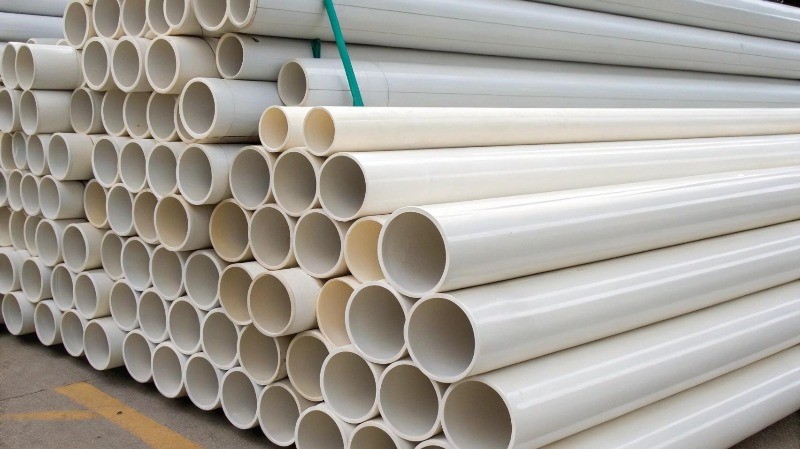
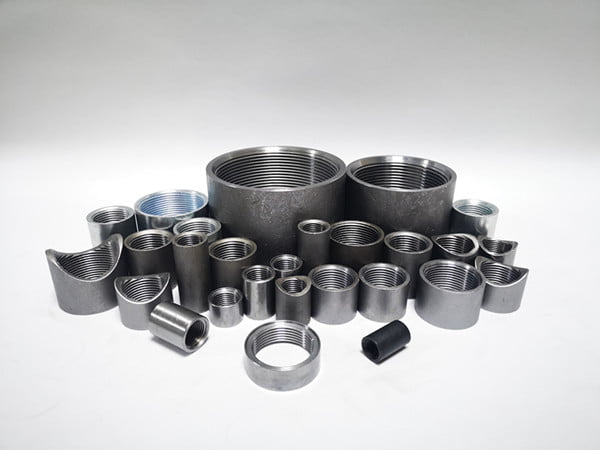
PVC, short for Polyvinyl Chloride, is a type of plastic. That is a synthetic plastic polymer made from the polymerization of VCM (vinyl chloride monomer). It is the third most widely produced synthetic plastic in the world, after polyethylene (PE) and polypropylene (PP). PVC Uses and Properties PVC (Polyvinyl Chloride) is a durable, lightweight, yet strong, and low-expenditure thermoplastic widely used in construction, plumbing, electrical, and industrial applications. It resists corrosion from most acids, alkalis, and salts. PVC has a long service life, and remains undeformed, and is recyclable. It provides excellent chemical resistance, low thermal conductivity, and non-conductive electrical properties in pipes and fittings for cables, medical devices, and consumer products. Its smooth inner surface ensures efficient fluid flow with minimal friction loss, and its low maintenance frequency. PVC Pipe Fitting Types As a pipes and fittings manufacturer, we supply a range of PVC (Polyvinyl Chloride) pipe fittings with strength, corrosion resistance, and long-term stability. Our PVC fittings are available in Schedule 40 and Schedule 80 standards. 1. PVC Coupling PVC couplings are short, straight pipes to join two lengths of PVC pipe. Available in sizes ranging from 1/2 inch to 2 inches, PVC couplings are lightweight, easy to install, and resistant to corrosion, chemicals, and UV degradation. 2. PVC Elbow We offer PVC elbows in 90-degree and 45-degree angles, allowing for changes in pipeline transportation. These elbows make the liquid or gas change direction for successful transport. 3. PVC Adapter PVC Female Adapter Our female adapters feature female threads inside for easy attachment to male-threaded fittings, and the hex nut ensures a secure connection without leaks. PVC Male Adapter The male adapter features one male threaded end and one socket that requires solvent for connection, enabling connections from PVC piping to female-threaded fittings. 4. PVC Union The structure of PVC unions is a fitting that allows for easy connection and removal, facilitating maintenance, system modifications, and ensuring leak resistance. 5. PVC Bushing The PVC bushing is a reducer plumbing fitting that connects different diameters. Our PVC bushings are Available in multiple size combinations (e.g., 3/4″ x 1/2″, 2″ x 1-1/2″), enabling smooth transitions between different pipe sizes. 6. PVC Tee PVC tees are a type of pipe fitting in a pipeline to allow transport in two branch directions. Suitable for high- and low-pressure systems, they are commonly found in irrigation, chemical transport, and waste management piping networks. 7. PVC Valves We provide a variety of PVC valves, including ball valves, check valves, butterfly valves, and gate valves. Lightweight yet strong, they resist corrosion, ensure smooth operation, and require minimal maintenance. Ideal for water supply lines, chemical processing, and agricultural systems. Specifications & Standards Our PVC pipe fittings meet global standards for strength, safety, and durability: Standard Description Schedule 40 Schedule 80 ASTM Pressure-rated PVC fittings ✓ ✓ ISO PVC piping for water ✓ ✓ Color Options White, Gray ✓ ✓ Size Range 1/2″ – 4″ ✓ ✓ We are an experienced manufacturer specializing in the production and export of pipe fittings. We provide our customers with high-quality fittings at competitive wholesale prices. Our products enable the construction of efficient, durable, and cost-effective piping systems for various applications, including construction, agriculture, chemical processing, and water treatment.
What Is The Difference Between Seamless And Welded Pipe?
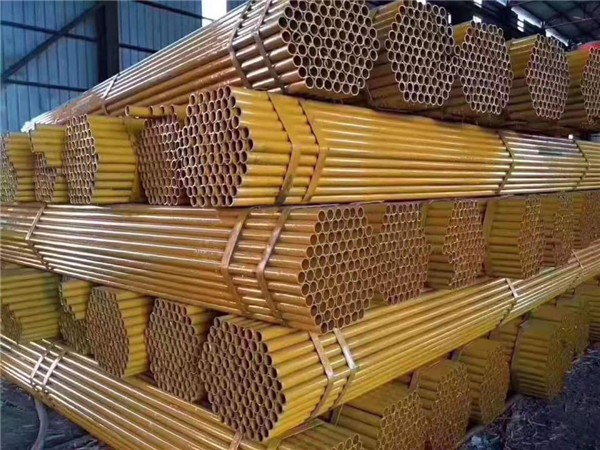
What is the difference between seamless and welded steel pipes? From their definition, we can see that one has no gaps and the other has gaps. And the seamless steel pipe can be seen from the outer surface, there is no gap in the whole body; the welded steel pipe has a welding gap. The price of seamless steel pipes is generally higher than that of welded steel pipes. Seamless steel pipes are generally used in factories; welded steel pipes are generally used in construction. The pressure resistance of seamless steel pipes is higher than that of welded steel pipes. 1. Seamless Steel Pipe Definition Seamless steel pipes are perforated from whole round steel, and steel pipes without welds on the surface are called seamless steel pipes. According to the production method, seamless steel pipes can be divided into hot-rolled seamless steel pipes, cold-rolled seamless steel pipes, cold-drawn seamless steel pipes, extruded seamless steel pipes, and top pipes. According to the cross-sectional shape, seamless steel pipes are divided into two types: round and special-shaped. Special-shaped pipes have square, elliptical, triangular, hexagonal, melon-shaped, star-shaped, and finned pipes. The maximum diameter is 900mm and the minimum diameter is 4mm. According to different uses, there are thick-walled seamless steel pipes and thin-walled seamless steel pipes. Seamless steel pipes are mainly used as petroleum geological drilling pipes, cracking pipes for the petrochemical industry, boiler pipes, bearing pipes, and high-precision structural steel pipes for automobiles, tractors, and aviation. Seamless Steel Pipe Use/Application (1) General-purpose seamless steel pipes are rolled from ordinary carbon structural steel, low-alloy structural steel, or alloy structural steel, with the largest output, and are mainly used as pipelines or structural parts for conveying fluids. (2) There are three types of supply according to different purposes: a. Supply according to chemical composition and mechanical properties; b. According to mechanical performance; c. According to the water pressure test supply. Note: Steel pipes supplied according to categories a and b, if used to withstand liquid pressure, must also undergo a hydraulic test. (3) Special-purpose seamless pipes include seamless pipes for boilers, chemical and electric power, seamless steel pipes for geology, and seamless pipes for petroleum. Seamless steel pipes have a hollow section and are used in large quantities as pipelines for conveying fluids, such as pipelines for conveying oil, natural gas, gas, water, and certain solid materials. Compared with solid steel such as round steel, steel pipe has a lighter weight when the bending and torsion strength is the same, and it is economical section steel. Widely used in the manufacture of structural parts and mechanical parts, such as oil drill pipes, automobile transmission shafts, bicycle frames, and steel scaffolds used in construction. Steel pipes are used to make ring parts, which can improve material utilization, simplify manufacturing procedures, and save materials and processing. Working hours, steel pipes have been widely used for manufacturing. 2. Welded Steel Pipe Definition Welded steel pipes refer to steel pipes with seams on the surface that are welded after bending and deforming steel strips or steel plates into round or square shapes. The blanks used for welded steel pipes are steel plates or strip steels. Since the 1930s, with the rapid development of high-quality strip, continuous rolling production, and the advancement of welding and inspection technology, the quality of welds has been continuously improved, and the variety and specifications of welded steel pipes have increased and replaced seamless steel pipes in more and more fields. Welded steel pipes have lower costs and higher production efficiency than seamless steel pipes. Classification Method Of Welded Steel Pipe (1) According to different welding methods, it can be divided into arc welded pipe, high frequency or low-frequency resistance welded pipe, gas welded pipe, furnace welded pipe, Bondi pipe, etc. Electric welded steel pipe: used in oil drilling and machinery manufacturing. Furnace welded pipes: can be used as water gas pipes, etc., large-diameter longitudinally welded pipes are used for high-pressure oil and gas transportation, etc.; spiral welded pipes are used for oil and gas transportation, pipe piles, bridge piers, etc. (2) According to the weld shape, it can be divided into straight seam welded pipe and spiral welded pipe. Longitudinal welded pipe: The production process is simple, the production efficiency is high, the cost is low, and the development is fast. Spiral welded pipe: The strength is generally higher than that of straight seam welded pipes. A narrower blank can be used to produce welded pipes with larger pipe diameters, and a billet with the same width can also be used to produce welded pipes with different pipe diameters. But compared with the straight seam pipe of the same length, the weld length is increased by 30-100%, and the production speed is lower. Therefore, most of the smaller diameter welded pipes adopt straight seam welding, and the large diameter welded pipes mostly adopt spiral welding. (3) According to the purpose, it is divided into general welded pipe, galvanized welded pipe, oxygen-blowing welded pipe, wire casing, metric welded pipe, roller pipe, deep well pump pipe, automobile pipe, transformer pipe, electric welded thin-walled pipe, electric welded special-shaped pipe, and spiral welded pipe. (4) According to the shape of the end, it is divided into round welded pipe and special-shaped (square, flat, etc.) welded pipe. (5) Other Categories GB/T3091-1993 (Galvanized welded steel pipe for low-pressure fluid transportation). Mainly used to transport water, gas, air, oil, heating hot water or steam, and other generally lower pressure fluids and other purposes. Its representative material is Q235A grade steel. GB/T3092-1993 (Galvanized welded steel pipe for low-pressure fluid transportation). Mainly used for conveying water, gas, air, oil, heating hot water or steam, and other generally lower pressure fluids and other purposes. Its representative material is Q235A grade steel. GB/T14291-1992 (Welded steel pipe for mining fluid transportation). Mainly used for straight seam welded steel pipes for mine pressure, drainage, and shaft gas discharge. Its representative material is Q235A, Grade B steel. GB/T14980-1994 (Large diameter electric welded steel pipe for low-pressure fluid transportation). It is mainly used to
Which Material Is Best for Gas Lines?
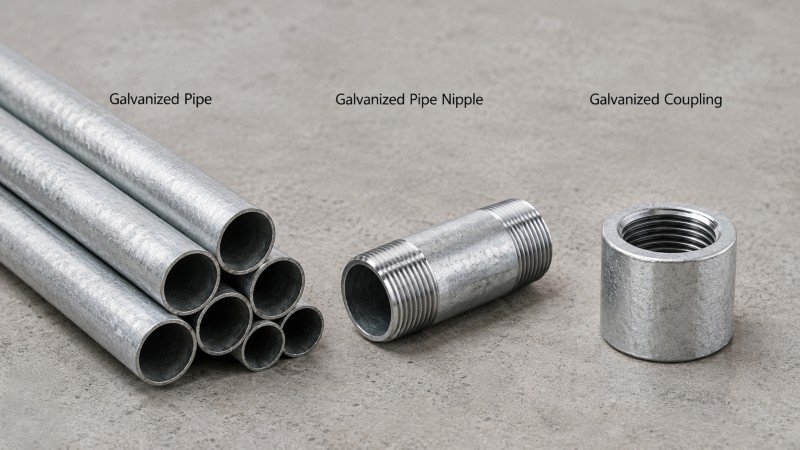
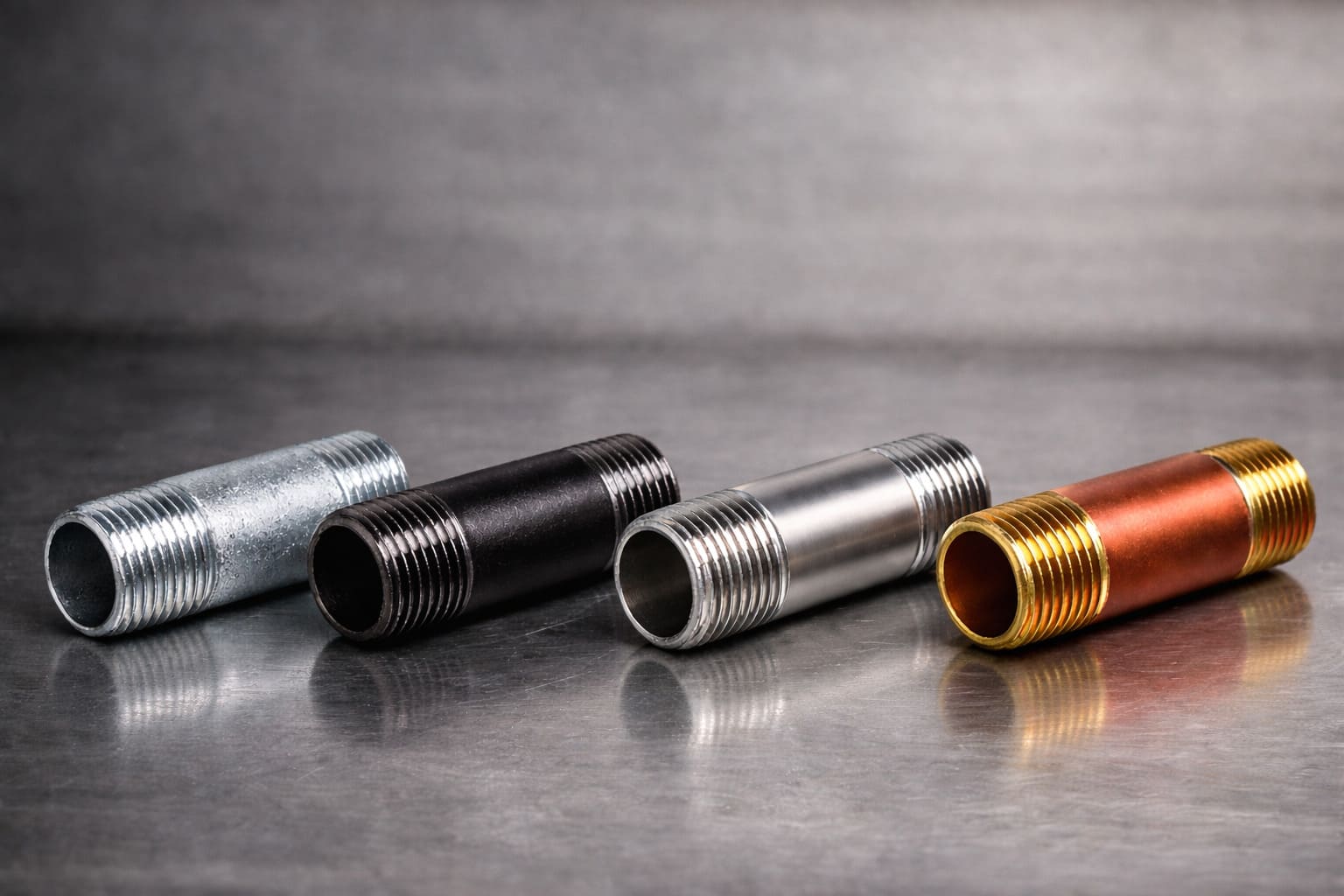
In gas systems, the common materials are galvanized steel, stainless steel, and copper. Each material has different strengths, applications, and cost considerations. This guide explains each option to help you choose the best pipe material for gas lines. Common Materials for Gas Lines 1. Galvanized Steel Galvanized steel pipes are widely used in households. Galvanized steel has high corrosion resistance, convenient installation, and high strength. Advantages Better corrosion resistance than black steel Suitable for humid environments Longer outdoor service life Disadvantages More expensive than black steel Zinc coating may deteriorate over time Some gas utilities restrict galvanized pipe for certain gas applications Typical Applications Outdoor gas piping Moist environments Utility piping systems Best Choice For Gas systems exposed to moisture or outdoor weather conditions. 2. Stainless Steel Stainless steel includes 304 and 316 stainless steel. Stainless steel pipes and fittings are used for moisture and coastal environments. Usually, a compression-type connection is adopted for better seal performance. 316 is better than 304 in higher corrosion environments. Advantages Excellent corrosion resistance High temperature resistance Long service life Clean appearance Suitable for harsh environments Disadvantages Higher material cost More expensive machining and threading Typical Applications Chemical plants Offshore systems Corrosive gas environments High-purity gas systems Best Choice For Corrosive, high-moisture, or high-temperature gas applications. 3. Copper Copper pipe is best for complicated piping. Copper pipe can reduce the number of pipe connectors, even though it has a higher cost, but it has good ductility. Advantages Good corrosion resistance Easy to machine and install Reliable sealing performance Disadvantages Lower strength than steel Not ideal for high-pressure industrial systems Higher cost than carbon steel Typical Applications Residential gas appliances Regulators Small gas connections Best Choice For Low-pressure residential or appliance gas systems. 4. Plastic Plastic pipe is becoming more widely used in gas pipeline applications with the development of technology. Plastic pipes have good corrosion resistance, light weight, lower cost, and are easy to install. Last, which materials of gas pipe and fittings are needed to consider many factors according to specific requirements and applications. Galvanized Steel vs Stainless Steel for Gas Lines This is one of the most common comparisons in industrial piping. Feature Galvanized Steel Stainless Steel Cost Lower Higher Strength Excellent Excellent Corrosion Resistance Moderate Excellent Outdoor Use Good Excellent Industrial Gas Systems Very Common Premium Option Service Life Long Very Long For most standard gas distribution systems, black carbon steel pipe nipples remain the industry standard because of their balance between strength, availability, and cost. However, stainless steel becomes the preferred option when corrosion resistance is critical. Which Thread Type Is Best for Gas Pipe Nipples? Most gas pipe nipples use: NPT Threads (North America) BSPT Threads (Europe, Asia, Middle East) Thread sealing is extremely important in gas systems to prevent leakage. Common sealing methods include: PTFE thread seal tape Pipe thread sealant Gas-rated sealing compounds Factors to Consider When Choosing Gas Pipe Nipple Materials 1. Corrosion Exposure Outdoor or humid environments may require galvanized or stainless steel. 2. Gas Type Different gases may require specific material compatibility. 3. Pressure Requirements Industrial high-pressure systems generally prefer carbon steel or stainless steel. 4. Local Codes and Standards Always verify local gas installation regulations before selecting materials. 5. Budget Carbon steel provides the best balance between performance and cost for most projects. Recommended Material by Application Application Recommended Material Indoor Natural Gas Lines Black Carbon Steel Outdoor Gas Systems Galvanized Steel Corrosive Environments Stainless Steel Residential Appliances Brass Industrial High-Pressure Gas Carbon Steel or Stainless Steel Final Thoughts The best pipe nipple material for gas lines depends on the operating environment, pressure requirements, corrosion exposure, and budget. For most commercial and industrial gas systems, black carbon steel pipe nipples remain the most widely used and cost-effective solution. For outdoor or corrosive environments, galvanized steel or stainless steel may provide longer service life and better reliability. Selecting the correct material helps improve safety, reduce maintenance, and ensure long-term system performance.