
What is a Pipe Union used for?
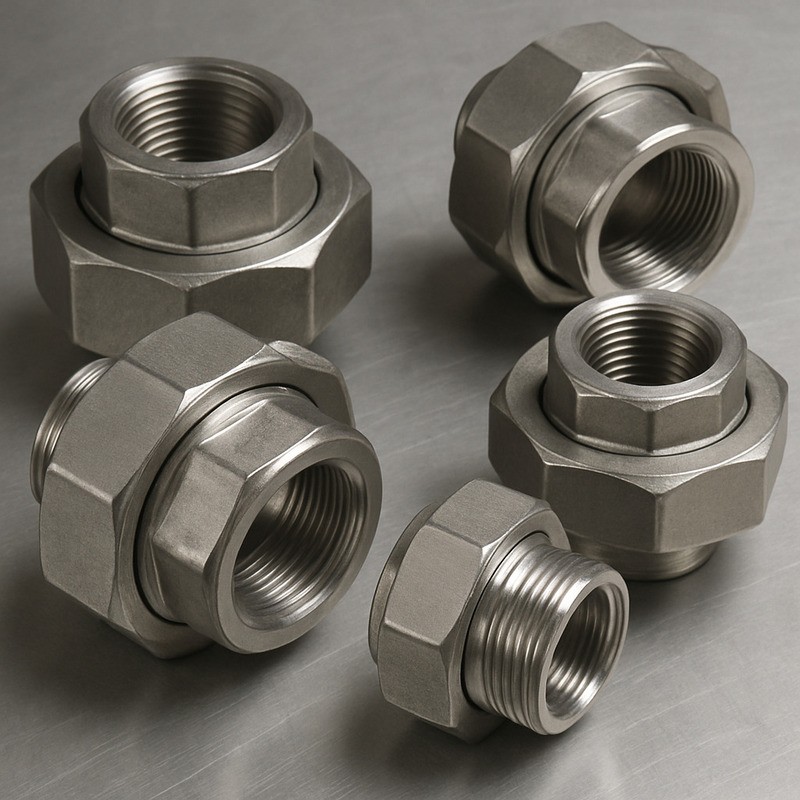
A pipe union is a crucial plumbing fitting widely used in industrial, commercial, and residential piping systems. It allows two pipes to be easily connected and disconnected without causing damage to the pipes or requiring complex tools. This makes pipe unions ideal for maintenance, repair, and installation tasks that require quick disassembly. Understanding the benefits of pipe unions is essential. These fittings provide a reliable, leak-proof connection that can withstand high pressure and temperature variations, making them suitable for water, gas, oil, and chemical pipelines. High-quality pipe unions are typically made from durable materials, such as stainless steel, brass, or carbon steel, ensuring a long service life and resistance to corrosion. Key benefits for buyers include easy installation, cost-effective maintenance, and enhanced system flexibility. When sourcing pipe unions, look for certifications such as ISO, ANSI, or ASTM to guarantee product quality and compliance with industry standards. The right pipe union can significantly improve the efficiency and reliability of your piping systems, making it a smart investment.
What is a Reducer Pipe?
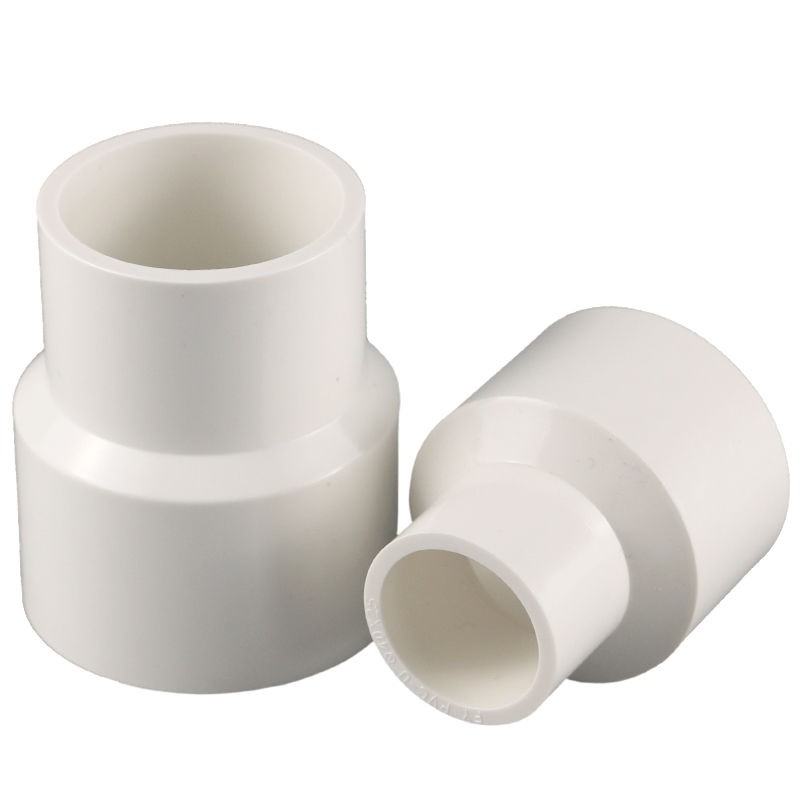
A reducer pipe is vital in piping systems to connect different diameters. Understanding the role of reducer pipes can help you use them more easily. As a leading manufacturer at Hebei Sanvo Pipe Fittings Co., Ltd., we pride ourselves on delivering high-quality pipe reducers that meet diverse needs. Explore what makes the benefits of reducer pipes, their differences from equal-diameter pipes, suitable applications, material options, and why choosing Sanvo is your best bet for plumbing pipe fittings in this article. 1. What is a Reducer Pipe, and Why Does It Matter? Reducer pipes are transitions between pipes of varying sizes. Reducer pipes ensure a seamless connection, maintaining efficiency and preventing turbulence in systems like industrial or home plumbing solutions. At Hebei Sanvo, our reducer pipes are precision-designed and meet international standards like ASTM and ASME. Whether high-pressure oil pipelines or residential water systems, our reducer pipe fittings guarantee leak-proof plumbing and long-term reliability. 2. Key Features of Reducer Pipe Fitting Made from stainless steel, carbon steel, and PVC, our reducers withstand rust and chemical erosion. Engineered to handle pressures up to 9000# (depending on material), ideal for plumbing solutions. Our reducer pipe fitting ensures easy pipe installation, whether welded, threaded, or glued. 3. Reducer Pipe vs. Equal-Diameter Pipe: What’s the Difference? Reducer Water Pipe connects pipes of different diameters (e.g., 4-inch and 2-inch), adjusting flow rate and pressure. The equal-diameter pipe connects pipes of the same diameter. Reducer pipes regulate flow by narrowing or expanding the pipe’s diameter, while equal-diameter pipes maintain steady flow. Reducer fitting is critical in systems requiring size transitions. Pipes of the same diameter use equal-diameter pipe fittings. Reducers can increase or decrease pressure due to diameter changes, whereas equal-diameter pipes keep pressure stable. 4. Types of Pipe Reducer Fittings Reducer Hex Nipple The reducer hex nipple connects two female threaded pipes of different diameters. It has a hexagon in the middle, making it easy to tighten with a wrench. They have a short pipe appearance and have two male thread ends. Their tight design and high strength make them suitable for high-pressure applications. The stainless hex nipple is corrosion-resistant and easy to replace. Reducer Coupling The Reducing coupler can extend or transit the piping system. The plastic pipe coupling is a socket pipe fitting, while carbon and stainless steel pipe couplings are threaded and widely used. The coupling is a firm connection, simple installation, smooth inner wall, and reduced water flow resistance. Reducer bushing The reduced bushing has a larger socket on one end and a smaller female threaded end on the other. The design saves space and is suitable for narrow areas. It has strong sealing performance. Achieve leak-proof plumbing with sealing tape. It is corrosion-resistant and durable. 5. Different Materials of Reducer Pipes and Their Characteristics Stainless Steel (304/316): Stainless steel pipe has high corrosion resistance, is durable, and withstands extreme temperatures (-20°C to 400°C). Stainless steel pipe fittings are for food processing, chemical plants, hot water pipes, and marine environments. Hygienic and long-lasting for demanding industrial plumbing solutions. Carbon Steel (Black and Galvanized Steel): High strength, wear-resistant, and cost-effective. Carbon pipes are for oil and gas pipelines, power plants, and high-pressure systems. Carbon steel pipe is ideal for heavy-duty applications where corrosion is less of a concern. PVC/CPVC: Plastic pipe is lightweight, corrosion-resistant PVC, and CPVC handles higher temperatures (up to 90°C). Plastic pipe connectors are for home plumbing solutions, irrigation, and drainage systems. Affordable and easy to install, great for non-pressurized systems. At Sanvo, we offer a full range of materials, ensuring you find the perfect reducer pipe for your project’s demands. 6. Why Choose Us? Hebei Sanvo Pipe Fittings Co., Ltd. is a manufacturer. Our reducer pipe fitting prevents leaks while withstanding harsh conditions. We have over 20 years of supplying plumbing pipe fittings to 35+ countries. From free samples to detailed installation guides, we are here to support you. Choosing Hebei Sanvo as your pipe fittings supplier comes with unmatched benefits: All the pipe fittings we produce undergo rigorous testing for durability, corrosion resistance, and pressure tolerance. If you need a specific size or material, we offer customized pipes to match your project; standard sizes usually range from 1/2-inch to 2-inch diameters. As a direct manufacturer, we offer cost-effective plumbing pipe fittings. With a robust supply chain, we ensure quick turnaround times so your project stays on schedule. Our team provides professional guidance on selecting the right reducer pipe for your application, from hot water pipes to chemical processing lines.
NPT Thread Applications and Advantages of NPT Pipe Fittings
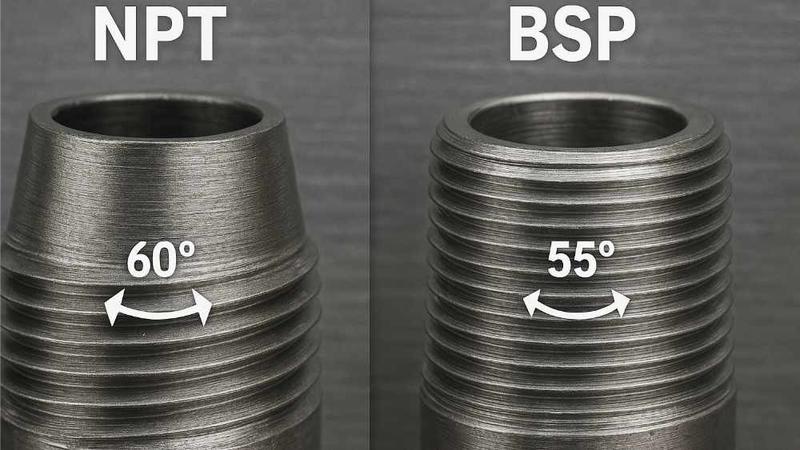
What is NPT Thread? NPT thread (National Pipe Thread) is a U.S. standard tapered thread commonly used in industrial pipe fittings to ensure a tight, leak-resistant seal. With a 60° thread angle and tapered design, NPT fittings are ideal for high-pressure applications in water, gas, and oil systems. They are widely used in stainless steel, galvanized steel, and black steel piping. For international buyers, please note that NPT is not compatible with BSP threads without the use of adapters. Always confirm thread standards when sourcing pipe connectors for U.S.-spec systems. Difference Between BSP and NPT When sourcing pipe fittings for international projects, choosing between BSP (British Standard Pipe) and NPT (National Pipe Thread) is critical. Misalignment in thread standards can lead to leaks, downtime, and increased costs. 1. Thread Type Feature NPT Thread BSP Thread Thread Type Tapered BSPT (tapered) or BSPP (parallel) Seal Method Thread interference + sealant Mechanical seal (BSPP) or interference (BSPT) Use of PTFE tape Required Depends on the BSP type NPT threads seal through the taper and require Teflon tape or thread sealant. BSP threads come in two types: BSPT (tapered) – similar to NPT but with a different angle BSPP (parallel) – requires a washer or O-ring to seal 2. Thread Angle & Pitch NPT Thread Angle: 60 degrees BSP Thread Angle: 55 degrees Thread Pitch: Even if the pitch is similar, the different angle means they are not interchangeable. This makes NPT and BSP fittings incompatible without the use of adapters. 3. Application & Material Compatibility Thread Type Common Materials Typical Applications NPT Stainless steel, galvanized, black steel Plumbing, oil & gas, compressed air BSP Brass, stainless steel, plastic Water systems, HVAC, and irrigation 4. Can NPT and BSP Threads Be Used Together? No. Although they appear similar, the thread angle and sealing method differ, which can result in leakage if forced together. Use thread adapters or match standards across your components. Final Tip for Procurement: When sourcing pipe nipples, couplings, or unions, always double-check: Thread standard (BSP vs NPT) Material compatibility Application pressure rating Using the wrong thread type can cause system failure, waste your business time, and money. Why use NPT Fittings? NPT stands for National Pipe Thread, a U.S. standard for tapered pipe threads designed to create a pressure-tight seal in piping systems. Commonly used in industrial pipe fittings, NPT threads are engineered with a 60° thread angle and a taper that allows for a secure, leak-resistant connection, especially when used with sealants like PTFE tape. Choosing NPT pipe fittings is essential when sourcing systems that operate under high pressure, such as water supply lines, compressed air systems, gas pipelines, or oil transfer setups. NPT fittings are especially popular in the U.S. market and widely available in stainless steel, galvanized steel, and black carbon steel. For international buyers, it’s essential to note that NPT threads are not compatible with BSP threads due to differences in angle and thread form, making it crucial to confirm thread standards during procurement. If you’re sourcing pipe connectors for American or North American systems, NPT is the preferred standard for long-term reliability and compatibility.
What Are Pipe Fittings?
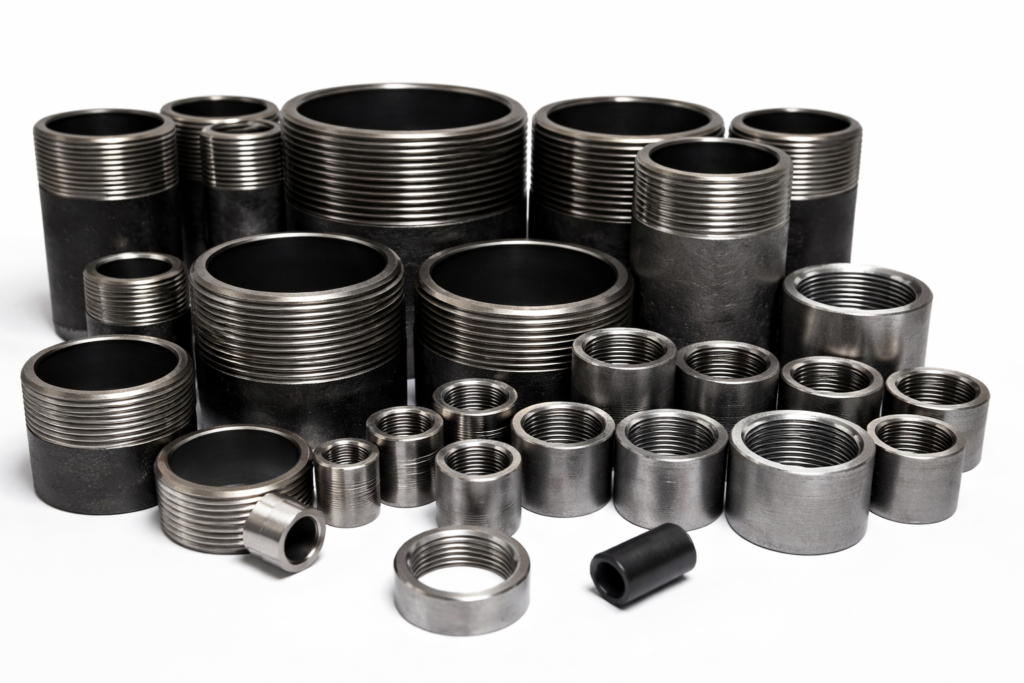
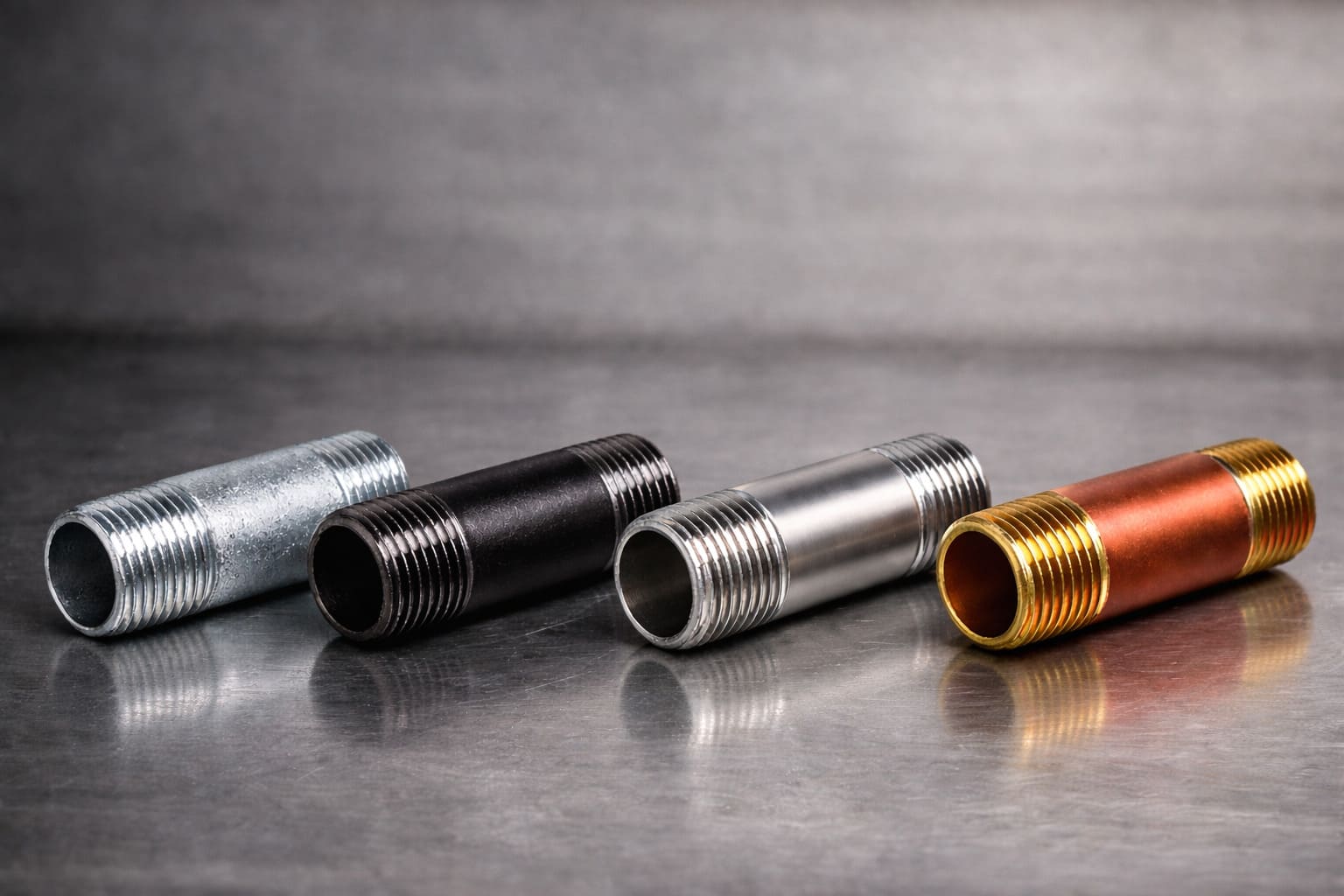
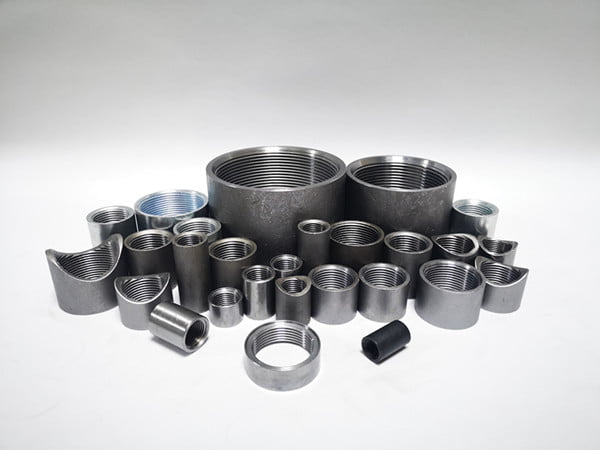
Pipe fittings are the general term for the parts and components that play the role of connection, control, direction change, diversion, sealing, and support in the pipeline system. Pipe Fittings Introduction: Steel pipe fittings are all pressure fittings. According to the different processing technology, it is divided into four categories, namely butt-welded pipe fittings (there are two kinds of welds and no welds), socket welding, and threaded pipe fittings, flange pipe fittings. Pipe Fittings Types: (1) According To Usage: 1. The pipe fittings used to connect the pipes are flange, union, pipe clamp, clamp, clamp, hose clamp, etc.;2. Pipe fittings that change the direction of the pipe: elbows, elbows;3. Pipe fittings that change the pipe diameter: reducer (reducing pipe), reducing elbow, branch pipe stand, reinforced pipe;4. Increase the pipe fittings of the pipe branch: three links and four links;5. Pipe fittings used for pipeline sealing: gaskets, raw material belts, hemp, flange blind plates, pipe plugs, blind plates, heads, welding plugs;6. Pipe fittings for pipeline fixing: snap ring, towing hook, lifting ring, bracket, bracket, pipe clamp, etc. (2) By Connection Points: 1. Welded pipe fittings; 2. Threaded pipe fittings;3. Tube fittings;4. Clamp pipe fittings;5. Socket pipe fittings;6. Adhesive pipe fittings;7. Hot melt pipe fittings;8. Curved elastic double melt pipe fittings;9. Aprons connected pipe fittings (3) Classified By Material: 1. Cast steel pipe fittings;2. Cast iron pipe fittings;3. Stainless steel pipe fittings;4. Plastic pipe fittings;5. PVC pipe fittings;6. Rubber pipe fittings;7. Graphite pipe fittings;8. Forged steel pipe fittings;9. PPR pipe fittings;10. Alloy pipe fittings;11. PE pipe fittings;12. ABS pipe fittings. Related applications: Development Prospects Of Building Materials Industry China is already the world’s largest producer and consumer of building materials. The output of main building materials products such as cement, plate glass, building sanitary ceramics, stone, and wall materials has ranked first in the world for many years. At the same time, the quality of building materials continues to improve, the consumption of energy and raw materials is declining year by year, a variety of new building materials are constantly emerging, building materials are constantly being upgraded, and the Cangzhou pipeline equipment manufacturing industry has a solid foundation. There are more than 3,200 production enterprises, of which 222 are above-scale (sales income of more than 5 million yuan), with 124,000 employees. The main products are various kinds of seamless steel pipes of various calibers such as special steel, stainless steel, carbon steel, low, medium, and high-pressure boiler pipes, oil drilling pipes, and other steel pipes; various elbow fittings such as tees, crosses, valves, reducers, etc.; Various stainless steel flanges, forged flanges; various pipe racks, instruments, oil blowout prevention devices and other pipe fittings; various polyethylene pipes, polypropylene pipes and other plastic pipes, a total of 16 categories, more than 370 varieties, more than 3500 kinds specification. The manufacturing process mainly adopts hot-rolled longitudinal seam welding, spiral double-sided submerged arc welding, forging, forging, intermediate frequency pushing, cold forming, hot extrusion, etc. The maximum processing diameter of the pipeline is 2020 mm. The products are widely used in engineering fields such as municipal administration, petrochemical industry, west-east gas transmission, shipbuilding, and nuclear power, with an annual design and processing capacity of 25 million tons. In 2010, enterprises above the designated size achieved an industrial added value of 13 billion yuan, a year-on-year increase of 31.7%, accounting for 16.1% of all enterprises above the designated size. The Cangzhou pipeline equipment manufacturing industry is moving towards the goals of “three highs” (upscale, high level, and high equipment) and “three highs” (high-end, high pressure, and high value-added), and strive to promote the pipeline equipment manufacturing capacity to reach 30 million tons. Cangzhou will become a well-known “pipeline equipment manufacturing and R&D base” and “pipeline equipment capital” at home and abroad. Infrastructure investment in the “Eleventh Five-Year Plan” has reached the mid-range. The explosive growth of investment in infrastructure construction such as roads and railways and the steady growth of investment in ordinary civil construction have put the construction industry in a booming stage. At the same time, in the context of building an energy-saving society and the country’s strengthening of independent innovation capabilities, the theme of energy conservation and technological innovation will be a hot spot for industry development. China Pipe Fittings Manufacturer Hebei Sanvo Pipes And Fittings Co., Ltd. is located in Cangzhou, Hebei, and a quality China pipe fittings manufacturer, exporting various types of threaded pipe fittings, including threaded galvanized pipe, black threaded pipe, and stainless steel threaded pipe. The specific products include steel pipe nipples, steel pipe couplings with threads, stainless steel threaded pipe fittings. These threaded pipe fittings are widely used in the field of gas, oil and gas, water, fire, HVAC, mines, petroleum, and other fluid transportation. So, if you are interested in our threaded pipe fittings, welcome to contact us by email, and look forward to hearing from you. Email: info@pipenipples.com
What Is Pipe Schedule? Guide to Pipe Wall Thickness
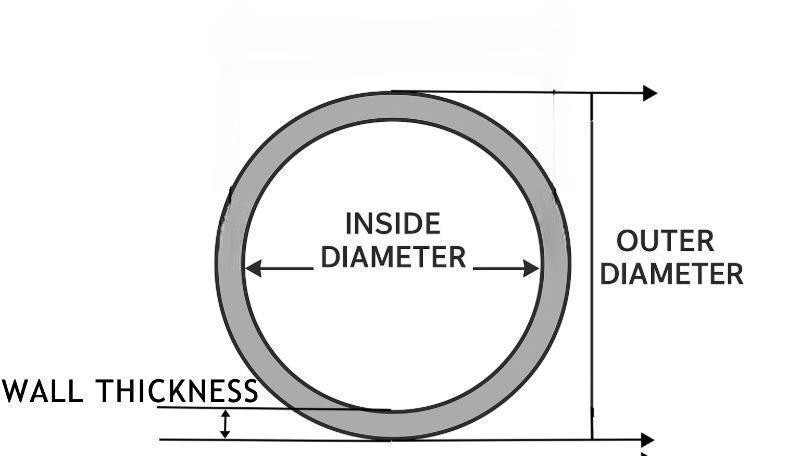
Pipe schedule is a pipe wall thickness grade, a numbering system used to represent a series of steel pipe wall thicknesses, formulated by the ASME/ANSI standard. The pipe schedule does not indicate a material or pressure grade, but a wall thickness series number. Definition of Pipe Schedule Pipe schedule = Wall Thickness Number The higher the pipe schedule number, the thicker its wall. A thicker wall allows the pipe to withstand higher pressure. Pipe schedule commonly includes: SCH 10 (thin wall) SCH 20 SCH 40 (medium wall thickness, most common) SCH 80 (thick wall) SCH 160 (ultra-thick wall) What is Schedule 40? Schedule 40 steel pipe refers to a standard specification for the wall thickness of steel pipes. This specification is defined by ASME/ANSI B36.10M and B36.19M. Schedule 40 is the most commonly and widely used medium wall thickness grade. Does SCH 40 equal the Pressure Grade? No. It can influence the pressure grade, but does not directly express the pressure grade. The true pressure grades must correspond to the material sizes (such as A53, A106, and API 5L), temperatures, wall thickness, and standards. Characteristics of Schedule 40 Steel Pipes Medium wall thickness allows steel pipes to withstand medium pressure. Sch 40 steel pipe is widely used in water systems, gas, low-pressure steam, and general industrial piping systems. The wall thickness varies with different sizes; SCH 40 is not a fixed measurement but changes depending on the pipe diameter. But the same schedule in the different nominal pipe sizes, the pipe wall is different, such as the schedule 40 pipe thickness: Pipe Schedule NPS Wall Thickness SCH 40 1″ 3.38 mm 2″ 3.91 mm 4″ 6.02 mm Compare Pipe Schedule 20 vs 40 vs 80 vs 160 “Pipe Schedule” indicates the grade of pipe wall thickness. The larger the number, the thicker the wall thickness and the stronger the pressure resistance. Wall thickness comparison SCH 20 < SCH 40 < SCH 80 < SCH 160 Wall Thickness Differences Take NPS 2″ (2 inches) as an example: NPS Schedule Wall Thickness (mm) Wall Thickness Grade 2″ SCH 20 2.11 mm Thin Wall SCH 40 3.91 mm Medium SCH 80 5.54 mm Thick Wall SCH 160 9.53 mm Extra Thick Trend of pressure resistance capacity Under the same material and size, the pressure resistance capacity increases with the wall thickness SCH 160 > SCH 80 > SCH 40 > SCH 20 SCH 40 has a medium wall thickness compared to SCH 10, SCH 80, and SCH 160. NPS DN Outside Diameter (in) / (mm) (ASME) Nominal Wall Thickness SCH 20 (mm) SCH 40 (mm) SCH 80 (mm) SCH 160 (mm) 1/8″ 6 0.405 in (≈ 10.3 mm) — 1.73 mm 2.41 mm — 1/4″ 8 0.540 in (≈ 13.7 mm) — 2.24 mm 3.02 mm — 3/8″ 10 0.675 in (≈ 17.1 mm) — 2.31 mm 3.20 mm — 1/2″ 15 0.840 in (≈ 21.3 mm) — 2.77 mm 3.73 mm 4.78 mm 3/4″ 20 1.050 in (≈ 26.7 mm) — 3.91 mm 5.56 mm 7.82 mm 1″ 25 1.315 in (≈ 33.4 mm) — 3.38 mm 4.55 mm 6.35 mm 1¼″ 32 1.660 in (≈ 42.2 mm) — 3.56 mm 4.85 mm 6.35 mm 1½″ 40 1.900 in (≈ 48.3 mm) — 3.68 mm 5.08 mm 7.14 mm 2″ 50 2.375 in (≈ 60.3 mm) — 3.91 mm 5.54 mm 8.74 mm 2½″ 65 2.875 in (≈ 73.0 mm) — 5.16 mm 7.01 mm 9.53 mm 3″ 80 3.500 in (≈ 88.9 mm) — 5.49 mm 7.62 mm 11.13 mm 4″ 100 4.500 in (≈ 114.3 mm) — 6.02 mm 8.56 mm 11.11 mm 6″ 150 6.625 in (≈ 168.3mm) 7.11 mm 7.11 mm 10.97 mm 14.27 mm 8″ 200 8.625 in (≈ 219.1 mm) 8.18 mm 8.18 mm 12.70 mm 18.26 mm 10″ 250 10.750 in (≈ 273 mm) 9.27 mm 9.27 mm 12.70 mm 21.44 mm 12″ 300 12.750 in (≈ 324 mm) 10.31 mm 10.31 mm 12.70 mm 25.40 mm Compare Key Features when Choosing Pipes Wall Thickness Pipe wall thickness is the key difference; the essence of the schedule is the grade of the wall thickness. Pressure Rating The primary purpose of different pipe schedules is to accommodate various pressure requirements. The larger pipe schedule allows the pipe to withstand higher pressure with the same pipe material and size. Pipe Weight The pipe schedule is smaller, and the pipe weight is lighter. The weight of the pipe affects transportation and installation costs, as well as the structural load requirements. Cost A thicker pipe contains more material, making it more expensive. Conclusion Pipe schedule is a wall thickness designation system; higher schedule numbers mean thicker walls. When selecting suitable pipes, pay close attention to wall thickness, pressure rating, pipe weight, and cost—these are the 4 key features. About Us SANVO is a leading manufacturer and supplier of high-quality pipe fittings, steel pipes, and customized metal components, serving the global market. Our product range includes threaded fittings and welded fittings, such as couplings, elbows, tees, and reducers. We can manufacture according to your exact dimensions, materials, and project requirements. Visit our facilities or contact our team to experience efficient, customer-focused service.
What Is Pipe Thread?
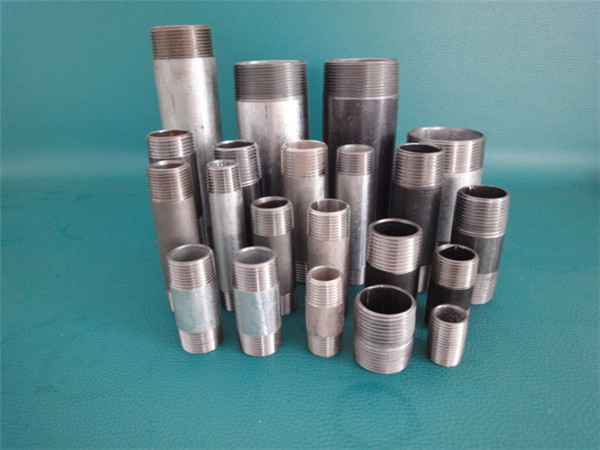
Pipe threads are threads for connection on the wall of the pipe. There are 55-degree unsealed pipe threads and 55-degree sealed pipe threads. It is mainly used to connect pipes to make the internal and external threads fit tightly. There are two different types of pipe threads: a straight pipe and a tapered pipe.Common different types of pipe threads mainly include the following: NPT, PT, G, etc. The Difference Between Threads Standard 1) NPT is the abbreviation of National (American) Pipe Thread. It belongs to the American standard 60-degree tapered pipe thread and is used in North America. Refer to GB/T12716-1991 for the national standard.2) PT (BSPT) is the abbreviation of Pipe Thread. It is a 55-degree sealed conical pipe thread. It belongs to the Wyeth thread family. It is mostly used in Europe and the Commonwealth countries. It is often used in the water and gas pipe industry. The taper is 1:16. T7306-2000. The domestic name is ZG.3) G is a 55-degree unsealed pipe thread, belonging to the Wyeth thread family. Mark G for cylindrical thread. Refer to GB/T7307-2001 for the national standard. In addition, the 1/4, 1/2, and 1/8 marks in the thread refer to the diameter of the thread size, and the unit is an inch. Insiders usually use points to refer to the thread size, one inch equals 8 points, 1/4 inch equals 2 points, and so on. G is the general name of pipe thread (Guan). The division of 55 and 60 degrees is functional, commonly known as pipe circle. That is, the thread is processed by a cylindrical surface. ZG is commonly known as pipe cone, that is, the thread is processed by a conical surface. The general water pipe joints are like this. The national standard is marked as Rc metric thread to indicate the pitch, and the American thread is 60 degrees. Metric units are used for metric threads, and imperial units are used for American and British threads. Pipe thread is mainly used to connect pipelines. The internal and external threads are closely matched. There are two types of straight pipes and tapered pipes. The nominal diameter refers to the diameter of the connected pipe, obviously the thread diameter is larger than the nominal diameter. 1/4, 1/2, 1/8 are the nominal diameters of inch threads, in inches. The inch pipe thread comes from the inch Wyeth thread, and the combination of the Wyeth thread pipeline series and the Wyeth thread profile establishes the basic size of the inch pipe thread. According to the 1/16 taper relationship, the radial diameter tolerance of the Wyeth thread is converted into an inch sealed tube Tolerance of the axial number of threads (there is a certain amount of rounding and adjustment). Then refer to the tolerance value of the inch seal pipe thread to propose the tolerance of the inch unsealed pipe thread (the tolerance changes from one-way distribution to one-way distribution, relax the top Diameter tolerance, let go of the bottom diameter tolerance). The time for three kinds of threads to be proposed is: In 1841, the British Wyeth thread was proposed, and in 1905, the new Wyeth thread standard (BS 84) was promulgated.In 1905, the imperial sealed pipe thread standard (BS 21) was promulgated.From 1905 to 1940, Wyeth Thread performed the responsibility of the imperial unsealed pipe. In 1940, the unsealed pipe thread series (BSP series) of the Wyeth thread was proposed; in 1956, the British unsealed pipe thread standard (BS 2779) was issued separately. European countries and Commonwealth countries first accepted the imperial pipe thread standard. The ISO/TC5/SC5 Pipe Thread Standardization Technical Committee and its secretariat are controlled by European countries, and the imperial pipe thread standard was adopted by the ISO standard. In 1955, the ISO proposed the inch seal pipe thread Standard (ISO R 7); In 1961, ISO proposed the standard for imperial unsealed pipe threads (ISO R 228). In 1978, ISO promulgated two official standards for imperial pipe threads (ISO7-1 and ISO228-1). Threads have been generally accepted by countries outside North America and are widely used in international trade. Metric Thread And Inch Thread Metric threads are expressed by pitch, US and British threads are expressed by the number of threads per inch;The metric thread is a 60-degree equilateral tooth shape, the inch thread is an isosceles 55-degree tooth shape, and the American thread is an isosceles 60-degree tooth shape;Metric units (such as mm) are used for metric threads, and imperial units (such as inches) are used for US and British threads;“Insiders” usually use “minutes” to refer to the thread size, one inch is equal to 8 minutes, 1/4 inch is 2 minutes, and so on.There are also: ISO-metric thread standard 60 degrees; UN-unified thread standard 60 degrees; API-American petroleum pipe thread standard 60 degrees; W-British Whitworth thread standard 55 degrees. Pipe Fittings With Pipe Threads Hebei Sanvo Pipes And Fittings Co., Ltd. is a quality threaded pipe fittings manufacturer and supplier in China, exporting standard NPT, BSPTsteel pipe nipple, steel pipe coupling, and 304/316 stainless steel threaded pipe fittings. Our pipe products are available in carbon steel and stainless steel, widely used in the field of gas, oil and gas, water, fire, HVAC, mines, petroleum, and other fluid transportation. And manufactured according to American Standard ASTM A733/A865, German Standard DIN2982/DIN2986, British Standard BS EN10241, and Japanese Standard JISB2302, sold to Israel, Germany, Italy, South Korea, United States, Middle East, Canada, France, and other national markets, well received. We warmly welcome customers from home and abroad to call us to discuss cooperation and development together. Email: info@pipenipples.com