
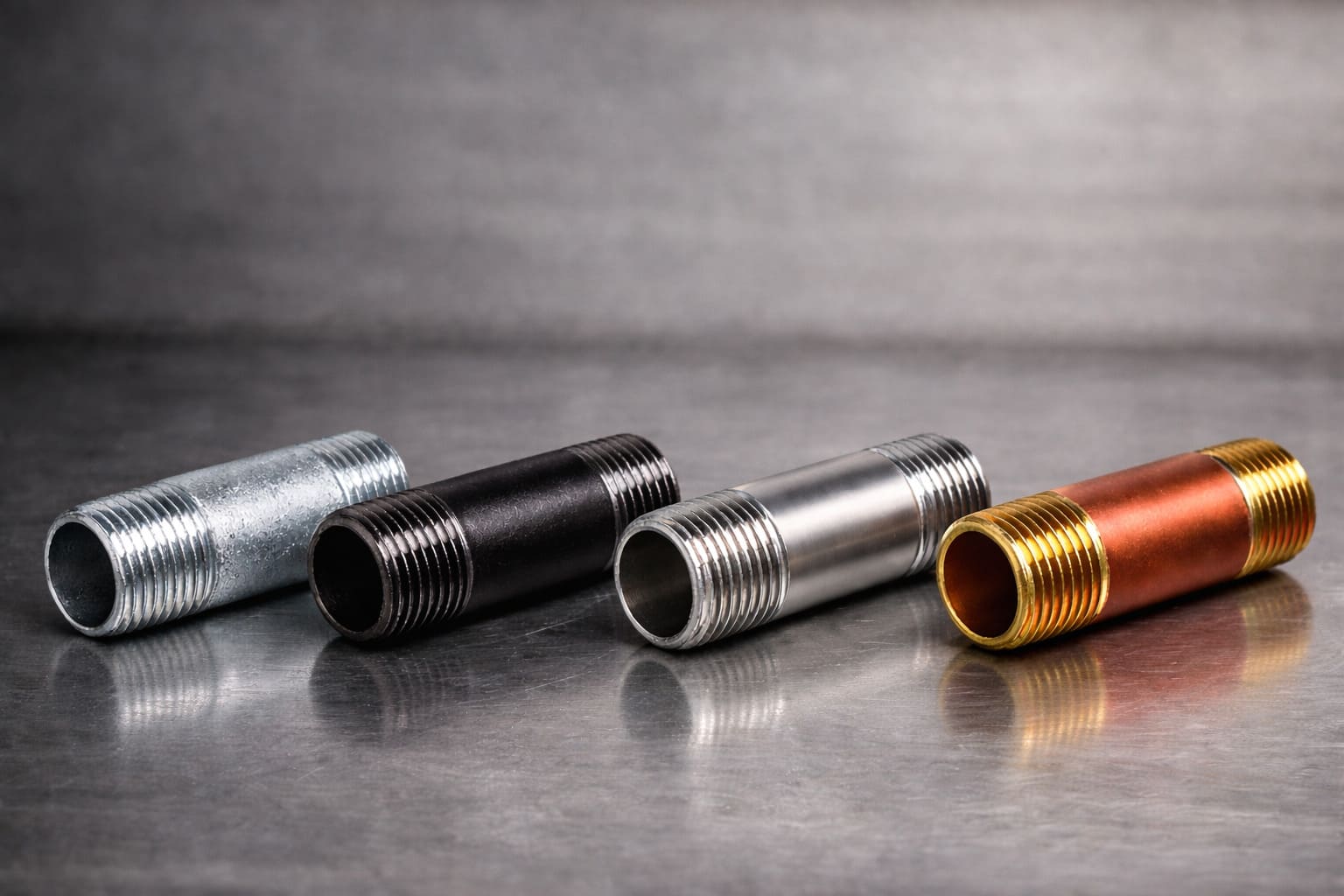
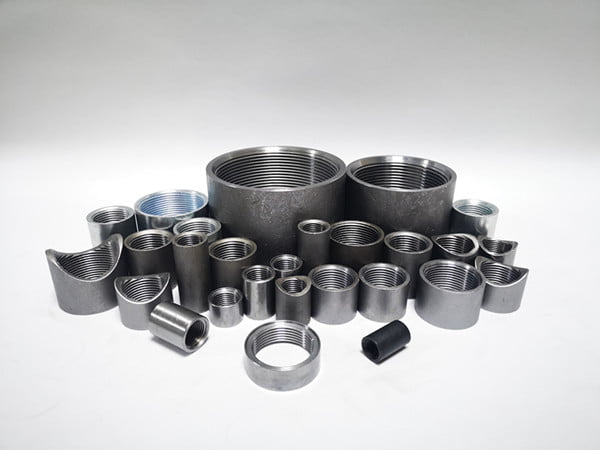
What Are Plumbing Fittings?
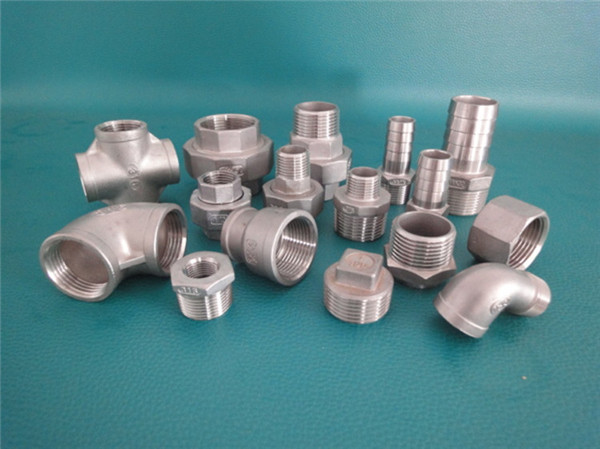
A fitting or adapter is used in pipe systems to connect straight sections of pipe or tube, adapt to different sizes or shapes, and for other purposes such as regulating (or measuring) fluid flow. These fittings are used in plumbing to manipulate the conveyance of water, gas, or liquid waste in domestic or commercial environments, within a system of pipes or tubes. Fittings (especially uncommon types) require money, time, materials, and tools to install, and are an important part of piping and plumbing systems. Valves are technically fittings but are usually discussed separately. The stainless steel threaded pipe fittings and other plumbing pipe fittings produced by our company are widely used in daily life because of their corrosion resistance. But there are also some installation requirements, as follows: First, the plumbing fittings cannot be installed in the bedroom or the room directly connected to the bedroom, so it is necessary to beware of gas poisoning. Second, a pressure relief pipe should be installed at the water outlet of the heating stove. The standard of the used pressure reducing pipe and the connected malleable pipe fittings should not be less than the pipe diameter. Third, the water inlet and outlet should be connected by malleable steel live connection instead of a malleable steel pipe hoop (280) to facilitate future repairs. Fourth, due to exhaust considerations, the main pipeline needs to be skewed, and the skew should be 100:1. Fifth, when using a local heating furnace, the highest point of the pipeline is 6 meters higher than the return water inlet of the heating furnace is the limit, exceeding 6 meters will cause excessive pressure, deformation of the protective body, and risk. Sixth, the entire heating system should be equipped with an open water filling bucket or expansion tank, and the height of the installation should be more than 25cm from the highest point in the entire heating system. Seventh, it is absolutely not allowed to install valves on the pipes of the pressure reducing pipe, water supply tank, and exhaust pipe, otherwise, it is very risky. Eighth, the middle of the water inlet and outlet of the furnace body is lower than the height of the middle of the radiator by more than 30cm, and the higher the middle of the radiator is relative to the water inlet and outlet, the better, which is beneficial to circulation. Ninth, if the water circulation is not smooth due to non-blocking reasons such as the pipe being too long, the position difference between the radiator and the heating stove can be increased, which will promote the water circulation, if necessary, a small hot water pipe pump can be added to force Let the water circulate. But do not push the water pump device on the horizontal main pipe below to push the water toward the furnace, otherwise, the furnace will be damaged due to the pressure generated by the pump. Tenth, the height of the chimney of the straight chimney coal stove should be more than two meters, and the chimney with a diameter of 12cm must be used for the bulk coal stove, which should be more than 4 meters. Be short and have as few elbows as possible. Other important tips for safe use that need to be mentioned: 1. When the flame is turned off for a short time in winter, the water in the system should be drained to prevent icing and blockage of the pipeline. If it is too late to dissolve from the beginning, the water pressure in the water jacket will increase sharply and damage will be caused by simple blasting.2. The pressure of the pressure gauge cannot be higher than 0.1 MPa (1 kg). If it is higher than this pressure, it is necessary to shut down the boiler. The water temperature of the pressureless small boiler cannot be higher than 95°C.3. It is forbidden for the heating furnace circulation system to communicate with the outside heating pipes.4. When the shower is not in use, it is necessary to drain the water in the pipeline at any time to avoid freezing and cracking the pipeline in winter. Also: other matters needing attention on the honeycomb heating stove: 1. Use high-quality briquette and do not use wet coal to avoid corrosion to stoves.2. When heating, the coal block should be flush with the furnace, but the fire pressure on the small water jacket, adjust the chimney damper, and open the ash drawer.3. When cooking rice, remove the pressure fire cover and adjust the chimney damper, or add a piece of coal to a lot of it, so that the rice cooks faster, and then shake it back to the original position when heating.4. When replacing the honeycomb, if it cannot be clamped, you can press a piece of new coal first, then cover the fire cover, swing the handle back and forth, and the spent coal will fall into the ash drawer until the new coal is flush with the furnace.5. When sealing the fire, you can put one or two pieces of new coal at a time, then put the fire sealing cover, pressure fire cover, and stove ring, adjust the chimney damper, and close the ash drawer. The user should explore the situation for about a week. can.6. After the heating stove has been burning for a period of time, the dust in the smoke neck, as well as the dust on the heat absorption sheet and the small water jacket, should be cleaned up in time. If it is not cleaned up in time, it can seriously affect the heating function and the smoke exhaust function. Hebei Sanvo specializes in the production of export standard pipe nipples, pipe couplings, stainless steel threaded pipe fittings, and other plumbing fittings, China factory direct supply, price concessions. If you are interested in plumbing pipe fittings, please do not hesitate to contact us by email at info@pipenipples.com or click here for other contact information.
What Are The Advantages Of Stainless Steel Threaded Nipple?
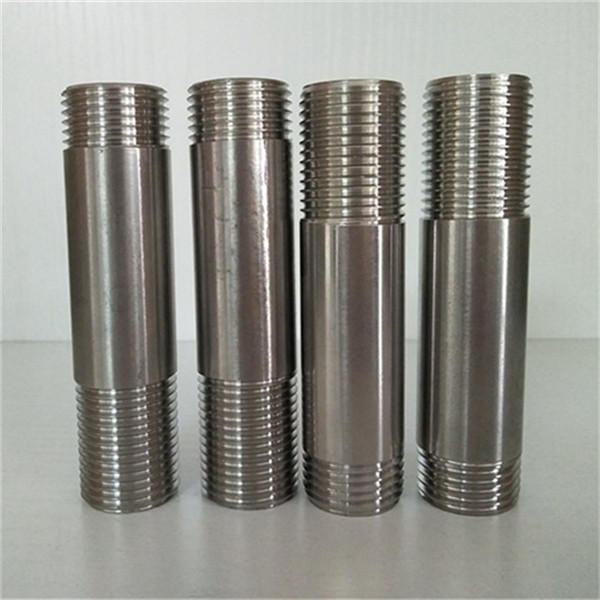
1. Easy to Remove and Install Stainless steel nipples belong to stainless steel fittings, which can be easily installed and removed without using tools. It has the advantages of compact structure, small size, lightweight, high-pressure resistance, and interchangeability. This kind of pipe nipple is light and handy, clean, and widely used in aerospace, metallurgy, mining, forging, coal, petroleum, ships, machine tools, chemical equipment, and various agricultural machinery hydraulic, pneumatic transmission, and lubrication transfer in pipelines systems, realize the safe, efficient and fast conversion without leakage. Stainless steel pipe nipples are ideal for multiple applications, saving time and effort. 2. Nipple Design Working pressure of stainless steel pipe nipple: 1.65Mpa. Temperature: -54 ~ + 180 ℃. Working medium: gasoline, heavy oil, kerosene, hydraulic oil, fuel oil, refrigeration oil, water, brine, acidic and alkaline liquids, high-pressure gas, etc. Sealing materials of threaded nipples include nitrile rubber, fluorine rubber, and silicone. Despite their small size and lightweight, stainless steel pipe nipples are strong enough to withstand high-pressure environments (up to 1.65 Mpa). Their compact structure makes them easy to handle and install. The thread pipe nipple’s tight construction uses more space and provides strength for application needs, making it easy to install in a limited-space system. 3. Wide Range of Applications These nipples in many industries, such as: (1) Aerospace (2) Metallurgy (3) Mining (4) Petroleum (5) Shipbuilding (6) Machine tools (7) Chemical Equipment (8) Agricultural machinery They are suitable for hydraulic, pneumatic, and lubrication fluid systems, helping ensure a smooth flow and quick conversion without leakage. 4. Leak-Free and Efficient One key benefit of stainless steel pipe nipples is that they allow quick, safe, and efficient pipeline conversions without leakage. Thread pipe nipples are especially useful for applications that require fast, reliable connections without any risk of leakage. The threaded design of stainless steel pipe fittings ensures a safe, tight connection and prevents leaks in the use process. The male thread can form a solid connection when stainless steel plumbing fittings connect with other thread pipes. Notes: (1) Do not use fluids other than applicable fluids; (2) Do not exceed the maximum use pressure when using; (3) Do not use it outside the operating temperature range to prevent wear or leakage of the sealing material; (4) Do not strike, bend, or stretch artificially to prevent damage; (5) Do not use it in places mixed with metal powder or sand and dust to prevent poor work or leakage; (6) Attaching debris can cause poor work or leakage. Stainless steel pipe nipples are more convenient and faster to use than ordinary nipples. This improves their flexibility, practicality, and safety and makes them easy to maintain and use. The quick connector allows for one-hand disassembly and connection, and the button operation is very convenient. Ordinary nipples are difficult to dismantle and connect with one hand, and even some require tools.
What Is A Close Nipple?
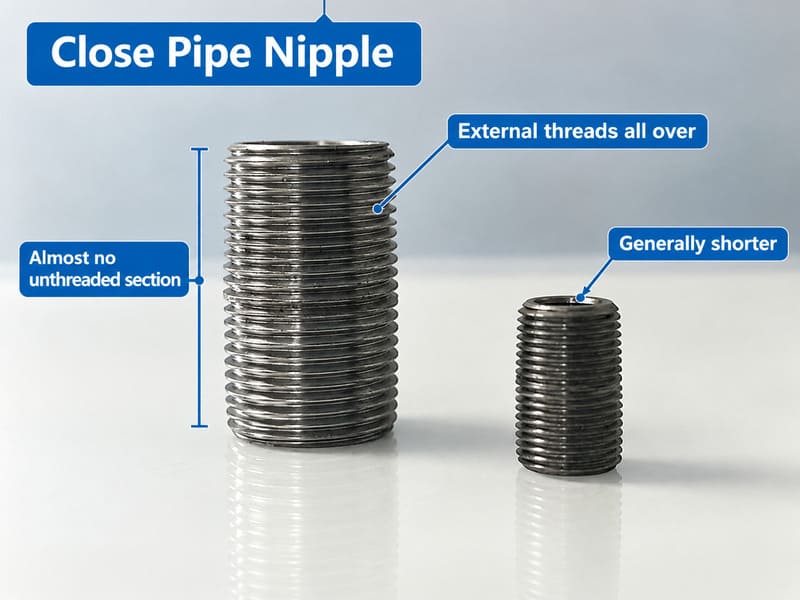
Understanding Close Nipples in Plumbing and Piping 1. What is a Close Nipple? In its most basic form, a pipe nipple is a short length of pipe with male pipe threads at both ends for connecting other fittings. Generally, there is a short distance of unthreaded pipe between the two threaded ends, depending on how far apart you need the attached fittings to be. When there is no unthreaded pipe between the two connecting ends, the pipe nipple is called a close nipple or a running nipple. In that case, connected fittings come close to touching one another, with very little nipple visibility. In plumbing and piping, a nipple is a fitting consisting of a short piece of thread pipe, usually provided with a male pipe threaded at each end for connecting two other pipes or fittings. The length of the nipple depends on how long the threads are. A close nipple has virtually no unthreaded area when screwed tightly between two female fittings; very little of the nipple remains exposed. In this case, the connected fittings are very close to touching each other, and you can barely see the nipples. When ordering a close nipple, indicate the diameter followed by close, for example, 1/2 x close. 2. Purpose and Functionality of Close Nipples Given the name, you may have figured out the purpose of a Close Nipple. The use of a close nipple allows you to create a closed, tight connection between two female-threaded steel pipes or fittings. However, there is a downside to closed nipples. The only way to tighten or loosen a closed nipple is to grip the threaded portion with a wrench. Because of this, it becomes easy for the applicator to damage the threading, requiring replacement of the nipple. Damaged threading can cause issues with your connection if not addressed. These issues may involve leaks of air, water, or other fluids based on the nipple application. There are special tools available to assist in their use. Narrow and small space is the best bit for using a short nipple like a closed nipple to save space because the unthreaded part is too short or hardly any, which design makes the nipple almost can screw to the end of the thread to reduce the space, let need link both sides pipes or fittings with minimize the distance. 3. Usage Challenges of Close Nipples Close nipples are difficult to install and remove. The closed plumbing nipple can only be unscrewed by gripping one threaded end with a pipe wrench, which may damage the threads and necessitate replacement. So, a nipple can require a specialty tool such as a nipple wrench (or an internal pipe wrench), which grips the inside of the pipe, leaving the threads undamaged. Due to the unique design of the closed nipple pipe, which may cause the risk of leakage, the threaded parts can become damaged during installation and removal. Please avoid overtightening; choose the right tool (nipple or internal pipe wrench); do not disassemble frequently; prevent corrosion and wear; replace parts on time to identify and resolve any problems. 4. Tools for Working with Close Nipples A nipple wrench is a tool for tightening or loosening the running nipple, which provides a stable grip and protects the thread from damage. An internal pipe wrench is a tool with a scalable internal clamping device. It will not contact directly with the external threads when installation or disassembly can avoid damage. Choose the appropriate size of the nipple and internal pipe wrenches based on the internal diameter, and avoid excessive force to prevent damage to the inner pipe wall. Types and Specifications of Close Nipples 5. Material Variations The close nipple pipes have common materials, including carbon steel, specifically galvanized and black carbon steel, and stainless steel close nipple pipes. 6. Standard Specifications of Close Nipples According to the export standards, there are American standard ASTM A733, German standard DIN2982, and British standard BS EN10241 specifications. 7. Manufacturing Processes for Close Nipples According to the process, there are welding pipe nipples and seamless close pipe nipples. Welded close pipe nipples are constructed by joining two pieces of pipe using a welding process, ensuring a strong and durable connection. These nipples often exhibit a thicker wall and enhanced pressure ratings, making them suitable for high-stress applications. On the other hand, seamless pipe nipples are formed from a single piece of material, eliminating weld seams. This manufacturing method provides superior integrity and resistance to corrosion. Both types are vital in various piping systems, allowing for easy connections between fittings, valves, and other components. Welded and seamless often hinges on factors such as the application pressure requirements, material compatibility, and budget considerations. Ultimately, understanding the distinctions between welded and seamless close pipe nipples is essential for ensuring the integrity and efficiency of any piping project. 8. How long is a Close Nipple? A close nipple is typically as short as possible, with no unthreaded portion between the two threaded ends. Its length is effectively enough to allow for the full threading on each side, bringing the two connected fittings as close as possible. The exact length of a close nipple varies depending on the pipe size (diameter). It is generally very short, often between 1 to 1.5 inches (2.5 to 3.8 cm) for diameters like 1/2 inch or 3/4 close nipple. The length may increase slightly For larger diameters to allow for full threading. However, this increase will be minimal. Plumbing nipples are specified by their diameter rather than their exact length, emphasizing the close connection rather than a precise measurement. Applications and Advantages of Close Nipples The closed pipe nipple is significant because it allows for free adjustment of the pipe position at both ends. It is commonly on fire-fighting spray pipes. Quality Pipe Fittings from Hebei Sanvo – A Close Pipe Nipple Manufacturer Hebei Sanvo is a reputable manufacturer and supplier of pipe fittings in China. As a close pipe nipple manufacturer, we export a wide range
What is a King Nipple?
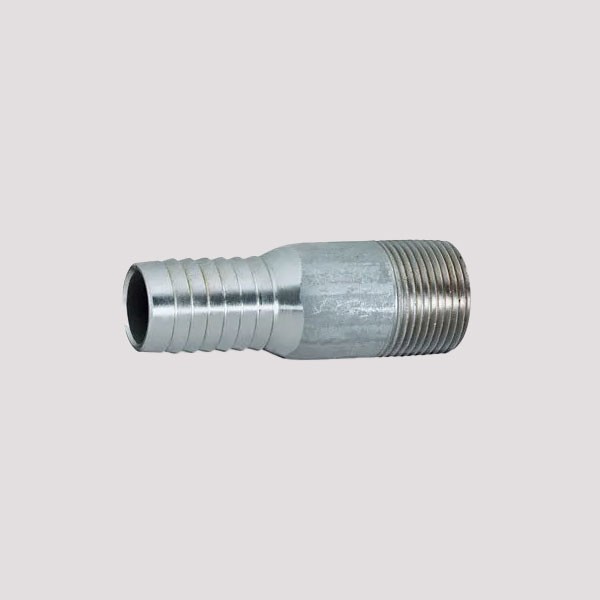
A king nipple is a type of pipe nipple. Its most characteristic feature is that one end has a male thread to connect to the female threaded pipe, and the other male thread is a hose connector, making it convenient for connecting to the hose pipe and fittings. The king nipple pipe does not feature a hex nut between the threaded section and the hose shank; it has a smooth pipe fitting. 1. Where is the King Nipple Pipe needed? The king nipple pipe fitting is widely used in pipelines, valves, and other equipment. However, we do not recommend the king combination nipple for steam systems. Its work pressure varies depending on the construction of the hose tube, system type, and application. If you encounter any problems, leave a message in the background, and we will respond promptly. 2. How to install King Nipple? The threaded part of the nipple connects with the same size female pipe thread or female thread fitting. The hose shank needs the hose pipe to be connected. 3. Sizes King nipple pipe sizes range from 1/4 to 4 inches. However, we can offer customized pipe sizes manufacturing to meet specific customer needs. You must notice that you connect the same-size tube or pipe fittings when using a king nipple. For example, the 1″ king nipple will connect to a 1-inch flexible hose pipe and make the other end thread into a 1″ threaded pipe. 4. What other names does it have? Besides “king nipple,” this common name, the king nipple is also called: KC nipple King fitting Combination nipple. 5. What material Combination Nipple is? 304, 316 stainless steel. 304 stainless steel can be resistant to the majority of corrosion from chemical substances and the environment. Economical than other high materials, 304 stainless steel has a lower cost but outstanding properties and is a higher-cost performance option. It is suitable for the majority of un-extreme applications. 316 stainless steel resistant to more chemical corrosion. In high temperature or pressure conditions, 316 stainless steel still sustains stability. 316 stainless steel conforms to safety standards and is usually used in food processing. Ss pipe fittings have excellent mechanical strength and withstand long-term use without damage; the stainless steel smooth surface makes it not easy to attach dirt and is easy to clean and maintain; stainless steel material can be recycled use, which reduces waste. Whether 304 or 316 stainless steel, the stainless steel pipe fittings can provide excellent performance and durability. 6. Why choose KC nipple and not another? King combination nipple is a simple and highly effective pipe connector, and its design makes the installation so easy: standard threaded in one end that can screw directly into the pipe; another one is a hose connection. KC nipple does not have complex parts and just be tightened when installing, saving time and effort and getting started quickly even with a new hand. The combination nipple has nice sealing and precision machining threaded, making it perfectly fit into the pipeline, preventing valid liquid or gas leaks. Whether a high-pressure stream or corrosive chemical, it ensures safety system operation and prevents damage and danger from leaks. King nipple fittings use 304 or 316 stainless steel, which provides exceptional corrosion resistance and durability. This ensures a long service life. These fittings have stable performance and reduce replacement frequency and cost in long-term use, whether in a wet environment, chemical industry, or high pressure and temperature conditions. Its application is extensive, not just pipeline connections but also petroleum and natural gas. Notably, the stainless steel king nipple is particularly secure for the food industry. Whatever industry, architecture, or construction, it provides highly effective and safe connections. Moreover, the low price of 1″ king nipple. It is durable, which means no replacement frequency or maintenance while maintaining quality, saving time and money. If your project has a special need, we can offer customized services to meet your requirements. 7. More Information The combination nipple, called KC nipple, connected to flexible hose pipes, pipelines, nipples, and other fittings, is used in liquid transportation systems. This nipple of a female thread and a hose shank makes the stainless steel king nipple more solid, anti-corrosion and ensures their use life in multiple environments. The threaded part achieves waterproof sealing. The king fitting is commonly used in petroleum, industry, agriculture, and other businesses, providing a reliable connection for various liquid transportation systems. 8. Dimensions Pipe Size 1/2 3/4 1 1 1/4 1 1/2 2 2 1/2 3 4 A 3.125 3.375 3.500 3.500 4.250 4.250 5.375 5.875 7.000 C 0.645 0.845 1.075 1.405 1.640 2.095 2.505 3.100 4.060
What is a NPT pipe nipple?
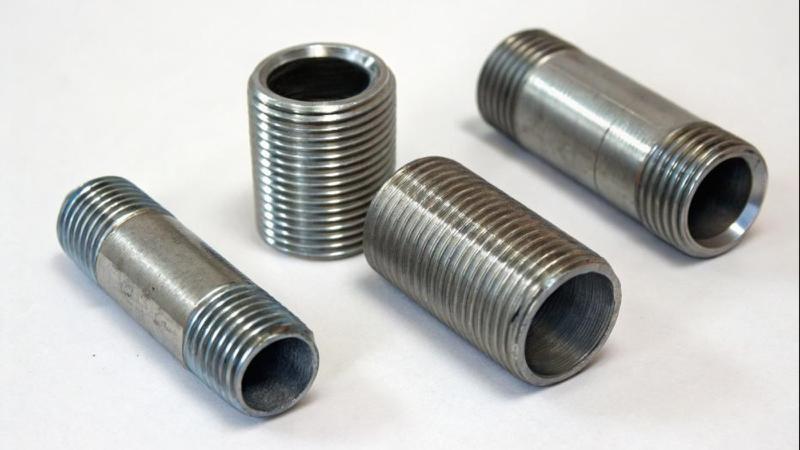
A NPT pipe nipple is a short length of pipe featuring National Pipe Taper (NPT) threads on both ends. It connects two pipes or fittings that have female threads. This is used in plumbing and industrial applications. This standardized threaded connection creates a tight seal through the tapered thread design, making it essential for leak-proof joints in various piping systems. What is a Pipe Nipple? Pipe nipples are among the most versatile pipe-to-pipe connectors in piping systems. These short pipe sections have threads on both ends, allowing them to connect larger pipes or fittings. Unlike regular pipes, nipples are designed specifically for making connections, not for transporting fluids over long distances. They come in various materials like stainless steel, carbon steel, or brass, and can have different thread types. The “nipple” name comes from their short, stubby appearance, typically ranging from close (very short) to several inches long. The terminology comes from the component’s physical resemblance to a nipple’s shape – short and protruding. This industrial naming convention dates back to early plumbing systems, where these short connectors were the “nipples” that joined larger “breasts” (main pipes) in the system. While the analogy might seem unusual today, the name stuck and became standard industry terminology worldwide. Understanding NPT Thread Standard The National Pipe Taper (NPT) standard is the most common type of thread used in North America to create tight seals that can hold pressure. The tapered design (1°47′) creates a wedging action that seals better under pressure than straight threads. This makes NPT nipple fittings ideal for water, gas, and chemical applications. Common NPT Pipe Nipple Sizes Popular sizes include: 1/2″ NPT nipple (most common for residential plumbing) 3/4″ NPT nipple 1″ NPT nipple 1 1/2″ NPT nipple (common in industrial applications) 2″ NPT nipple How Long is a Close Pipe Nipple? Close pipe nipples are the shortest standard length available, with virtually no unthreaded portion between the threaded ends. Their total length equals just the combined length of the two threaded sections. These ultra-compact connectors are ideal for tight spaces where every inch counts, though they require special tools (like nipple wrenches) for proper installation due to the lack of gripping surface. How Are Pipe Nipples Length Measured? Understanding pipe nipple measurements is crucial for proper system design: Overall Length (OAL): Measured from end to end, including threadsThread Engagement Length: Typically 3-5 threads, depending on sizeNominal Size: Refers to the pipe’s inner diameter (e.g., 1/2″ NPT) Pro tip: Always specify whether you need “thread to thread” or “face to face” measurements when ordering, as this affects how the nipple will fit in your assembly. 6 Main Types of Pipe Nipples Close Nipple: Threads touch in the center (shortest possible) Hex Nipple: Features a hexagonal center for wrench grip Toe Nipple: One end has longer threads for special applications Barrel Nipple: Unthreaded center section Reducer Nipple: Connects different pipe sizes Hose Nipple: Designed for hose connections Material Variations Stainless steel (304/316) Carbon steel (black/galvanized) Brass/bronze Plastic (PVC/CPVC) What is a TOE Pipe Nipple? A TOE (Threaded One End) pipe nipple has threads on only one end, with the other end left plain for welding or other connections. TOE nipples bridge the gap between threaded and non-threaded systems, often used in retrofit applications or where mixed connection types are required. All About NPT and BSPT Pipe Threads NPT (National Pipe Taper) Threads American standard (ANSI/ASME B1.20.1)60° thread angle with 1°47′ taperSeals through thread interferenceRequires thread sealant (Teflon tape/paste) BSPT (British Standard Pipe Taper) International standard (ISO 7-1)55° thread angle with 1°47′ taperCommon in Europe/AsiaCompatible with BSPP parallel threads Both create pressure-tight joints but are not interchangeable due to differing thread angles and pitches. BSP Vs. NPT: Which is Better? The “better” thread depends entirely on your application: Feature NPT BSP Region Americas Europe/Asia Sealing Thread deformation Washer often used Pressure High pressure Moderate pressure Availability Wide in the US Global standard Why Choose Our NPT Pipe Nipples? As a leading exporter of pipe fittings, we offer: Full size range: From 1/8″ to 4″ NPT nipplesMaterial options: 304/316 stainless, carbon steel, brassCustom lengths: Cut-to-order services availableCompetitive pricing: Factory-direct savingsGlobal shipping: Reliable logistics network Whether you need standard 1/2″ NPT nipples or specialty 1 1/2″ NPT nipple fittings, we’ve covered your piping connection needs. Contact our team today for quotes or technical support on your application requirements.
What Is A Pipe Coupling?
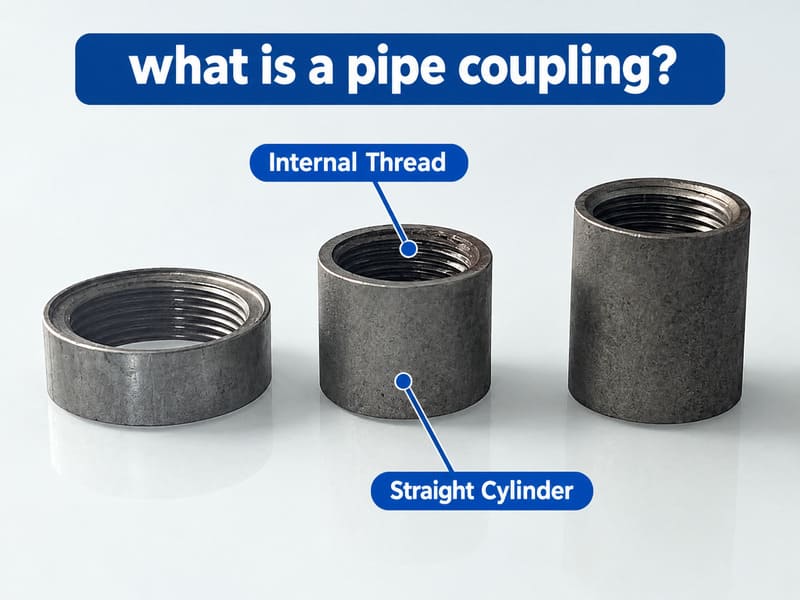
As a pipes and fittings manufacturer, we have a responsibility to help wholesalers solve problems before ordering. A coupler is a short, cylindrical pipe fitting with female threads or smooth ends designed to join two pipes of the same or different diameters. Most metal couplers, such as stainless steel or galvanized steel couplers, feature a straight, thick-walled body, while PVC couplers have a lightweight, smooth, uniform surface. Depending on the type, some couplers may include hexagonal edges for easy tightening with a wrench or compression rings for quick installation. A coupler is a type of fitting used to connect two pipes or tubes in plumbing, industrial, or construction systems. Pipe couplings (or couplers/coupler) are short lengths of pipe or tube designed to connect two tubes of equal or different sizes. It features either a socket or female threads at one or both ends. The coupling pipe is a pipe fitting that facilitates the extension or termination of pipe runs, allows for a change in pipe sizes, and can be used to repair broken or leaking pipes. Over time, most pipe installations require several pipe lengths to join or cut to navigate changes in direction and cross obstacles. Pipeline couplings are a simple and effective solution for connecting these sections while preserving the integrity and continuity of the pipes. 1. Material The coupling materials include carbon steel, stainless steel, and more. In general, the materials match or resemble the composition of the pipes they connect. The material of a pipe coupling is crucial for its performance and longevity. Here is a deeper look at the materials and their applications: Stainless steel Stainless steel couplings have 304 or 316 stainless steel, 316 offering higher resistance to chlorides and acids. They have high anti-corrosion properties even in harsh environments. High durability and high-temperature resistance make it suitable for harsh environments like chemical plants or marine applications. Stainless steel is ideal for the food, drink, and medicine industries due to its hygiene and easy cleaning. Galvanized Steel The galvanized coating on the surface of the coupling can enhance the corrosion resistance and extend the service life. The galvanized pipe coupling is suitable for outdoor or wet environments. However, regular checks are necessary to prevent loss of the galvanized surface when prolonged use occurs in drinking water pipelines. The galvanized steel coupling fitting can withstand high temperatures and is cheaper than stainless steel fittings or copper pipes. Black Steel A black pipe coupling coats black oxide during manufacturing and has a certain degree of anti-corrosion properties. Lower price, durable. The black pipe coupling’s corrosion resistance is limited and needs extra protection. PVC PVC couplings are crucial pipe fittings. The coupling PVC is resistant to acids and alkalis for moisture applications. The PVC coupling connector is easy to install with PVC cement, and PVC is a cost-effective solution for plumbing connections. More importantly, the PVC coupler is durable, has a lifetime of 10 years, and reduces the trouble of frequent replacement. Hebei SANVO PVC pipe fittings meet international standards and offer high quality, making them the best choice for industrial and home plumbing solutions. Hebei SANVO provides technical support and installation guidance to help you build a highly efficient and safe piping system! 2. Key Characteristics of Pipe Couplings Flexibility They can be rigid or flexible based on the movement they can withstand. They can also be either permanent or removable. Increased or Decreased Diameter Some coupling for pipes allows for changes in internal diameter to join pipes of different sizes. T or Cross-Shaped These can connect more than two pipes. Angled Some are designed to create bends in piping systems. 3. Types of Threaded Pipe Couplings Full Coupling Full coupling connected with two pipes ensures no leakage. Full merchant coupling usually connects to small-bore pipes. It connects pipe to pipe or pipe to a swage nipple with threaded ends. It is an adapter often used when the ends differ (like BSP and NPT). Half Coupling Half coupling connects one coupling to another or a fitting. It is ideal for small-bore branching from vessels or large pipes. Half coupling is shorter than full coupling and also features threaded ends. Reducer Coupling Reducer coupling connects with different diameters. Reducer coupling enables a connection between pipes of different diameters. Reducing coupling, which is a coupling that connects a 3/4″ NPT pipe to a 1/2″ NPT pipe. It is common where small process feeder lines merge with larger supply circuits. 4. Benefits prevent leak Coupling pipes can ensure tight seals and decrease the risk of compromising system integrity. The coupling thread enhances the reliability of the high-pressure system. cost-effective Coupler decreases the complexity of welding, saving time and force costs. Steel coupling simplifies repairs and extends the service life of the piping system. customized We offer a variety of sizes and materials of pipe connector fittings and coupling pipe fittings to meet different needs as manufacturers. Reducer coupling, adaptor, and other pipe fittings can be customized according to your needs. 5. Application of Coupling The application of coupling pipe fittings is vast and varied, reflecting the growing need for modern piping systems. The steel pipe coupling has inherent strength, versatility, robust flow rates, and high chemical tolerance, making it particularly suitable for: Industrial Applications: Used in firefighting systems, heating, and air supply/removal. Marine Use: Essential for freshwater and seawater storage on ships and offshore facilities. Power Generation: Utilized in cooling return tanks, lubrication tanks, and compressed air tubes in power plants. Manufacturing and Structural Engineering: Commonly employed in plant maintenance, water and gas delivery systems, and various engineering projects. Auto Repair: The muffler pipe coupler connects sections of the vehicle’s exhaust system, ensuring airtightness. Pipe couplings have become indispensable in many settings because they offer secure, robust seals and maintain flexibility. 6. Pipes and Fittings Supplier Highlight: Hebei Sanvo is a leading manufacturer and supplier of pipe couplings in China. The company houses its factory and integrates production, sales, and processing to offer high-quality products. Materials: Pipe couplings made of