
DIN 2440 Pipe Nipple Supplier
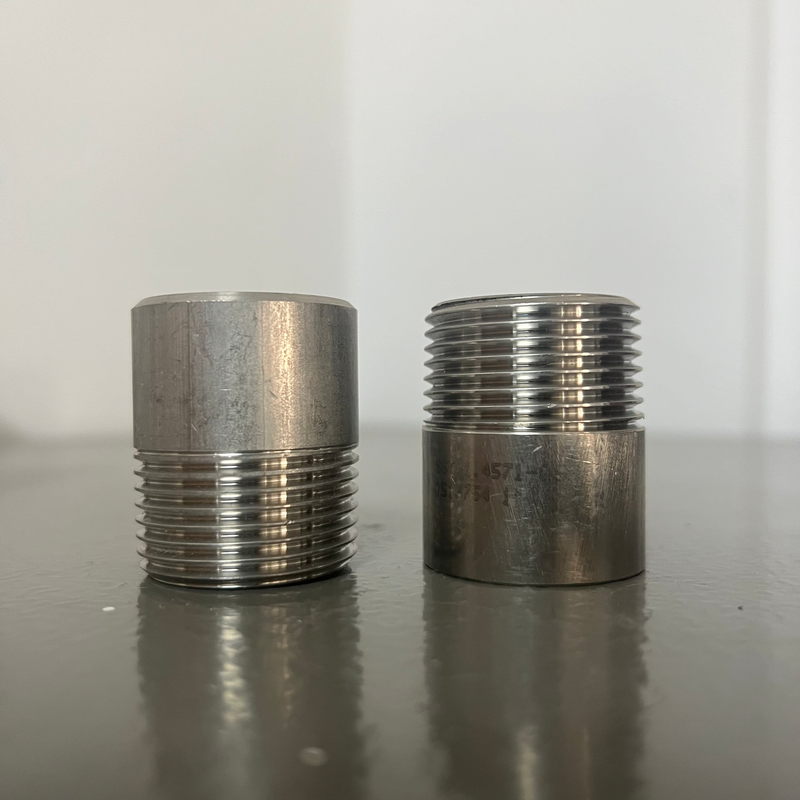
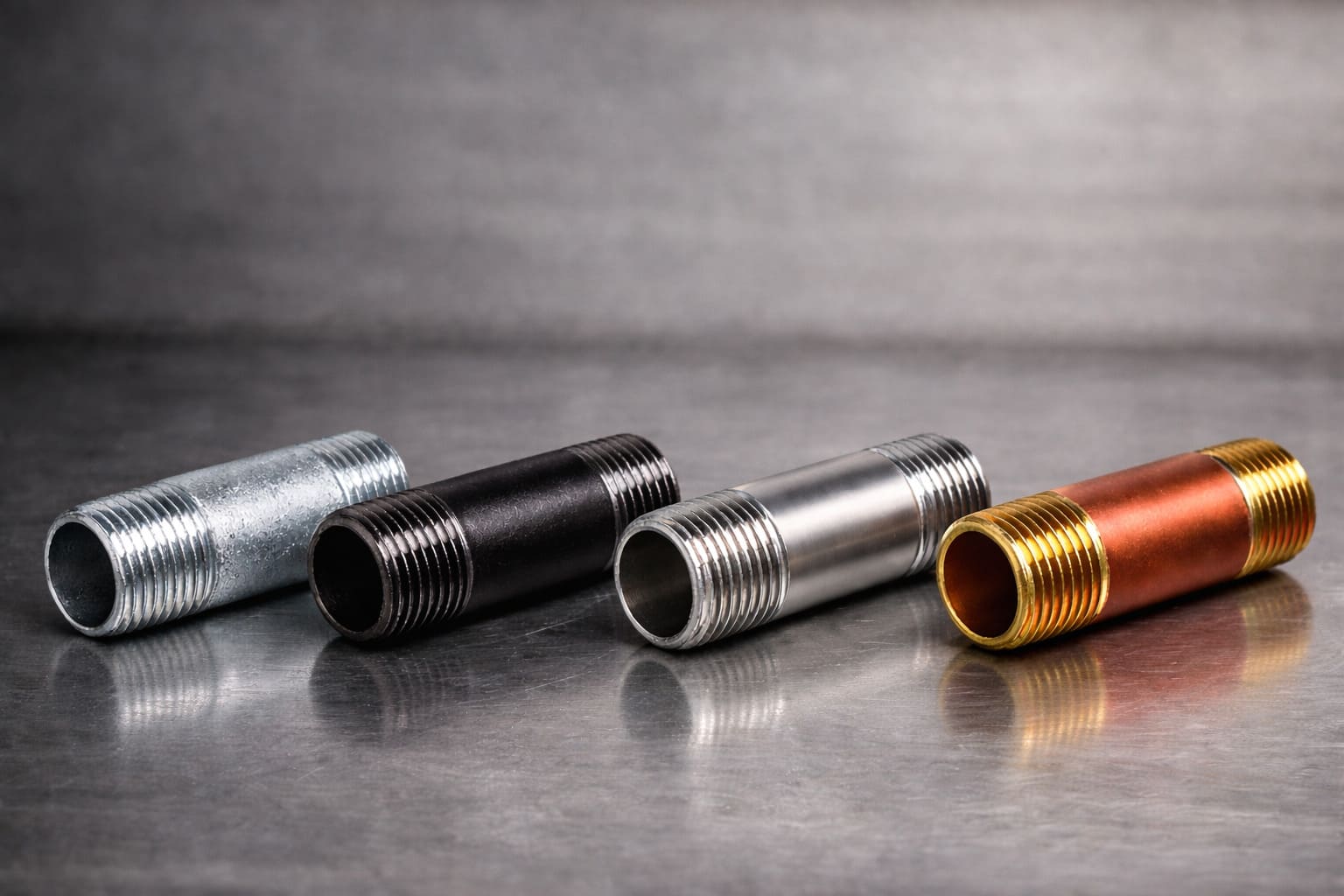
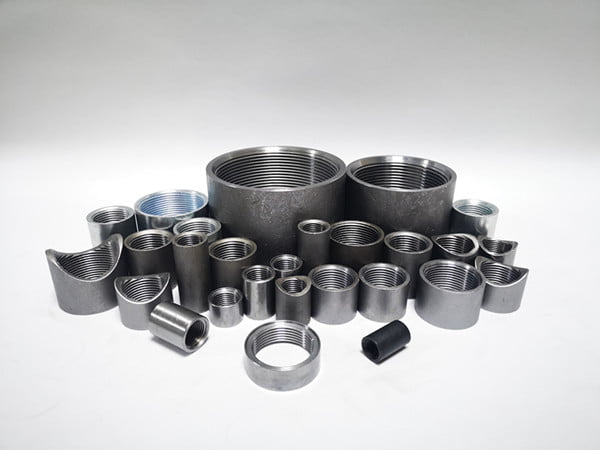
DIN 2440 is a European industrial standard for carbon steel nipples suitable for low-pressure transportation and construction applications. DIN 2440 pipe standard regulates the size, material, technical, and tolerance of seamless or welding pipes, common in gas, water, and other liquid transportation without corrosion. 1. Types Barrel Nipple A barrel nipple is a pipe nipple size from 1/8” to 6”, divided into short, medium, and longer lengths according to customer needs, which is according to your needs to choose. BSP or NPT male thread on both ends connects to other pipes. Seamless Nipple The seamless pipe fitting is manufactured from hot-rolled or cold-drawn seamless pipe to ensure the material structure is uniform with no welded point and higher compressive strength. Seamless nipples have high strength, vibration resistance, and anti-pressure ability, even in extreme environments. Welded Nipple The welding nipple is welded pipe after seam treatment processing to ensure strength and sealing. Welded nipples are suitable for low-pressure and room-temperature applications and are generally less expensive than seamless pipe nipples. 2. Material DIN 2440 pipe usually uses carbon steel, such as St33 carbon steel, which is famous in low-pressure applications due to its strength and durability. Carbon steel nipples have two types in the following: Black pipe nipple Black nipple with DIN 2440 is not a treated surface suitable for a dry or small corrosion environment. Galvanized nipple A galvanized surface enhances corrosion and rust resistance and is suitable for moisture and corrosion environments. 3. Thread Standard Pipe nipple according to din 2440 standard use iso 7/1 or bs 21 thread standard. ISO 7-1 ISO 7-1 is a pipe nipple thread standard by the International Organization for Standardization, widely used in gas and liquid pipeline connections. It belongs to Pipe Threads for Pressure-Tight Joints. Taper pipe thread: marked as RC thread (female thread) and R thread (male thread). Pipe with parallel thread: marked as RP (female thread) and G threads. RC and R threads achieve sealing depending on themselves, but R and RP threads require additional sealing material. Thread size expressed in imperial units, such as 1/8″, 1/4″, 1/2″, 1″ etc. The thread angle is 55 degrees wyeth threaded angle. BS 21 BS 21 standard is a British standard mainly used for piping systems sealing connections. BS 21 standard includes a taper thread and a parallel thread. The male thread usually is a taper thread, and the female thread can be a taper or parallel thread. Taper thread sealing is usually achieved by itself or with a seal. When matching taper thread with parallel thread, the sealant should ensure the sealing effect. Thread Angle also 55° Wyeth thread Angle. Thread size is compatible with the ISO 7/1 size system, allowing interchangeability. 4. Sizes DN Inch O.D. (mm) Wall thickness (mm) 6 1/8 10.2 2 8 1/4 13.5 2.35 10 3/8 17.2 2.35 15 1/2 21.3 2.65 20 3/4 26.9 2.65 25 1 33.7 3.25 32 11/4 42.4 3.25 40 11/2 48.3 3.25 50 2 60.3 3.65 65 21/2 76.1 3.65 80 3 88.9 4.05 100 4 114.3 4.5 125 5 139.7 4.85 150 6 165.1 4.85 5. Key Features Multifunction DIN 2440 pipe nipple is for low-pressure systems. Use for plumbing, HVAC, and structural frames. Size consistency DIN 2440 standard ensures precise outside diameters, thicknesses, and lengths for seamless integration into existing systems. Pressure grade Suitable for low-pressure applications, the property will change according to the thickness and material treatment. Anti-corrosion The galvanized nipple provides enhanced protection in corrosion or wet environments to extend service life. 6. Advantage Standardization, compatible with DIN standard pipes Durable carbon steel is reliable in various low-pressure applications. Galvanized nipples extend use life in severe environments. Easy to install and remove.
Steel Pipe Standards & Wall Thickness: DIN 2440 vs BS 1387
When sourcing industrial pipes, choosing the correct standard is not just a technical detail—it directly impacts project safety, compatibility, and long-term performance. As a direct manufacturer of steel pipes and fittings in China, we frequently help global buyers compare BS 1387 and DIN 2440 to ensure the right selection. In this guide, we break down the key differences, wall thickness standards, and practical applications—so you can make a confident purchasing decision. 1. Overview of BS 1387 and DIN 2440 BS 1387 Steel Pipe BS 1387 is a British standard widely used for: Water supply systems Gas pipelines Structural applications It is especially popular in Middle East, Africa, and Commonwealth markets. As a China BS 1387 galvanized steel pipe manufacturer, we produce: Black steel pipes Hot-dip galvanized pipes Threaded & coupled pipes DIN 2440 Steel Pipe DIN 2440 is a German standard known for: Precision engineering Strict dimensional control Compatibility with European systems It is commonly used alongside DIN pipe fittings, ensuring seamless installation in industrial projects. 2. Wall Thickness Comparison Wall thickness is one of the most critical factors when selecting pipes, as it determines pressure resistance and durability. BS 1387 Wall Thickness Classes BS 1387 pipes are classified into three categories: Light (L) – cost-effective, lower pressure applications Medium (M) – general-purpose usage Heavy (H) – high-pressure and demanding environments This flexibility makes BS 1387 ideal for projects requiring cost-performance balance. DIN 2440 Wall Thickness DIN 2440 typically corresponds to medium-weight pipes, offering: More standardized thickness Higher consistency Better integration with DIN systems Compared to BS 1387, DIN 2440 is less flexible but more uniform. 3. Key Differences: DIN 2440 vs BS 1387 Feature BS 1387 DIN 2440 Origin UK Standard German Standard Thickness Options Light / Medium / Heavy Mainly Medium Flexibility High Moderate Application Global, especially developing markets Europe & industrial systems Surface Options Black / Galvanized Usually black or treated 4. Galvanized Steel Pipes: Why BS 1387 Dominates In real-world procurement, galvanized pipes are often the preferred choice due to corrosion resistance. As one of the leading BS 1387 galvanized pipe factories, we provide: Uniform zinc coating Strong anti-corrosion performance Long service life in outdoor environments Many buyers specifically look for: BS 1387 galvanized steel pipe factories China BS 1387 galvanized steel pipe manufacturers Because this standard offers the best balance between price, durability, and global acceptance. 5. How to Choose the Right Standard From our experience working with distributors, contractors, and EPC companies: Choose BS 1387 if you need: Flexible thickness options Cost-effective solutions Wide international compatibility Choose DIN 2440 if you need: Strict European compliance Compatibility with DIN pipe fittings Higher dimensional precision 6. Why Work With Us We are not traders—we are a direct steel pipe manufacturer in China, offering: Full production control from raw material to finished pipes Competitive factory pricing Custom threading, cutting, and surface treatment Fast delivery for bulk orders Whether you are sourcing from BS 1387 galvanized steel pipe factories or need reliable DIN pipe fittings, we can support your project with consistent quality and stable supply. Call to Action Looking for a reliable supplier? Contact us today to get: Latest price list Free samples Technical support for your project
Do You Know The Physical Properties Of Seamless Tubes?
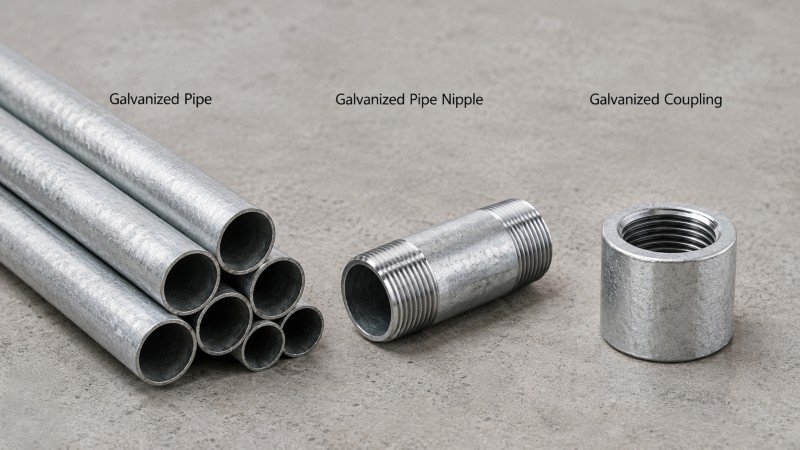
A seamless tube/pipe is a long steel bar with a hollow cross-section and no seams around it. And seamless pipe can be made into pipe nipples and pipe couplings, used as pipe fittings. At present, there are more than 5,100 production plants under 1850 companies producing seamless pipes in the world, among which there are more than 260 plants under 170 companies producing oil pipes. Do you know its physical properties? The physical properties are divided into the following points: 1. Domestic seamless pipes supplied according to the performance of the organization, ordinary carbon steels are manufactured according to GB/T700-88 Class A steel (but ensure that the sulfur content does not exceed 0.050% and the phosphorus content does not exceed 0.045%), and its mechanical properties Should comply with the value specified in the table of GB8162-87. 2. The hydraulic test specified in the guaranteed standard for domestic seamless pipes supplied by the hydraulic test. 3. The physical property inspection of the seamless pipe shall be carried out in accordance with the relevant standards specified in the contract.
Everything You Need to Know About Cast Pipe Fittings
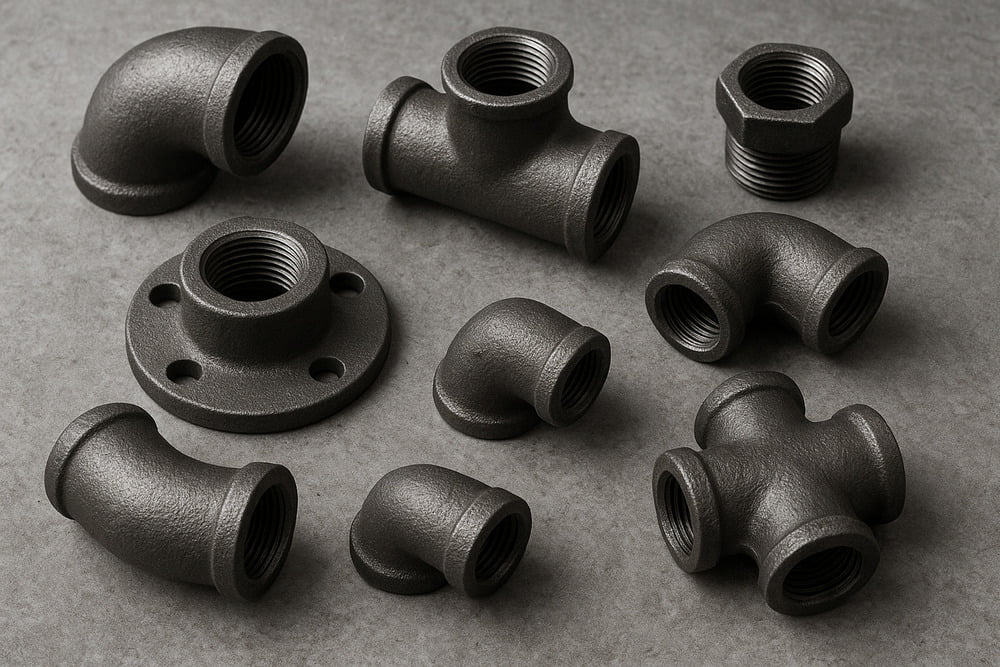
What is Cast Fitting? Cast Pipe Fittings are pipe fittings that are formed by melting metal and pouring it into a mold. It is a type of pipe fitting manufactured by the casting process and is suitable for a variety of fluid transfer systems. Is Stainless Steel good for Casting? Yes, stainless steel fittings can be cast, but whether they are “suitable” according to the use and performance requirements must be determined. Stainless steel has good liquidity and corrosion resistance, and after the metal is melted, it can be precision-cast into a variety of complex shapes of fittings. There are indeed many stainless steel casting fittings in the industry. It is widely used in valves, flanges, tees, elbows, and other products. The Advantages of Casting Stainless Steel Pipe Fittings Flexible molding: Complex structures or large-sized pipe fittings can be manufactured. Smooth surface: Precision casting brings a high-precision appearance. Lower cost: Low and medium-pressure systems are cost-effective. Excellent corrosion resistance: Retains the antioxidant and corrosion resistance properties of stainless steel materials. Limitations and Shortcomings Organization density is lower than forging; there may be pores, shrinkage, and other minor defects. Mechanical properties are slightly worse: not as good as the pressure and impact resistance of forging. Not suitable for high-pressure, high-temperature environments, such as petrochemical pipelines or boiler systems, forged stainless steel pipe fittings are not appropriate. What Temperature can you Cast Stainless Steel? Stainless steel has a melting point of approximately 1370°C to 1450°C; the actual pouring temperature is usually about 50 to 150°C above the melting point because it needs to keep the metal completely molten and fluid during casting. Casting Temperature Control Points Too low a temperature → poor metal fluidity, easy to cold separation, underpouring; Too high a temperature → easy to lead to coarse grains, serious oxidation, increased porosity; The optimum temperature zone is commonly controlled at +80~120℃ after the metal is completely melted, fine-tuned according to the mold material and casting thickness. What is better, Cast or forged? Cast fittings have a lower cost and are more suitable for low- to medium-pressure and general liquid transportation systems. Please select cast fittings for projects that require low cost, low pressure, or complex structures, such as water supply and drainage; food processing, and low-pressure mechanical pipelines. Forged fittings are superior for high-pressure, high-temperature, and critical systems, but are a little expensive than cast fittings. Please use the forged fitting when a project involves high pressure, high temperatures, or critical systems, such as oil and gas pipelines, boilers, and high-pressure chemical systems.
Features of High-Quality Plumbing Fittings
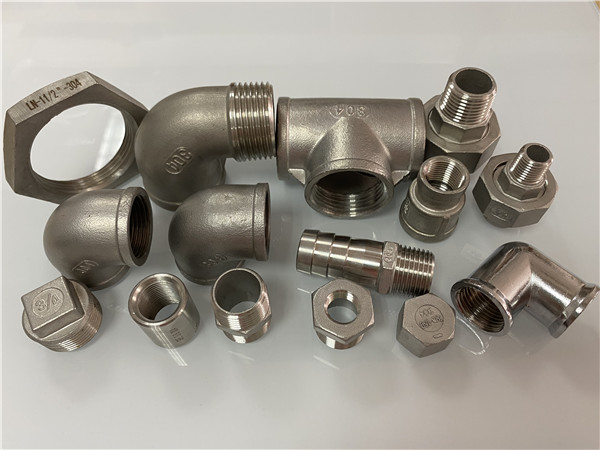
Plumbing pipe fittings have healthy qualities that never corrode, scale, and breed bacteria. The firm new pipe material satisfies the perfect pursuit of never leaking. It is non-toxic and harmless and fully meets the requirements of national drinking water hygiene indicators.The full application of the most advanced hot-melt connection technology in the world makes your construction and installation more convenient, faster, and safer.Good thermal insulation performance, when plumbing pipe fittings are used in hot water systems, no additional thermal insulation materials are needed. And as an energy-saving product. Favored by more consumers.The smooth inner wall of the pipe ensures the smooth and fast passage of water, thereby reducing water flow resistance.The pipes are made of thermoplastic materials with environmental protection functions, so there is no worry about environmental pollution, and in the process of production and use, they can be recycled, and resource waste is minimized, making it the first choice for a new generation of environmental protection and energy-saving products. Specific Features Of High-Quality Plumbing Fittings 1. Plumbing fittings are light in weight, flexible, and simple in constructionThe weight of the pipe is 1/20 of the galvanized steel pipe, which is easy to handle, and the minimum bending radius is 6D (D: pipe outer diameter).2. Good durability, non-toxic, and harmless.Because it is a high molecular weight polymer, the molecular structure is stable, the service life can reach 50-100 years, and it is non-toxic and harmless.3. Anti-ultraviolet and corrosion resistanceAnti-ultraviolet rays and microbial damage will not cause any impact on water quality.4. Good freezing and heat resistanceAt -20℃, it has good low-temperature impact resistance, and the pipe will not freeze and crack. After thawing, the pipe can be restored to its original shape and can withstand high temperatures below 100°C.5. The pipe wall of plumbing fittings is smooth and does not scaleThe inner wall is smooth, which can increase the water flow by 30% compared with the galvanized pipe.6. Advanced connection methodThe connection method is an integrated hot-melt connection, so when it is buried, it can avoid the movement of the pipe and the leakage of the connection due to temperature changes and water hammer.7. Save energyWith good heat preservation, Weixing PB can save energy by 30% when it is used for low-temperature floor radiant heating.8. Easy to repairWhen the plumbing fittings are buried in the dark, they are not bonded to concrete. When there is man-made damage, it can be quickly repaired through the replaced pipeline. Hebei Sanvo stainless steel pipe fittings such as stainless steel elbows, stainless steel tees, pipe unions, pipe caps, pipe plugs, hose nipples, hex nipples, and other ss pipe fittings can meet your features of high-quality plumbing fittings needs. If you are interested in this, you can click here to learn more or contact us directly.
Flow, Pressure and Valve Selection Guide

Relationship between Pressure and Flow Rate “Pressure” of a pipe refers to the internal pressure that the pipe can withstand or actually bears during use. This pressure results from forces exerted on the pipe wall by either flowing or stationary liquid or gas in the pipelines. It can be understood as: the pressure exerted by the internal medium of the pipe pushing against the pipe wall. “Flow” is the amount of fluid through the pipe in unit time. Pressure difference greater, flow greater. It’s like the larger the faucet is turned on, the greater the water flow. Schedule 40/80/160 Pipe Pressure Rating Chart NPS OD (in) Wall Thickness (in) Pressure (psi) Sch 40 Sch 80 Sch 160 Sch 40 Sch 80 Sch160 1/8 0.405 0.068 0.095 9,504 14,149 1/4 0.540 0.088 0.119 9,182 13,109 3/8 0.675 0.091 0.126 7,405 10,752 1/2 0.840 0.109 0.147 0.187 6,358 8,575 11,908 3/4 1.050 0.113 0.154 0.218 5,273 7,187 9,003 1 1.315 0.133 0.179 0.250 4,956 6,670 9,111 1¼ 1.660 0.140 0.191 0.250 4,133 5,638 7,092 1½ 1.900 0.145 0.200 0.281 3,739 5,158 7,357 2 2.375 0.154 0.218 0.344 3,177 4,498 8,027 2½ 2.875 0.203 0.276 0.375 3,667 5,095 7,136 3 3.500 0.216 0.300 3,181 4,509 4 4.500 0.237 0.337 2,694 3,903 6 6.625 0.280 0.432 2,143 3,371 This table lists the pipe pressure rating of various Nominal Pipe Sizes under different pipe schedules (Sch 40, Sch 80, Sch 160). Notes: Pressure is the allowable working pressure, not the burst pressure. Sch 160 is not available for all pipe sizes. Flow Control Valve Types Flow control valves are designed to regulate the rate of fluid flow within a pipeline system. Different valve types offer varying levels of control accuracy, operating mechanisms, and suitability for specific fluid characteristics and system pressures. Below are the most common types of flow control valves used in industrial and commercial piping systems. Globe Valves Globe valves are one of the most widely used flow-control valves. They feature a linear motion design, where the disc moves up and down to create precise throttling. Check Valve These valves use actuators—whether pneumatic, electric, or hydraulic to control the valve opening based on a control signal. Butterfly Valves Butterfly valves use a rotating disc to regulate flow. When partially open, they provide moderate flow control, with advantages as low weight and cost. Diaphragm Valves A flexible diaphragm is pressed against a seat to control flow. Ideal for corrosive or dirty fluids. Needle Valves Needle valves provide precise flow control because of their narrow, tapered plunger. Gate Valve Gate valves are designed for fully open or fully closed operation. Frequent adjustments lead to wear on the sealing surfaces, shortening the service life. Not suitable for precise flow control. Pinch Valve Pinch valves offer variable control by compressing the hose to adjust the flow area from 0% to 100%. Their lined hose construction is effective for regulating slurries, particulate matter, and corrosive media. Summary Valve Type Flow Control Ability Best For Notes Globe Precise General liquids, steam Ideal control valve Check None Backflow prevention Cannot control flow Butterfly Moderate Large pipes, water Rough throttling Diaphragm Moderate Corrosive, slurry Smooth throttling Needle Very fine Low flow, gas Precision control Gate Not suitable On/off service Do not throttle Pinch Good Slurry, particulates Continuously adjustable Globe Valves, Needle Valves, and Pinch Valves can provide precise control for flows. Butterfly valves and diaphragm valves are effective for controlling moderate flow piping systems. When selecting the right valve to control flow, consider accurate needs, the type of fluid it will handle, as well as the pressure, temperature, and operating conditions of the piping system. Can a Ball Valve Control Flow? Yes, the ball valve can control flow, but it is not recommended for precise flow control. Ball valves are designed for on/off isolation, not throttling. Ball Valves Mainly Function Rough flow control Not suitable for precise control Short-term throttling is possible, but long-term throttling will damage the valve. When is a ball valve used for throttling? The flow medium is clean The control requirement is low Valve is used temporarily, not continuously