
What does NPT stand for in pipe fittings?
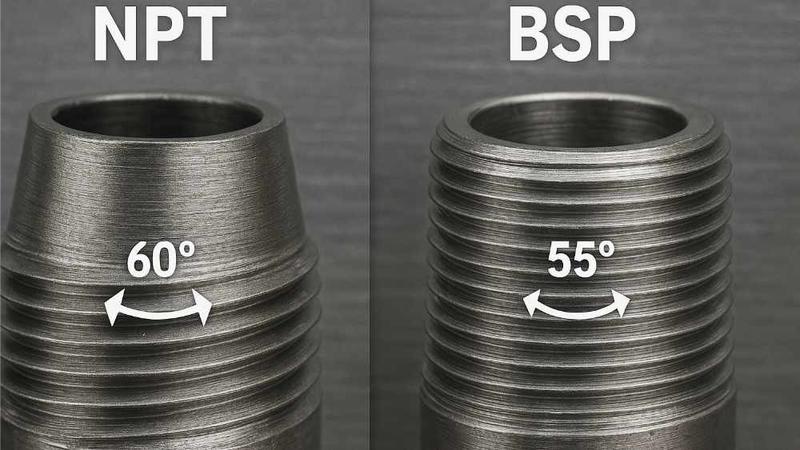
What is NPT Thread? NPT thread (National Pipe Thread) is a U.S. standard tapered thread commonly used in industrial pipe fittings to ensure a tight, leak-resistant seal. With a 60° thread angle and tapered design, NPT fittings are ideal for high-pressure applications in water, gas, and oil systems. They are widely used in stainless steel, galvanized steel, and black steel piping. For international buyers, please note that NPT is not compatible with BSP threads without the use of adapters. Always confirm thread standards when sourcing pipe connectors for U.S.-spec systems. Difference Between BSP and NPT When sourcing pipe fittings for international projects, choosing between BSP (British Standard Pipe) and NPT (National Pipe Thread) is critical. Misalignment in thread standards can lead to leaks, downtime, and increased costs. 1. Thread Type Feature NPT Thread BSP Thread Thread Type Tapered BSPT (tapered) or BSPP (parallel) Seal Method Thread interference + sealant Mechanical seal (BSPP) or interference (BSPT) Use of PTFE tape Required Depends on the BSP type NPT threads seal through the taper and require Teflon tape or thread sealant. BSP threads come in two types: BSPT (tapered) – similar to NPT but with a different angle BSPP (parallel) – requires a washer or O-ring to seal 2. Thread Angle & Pitch NPT Thread Angle: 60 degrees BSP Thread Angle: 55 degrees Thread Pitch: Even if the pitch is similar, the different angle means they are not interchangeable. This makes NPT and BSP fittings incompatible without the use of adapters. 3. Application & Material Compatibility Thread Type Common Materials Typical Applications NPT Stainless steel, galvanized, black steel Plumbing, oil & gas, compressed air BSP Brass, stainless steel, plastic Water systems, HVAC, and irrigation 4. Can NPT and BSP Threads Be Used Together? No. Although they appear similar, the thread angle and sealing method differ, which can result in leakage if forced together. Use thread adapters or match standards across your components. Final Tip for Procurement: When sourcing pipe nipples, couplings, or unions, always double-check: Thread standard (BSP vs NPT) Material compatibility Application pressure rating Using the wrong thread type can cause system failure, waste your business time, and money. Why use NPT Fittings? NPT stands for National Pipe Thread, a U.S. standard for tapered pipe threads designed to create a pressure-tight seal in piping systems. Commonly used in industrial pipe fittings, NPT threads are engineered with a 60° thread angle and a taper that allows for a secure, leak-resistant connection, especially when used with sealants like PTFE tape. Choosing NPT pipe fittings is essential when sourcing systems that operate under high pressure, such as water supply lines, compressed air systems, gas pipelines, or oil transfer setups. NPT fittings are especially popular in the U.S. market and widely available in stainless steel, galvanized steel, and black carbon steel. For international buyers, it’s essential to note that NPT threads are not compatible with BSP threads due to differences in angle and thread form, making it crucial to confirm thread standards during procurement. If you’re sourcing pipe connectors for American or North American systems, NPT is the preferred standard for long-term reliability and compatibility.
What Are Pipe Fittings?
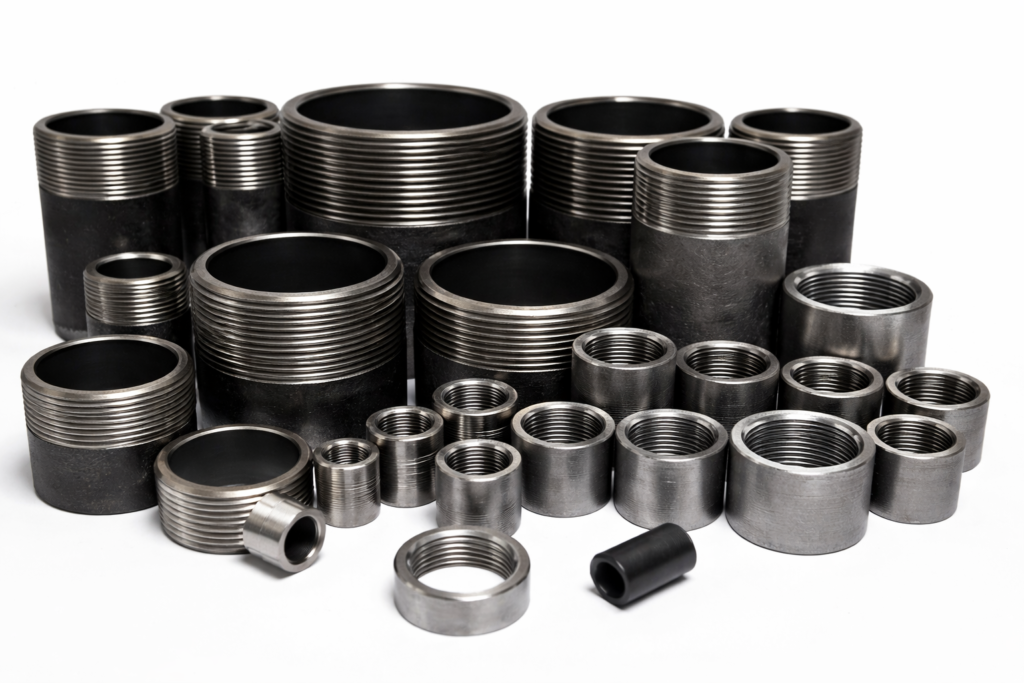
Pipe fittings are the general term for the parts and components that play the role of connection, control, direction change, diversion, sealing, and support in the pipeline system. Pipe Fittings Introduction: Steel pipe fittings are all pressure fittings. According to the different processing technology, it is divided into four categories, namely butt-welded pipe fittings (there are two kinds of welds and no welds), socket welding, and threaded pipe fittings, flange pipe fittings. Pipe Fittings Types: (1) According To Usage: 1. The pipe fittings used to connect the pipes are flange, union, pipe clamp, clamp, clamp, hose clamp, etc.;2. Pipe fittings that change the direction of the pipe: elbows, elbows;3. Pipe fittings that change the pipe diameter: reducer (reducing pipe), reducing elbow, branch pipe stand, reinforced pipe;4. Increase the pipe fittings of the pipe branch: three links and four links;5. Pipe fittings used for pipeline sealing: gaskets, raw material belts, hemp, flange blind plates, pipe plugs, blind plates, heads, welding plugs;6. Pipe fittings for pipeline fixing: snap ring, towing hook, lifting ring, bracket, bracket, pipe clamp, etc. (2) By Connection Points: 1. Welded pipe fittings; 2. Threaded pipe fittings;3. Tube fittings;4. Clamp pipe fittings;5. Socket pipe fittings;6. Adhesive pipe fittings;7. Hot melt pipe fittings;8. Curved elastic double melt pipe fittings;9. Aprons connected pipe fittings (3) Classified By Material: 1. Cast steel pipe fittings;2. Cast iron pipe fittings;3. Stainless steel pipe fittings;4. Plastic pipe fittings;5. PVC pipe fittings;6. Rubber pipe fittings;7. Graphite pipe fittings;8. Forged steel pipe fittings;9. PPR pipe fittings;10. Alloy pipe fittings;11. PE pipe fittings;12. ABS pipe fittings. Related applications: Development Prospects Of Building Materials Industry China is already the world’s largest producer and consumer of building materials. The output of main building materials products such as cement, plate glass, building sanitary ceramics, stone, and wall materials has ranked first in the world for many years. At the same time, the quality of building materials continues to improve, the consumption of energy and raw materials is declining year by year, a variety of new building materials are constantly emerging, building materials are constantly being upgraded, and the Cangzhou pipeline equipment manufacturing industry has a solid foundation. There are more than 3,200 production enterprises, of which 222 are above-scale (sales income of more than 5 million yuan), with 124,000 employees. The main products are various kinds of seamless steel pipes of various calibers such as special steel, stainless steel, carbon steel, low, medium, and high-pressure boiler pipes, oil drilling pipes, and other steel pipes; various elbow fittings such as tees, crosses, valves, reducers, etc.; Various stainless steel flanges, forged flanges; various pipe racks, instruments, oil blowout prevention devices and other pipe fittings; various polyethylene pipes, polypropylene pipes and other plastic pipes, a total of 16 categories, more than 370 varieties, more than 3500 kinds specification. The manufacturing process mainly adopts hot-rolled longitudinal seam welding, spiral double-sided submerged arc welding, forging, forging, intermediate frequency pushing, cold forming, hot extrusion, etc. The maximum processing diameter of the pipeline is 2020 mm. The products are widely used in engineering fields such as municipal administration, petrochemical industry, west-east gas transmission, shipbuilding, and nuclear power, with an annual design and processing capacity of 25 million tons. In 2010, enterprises above the designated size achieved an industrial added value of 13 billion yuan, a year-on-year increase of 31.7%, accounting for 16.1% of all enterprises above the designated size. The Cangzhou pipeline equipment manufacturing industry is moving towards the goals of “three highs” (upscale, high level, and high equipment) and “three highs” (high-end, high pressure, and high value-added), and strive to promote the pipeline equipment manufacturing capacity to reach 30 million tons. Cangzhou will become a well-known “pipeline equipment manufacturing and R&D base” and “pipeline equipment capital” at home and abroad. Infrastructure investment in the “Eleventh Five-Year Plan” has reached the mid-range. The explosive growth of investment in infrastructure construction such as roads and railways and the steady growth of investment in ordinary civil construction have put the construction industry in a booming stage. At the same time, in the context of building an energy-saving society and the country’s strengthening of independent innovation capabilities, the theme of energy conservation and technological innovation will be a hot spot for industry development. China Pipe Fittings Manufacturer Hebei Sanvo Pipes And Fittings Co., Ltd. is located in Cangzhou, Hebei, and a quality China pipe fittings manufacturer, exporting various types of threaded pipe fittings, including threaded galvanized pipe, black threaded pipe, and stainless steel threaded pipe. The specific products include steel pipe nipples, steel pipe couplings with threads, stainless steel threaded pipe fittings. These threaded pipe fittings are widely used in the field of gas, oil and gas, water, fire, HVAC, mines, petroleum, and other fluid transportation. So, if you are interested in our threaded pipe fittings, welcome to contact us by email, and look forward to hearing from you. Email: info@pipenipples.com
What Is Pipe Schedule? Guide to Pipe Wall Thickness
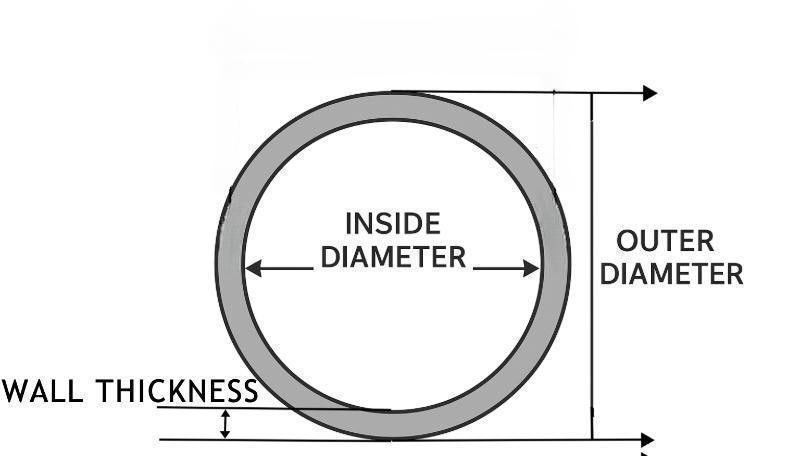
Pipe schedule is a pipe wall thickness grade, a numbering system used to represent a series of steel pipe wall thicknesses, formulated by the ASME/ANSI standard. The pipe schedule does not indicate a material or pressure grade, but a wall thickness series number. Definition of Pipe Schedule Pipe schedule = Wall Thickness Number The higher the pipe schedule number, the thicker its wall. A thicker wall allows the pipe to withstand higher pressure. Pipe schedule commonly includes: SCH 10 (thin wall) SCH 20 SCH 40 (medium wall thickness, most common) SCH 80 (thick wall) SCH 160 (ultra-thick wall) What is Schedule 40? Schedule 40 steel pipe refers to a standard specification for the wall thickness of steel pipes. This specification is defined by ASME/ANSI B36.10M and B36.19M. Schedule 40 is the most commonly and widely used medium wall thickness grade. Does SCH 40 equal the Pressure Grade? No. It can influence the pressure grade, but does not directly express the pressure grade. The true pressure grades must correspond to the material sizes (such as A53, A106, and API 5L), temperatures, wall thickness, and standards. Characteristics of Schedule 40 Steel Pipes Medium wall thickness allows steel pipes to withstand medium pressure. Sch 40 steel pipe is widely used in water systems, gas, low-pressure steam, and general industrial piping systems. The wall thickness varies with different sizes; SCH 40 is not a fixed measurement but changes depending on the pipe diameter. But the same schedule in the different nominal pipe sizes, the pipe wall is different, such as the schedule 40 pipe thickness: Pipe Schedule NPS Wall Thickness SCH 40 1″ 3.38 mm 2″ 3.91 mm 4″ 6.02 mm Compare Pipe Schedule 20 vs 40 vs 80 vs 160 “Pipe Schedule” indicates the grade of pipe wall thickness. The larger the number, the thicker the wall thickness and the stronger the pressure resistance. Wall thickness comparison SCH 20 < SCH 40 < SCH 80 < SCH 160 Wall Thickness Differences Take NPS 2″ (2 inches) as an example: NPS Schedule Wall Thickness (mm) Wall Thickness Grade 2″ SCH 20 2.11 mm Thin Wall SCH 40 3.91 mm Medium SCH 80 5.54 mm Thick Wall SCH 160 9.53 mm Extra Thick Trend of pressure resistance capacity Under the same material and size, the pressure resistance capacity increases with the wall thickness SCH 160 > SCH 80 > SCH 40 > SCH 20 SCH 40 has a medium wall thickness compared to SCH 10, SCH 80, and SCH 160. NPS DN Outside Diameter (in) / (mm) (ASME) Nominal Wall Thickness SCH 20 (mm) SCH 40 (mm) SCH 80 (mm) SCH 160 (mm) 1/8″ 6 0.405 in (≈ 10.3 mm) — 1.73 mm 2.41 mm — 1/4″ 8 0.540 in (≈ 13.7 mm) — 2.24 mm 3.02 mm — 3/8″ 10 0.675 in (≈ 17.1 mm) — 2.31 mm 3.20 mm — 1/2″ 15 0.840 in (≈ 21.3 mm) — 2.77 mm 3.73 mm 4.78 mm 3/4″ 20 1.050 in (≈ 26.7 mm) — 3.91 mm 5.56 mm 7.82 mm 1″ 25 1.315 in (≈ 33.4 mm) — 3.38 mm 4.55 mm 6.35 mm 1¼″ 32 1.660 in (≈ 42.2 mm) — 3.56 mm 4.85 mm 6.35 mm 1½″ 40 1.900 in (≈ 48.3 mm) — 3.68 mm 5.08 mm 7.14 mm 2″ 50 2.375 in (≈ 60.3 mm) — 3.91 mm 5.54 mm 8.74 mm 2½″ 65 2.875 in (≈ 73.0 mm) — 5.16 mm 7.01 mm 9.53 mm 3″ 80 3.500 in (≈ 88.9 mm) — 5.49 mm 7.62 mm 11.13 mm 4″ 100 4.500 in (≈ 114.3 mm) — 6.02 mm 8.56 mm 11.11 mm 6″ 150 6.625 in (≈ 168.3mm) 7.11 mm 7.11 mm 10.97 mm 14.27 mm 8″ 200 8.625 in (≈ 219.1 mm) 8.18 mm 8.18 mm 12.70 mm 18.26 mm 10″ 250 10.750 in (≈ 273 mm) 9.27 mm 9.27 mm 12.70 mm 21.44 mm 12″ 300 12.750 in (≈ 324 mm) 10.31 mm 10.31 mm 12.70 mm 25.40 mm Compare Key Features when Choosing Pipes Wall Thickness Pipe wall thickness is the key difference; the essence of the schedule is the grade of the wall thickness. Pressure Rating The primary purpose of different pipe schedules is to accommodate various pressure requirements. The larger pipe schedule allows the pipe to withstand higher pressure with the same pipe material and size. Pipe Weight The pipe schedule is smaller, and the pipe weight is lighter. The weight of the pipe affects transportation and installation costs, as well as the structural load requirements. Cost A thicker pipe contains more material, making it more expensive. Conclusion Pipe schedule is a wall thickness designation system; higher schedule numbers mean thicker walls. When selecting suitable pipes, pay close attention to wall thickness, pressure rating, pipe weight, and cost—these are the 4 key features. About Us SANVO is a leading manufacturer and supplier of high-quality pipe fittings, steel pipes, and customized metal components, serving the global market. Our product range includes threaded fittings and welded fittings, such as couplings, elbows, tees, and reducers. We can manufacture according to your exact dimensions, materials, and project requirements. Visit our facilities or contact our team to experience efficient, customer-focused service.
What Is Pipe Thread?
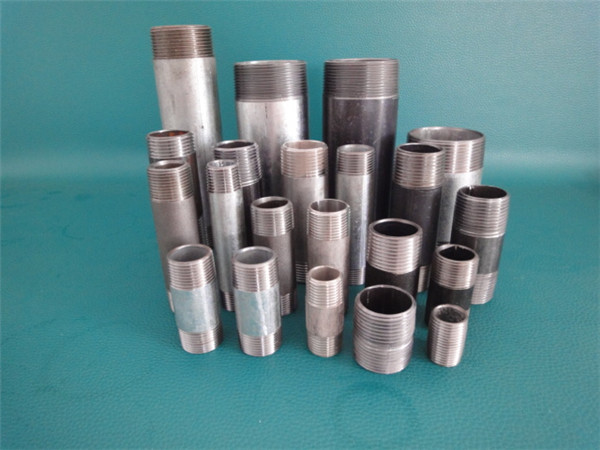
Pipe threads are threads for connection on the wall of the pipe. There are 55-degree unsealed pipe threads and 55-degree sealed pipe threads. It is mainly used to connect pipes to make the internal and external threads fit tightly. There are two different types of pipe threads: a straight pipe and a tapered pipe.Common different types of pipe threads mainly include the following: NPT, PT, G, etc. The Difference Between Threads Standard 1) NPT is the abbreviation of National (American) Pipe Thread. It belongs to the American standard 60-degree tapered pipe thread and is used in North America. Refer to GB/T12716-1991 for the national standard.2) PT (BSPT) is the abbreviation of Pipe Thread. It is a 55-degree sealed conical pipe thread. It belongs to the Wyeth thread family. It is mostly used in Europe and the Commonwealth countries. It is often used in the water and gas pipe industry. The taper is 1:16. T7306-2000. The domestic name is ZG.3) G is a 55-degree unsealed pipe thread, belonging to the Wyeth thread family. Mark G for cylindrical thread. Refer to GB/T7307-2001 for the national standard. In addition, the 1/4, 1/2, and 1/8 marks in the thread refer to the diameter of the thread size, and the unit is an inch. Insiders usually use points to refer to the thread size, one inch equals 8 points, 1/4 inch equals 2 points, and so on. G is the general name of pipe thread (Guan). The division of 55 and 60 degrees is functional, commonly known as pipe circle. That is, the thread is processed by a cylindrical surface. ZG is commonly known as pipe cone, that is, the thread is processed by a conical surface. The general water pipe joints are like this. The national standard is marked as Rc metric thread to indicate the pitch, and the American thread is 60 degrees. Metric units are used for metric threads, and imperial units are used for American and British threads. Pipe thread is mainly used to connect pipelines. The internal and external threads are closely matched. There are two types of straight pipes and tapered pipes. The nominal diameter refers to the diameter of the connected pipe, obviously the thread diameter is larger than the nominal diameter. 1/4, 1/2, 1/8 are the nominal diameters of inch threads, in inches. The inch pipe thread comes from the inch Wyeth thread, and the combination of the Wyeth thread pipeline series and the Wyeth thread profile establishes the basic size of the inch pipe thread. According to the 1/16 taper relationship, the radial diameter tolerance of the Wyeth thread is converted into an inch sealed tube Tolerance of the axial number of threads (there is a certain amount of rounding and adjustment). Then refer to the tolerance value of the inch seal pipe thread to propose the tolerance of the inch unsealed pipe thread (the tolerance changes from one-way distribution to one-way distribution, relax the top Diameter tolerance, let go of the bottom diameter tolerance). The time for three kinds of threads to be proposed is: In 1841, the British Wyeth thread was proposed, and in 1905, the new Wyeth thread standard (BS 84) was promulgated.In 1905, the imperial sealed pipe thread standard (BS 21) was promulgated.From 1905 to 1940, Wyeth Thread performed the responsibility of the imperial unsealed pipe. In 1940, the unsealed pipe thread series (BSP series) of the Wyeth thread was proposed; in 1956, the British unsealed pipe thread standard (BS 2779) was issued separately. European countries and Commonwealth countries first accepted the imperial pipe thread standard. The ISO/TC5/SC5 Pipe Thread Standardization Technical Committee and its secretariat are controlled by European countries, and the imperial pipe thread standard was adopted by the ISO standard. In 1955, the ISO proposed the inch seal pipe thread Standard (ISO R 7); In 1961, ISO proposed the standard for imperial unsealed pipe threads (ISO R 228). In 1978, ISO promulgated two official standards for imperial pipe threads (ISO7-1 and ISO228-1). Threads have been generally accepted by countries outside North America and are widely used in international trade. Metric Thread And Inch Thread Metric threads are expressed by pitch, US and British threads are expressed by the number of threads per inch;The metric thread is a 60-degree equilateral tooth shape, the inch thread is an isosceles 55-degree tooth shape, and the American thread is an isosceles 60-degree tooth shape;Metric units (such as mm) are used for metric threads, and imperial units (such as inches) are used for US and British threads;“Insiders” usually use “minutes” to refer to the thread size, one inch is equal to 8 minutes, 1/4 inch is 2 minutes, and so on.There are also: ISO-metric thread standard 60 degrees; UN-unified thread standard 60 degrees; API-American petroleum pipe thread standard 60 degrees; W-British Whitworth thread standard 55 degrees. Pipe Fittings With Pipe Threads Hebei Sanvo Pipes And Fittings Co., Ltd. is a quality threaded pipe fittings manufacturer and supplier in China, exporting standard NPT, BSPTsteel pipe nipple, steel pipe coupling, and 304/316 stainless steel threaded pipe fittings. Our pipe products are available in carbon steel and stainless steel, widely used in the field of gas, oil and gas, water, fire, HVAC, mines, petroleum, and other fluid transportation. And manufactured according to American Standard ASTM A733/A865, German Standard DIN2982/DIN2986, British Standard BS EN10241, and Japanese Standard JISB2302, sold to Israel, Germany, Italy, South Korea, United States, Middle East, Canada, France, and other national markets, well received. We warmly welcome customers from home and abroad to call us to discuss cooperation and development together. Email: info@pipenipples.com
What is PVC Material?
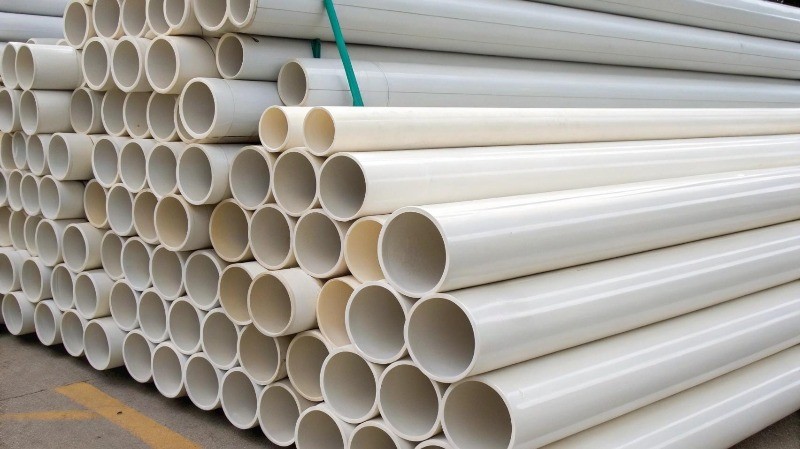
PVC, short for Polyvinyl Chloride, is a type of plastic. That is a synthetic plastic polymer made from the polymerization of VCM (vinyl chloride monomer). It is the third most widely produced synthetic plastic in the world, after polyethylene (PE) and polypropylene (PP). PVC Uses and Properties PVC (Polyvinyl Chloride) is a durable, lightweight, yet strong, and low-expenditure thermoplastic widely used in construction, plumbing, electrical, and industrial applications. It resists corrosion from most acids, alkalis, and salts. PVC has a long service life, and remains undeformed, and is recyclable. It provides excellent chemical resistance, low thermal conductivity, and non-conductive electrical properties in pipes and fittings for cables, medical devices, and consumer products. Its smooth inner surface ensures efficient fluid flow with minimal friction loss, and its low maintenance frequency. PVC Pipe Fitting Types As a pipes and fittings manufacturer, we supply a range of PVC (Polyvinyl Chloride) pipe fittings with strength, corrosion resistance, and long-term stability. Our PVC fittings are available in Schedule 40 and Schedule 80 standards. 1. PVC Coupling PVC couplings are short, straight pipes to join two lengths of PVC pipe. Available in sizes ranging from 1/2 inch to 2 inches, PVC couplings are lightweight, easy to install, and resistant to corrosion, chemicals, and UV degradation. 2. PVC Elbow We offer PVC elbows in 90-degree and 45-degree angles, allowing for changes in pipeline transportation. These elbows make the liquid or gas change direction for successful transport. 3. PVC Adapter PVC Female Adapter Our female adapters feature female threads inside for easy attachment to male-threaded fittings, and the hex nut ensures a secure connection without leaks. PVC Male Adapter The male adapter features one male threaded end and one socket that requires solvent for connection, enabling connections from PVC piping to female-threaded fittings. 4. PVC Union The structure of PVC unions is a fitting that allows for easy connection and removal, facilitating maintenance, system modifications, and ensuring leak resistance. 5. PVC Bushing The PVC bushing is a reducer plumbing fitting that connects different diameters. Our PVC bushings are Available in multiple size combinations (e.g., 3/4″ x 1/2″, 2″ x 1-1/2″), enabling smooth transitions between different pipe sizes. 6. PVC Tee PVC tees are a type of pipe fitting in a pipeline to allow transport in two branch directions. Suitable for high- and low-pressure systems, they are commonly found in irrigation, chemical transport, and waste management piping networks. 7. PVC Valves We provide a variety of PVC valves, including ball valves, check valves, butterfly valves, and gate valves. Lightweight yet strong, they resist corrosion, ensure smooth operation, and require minimal maintenance. Ideal for water supply lines, chemical processing, and agricultural systems. Specifications & Standards Our PVC pipe fittings meet global standards for strength, safety, and durability: Standard Description Schedule 40 Schedule 80 ASTM Pressure-rated PVC fittings ✓ ✓ ISO PVC piping for water ✓ ✓ Color Options White, Gray ✓ ✓ Size Range 1/2″ – 4″ ✓ ✓ We are an experienced manufacturer specializing in the production and export of pipe fittings. We provide our customers with high-quality fittings at competitive wholesale prices. Our products enable the construction of efficient, durable, and cost-effective piping systems for various applications, including construction, agriculture, chemical processing, and water treatment.
What Is The Difference Between Seamless And Welded Pipe?
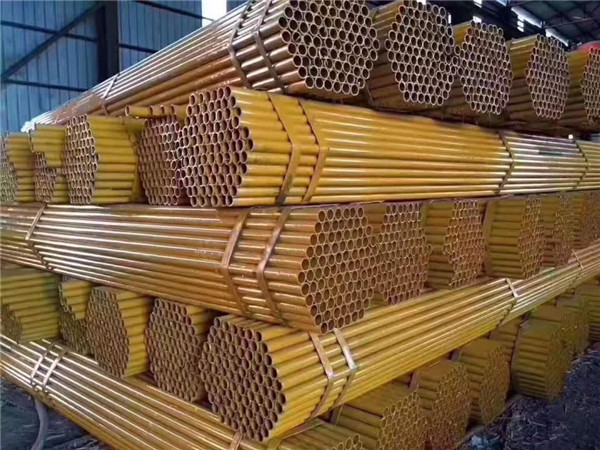
What is the difference between seamless and welded steel pipes? From their definition, we can see that one has no gaps and the other has gaps. And the seamless steel pipe can be seen from the outer surface, there is no gap in the whole body; the welded steel pipe has a welding gap. The price of seamless steel pipes is generally higher than that of welded steel pipes. Seamless steel pipes are generally used in factories; welded steel pipes are generally used in construction. The pressure resistance of seamless steel pipes is higher than that of welded steel pipes. 1. Seamless Steel Pipe Definition Seamless steel pipes are perforated from whole round steel, and steel pipes without welds on the surface are called seamless steel pipes. According to the production method, seamless steel pipes can be divided into hot-rolled seamless steel pipes, cold-rolled seamless steel pipes, cold-drawn seamless steel pipes, extruded seamless steel pipes, and top pipes. According to the cross-sectional shape, seamless steel pipes are divided into two types: round and special-shaped. Special-shaped pipes have square, elliptical, triangular, hexagonal, melon-shaped, star-shaped, and finned pipes. The maximum diameter is 900mm and the minimum diameter is 4mm. According to different uses, there are thick-walled seamless steel pipes and thin-walled seamless steel pipes. Seamless steel pipes are mainly used as petroleum geological drilling pipes, cracking pipes for the petrochemical industry, boiler pipes, bearing pipes, and high-precision structural steel pipes for automobiles, tractors, and aviation. Seamless Steel Pipe Use/Application (1) General-purpose seamless steel pipes are rolled from ordinary carbon structural steel, low-alloy structural steel, or alloy structural steel, with the largest output, and are mainly used as pipelines or structural parts for conveying fluids. (2) There are three types of supply according to different purposes: a. Supply according to chemical composition and mechanical properties; b. According to mechanical performance; c. According to the water pressure test supply. Note: Steel pipes supplied according to categories a and b, if used to withstand liquid pressure, must also undergo a hydraulic test. (3) Special-purpose seamless pipes include seamless pipes for boilers, chemical and electric power, seamless steel pipes for geology, and seamless pipes for petroleum. Seamless steel pipes have a hollow section and are used in large quantities as pipelines for conveying fluids, such as pipelines for conveying oil, natural gas, gas, water, and certain solid materials. Compared with solid steel such as round steel, steel pipe has a lighter weight when the bending and torsion strength is the same, and it is economical section steel. Widely used in the manufacture of structural parts and mechanical parts, such as oil drill pipes, automobile transmission shafts, bicycle frames, and steel scaffolds used in construction. Steel pipes are used to make ring parts, which can improve material utilization, simplify manufacturing procedures, and save materials and processing. Working hours, steel pipes have been widely used for manufacturing. 2. Welded Steel Pipe Definition Welded steel pipes refer to steel pipes with seams on the surface that are welded after bending and deforming steel strips or steel plates into round or square shapes. The blanks used for welded steel pipes are steel plates or strip steels. Since the 1930s, with the rapid development of high-quality strip, continuous rolling production, and the advancement of welding and inspection technology, the quality of welds has been continuously improved, and the variety and specifications of welded steel pipes have increased and replaced seamless steel pipes in more and more fields. Welded steel pipes have lower costs and higher production efficiency than seamless steel pipes. Classification Method Of Welded Steel Pipe (1) According to different welding methods, it can be divided into arc welded pipe, high frequency or low-frequency resistance welded pipe, gas welded pipe, furnace welded pipe, Bondi pipe, etc. Electric welded steel pipe: used in oil drilling and machinery manufacturing. Furnace welded pipes: can be used as water gas pipes, etc., large-diameter longitudinally welded pipes are used for high-pressure oil and gas transportation, etc.; spiral welded pipes are used for oil and gas transportation, pipe piles, bridge piers, etc. (2) According to the weld shape, it can be divided into straight seam welded pipe and spiral welded pipe. Longitudinal welded pipe: The production process is simple, the production efficiency is high, the cost is low, and the development is fast. Spiral welded pipe: The strength is generally higher than that of straight seam welded pipes. A narrower blank can be used to produce welded pipes with larger pipe diameters, and a billet with the same width can also be used to produce welded pipes with different pipe diameters. But compared with the straight seam pipe of the same length, the weld length is increased by 30-100%, and the production speed is lower. Therefore, most of the smaller diameter welded pipes adopt straight seam welding, and the large diameter welded pipes mostly adopt spiral welding. (3) According to the purpose, it is divided into general welded pipe, galvanized welded pipe, oxygen-blowing welded pipe, wire casing, metric welded pipe, roller pipe, deep well pump pipe, automobile pipe, transformer pipe, electric welded thin-walled pipe, electric welded special-shaped pipe, and spiral welded pipe. (4) According to the shape of the end, it is divided into round welded pipe and special-shaped (square, flat, etc.) welded pipe. (5) Other Categories GB/T3091-1993 (Galvanized welded steel pipe for low-pressure fluid transportation). Mainly used to transport water, gas, air, oil, heating hot water or steam, and other generally lower pressure fluids and other purposes. Its representative material is Q235A grade steel. GB/T3092-1993 (Galvanized welded steel pipe for low-pressure fluid transportation). Mainly used for conveying water, gas, air, oil, heating hot water or steam, and other generally lower pressure fluids and other purposes. Its representative material is Q235A grade steel. GB/T14291-1992 (Welded steel pipe for mining fluid transportation). Mainly used for straight seam welded steel pipes for mine pressure, drainage, and shaft gas discharge. Its representative material is Q235A, Grade B steel. GB/T14980-1994 (Large diameter electric welded steel pipe for low-pressure fluid transportation). It is mainly used to