
What Is A Close Nipple?
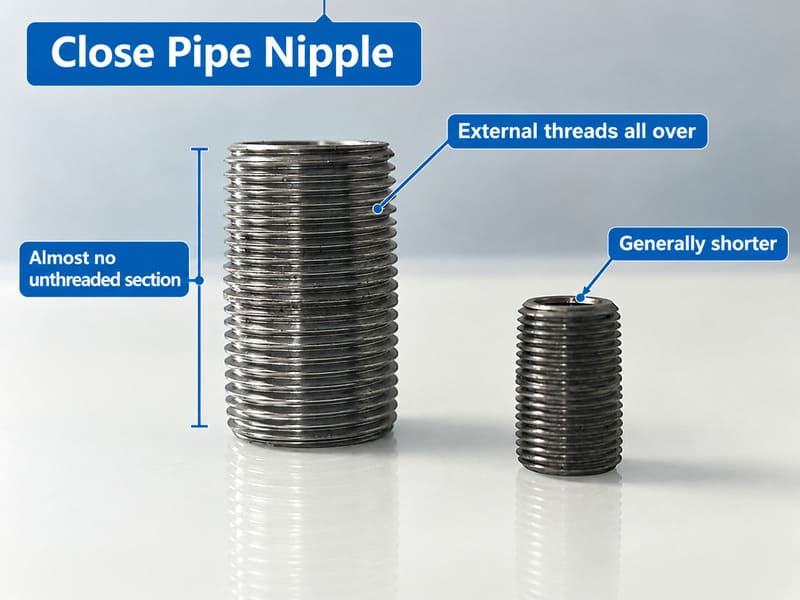
Understanding Close Nipples in Plumbing and Piping 1. What is a Close Nipple? In its most basic form, a pipe nipple is a short length of pipe with male pipe threads at both ends for connecting other fittings. Generally, there is a short distance of unthreaded pipe between the two threaded ends, depending on how far apart you need the attached fittings to be. When there is no unthreaded pipe between the two connecting ends, the pipe nipple is called a close nipple or a running nipple. In that case, connected fittings come close to touching one another, with very little nipple visibility. In plumbing and piping, a nipple is a fitting consisting of a short piece of thread pipe, usually provided with a male pipe threaded at each end for connecting two other pipes or fittings. The length of the nipple depends on how long the threads are. A close nipple has virtually no unthreaded area when screwed tightly between two female fittings; very little of the nipple remains exposed. In this case, the connected fittings are very close to touching each other, and you can barely see the nipples. When ordering a close nipple, indicate the diameter followed by close, for example, 1/2 x close. 2. Purpose and Functionality of Close Nipples Given the name, you may have figured out the purpose of a Close Nipple. The use of a close nipple allows you to create a closed, tight connection between two female-threaded steel pipes or fittings. However, there is a downside to closed nipples. The only way to tighten or loosen a closed nipple is to grip the threaded portion with a wrench. Because of this, it becomes easy for the applicator to damage the threading, requiring replacement of the nipple. Damaged threading can cause issues with your connection if not addressed. These issues may involve leaks of air, water, or other fluids based on the nipple application. There are special tools available to assist in their use. Narrow and small space is the best bit for using a short nipple like a closed nipple to save space because the unthreaded part is too short or hardly any, which design makes the nipple almost can screw to the end of the thread to reduce the space, let need link both sides pipes or fittings with minimize the distance. 3. Usage Challenges of Close Nipples Close nipples are difficult to install and remove. The closed plumbing nipple can only be unscrewed by gripping one threaded end with a pipe wrench, which may damage the threads and necessitate replacement. So, a nipple can require a specialty tool such as a nipple wrench (or an internal pipe wrench), which grips the inside of the pipe, leaving the threads undamaged. Due to the unique design of the closed nipple pipe, which may cause the risk of leakage, the threaded parts can become damaged during installation and removal. Please avoid overtightening; choose the right tool (nipple or internal pipe wrench); do not disassemble frequently; prevent corrosion and wear; replace parts on time to identify and resolve any problems. 4. Tools for Working with Close Nipples A nipple wrench is a tool for tightening or loosening the running nipple, which provides a stable grip and protects the thread from damage. An internal pipe wrench is a tool with a scalable internal clamping device. It will not contact directly with the external threads when installation or disassembly can avoid damage. Choose the appropriate size of the nipple and internal pipe wrenches based on the internal diameter, and avoid excessive force to prevent damage to the inner pipe wall. Types and Specifications of Close Nipples 5. Material Variations The close nipple pipes have common materials, including carbon steel, specifically galvanized and black carbon steel, and stainless steel close nipple pipes. 6. Standard Specifications of Close Nipples According to the export standards, there are American standard ASTM A733, German standard DIN2982, and British standard BS EN10241 specifications. 7. Manufacturing Processes for Close Nipples According to the process, there are welding pipe nipples and seamless close pipe nipples. Welded close pipe nipples are constructed by joining two pieces of pipe using a welding process, ensuring a strong and durable connection. These nipples often exhibit a thicker wall and enhanced pressure ratings, making them suitable for high-stress applications. On the other hand, seamless pipe nipples are formed from a single piece of material, eliminating weld seams. This manufacturing method provides superior integrity and resistance to corrosion. Both types are vital in various piping systems, allowing for easy connections between fittings, valves, and other components. Welded and seamless often hinges on factors such as the application pressure requirements, material compatibility, and budget considerations. Ultimately, understanding the distinctions between welded and seamless close pipe nipples is essential for ensuring the integrity and efficiency of any piping project. 8. How long is a Close Nipple? A close nipple is typically as short as possible, with no unthreaded portion between the two threaded ends. Its length is effectively enough to allow for the full threading on each side, bringing the two connected fittings as close as possible. The exact length of a close nipple varies depending on the pipe size (diameter). It is generally very short, often between 1 to 1.5 inches (2.5 to 3.8 cm) for diameters like 1/2 inch or 3/4 close nipple. The length may increase slightly For larger diameters to allow for full threading. However, this increase will be minimal. Plumbing nipples are specified by their diameter rather than their exact length, emphasizing the close connection rather than a precise measurement. Applications and Advantages of Close Nipples The closed pipe nipple is significant because it allows for free adjustment of the pipe position at both ends. It is commonly on fire-fighting spray pipes. Quality Pipe Fittings from Hebei Sanvo – A Close Pipe Nipple Manufacturer Hebei Sanvo is a reputable manufacturer and supplier of pipe fittings in China. As a close pipe nipple manufacturer, we export a wide range
What is a King Nipple?
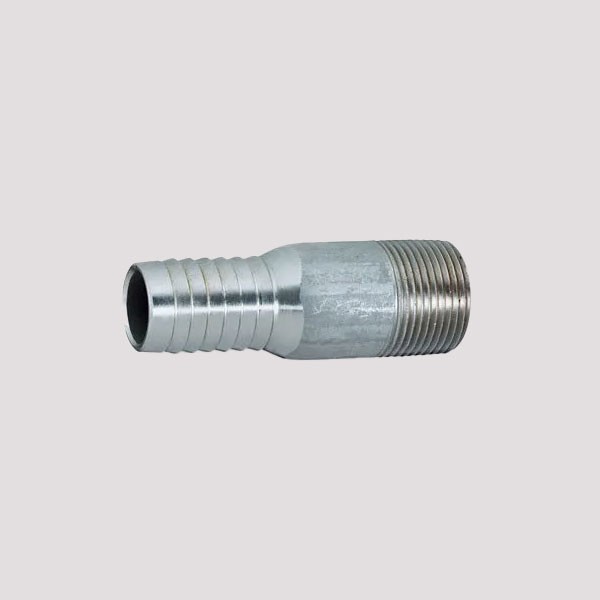
A king nipple is a type of pipe nipple. Its most characteristic feature is that one end has a male thread to connect to the female threaded pipe, and the other male thread is a hose connector, making it convenient for connecting to the hose pipe and fittings. The king nipple pipe does not feature a hex nut between the threaded section and the hose shank; it has a smooth pipe fitting. 1. Where is the King Nipple Pipe needed? The king nipple pipe fitting is widely used in pipelines, valves, and other equipment. However, we do not recommend the king combination nipple for steam systems. Its work pressure varies depending on the construction of the hose tube, system type, and application. If you encounter any problems, leave a message in the background, and we will respond promptly. 2. How to install King Nipple? The threaded part of the nipple connects with the same size female pipe thread or female thread fitting. The hose shank needs the hose pipe to be connected. 3. Sizes King nipple pipe sizes range from 1/4 to 4 inches. However, we can offer customized pipe sizes manufacturing to meet specific customer needs. You must notice that you connect the same-size tube or pipe fittings when using a king nipple. For example, the 1″ king nipple will connect to a 1-inch flexible hose pipe and make the other end thread into a 1″ threaded pipe. 4. What other names does it have? Besides “king nipple,” this common name, the king nipple is also called: KC nipple King fitting Combination nipple. 5. What material Combination Nipple is? 304, 316 stainless steel. 304 stainless steel can be resistant to the majority of corrosion from chemical substances and the environment. Economical than other high materials, 304 stainless steel has a lower cost but outstanding properties and is a higher-cost performance option. It is suitable for the majority of un-extreme applications. 316 stainless steel resistant to more chemical corrosion. In high temperature or pressure conditions, 316 stainless steel still sustains stability. 316 stainless steel conforms to safety standards and is usually used in food processing. Ss pipe fittings have excellent mechanical strength and withstand long-term use without damage; the stainless steel smooth surface makes it not easy to attach dirt and is easy to clean and maintain; stainless steel material can be recycled use, which reduces waste. Whether 304 or 316 stainless steel, the stainless steel pipe fittings can provide excellent performance and durability. 6. Why choose KC nipple and not another? King combination nipple is a simple and highly effective pipe connector, and its design makes the installation so easy: standard threaded in one end that can screw directly into the pipe; another one is a hose connection. KC nipple does not have complex parts and just be tightened when installing, saving time and effort and getting started quickly even with a new hand. The combination nipple has nice sealing and precision machining threaded, making it perfectly fit into the pipeline, preventing valid liquid or gas leaks. Whether a high-pressure stream or corrosive chemical, it ensures safety system operation and prevents damage and danger from leaks. King nipple fittings use 304 or 316 stainless steel, which provides exceptional corrosion resistance and durability. This ensures a long service life. These fittings have stable performance and reduce replacement frequency and cost in long-term use, whether in a wet environment, chemical industry, or high pressure and temperature conditions. Its application is extensive, not just pipeline connections but also petroleum and natural gas. Notably, the stainless steel king nipple is particularly secure for the food industry. Whatever industry, architecture, or construction, it provides highly effective and safe connections. Moreover, the low price of 1″ king nipple. It is durable, which means no replacement frequency or maintenance while maintaining quality, saving time and money. If your project has a special need, we can offer customized services to meet your requirements. 7. More Information The combination nipple, called KC nipple, connected to flexible hose pipes, pipelines, nipples, and other fittings, is used in liquid transportation systems. This nipple of a female thread and a hose shank makes the stainless steel king nipple more solid, anti-corrosion and ensures their use life in multiple environments. The threaded part achieves waterproof sealing. The king fitting is commonly used in petroleum, industry, agriculture, and other businesses, providing a reliable connection for various liquid transportation systems. 8. Dimensions Pipe Size 1/2 3/4 1 1 1/4 1 1/2 2 2 1/2 3 4 A 3.125 3.375 3.500 3.500 4.250 4.250 5.375 5.875 7.000 C 0.645 0.845 1.075 1.405 1.640 2.095 2.505 3.100 4.060
What is a NPT pipe nipple?
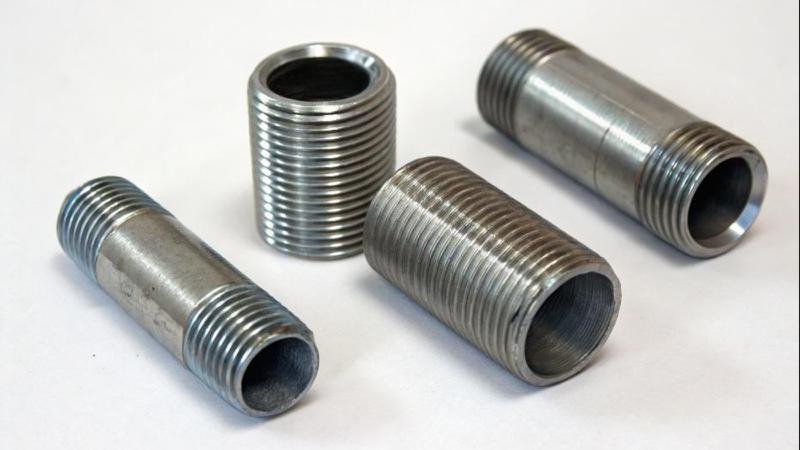
A NPT pipe nipple is a short length of pipe featuring National Pipe Taper (NPT) threads on both ends. It connects two pipes or fittings that have female threads. This is used in plumbing and industrial applications. This standardized threaded connection creates a tight seal through the tapered thread design, making it essential for leak-proof joints in various piping systems. What is a Pipe Nipple? Pipe nipples are among the most versatile pipe-to-pipe connectors in piping systems. These short pipe sections have threads on both ends, allowing them to connect larger pipes or fittings. Unlike regular pipes, nipples are designed specifically for making connections, not for transporting fluids over long distances. They come in various materials like stainless steel, carbon steel, or brass, and can have different thread types. The “nipple” name comes from their short, stubby appearance, typically ranging from close (very short) to several inches long. The terminology comes from the component’s physical resemblance to a nipple’s shape – short and protruding. This industrial naming convention dates back to early plumbing systems, where these short connectors were the “nipples” that joined larger “breasts” (main pipes) in the system. While the analogy might seem unusual today, the name stuck and became standard industry terminology worldwide. Understanding NPT Thread Standard The National Pipe Taper (NPT) standard is the most common type of thread used in North America to create tight seals that can hold pressure. The tapered design (1°47′) creates a wedging action that seals better under pressure than straight threads. This makes NPT nipple fittings ideal for water, gas, and chemical applications. Common NPT Pipe Nipple Sizes Popular sizes include: 1/2″ NPT nipple (most common for residential plumbing) 3/4″ NPT nipple 1″ NPT nipple 1 1/2″ NPT nipple (common in industrial applications) 2″ NPT nipple How Long is a Close Pipe Nipple? Close pipe nipples are the shortest standard length available, with virtually no unthreaded portion between the threaded ends. Their total length equals just the combined length of the two threaded sections. These ultra-compact connectors are ideal for tight spaces where every inch counts, though they require special tools (like nipple wrenches) for proper installation due to the lack of gripping surface. How Are Pipe Nipples Length Measured? Understanding pipe nipple measurements is crucial for proper system design: Overall Length (OAL): Measured from end to end, including threadsThread Engagement Length: Typically 3-5 threads, depending on sizeNominal Size: Refers to the pipe’s inner diameter (e.g., 1/2″ NPT) Pro tip: Always specify whether you need “thread to thread” or “face to face” measurements when ordering, as this affects how the nipple will fit in your assembly. 6 Main Types of Pipe Nipples Close Nipple: Threads touch in the center (shortest possible) Hex Nipple: Features a hexagonal center for wrench grip Toe Nipple: One end has longer threads for special applications Barrel Nipple: Unthreaded center section Reducer Nipple: Connects different pipe sizes Hose Nipple: Designed for hose connections Material Variations Stainless steel (304/316) Carbon steel (black/galvanized) Brass/bronze Plastic (PVC/CPVC) What is a TOE Pipe Nipple? A TOE (Threaded One End) pipe nipple has threads on only one end, with the other end left plain for welding or other connections. TOE nipples bridge the gap between threaded and non-threaded systems, often used in retrofit applications or where mixed connection types are required. All About NPT and BSPT Pipe Threads NPT (National Pipe Taper) Threads American standard (ANSI/ASME B1.20.1)60° thread angle with 1°47′ taperSeals through thread interferenceRequires thread sealant (Teflon tape/paste) BSPT (British Standard Pipe Taper) International standard (ISO 7-1)55° thread angle with 1°47′ taperCommon in Europe/AsiaCompatible with BSPP parallel threads Both create pressure-tight joints but are not interchangeable due to differing thread angles and pitches. BSP Vs. NPT: Which is Better? The “better” thread depends entirely on your application: Feature NPT BSP Region Americas Europe/Asia Sealing Thread deformation Washer often used Pressure High pressure Moderate pressure Availability Wide in the US Global standard Why Choose Our NPT Pipe Nipples? As a leading exporter of pipe fittings, we offer: Full size range: From 1/8″ to 4″ NPT nipplesMaterial options: 304/316 stainless, carbon steel, brassCustom lengths: Cut-to-order services availableCompetitive pricing: Factory-direct savingsGlobal shipping: Reliable logistics network Whether you need standard 1/2″ NPT nipples or specialty 1 1/2″ NPT nipple fittings, we’ve covered your piping connection needs. Contact our team today for quotes or technical support on your application requirements.
What Is A Pipe Coupling?
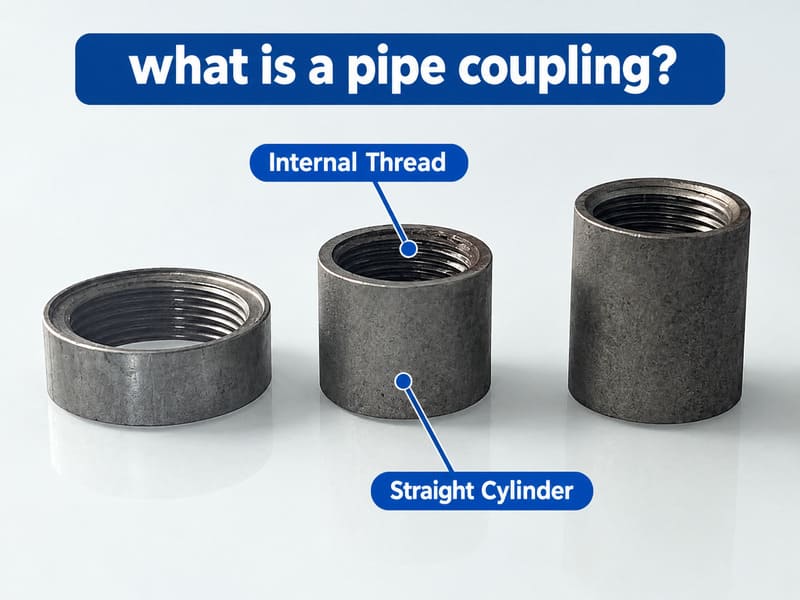
As a pipes and fittings manufacturer, we have a responsibility to help wholesalers solve problems before ordering. A coupler is a short, cylindrical pipe fitting with female threads or smooth ends designed to join two pipes of the same or different diameters. Most metal couplers, such as stainless steel or galvanized steel couplers, feature a straight, thick-walled body, while PVC couplers have a lightweight, smooth, uniform surface. Depending on the type, some couplers may include hexagonal edges for easy tightening with a wrench or compression rings for quick installation. A coupler is a type of fitting used to connect two pipes or tubes in plumbing, industrial, or construction systems. Pipe couplings (or couplers/coupler) are short lengths of pipe or tube designed to connect two tubes of equal or different sizes. It features either a socket or female threads at one or both ends. The coupling pipe is a pipe fitting that facilitates the extension or termination of pipe runs, allows for a change in pipe sizes, and can be used to repair broken or leaking pipes. Over time, most pipe installations require several pipe lengths to join or cut to navigate changes in direction and cross obstacles. Pipeline couplings are a simple and effective solution for connecting these sections while preserving the integrity and continuity of the pipes. 1. Material The coupling materials include carbon steel, stainless steel, and more. In general, the materials match or resemble the composition of the pipes they connect. The material of a pipe coupling is crucial for its performance and longevity. Here is a deeper look at the materials and their applications: Stainless steel Stainless steel couplings have 304 or 316 stainless steel, 316 offering higher resistance to chlorides and acids. They have high anti-corrosion properties even in harsh environments. High durability and high-temperature resistance make it suitable for harsh environments like chemical plants or marine applications. Stainless steel is ideal for the food, drink, and medicine industries due to its hygiene and easy cleaning. Galvanized Steel The galvanized coating on the surface of the coupling can enhance the corrosion resistance and extend the service life. The galvanized pipe coupling is suitable for outdoor or wet environments. However, regular checks are necessary to prevent loss of the galvanized surface when prolonged use occurs in drinking water pipelines. The galvanized steel coupling fitting can withstand high temperatures and is cheaper than stainless steel fittings or copper pipes. Black Steel A black pipe coupling coats black oxide during manufacturing and has a certain degree of anti-corrosion properties. Lower price, durable. The black pipe coupling’s corrosion resistance is limited and needs extra protection. PVC PVC couplings are crucial pipe fittings. The coupling PVC is resistant to acids and alkalis for moisture applications. The PVC coupling connector is easy to install with PVC cement, and PVC is a cost-effective solution for plumbing connections. More importantly, the PVC coupler is durable, has a lifetime of 10 years, and reduces the trouble of frequent replacement. Hebei SANVO PVC pipe fittings meet international standards and offer high quality, making them the best choice for industrial and home plumbing solutions. Hebei SANVO provides technical support and installation guidance to help you build a highly efficient and safe piping system! 2. Key Characteristics of Pipe Couplings Flexibility They can be rigid or flexible based on the movement they can withstand. They can also be either permanent or removable. Increased or Decreased Diameter Some coupling for pipes allows for changes in internal diameter to join pipes of different sizes. T or Cross-Shaped These can connect more than two pipes. Angled Some are designed to create bends in piping systems. 3. Types of Threaded Pipe Couplings Full Coupling Full coupling connected with two pipes ensures no leakage. Full merchant coupling usually connects to small-bore pipes. It connects pipe to pipe or pipe to a swage nipple with threaded ends. It is an adapter often used when the ends differ (like BSP and NPT). Half Coupling Half coupling connects one coupling to another or a fitting. It is ideal for small-bore branching from vessels or large pipes. Half coupling is shorter than full coupling and also features threaded ends. Reducer Coupling Reducer coupling connects with different diameters. Reducer coupling enables a connection between pipes of different diameters. Reducing coupling, which is a coupling that connects a 3/4″ NPT pipe to a 1/2″ NPT pipe. It is common where small process feeder lines merge with larger supply circuits. 4. Benefits prevent leak Coupling pipes can ensure tight seals and decrease the risk of compromising system integrity. The coupling thread enhances the reliability of the high-pressure system. cost-effective Coupler decreases the complexity of welding, saving time and force costs. Steel coupling simplifies repairs and extends the service life of the piping system. customized We offer a variety of sizes and materials of pipe connector fittings and coupling pipe fittings to meet different needs as manufacturers. Reducer coupling, adaptor, and other pipe fittings can be customized according to your needs. 5. Application of Coupling The application of coupling pipe fittings is vast and varied, reflecting the growing need for modern piping systems. The steel pipe coupling has inherent strength, versatility, robust flow rates, and high chemical tolerance, making it particularly suitable for: Industrial Applications: Used in firefighting systems, heating, and air supply/removal. Marine Use: Essential for freshwater and seawater storage on ships and offshore facilities. Power Generation: Utilized in cooling return tanks, lubrication tanks, and compressed air tubes in power plants. Manufacturing and Structural Engineering: Commonly employed in plant maintenance, water and gas delivery systems, and various engineering projects. Auto Repair: The muffler pipe coupler connects sections of the vehicle’s exhaust system, ensuring airtightness. Pipe couplings have become indispensable in many settings because they offer secure, robust seals and maintain flexibility. 6. Pipes and Fittings Supplier Highlight: Hebei Sanvo is a leading manufacturer and supplier of pipe couplings in China. The company houses its factory and integrates production, sales, and processing to offer high-quality products. Materials: Pipe couplings made of
What is a Pipe Union used for?
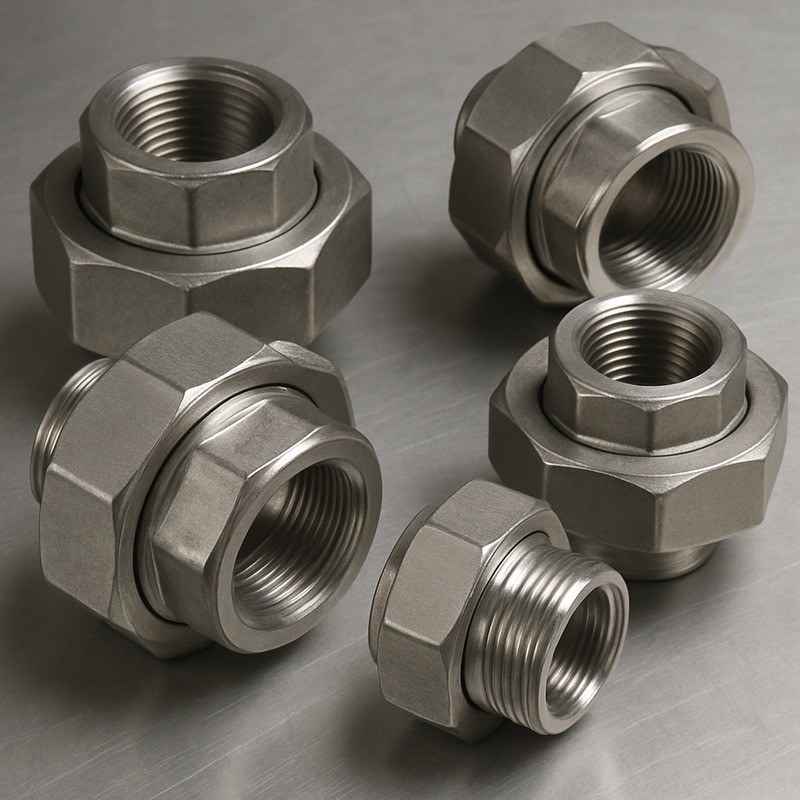
A pipe union is a crucial plumbing fitting widely used in industrial, commercial, and residential piping systems. It allows two pipes to be easily connected and disconnected without causing damage to the pipes or requiring complex tools. This makes pipe unions ideal for maintenance, repair, and installation tasks that require quick disassembly. Understanding the benefits of pipe unions is essential. These fittings provide a reliable, leak-proof connection that can withstand high pressure and temperature variations, making them suitable for water, gas, oil, and chemical pipelines. High-quality pipe unions are typically made from durable materials, such as stainless steel, brass, or carbon steel, ensuring a long service life and resistance to corrosion. Key benefits for buyers include easy installation, cost-effective maintenance, and enhanced system flexibility. When sourcing pipe unions, look for certifications such as ISO, ANSI, or ASTM to guarantee product quality and compliance with industry standards. The right pipe union can significantly improve the efficiency and reliability of your piping systems, making it a smart investment.
What is a Reducer Pipe?
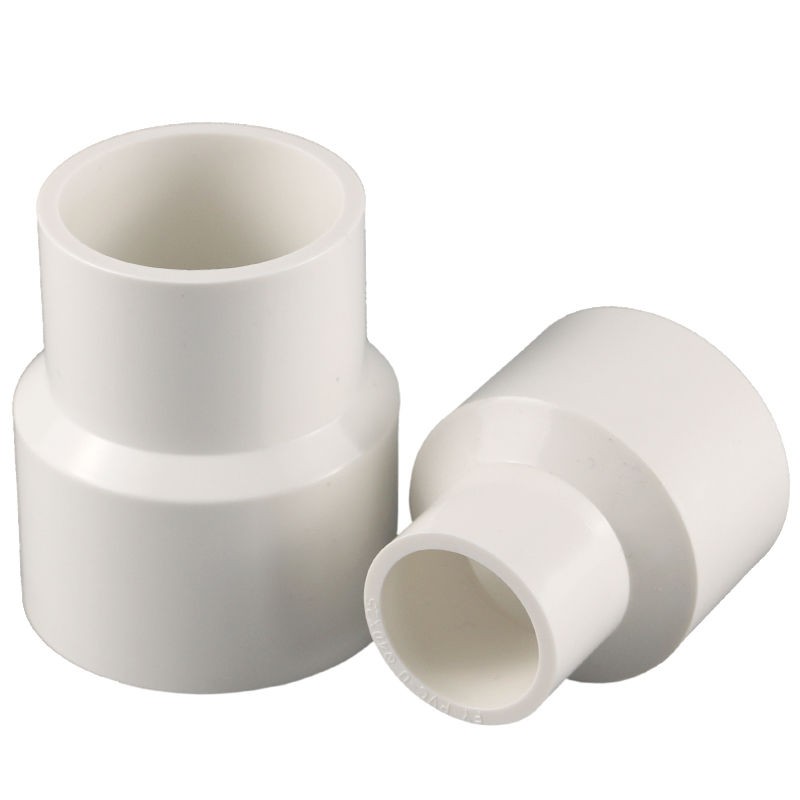
A reducer pipe is vital in piping systems to connect different diameters. Understanding the role of reducer pipes can help you use them more easily. As a leading manufacturer at Hebei Sanvo Pipe Fittings Co., Ltd., we pride ourselves on delivering high-quality pipe reducers that meet diverse needs. Explore what makes the benefits of reducer pipes, their differences from equal-diameter pipes, suitable applications, material options, and why choosing Sanvo is your best bet for plumbing pipe fittings in this article. 1. What is a Reducer Pipe, and Why Does It Matter? Reducer pipes are transitions between pipes of varying sizes. Reducer pipes ensure a seamless connection, maintaining efficiency and preventing turbulence in systems like industrial or home plumbing solutions. At Hebei Sanvo, our reducer pipes are precision-designed and meet international standards like ASTM and ASME. Whether high-pressure oil pipelines or residential water systems, our reducer pipe fittings guarantee leak-proof plumbing and long-term reliability. 2. Key Features of Reducer Pipe Fitting Made from stainless steel, carbon steel, and PVC, our reducers withstand rust and chemical erosion. Engineered to handle pressures up to 9000# (depending on material), ideal for plumbing solutions. Our reducer pipe fitting ensures easy pipe installation, whether welded, threaded, or glued. 3. Reducer Pipe vs. Equal-Diameter Pipe: What’s the Difference? Reducer Water Pipe connects pipes of different diameters (e.g., 4-inch and 2-inch), adjusting flow rate and pressure. The equal-diameter pipe connects pipes of the same diameter. Reducer pipes regulate flow by narrowing or expanding the pipe’s diameter, while equal-diameter pipes maintain steady flow. Reducer fitting is critical in systems requiring size transitions. Pipes of the same diameter use equal-diameter pipe fittings. Reducers can increase or decrease pressure due to diameter changes, whereas equal-diameter pipes keep pressure stable. 4. Types of Pipe Reducer Fittings Reducer Hex Nipple The reducer hex nipple connects two female threaded pipes of different diameters. It has a hexagon in the middle, making it easy to tighten with a wrench. They have a short pipe appearance and have two male thread ends. Their tight design and high strength make them suitable for high-pressure applications. The stainless hex nipple is corrosion-resistant and easy to replace. Reducer Coupling The Reducing coupler can extend or transit the piping system. The plastic pipe coupling is a socket pipe fitting, while carbon and stainless steel pipe couplings are threaded and widely used. The coupling is a firm connection, simple installation, smooth inner wall, and reduced water flow resistance. Reducer bushing The reduced bushing has a larger socket on one end and a smaller female threaded end on the other. The design saves space and is suitable for narrow areas. It has strong sealing performance. Achieve leak-proof plumbing with sealing tape. It is corrosion-resistant and durable. 5. Different Materials of Reducer Pipes and Their Characteristics Stainless Steel (304/316): Stainless steel pipe has high corrosion resistance, is durable, and withstands extreme temperatures (-20°C to 400°C). Stainless steel pipe fittings are for food processing, chemical plants, hot water pipes, and marine environments. Hygienic and long-lasting for demanding industrial plumbing solutions. Carbon Steel (Black and Galvanized Steel): High strength, wear-resistant, and cost-effective. Carbon pipes are for oil and gas pipelines, power plants, and high-pressure systems. Carbon steel pipe is ideal for heavy-duty applications where corrosion is less of a concern. PVC/CPVC: Plastic pipe is lightweight, corrosion-resistant PVC, and CPVC handles higher temperatures (up to 90°C). Plastic pipe connectors are for home plumbing solutions, irrigation, and drainage systems. Affordable and easy to install, great for non-pressurized systems. At Sanvo, we offer a full range of materials, ensuring you find the perfect reducer pipe for your project’s demands. 6. Why Choose Us? Hebei Sanvo Pipe Fittings Co., Ltd. is a manufacturer. Our reducer pipe fitting prevents leaks while withstanding harsh conditions. We have over 20 years of supplying plumbing pipe fittings to 35+ countries. From free samples to detailed installation guides, we are here to support you. Choosing Hebei Sanvo as your pipe fittings supplier comes with unmatched benefits: All the pipe fittings we produce undergo rigorous testing for durability, corrosion resistance, and pressure tolerance. If you need a specific size or material, we offer customized pipes to match your project; standard sizes usually range from 1/2-inch to 2-inch diameters. As a direct manufacturer, we offer cost-effective plumbing pipe fittings. With a robust supply chain, we ensure quick turnaround times so your project stays on schedule. Our team provides professional guidance on selecting the right reducer pipe for your application, from hot water pipes to chemical processing lines.