
Ultimate Guide to Seamless and Welded Steel Pipes
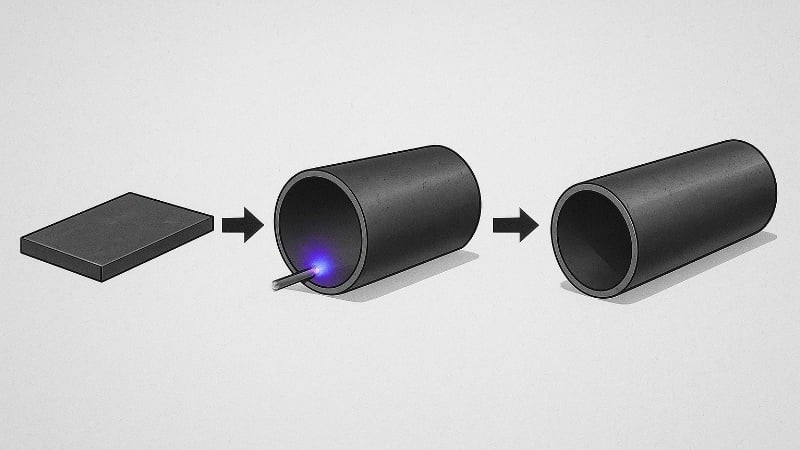
Welded Pipe Manufacturing Process Welded steel pipes are produced by forming a steel coil or plate into a cylindrical shape through hot or cold rolling and welding. Welding and forming methods vary depending on the product. After welding, pipes undergo internal and external seam trimming and smoothing, end conditioning (plain, grooved, or threaded), and anti-corrosion treatments such as oiling and galvanizing coating. Seamless Pipe Manufacturing Process Seamless steel pipes are produced without any welding seam. They are manufactured by piercing solid steel billets and forming them into hollow tubes through a series of thermal and mechanical processes. Seamless pipes provide superior strength, uniformity, and high-pressure resistance, making them essential in oil & gas, boilers, hydraulic systems, and high-temperature applications. Seamless vs. Welded Pipe: Advantages and Disadvantages Seamless Steel Pipe Advantages The seamless steel pipe without a weld seam has uniform strength throughout. Ideal for high-pressure, high-temperature, and critical service conditions. Uniform structure, high toughness, long-term service. Suitable for precision and heavy-wall applications, such as hydraulic cylinders, boiler tubes, and oil & gas lines. Disadvantages The processes of complex manufacturing, piercing, rolling, and sizing make the seamless pipe more expensive. More difficult to produce large diameters compared to welded pipes. Compared to the welded pipe, the wall thickness tolerance can vary more. Welded Steel Pipe Advantages Lower cost and higher production efficiency. Smooth internal surface, Suitable for low- to medium-pressure fluid transport. Wall thickness, diameter, and length can be tailored easily. Disadvantages Weld can be a weak point under very high pressure or extreme service conditions. Not ideal for ultra-high-pressure applications, Seamless pipes perform better for boilers, hydraulic systems, and critical oil & gas operations. Comparison Table Feature Seamless Steel Pipe Welded Steel Pipe Weld Seam None Present Strength & Pressure Resistance Higher Moderate, depends on weld quality Mechanical Properties Superior Good, but affected by welding Cost Higher Lower Wall Thickness Uniformity Slight variation Very consistent Ideal Applications High pressure, high temperature, critical service Low/medium pressure, structural, large-diameter pipelines Dimensions and Wall Thickness of Seamless vs. Welded Pipe Common Dimensional Standards We produce seamless steel pipes and welded Steel Pipes in NPS from 1/8 inch to 48 inches (DN 6 – DN 1200). Standards include ASTM A106, API 5L Gr. B, ASTM A53. Pipe Schedule We produce seamless pipes and welded steel pipes, which can achieve SCH 10, SCH 20, SCH 40, SCH 80, SCH 160, XS, and XXS. Application Recommendations Seamless Pipes – Best For High pressure, high temperature, or critical service Thick-wall pipe requirements Small-diameter precision tubing Oil & gas, boilers, hydraulic systems, pressure vessels Welded Pipes – Best For Large-diameter pipelines Water supply, fire protection, and structural applications Medium- and low-pressure systems Stainless steel decorative tubing, thin-wall applications Cost-sensitive projects Pipe End Finishes for Welded and Seamless Pipes Both welded and seamless steel pipes can be supplied with different end types depending on installation requirements, connection method, and industry standards. Below are the most common and engineering-approved end finishes. Plain End (PE) Pipe end is cut round with no additional machining. Can be supplied deburrred, faced, or lightly chamfered Features: Most economical, Simple processing, High versatility Threaded End (TE) It can be used for both, but is more common in welded pipes. Threads typically follow NPT, BSPT, or BSPP standards. Usually with thread protector caps. Thread options: Male Thread Female Thread (less common, usually used on fittings) Note: For seamless pipes, threading is also common for high-pressure fittings (e.g., ASTM A106 Gr.B). Grooved End Groove cut at pipe end for mechanical coupling systems (Victaulic groove type). Used in: fire sprinkler systems, HVAC systems, low or medium-pressure water distribution Advantages: Fast installation No welding needed on site Easy maintenance Flanged Ends Pipe ends are prepared to connect with a flange. Used for high-pressure service. Conduit Ends (for threaded pipes) Common for welded and seamless small-diameter pipes Pipes supplied with one socket/coupling + one male thread Standard for plumbing & fire protection pipes Bell End For socket-type joining, mostly for water pipes. Key Considerations When Purchasing Seamless and Welded Steel Pipes Material Standards & Specifications Ensure the pipe grade meets the required international standards (e.g., ASTM, ASME, API, EN, DIN). Seamless: ASTM A106, ASTM A53, API 5L Gr. B Welded: ASTM A53, ASTM A312, API 5L Gr. B Manufacturing Process Different processes lead to different performance levels: Seamless pipes: hot-rolled, cold-drawn, or cold-rolled. Welded pipes: ERW, LSAW/SAW, SSAW, TIG-welded for stainless steel. Pressure & Temperature Requirements Seamless pipes generally perform better under high pressure, high temperature, or cyclic loading. Welded pipes are suitable for medium- and low-pressure systems. Choose the correct schedule (SCH) or wall thickness accordingly. Corrosion Resistance Requirements For corrosive environments, assess: Material grade (e.g., 304/316 stainless, galvanized steel) Surface finishing: hot-dip galvanizing, black sandblasted Expected lifespan in the intended application Request a quote Sanvo stays fully stocked with the best inventory of welded and seamless steel piping products in the industry. We have a factory, ensuring buyers get the pipe they need faster and at the best price. In this guide for buyers of seamless and welded pipe, we will help you navigate the procurement process from start to finish. We aim to ensure that you acquire what you need as quickly and efficiently as possible when it’s time to make a purchase. If a piping purchase is in your near future, request a quote. We’ll provide one that gets you exactly the products you need—fast.
Understanding Grooved Piping Systems for Fire & HVAC
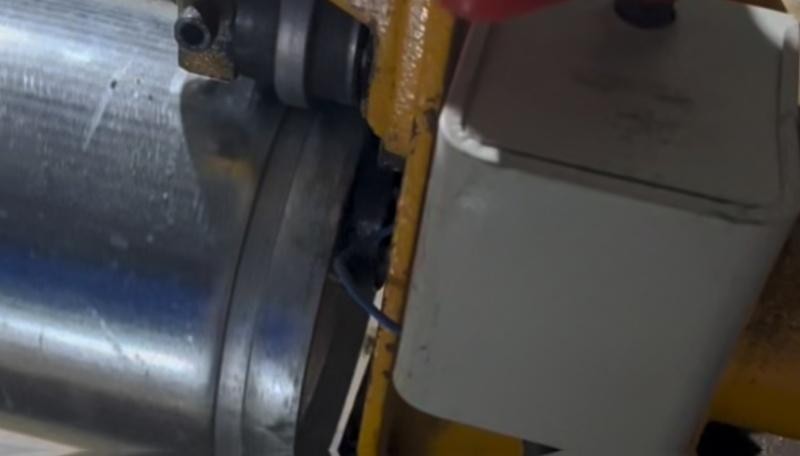
Technologies of Grooved Piping Groove technology is a type of piping connection through process grooving on the pipe ends, and specially grooved couplings to the piping system connection. The grooved ends are formed by rolling or cutting. Grooved couplings are produced from steel and have an installed internal sealing ring to ensure sealing and leakproofness of the piping system. The worker needs to insert the pipe ends into the connectors and tighten the bolt to complete the connection without welding or the threading process when installing. Principal Advantages Faster installation and saves 50% to 70% time than a welding connection. Convenient for maintenance due to fast removal and replacement design. The seal ring can reliably prevent leaks. Higher safety. Connected by grooved couplings can reduce noise. Grooved coupling, small size, and tightened to save space. Common Grooved Fittings The grooved pipe is typically not used on its own; it requires compatible grooved fittings to create complete piping systems. They are common types of grooved fittings below: Grooved Coupling Grooved Elbow Grooved Tees & Cross Grooved Flange The “grooved end pipe + grooved pipe fittings” are the components of the grooved piping system, which achieve complete piping systems by using different types of grooved pipe fittings. The grooved system is installed quickly, safely, reliably, and easily maintained. Pressure Class of Grooved End Pipe The pressure class of grooved end pipes and grooved fittings depends on pipe material, wall thickness, diameter, and the types of grooved pipe fittings. The common pressure range of the grooved end pipe is 150 to 600 psi. Main Standards for Grooved Pipes & Fittings Grooved pipe and fittings have production and test standards unified internationally. Different regions have a few differences, but core content includes size, tolerance, grooved profile, connection perforation, and pressure requirement. AWWA C606 was developed by the American Water Works Association, which specifies groove sizes, tolerances, grooved depth, sealing ring requirements, and testing methods. It is the most commonly used in America for fire protection, HVAC, and industrial piping systems. ASTM A795 and ASTM A53 specify sizes and performance standards that are typically used in conjunction with AWWA C606. ISO 6182-12 / ISO 4200 are standards developed by the International Organization for Standardization (ISO) to outline the technical requirements for grooved pipe fittings. These requirements encompass mechanical strength, sealing performance, and pressure-resistant classifications. Grooved fittings are commonly used in Europe, Southeast Asia, the Middle East, and various international markets. The European Committee for Standardization developed EN 10226 / EN 10255, which are suitable for the European Union and European markets. UL Listed and FM Approved products, developed by Underwriters Laboratories and Factory Mutual, are designed for grooved pipes and fittings used in fire sprinkler systems. This certification ensures that the products have undergone structural, pressure, and corrosion testing. Only those products that have completed UL/FM certification can be utilized in fire protection projects across North America.
DIN, BS, ISO Pipe Nipple Standards Explained
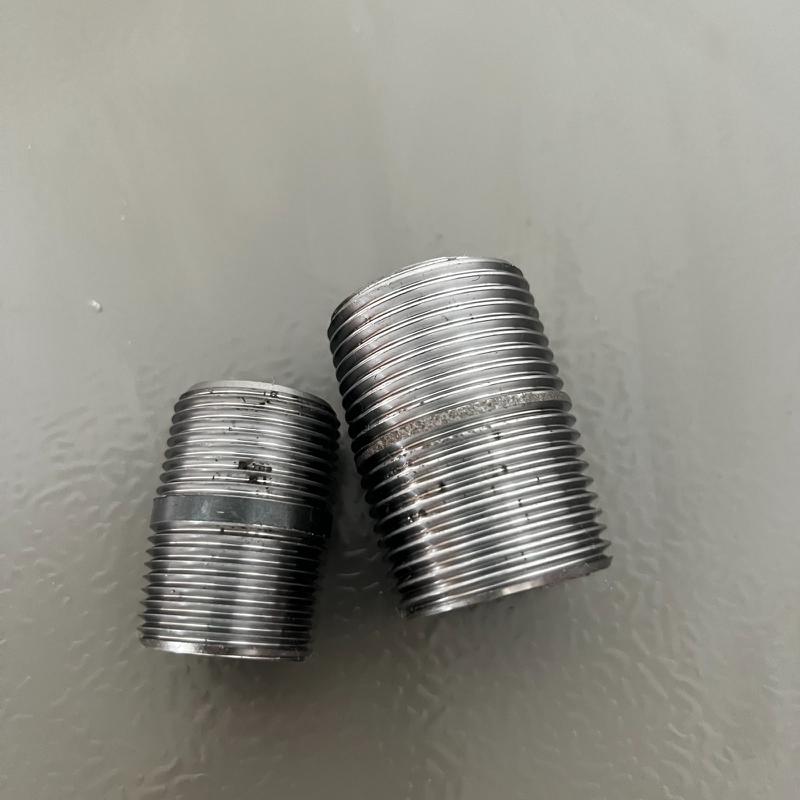
This guide mainly discusses the standards of pipe nipples. Dimensions Thread standards Material standards Standards defined by International Organization for Standardization (ISO), Deutsches Institut für Normung (DIN), and British Standards Institution (BS) directly affect sealing performance, compatibility, and safety in piping systems. 1. Pipe Nipples: Thread Standards 2. Material Stankards for Pipe Nipples 3. Dimensional Standards 1. Pipe Nipples: Thread Standards (1) ISO Thread Standards ISO 7-1 (Pressure-tight threads) Tapered threads (R) Used for sealing directly through threads Common in gas and industrial pipelines Equivalent to BSPT in many applications (2) DIN Thread Standards DIN 2999 German standard for tapered pipe threads Technically aligned with ISO 7-1 Widely used in continental Europe In practice: DIN 2999 ≈ ISO 7-1 (3) BS Thread Standards (BSP) BS 21 Defines BSP threads: BSPT (Tapered) Self-sealing High-pressure use BSPP (Parallel) Requires gasket Easy assembly (4) Key Differences Standard Thread Type Sealing Method ISO 7-1 Tapered Thread sealing DIN 2999 Tapered Thread sealing BS 21 (BSPT) Tapered Thread sealing BS 21 (BSPP) Parallel Gasket sealing 2. Material Standards for Pipe Nipples This is where most buyers get confused: ISO / DIN / BS mainly define dimensions and threadsMaterial standards are often defined under: ASTM International European Committee for Standardization (EN standards) (1) DIN / EN Material Standards DIN / EN equivalents: EN 10255 → similar to BS1387 EN 10216 → pressure pipes DIN EN 10025 → structural steel Used widely in Europe for compliance (2) BS Material Standards BS 1387 → traditional steel pipes Now mostly replaced by EN standards (3) How Buyers Should Choose Europe projects: EN / DIN preferred US or global: ASTM preferred Mixed projects: Choose materials with dual certification Click here to select suitable pipes for your industry and get the information you need! 3. Dimensional Standards (1) DIN 2440 Defines pipe dimensions and thickness Common in water, gas, and HVAC systems Suitable for medium and low-pressure applications (2) BS Dimensional Standards BS 1387 Covers light, medium, and heavy pipes Used for water, gas, and structural applications Widely used before being gradually replaced by EN standards (3) EN Standards Material and dimensional standards in Europe are now largely unified under: European Committee for Standardization (EN) Common EN standards: EN 10255 → Non-alloy steel pipes (similar to BS 1387) EN 10216 → Pressure pipes EN 10217 → Welded pipes Conclusion Understanding pipe standards is essential for correct selection: Dimensional standards ensure fit Thread standards ensure sealing Material standards ensure performance Choosing the right combination helps avoid leakage, incompatibility, and costly failures.
Welded pipe nipples vs threaded pipe nipples: Which is more suitable for your project?
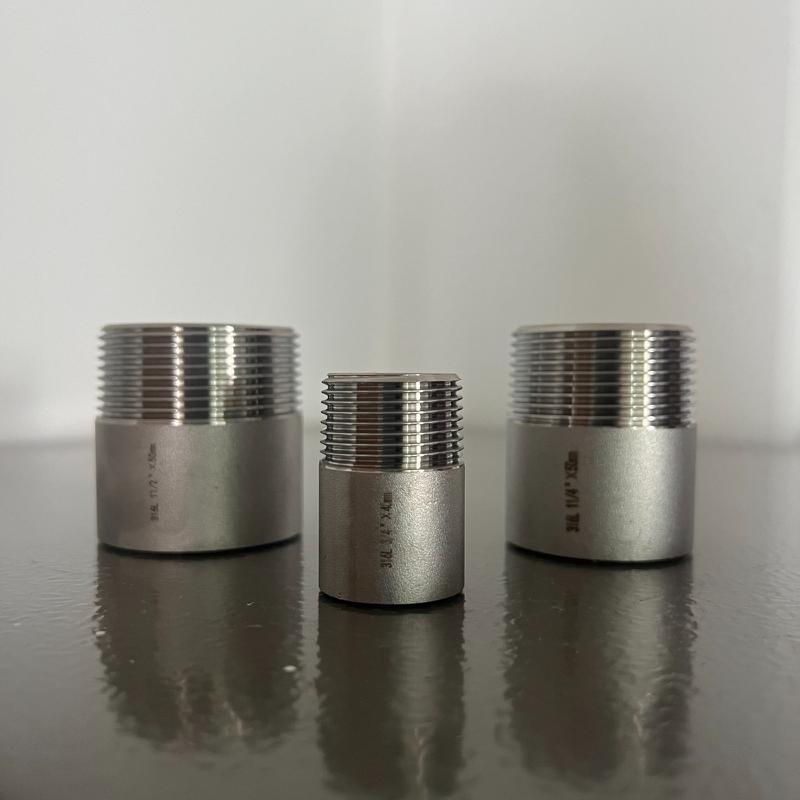
When selecting pipe nipples for a project, there are two popular options: welded and threaded pipe nipples. They have distinct features, advantages, and suitable applications. In the following, we will explore their differences and help you make the best choice. 1. Welded Pipe Nipple Welded pipe nipples are connected to pipes or fittings by welding, creating a permanent and robust connection. Key Features Welded connections are solid and reliable, especially for high-pressure systems. Welding reduces the risk of leaks. Welding pipes can handle a wide range of temperatures and pressures. Their material usually includes carbon steel, stainless steel, or other robust materials. Common Applications High-pressure pipelines. Chemical and petrochemical industries. Steam, oil, and gas distribution systems. Extreme environments require long-lasting connections. Advantage They can leak-proof and secure connections. It is suited for permanent installations. Excellent for high-pressure and high-temperature systems. Disadvantage Requires skilled labor and specialized equipment when installing weld nipple fittings. It is time-consuming to install or modify. It is can not reusable. 2. Threaded Pipe Nipple Threaded pipe nipples have male threads on one or both ends, allowing them to screw into fittings or other pipes. Key Features No special tools are required to install or remove easily. Compatible with common thread standards like NPT (National Pipe Thread) or BSP (British Standard Pipe). Available in various lengths, diameters, and materials, including galvanized steel, stainless steel, and brass. Common Applications Residential plumbing systems. Low to medium-pressure applications. Where temporary use or frequent disassembly applications. That requires corrosion resistance applications (e.g., galvanized or stainless steel threaded nipples). Pros Easy to assemble and disassemble. Reusable. No welding equipment or expertise is needed. Cons Risk of leaks if threads are damaged or improperly sealed. Less suitable for high-pressure or high-vibration environments. Establishing a connection may require thread sealant or tape. 3. Comparing Welded vs. Threaded Nipple Aspect Welded Nipple Threaded Nipple Installation Requires welding tools and expertise. Simple, requires basic tools. Strength Stronger, ideal for permanent systems. Moderate, suited for low to medium pressure. Leak Prevention Excellent seal with no gaps. Dependent on thread quality and sealing materials. Flexibility It is not removable once welded. Easy to remove and reuse. Cost Higher installation cost. Lower installation cost. Applications High-pressure, high-temperature systems. Residential, temporary, or low-pressure projects. 4. How to weld pipe? Prepare professional tools, such as SMAW, TIG, MIG, or SAW, and choose the suitable welding material according to the pipes. Clean the fittings before formal welding to prevent dust and impurities that may influence the welding process. First, weld several points at the gap of the pipe nipple butt, and take a lower electricity backing weld on the first to ensure the welding line melts through. Fill welding increases the thickness, and cover welding offers an aesthetic appearance. After successful welding, examine and clean the welding line to remove residue, ensure quality, and improve performance through heat treatment. Please control the temperature, maintain ventilation, and select the correct position during welding. 5. How to remove the broken threaded pipe? You can choose a handle or electric tool when removing the threaded steel pipe nipple because suitable tools can avoid secondary damage. First, use the lubricant and beat it lightly to loosen the connection; second, rotate the edge of the pipe nipples with tools after the interpenetration lubricant. If the threaded nipple is badly damaged, you can take a cut or heat action. Don’t push too hard when removing the process to prevent aggravating the threaded part of the stuck. 6. Choosing the Right Option Welded Nipple is Ideal For: Long-term or permanent installations. High-pressure and high-temperature systems. And environments demand maximum durability and leak-proof performance. Threaded Nipple is Ideal For: Systems requiring flexibility or frequent modifications. Low to medium-pressure applications. That temporary uses or budget-conscious projects. 7. Conclusion Choose welded or threaded pipe depending on your project’s specific requirements. Welded pipe fittings are best for high-pressure systems, which can offer a durable connection; threaded pipe fittings are the choice for versatility, reusability, and ease of installation. Please consider your project’s needs carefully to ensure the best fit.
What Are Plumbing Fittings?
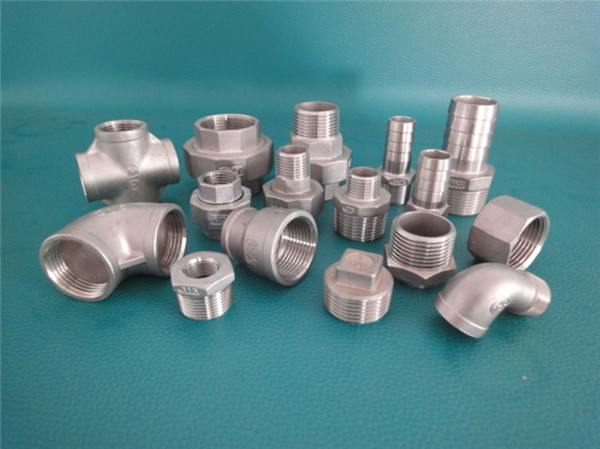
A fitting or adapter is used in pipe systems to connect straight sections of pipe or tube, adapt to different sizes or shapes, and for other purposes such as regulating (or measuring) fluid flow. These fittings are used in plumbing to manipulate the conveyance of water, gas, or liquid waste in domestic or commercial environments, within a system of pipes or tubes. Fittings (especially uncommon types) require money, time, materials, and tools to install, and are an important part of piping and plumbing systems. Valves are technically fittings but are usually discussed separately. The stainless steel threaded pipe fittings and other plumbing pipe fittings produced by our company are widely used in daily life because of their corrosion resistance. But there are also some installation requirements, as follows: First, the plumbing fittings cannot be installed in the bedroom or the room directly connected to the bedroom, so it is necessary to beware of gas poisoning. Second, a pressure relief pipe should be installed at the water outlet of the heating stove. The standard of the used pressure reducing pipe and the connected malleable pipe fittings should not be less than the pipe diameter. Third, the water inlet and outlet should be connected by malleable steel live connection instead of a malleable steel pipe hoop (280) to facilitate future repairs. Fourth, due to exhaust considerations, the main pipeline needs to be skewed, and the skew should be 100:1. Fifth, when using a local heating furnace, the highest point of the pipeline is 6 meters higher than the return water inlet of the heating furnace is the limit, exceeding 6 meters will cause excessive pressure, deformation of the protective body, and risk. Sixth, the entire heating system should be equipped with an open water filling bucket or expansion tank, and the height of the installation should be more than 25cm from the highest point in the entire heating system. Seventh, it is absolutely not allowed to install valves on the pipes of the pressure reducing pipe, water supply tank, and exhaust pipe, otherwise, it is very risky. Eighth, the middle of the water inlet and outlet of the furnace body is lower than the height of the middle of the radiator by more than 30cm, and the higher the middle of the radiator is relative to the water inlet and outlet, the better, which is beneficial to circulation. Ninth, if the water circulation is not smooth due to non-blocking reasons such as the pipe being too long, the position difference between the radiator and the heating stove can be increased, which will promote the water circulation, if necessary, a small hot water pipe pump can be added to force Let the water circulate. But do not push the water pump device on the horizontal main pipe below to push the water toward the furnace, otherwise, the furnace will be damaged due to the pressure generated by the pump. Tenth, the height of the chimney of the straight chimney coal stove should be more than two meters, and the chimney with a diameter of 12cm must be used for the bulk coal stove, which should be more than 4 meters. Be short and have as few elbows as possible. Other important tips for safe use that need to be mentioned: 1. When the flame is turned off for a short time in winter, the water in the system should be drained to prevent icing and blockage of the pipeline. If it is too late to dissolve from the beginning, the water pressure in the water jacket will increase sharply and damage will be caused by simple blasting.2. The pressure of the pressure gauge cannot be higher than 0.1 MPa (1 kg). If it is higher than this pressure, it is necessary to shut down the boiler. The water temperature of the pressureless small boiler cannot be higher than 95°C.3. It is forbidden for the heating furnace circulation system to communicate with the outside heating pipes.4. When the shower is not in use, it is necessary to drain the water in the pipeline at any time to avoid freezing and cracking the pipeline in winter. Also: other matters needing attention on the honeycomb heating stove: 1. Use high-quality briquette and do not use wet coal to avoid corrosion to stoves.2. When heating, the coal block should be flush with the furnace, but the fire pressure on the small water jacket, adjust the chimney damper, and open the ash drawer.3. When cooking rice, remove the pressure fire cover and adjust the chimney damper, or add a piece of coal to a lot of it, so that the rice cooks faster, and then shake it back to the original position when heating.4. When replacing the honeycomb, if it cannot be clamped, you can press a piece of new coal first, then cover the fire cover, swing the handle back and forth, and the spent coal will fall into the ash drawer until the new coal is flush with the furnace.5. When sealing the fire, you can put one or two pieces of new coal at a time, then put the fire sealing cover, pressure fire cover, and stove ring, adjust the chimney damper, and close the ash drawer. The user should explore the situation for about a week. can.6. After the heating stove has been burning for a period of time, the dust in the smoke neck, as well as the dust on the heat absorption sheet and the small water jacket, should be cleaned up in time. If it is not cleaned up in time, it can seriously affect the heating function and the smoke exhaust function. Hebei Sanvo specializes in the production of export standard pipe nipples, pipe couplings, stainless steel threaded pipe fittings, and other plumbing fittings, China factory direct supply, price concessions. If you are interested in plumbing pipe fittings, please do not hesitate to contact us by email at info@pipenipples.com or click here for other contact information.
What Are The Advantages Of Stainless Steel Threaded Nipple?
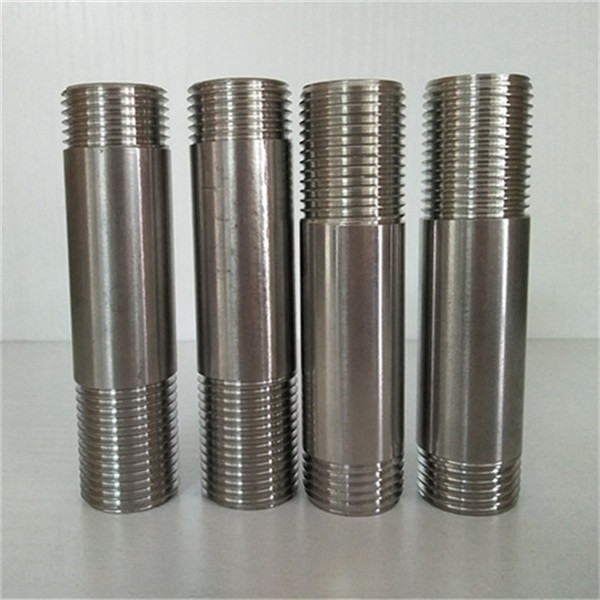
1. Easy to Remove and Install Stainless steel nipples belong to stainless steel fittings, which can be easily installed and removed without using tools. It has the advantages of compact structure, small size, lightweight, high-pressure resistance, and interchangeability. This kind of pipe nipple is light and handy, clean, and widely used in aerospace, metallurgy, mining, forging, coal, petroleum, ships, machine tools, chemical equipment, and various agricultural machinery hydraulic, pneumatic transmission, and lubrication transfer in pipelines systems, realize the safe, efficient and fast conversion without leakage. Stainless steel pipe nipples are ideal for multiple applications, saving time and effort. 2. Nipple Design Working pressure of stainless steel pipe nipple: 1.65Mpa. Temperature: -54 ~ + 180 ℃. Working medium: gasoline, heavy oil, kerosene, hydraulic oil, fuel oil, refrigeration oil, water, brine, acidic and alkaline liquids, high-pressure gas, etc. Sealing materials of threaded nipples include nitrile rubber, fluorine rubber, and silicone. Despite their small size and lightweight, stainless steel pipe nipples are strong enough to withstand high-pressure environments (up to 1.65 Mpa). Their compact structure makes them easy to handle and install. The thread pipe nipple’s tight construction uses more space and provides strength for application needs, making it easy to install in a limited-space system. 3. Wide Range of Applications These nipples in many industries, such as: (1) Aerospace (2) Metallurgy (3) Mining (4) Petroleum (5) Shipbuilding (6) Machine tools (7) Chemical Equipment (8) Agricultural machinery They are suitable for hydraulic, pneumatic, and lubrication fluid systems, helping ensure a smooth flow and quick conversion without leakage. 4. Leak-Free and Efficient One key benefit of stainless steel pipe nipples is that they allow quick, safe, and efficient pipeline conversions without leakage. Thread pipe nipples are especially useful for applications that require fast, reliable connections without any risk of leakage. The threaded design of stainless steel pipe fittings ensures a safe, tight connection and prevents leaks in the use process. The male thread can form a solid connection when stainless steel plumbing fittings connect with other thread pipes. Notes: (1) Do not use fluids other than applicable fluids; (2) Do not exceed the maximum use pressure when using; (3) Do not use it outside the operating temperature range to prevent wear or leakage of the sealing material; (4) Do not strike, bend, or stretch artificially to prevent damage; (5) Do not use it in places mixed with metal powder or sand and dust to prevent poor work or leakage; (6) Attaching debris can cause poor work or leakage. Stainless steel pipe nipples are more convenient and faster to use than ordinary nipples. This improves their flexibility, practicality, and safety and makes them easy to maintain and use. The quick connector allows for one-hand disassembly and connection, and the button operation is very convenient. Ordinary nipples are difficult to dismantle and connect with one hand, and even some require tools.