
Threaded Pipe Coupling Dimensions
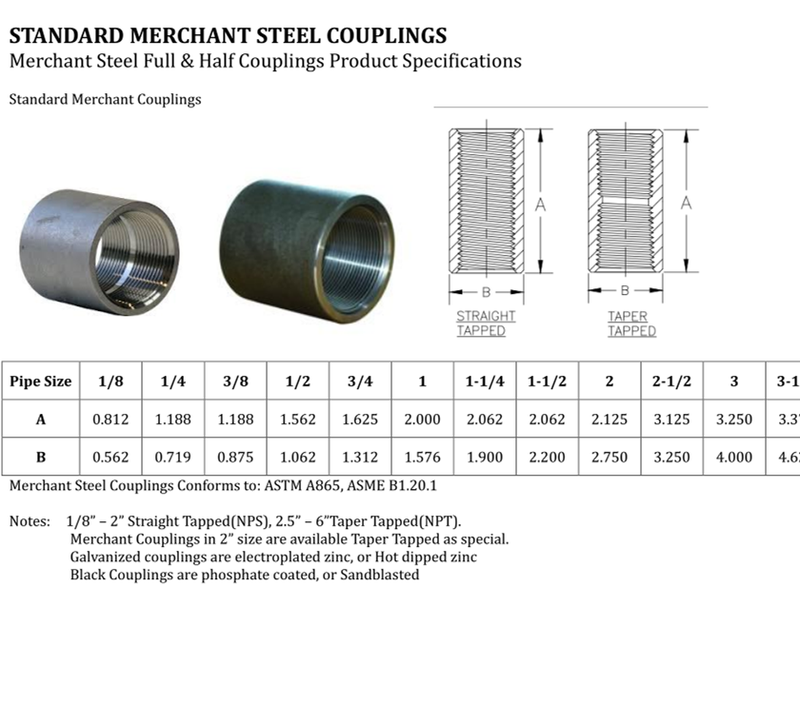
A threaded coupling (or coupler) (used in piping or plumbing) is a very short length of pipe or tube, with threads at both ends that allows two pipes or tubes to be joined together. Hebei Sanvo is a quality pipe couplings manufacturer and supplier, and exports various dimensions of steel pipe coupling, including carbon steel pipe coupling, stainless steel pipe coupling, galvanized pipe coupling, black pipe coupling, standard full merchant coupling, standard half merchant coupling, extra heavy full merchant coupling, extra heavy half merchant coupling, API Line pipe coupling, and other threaded pipe couplings. The Threaded Pipe Coupling Dimensions Chart Is As Follows: 1, Standard Full Merchant Couplings Merchant Steel Couplings Conforms to ASTM A865, ASME B1.20.1Size: 1/8”-6”Notes: 1/8”-2” Straight Tapped(NPS), 2.5”-6” Taper Tapped(NPT).Merchant Couplings in 2” are available Taper Tapped as special.Galvanized Couplings are electroplated zinc or hot-dipped zinc;Black Couplings are phosphate coated or sandblasted. 2, Standard Half Merchant Couplings Merchant Steel Half Couplings Conforms to ASTM A865, ASME B1.20.1Size: 1/8”-6”Notes: 1/8”-1”Taper Tapped(NPT), 1 1/4”-2” Sraight Tapped(NPS), 2.5”-6” Taper Tapped(NPT).Merchant Couplings in 2” are available Taper Tapped as special.Galvanized Couplings are electroplated zinc or hot-dipped zinc;Black Couplings are phosphate coated or sandblasted. 3, Extra Heavy Full Merchant Couplings Size: 1/8”-6”Conforms to ASTM A865, ASME B1.20.1Finish: Black or Galvanized 4, Extra Heavy Half Merchant Couplings Size: 1/8”-6”Conforms to ASTM A865, ASME B1.20.1Finish: Black or Galvanized 5, API Line Pipe Couplings Size: 1/8”-12”Material: API 5L Section 8Dimensions: API 5L, API 5B 6, DIN2986 / EN 10241 Steel Pipe Socket / Steel Pipe Couplings Size: DN6-DN150Conforms to DIN2986, EN10241Material: Seamless Steel PipeThread: DIN2999, ISO7/1, BS21Finish: Black or Galvanized 7, Threaded Welding Outlets With UL/FM Approval Size: 1/2″-2 1/2″(1/2″, 3/4″, 1″, 1 1/4″, 1 1/2″, 2″, 2 1/2″)Material: Black Steel Pipe, ASTM A53Pressure Rating: 20.7 bar(300psi)
Threaded Steel Pipes for Industrial Piping Systems
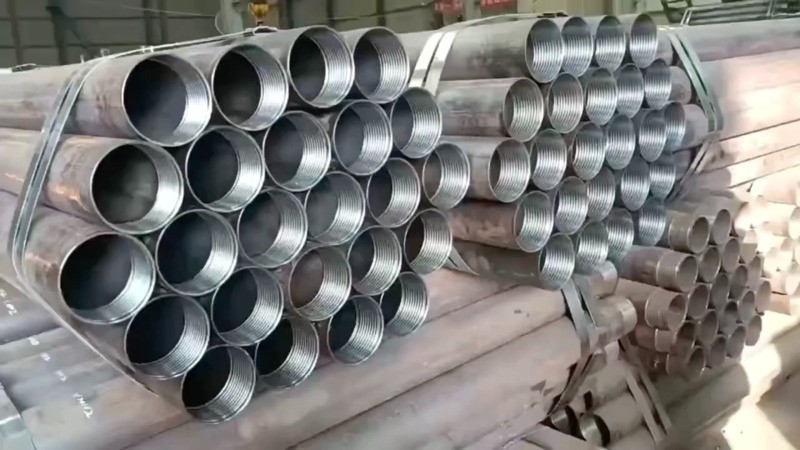
What is a threaded steel pipe? A threaded pipe, also known as a pre-cut pipe or ready-cut pipe, is a type of pipe that is prepared with threaded ends for easy connection. A threaded steel pipe is a finished pipe product with threads machined at one or both ends. Characteristics of threaded steel pipes 1. Threads on both ends or one end Common thread standards include: NPT (American standard) BSPT (British Standard) 2. The Advantage of Pre-cut Pipe No welding required Direct connection to threaded fittings like elbows, tees, couplings, pipe clamps, valves, etc. Ideal for rapid installation and maintenance. 3. Common Materials Carbon Steel: Black Steel (black surface finish), Hot-dip galvanized Stainless Steel Threaded Pipe: 304, 304L, 316, and 316L 4. Primary Applications Threaded steel pipes are commonly used in: Civil & Engineering Water Supply LPG / Natural Gas Sprinklers HVAC Systems, Compressed Air Industrial Piping, Mechanical Equipment Low- and Medium-Pressure Networks Threaded Steel Pipe vs Plain-End Steel Pipe: Key Differences 1. Appearance Threaded Steel Pipe: Pipe is machined into threaded ends Can be directly connected to a threaded fitting Plain-End Steel Pipe: Pipe ends feature plain ends or beveled ends Cannot be directly connected to threaded fittings 2. Different Manufacturing Processes Threaded Steel Pipe: Requires an additional cut threading process Threads are machined on a lathe/threading machine Higher manufacturing precision requirements (taper, depth, accuracy) Plain End Steel Pipe: No end processing required Directly used for welding, flange connections, etc. 3. Usage Method Differences Threaded Pipe: Can be directly screwed into place without welding required, screw on threaded components like elbows, tees, pipe clamps, valves, etc. Plain End Steel Pipe: Requires welding or flange connections 4. Cost Threaded Steel Pipe is a little more expensive than plain-end pipe due to an additional manufacturing step. Plain End Pipe has a lower raw material cost, resulting in a lower price. Technical Specifications Specification Details Size Range 1/2″ – 6″ (DN15 – DN150) Wall Thickness SCH10 / SCH40 / SCH80 Standards ASTM A53 / A106 / A135 / EN10255 / JIS Thread Types NPT / BSPT / BSPP End Types Threaded End Surface Options Black / Hot-dip galvanized Material Carbon Steel, Stainless Steel (304 / 316) Packaging & Delivery Pipes bundled with steel straps Protective plastic caps on both ends Thread protectors to avoid damage during transit Loaded on pallets for safe handling Customized marking and labeling available Compliance & Certifications ISO 9001 certified manufacturing process UL/FM approval available for fire protection applications CE marking for European compliance Mill Test Certificates (MTC / EN10204 3.1) FAQs Q1: What is the difference between NPT and BSPT threads?A: NPT is the American standard tapered thread, while BSPT is the British standard tapered thread. Both provide tight seals but differ in angle and thread pitch. Q2: Can threaded pipes be used in high-pressure systems?A: Threaded steel pipes are suitable for medium-pressure systems. For very high-pressure applications, welded or flanged pipes are recommended. Q3: Do you offer customized lengths?A: Yes, we can cut pipes to customer-specified lengths. Ordering Information MOQ: Negotiable, both small trial orders and bulk orders are welcome. Lead Time: 15–30 days, depending on quantity Available Lengths: 18 to 72 inches, or customized Custom Thread Options: NPT, BSPT, BSPP
EntrePot Trade Strategies to Simplify Pipe Sourcing

What is Entrepot Trade? The entrepot trade involves exporting products from the producing country to a third country, and then from that third country to the final importing country. This trade method is widely used in the field of industrial products, more suitable for importers who need to optimize taxes, improve customs clearance efficiency, and reduce post-cost. Benefits of Entrepot Trade Reduce Tariff Optimization The higher tariffs of some countries to especially produce a country, but implement the third country entrepot trade can be: Avoid the higher tariff resource country tag Use the third country as the port of transhipment Reduced the import cost and enhanced the price advantages Faster Customs Clearance The third country usually has: Higher customs clearance efficiency Flexible in the requirement of documents The logistics support is more mature Flexible Trade Options The entrepot trade is especially suitable for: Mixed packages of multiple brands Small batch, various varieties Take the different produce land documents to meet the needs of the customer Stable Logistics and Delivery The third country usually has mature ports and shipping routes, and can provide: Shorter transit time More stable shipping schedules Less transportation risk
Types, Dimensions, and Applications Of Stainless Steel Threaded Pipe Fittings
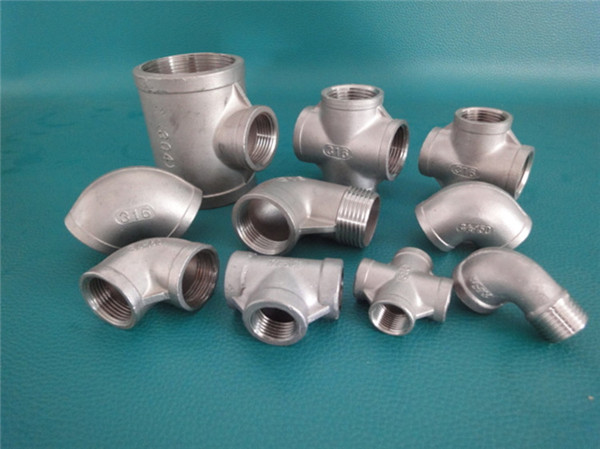
Stainless steel threaded pipe fittings are essential components in various pipeline systems. Their versatility, durability, and superior performance make them ideal for numerous applications. Below is a detailed breakdown of their types, dimensions, features, and uses. 1. What Are Stainless Steel Pipe Fittings? Stainless steel pipe fittings are a kind of pipe fittings. They are made of stainless steel and are called stainless steel pipe fittings. They include stainless steel elbows, stainless steel tees, stainless steel crosses, stainless steel reducers, stainless steel caps, etc., depending on the connection method. Divided into four categories: socket stainless steel pipe fittings, threaded stainless steel pipe fittings, flanged stainless steel pipe fittings, and welded stainless steel pipe fittings. Stainless steel elbows are pipe fittings that allow for turns in piping systems. Flanges connect pipes and are typically attached to the ends of pipes. Stainless steel three-way pipes are designed for situations where three pipes converge, while stainless steel four-way pipes connect four pipes. Additionally, stainless steel reducers connect two pipes of different diameters. The main types of stainless steel materials include 304, 304L, 316, and 316L. Stainless steel pipe fittings refer to various stainless steel pipe connection workpieces, which can be categorized based on their shape, purpose, and connection method. It is characterized by easy installation, high performance, and durability, making it widely used in various pipeline constructions and installations. Stainless steel threaded pipe fittings are stainless steel pipe fittings with threads. Typically found in water gas pipes, small-diameter water pipes, compressed air pipes, and low-pressure steam pipes. The pipe connects to a threaded pipe end. Threads coated with a suitable adhesive, such as thick white paint or glycerin lead monoxide adhesive, ensure proper sealing. Advantages of Stainless Steel: Stainless Steel Corrosion Resistance Stainless steel pipe fittings possess exceptional resistance to oxidation and high temperatures. The toughness and strength of stainless steel pipe fittings are largely unaffected at low temperatures. The high strength of stainless steel withstands wear and tear and high pressure from outside. Stainless steel pipes and fittings can maintain their properties in extreme conditions than other materials. Furthermore, stainless steel fittings typically have a longer lifespan, often decades or more, which helps reduce replacement and maintenance costs. Durable Stainless Steel The high strength of stainless steel withstands wear and tear and high pressure from outside. Stainless steel pipes and fittings can maintain their properties in extreme conditions than other materials. Furthermore, stainless steel fittings typically have a longer lifespan, often decades or more, which helps reduce replacement and maintenance costs. Temperature Resistance Stainless steel pipe fittings possess exceptional resistance to oxidation and high temperatures. The toughness and strength of stainless steel pipe fittings are largely unaffected at low temperatures. 2. What Are Stainless Steel Threaded Pipe Fittings? Stainless Steel Threaded Pipe Fittings Types: (1) Stainless steel threaded elbow; (2)Stainless steel threaded tee; (3)Stainless steel threaded pipe cap; (4)Stainless steel threaded pipe plug; (5)Stainless steel hose nipple; (6)Stainless steel hex bushing; (7)Stainless steel pipe union; (8)Stainless steel hex nipple; (9)Stainless steel locknut; (10)Stainless steel threaded reducer, etc. Stainless Steel Threaded Pipe Fittings Dimensions And Features: (1)Size: 1/8”-4”; (2)Connection: Thread; (3)Thread standards: BSPT, NPT, BSP, DIN, etc; (4)Technics: Casting; (5)Material: 304/316 Stainless Steel; (6)Pressure: 10KG/CM2 (150LBS), 60kg/cm2 (1000WOG); (7)Product advantages: Stainless steel is an environmentally friendly material that replaces traditional carbon steel, aluminum, and copper products. The stainless steel products have a long service life, beautiful appearance, and resistance to acid, alkali, and corrosion. It is ideal for high-end communities, hotels, and equipment manufacturers. Difference between NPT and BSP pipe threads NPT(National Pipe Thread) and BSP (British Pipe Thread) are common thread standards. Differences between them are design standard, thread angle, thread form, and use application. NPT Pipe Thread National Pipe Thread used in the North American market, especially in America and Canada, belongs to the American standard. The NPT thread angle is 60 degrees. Depending on the tight fit of thread and thread to achieve sealing, sealants or raw tape can enhance the sealing effect. NPT pipe is widely used in industrial pipelines, plumbing, and gas transporting. Example: 1/2” NPT mains National Pipe Thread Standards, 1/2 inch diameter. BSP Pipe Thread British Standard Pipe Thread is widespread in Europe, Asia, Oceania, and other countries that belong to the British Standard Pipe. The BSP thread angle usually is 55 degrees. BSPT (British Standard Pipe Taper Thread): The tapered thread is the same as the NPT pipe thread, but the angle and standard differ. The pipe taper thread is sealing depending on the thread matching. BSPP (British Standard Pipe Parallel Thread): Parallel threads require gaskets or seals for auxiliary sealing. Example: 1/4” BSPT Thread mains British Standard Pipe Taper Thread, 1/4 inch diameter. Summary NPT pipe and BSP pipe fittings can not use exchange because of the different thread angles, thread pitches, and design of NPT Pipe Thread, and BSP Pipe Thread connection force may lead to thread worse, poor sealing, or water leak. If you want to connect successfully, please use conversion fittings or adapters to set the adaptive problem. 3. Application Range Of Stainless Steel Pipes And Fittings: A stainless steel pipe is a hollow and long round steel widely used in petroleum, chemical, medical, food, light industry, mechanical instrumentation, and other industrial pipelines and mechanical structural parts. In addition, when the bending and torsion strength are the same, the weight is lighter, making it a popular choice for manufacturing mechanical components and engineering structures. It is also often used to produce conventional weapons, barrels, and shells. Stainless steel pipes can be in oil well pipes (casing, oil pipes, drill pipes, etc.), line pipes, boiler pipes, mechanical structure pipes, hydraulic prop pipes, gas cylinder pipes, geological pipes, chemical pipes (high-pressure fertilizer pipes, petroleum Cracking pipe) and ship pipes. Stainless steel pipe is an economical cross-section of steel and a crucial product in the iron and steel industry. It is widespread in decoration and industry. Many people use it to make stair railings, window guards, railings, furniture, etc on the market. Two
Types of Nipples: Understanding Pipe Nipples and Their Applications
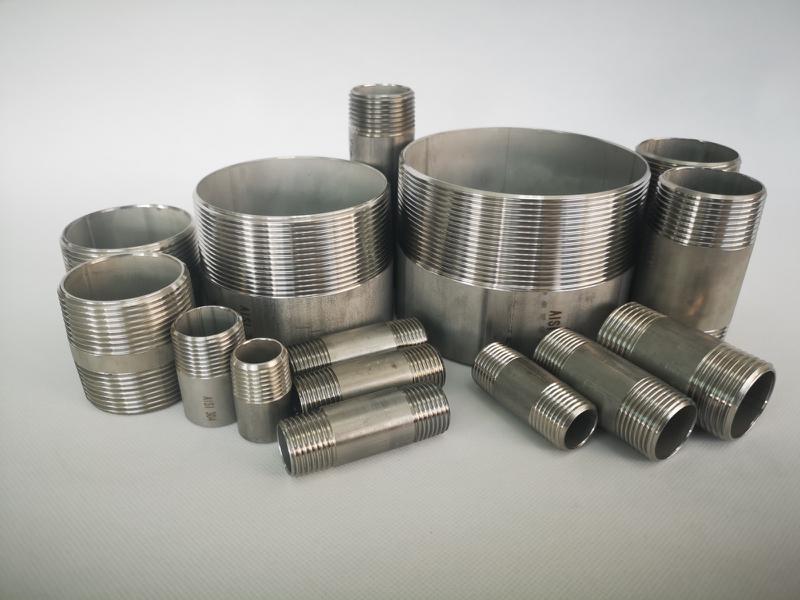
What is a nipple in plumbing? In plumbing, a nipple is a short pipe with male threads on both ends. It is used to connect two female-threaded fittings or pipes. The primary purpose of a nipple is to create a secure and leak-proof connection between different sections of a piping system. Pipe nipple, barrel nipple, close nipple, threaded pipe nipple, tubing nipple, screwed pipe nipple, and plumbing nipple are all it’s named. The pipe nipple is a kind of pipe fitting with male threads on both ends and a nonthreaded middle. It plays a significant role in plumbing, construction, and the delivery of liquids or gases. Next, we will discuss the characteristics, benefits, and materials of barrel nipples and provide insights into various other types of nipples. Key Features of Pipe Nipples The double-threaded design makes more secure and firm connections between pipes. When installed, the male threads on the pipe nipple engage tightly with the female threads of pipes, reducing the likelihood of water leaks and ensuring a long service life. Applications of Different Pipe Fitting Sizes Different sizes are suited for various applications based on the requirements of flow, pressure, and the type of system in use. 1/8 Inch to 1/4 Inch: These smaller fittings suit low-flow applications like instrumentation, gas lines, and mini-plumbing systems. They are ideal for connecting gauges or valves in tight spaces. 1/2 Inch to 3/4 Inch: Commonly found in residential plumbing, these sizes suit water supply lines and heating systems, and the need is fully satisfied. 1 Inch to 2 Inches: Often employed in commercial plumbing and industrial settings, these fittings handle higher volume fluid. They are suitable for main water lines, irrigation systems, and HVAC installations where mass flow rates are required. 3 Inches and Above: These are ideal for heavy-duty industrial applications, including waste management systems, large-scale irrigation projects, and fire protection systems. Convenient for accommodating significant pressure and flow rates necessary for such demanding environments. Understanding the specific application helps to choose the correct size fitting to maintain efficiency and safety within a piping system. Advantages of Using Pipe Nipples Because of the simple design and standard size of the pipe joint, installing pipe nipples is fast and easy without requiring extensive modifications. Resilient to wear and tear, durability ensures that installations remain functional for many years. Does not need frequent replacements or repairs. Material Barrel nipples can be made from various materials, including steel, stainless steel, and brass, each suitable for specific applications and conditions. Carbon Steel: Common nipple types include galvanized and black nipples, known for their strength and durability. Carbon steel barrel nipples in high-pressure applications can endure harsh conditions and are typically more affordable than stainless steel. Stainless Steel: Stainless steel barrel nipples resist corrosion and staining, making them ideal for environments where exposure to water or chemicals is prevalent. Their durability and appearance contribute to their popularity in the plumbing and food processing industries. Brass: Brass barrel nipples are well-known for being durable and resistant to rust and corrosion. They are frequently used in plumbing because they can maintain high-quality connections over time. Furthermore, brass fittings provide an attractive appearance in exposed plumbing systems. Conclusion Pipe joints are regarded as critical components in various piping systems thanks to their unique design and clear advantages. Their versatile sizing, threaded ends, and material options contribute to their widespread use in plumbing and industrial applications. Understanding the different types of nipples and their specific functionalities can boost the effectiveness and reliability of any piping project. When selecting fittings, it is essential to consider the application requirements, environmental factors, and material properties to ensure optimal performance and longevity.
How many types of pipe coupling are there?
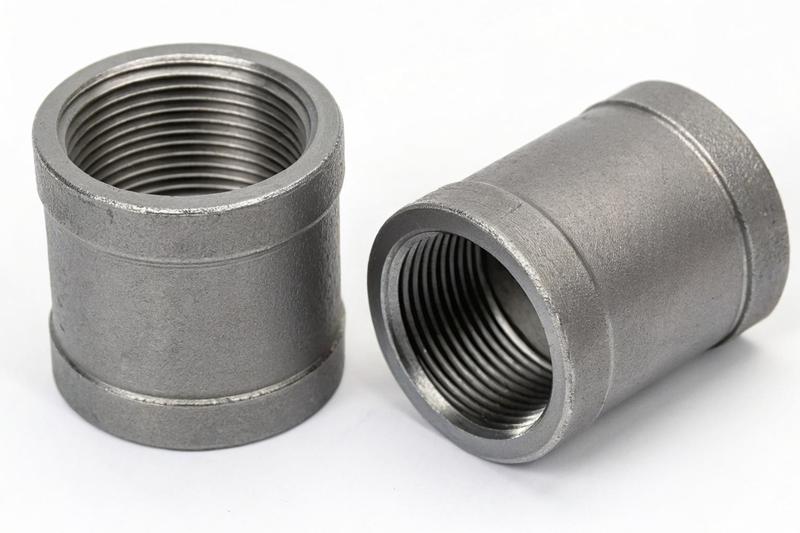
If you’ve ever worked with pipes in plumbing, construction, or industrial systems, you know how crucial couplings are. They connect pipes, redirect flow, and even help with repairs. But how many types of pipe couplings are there? And which one should you use for your project? Let’s break it down in simple terms to pick the right one without the headache. What is Coupling? Okay, let’s talk about those handy little connectors that keep your pipes together – pipe couplings! Think of them as the handshake method between two pieces of pipe, making sure whatever’s flowing inside stays put and goes where it needs to go. Choosing the right one is key, and there are a few different coupling types, each with its superpower. Application of Coupling Here are the key applications of pipe couplings: Joining Pipes: Their primary job is connecting two pipe sections.Pipe Repair: Used to fix damaged or leaking parts of a pipeline.System Assembly: Essential for putting together new piping systems or adding to existing ones.Connecting Different Pipes: Can join pipes of different sizes or materials.Allowing Movement: Some types help handle vibration, expansion, or contraction.Faster Installation: Often quicker and easier to install than welding.Safer Installation: Can avoid the need for hot work like welding.Temporary Setups: Great for quick or temporary connections. Types of Couplings Full Coupling and Half Coupling are like siblings in the threaded coupling family, often used for similar jobs (especially creating connections), but built slightly differently for specific purposes. Full Coupling vs. Half Coupling: What’s the Difference? Full and half couplings are short pipes used to join things, but their structure gives them different primary roles. Full Coupling: The Two-Sided Connector What it is: A short cylinder that’s threaded on the inside at both ends.How it works: Its basic job is to connect two pieces of threaded pipe in a straight line. You screw one pipe into one end and the other pipe into the other end. You can also weld the outside of a full coupling onto the surface of a larger pipe or tank. (though this is less common when welded onto a surface). Half Coupling: The Single-Sided Specialist What it is: This is a short cylinder with a female thread on one end. The other end is typically plain or beveled, specifically designed to be welded onto a flat or curved surface.How it works: Its main purpose is to be welded onto the side of a larger pipe. You weld the unthreaded end onto the surface. The threaded end gives you one convenient threaded connection to another pipe.It cannot connect two pipes inline using threaded connections, because it only has threading on one end. Reducing Coupling What if you need to connect a big pipe to a smaller one? A standard coupling won’t cut it. Enter the reducing coupling! This one looks like a cone, allowing it to connect pipes of different diameters. It smoothly transitions the flow from different diameter pipes. Compression Coupling They typically consist of a main part, a nut on each end, and a ferrule between the nut and the pipe. As you tighten the nuts, the ferrule gets compressed onto the pipe surface, creating a super-tight, leak-proof seal without needing threads or welding. Ideal for situations where you need a joint that is easy to assemble and disassemble. Often used with copper, plastic, or even some metal pipes. Slip or Repair Coupling A slip coupling (sometimes called a repair coupling) doesn’t have that stop. You can slide one end of the pipe onto the fitting, then line up the other end of the pipe, and slide the coupling back over both ends to bridge the gap. Super handy for repairs! Your go-to for fixing a broken pipe section. Grooved Coupling Grooved couplings are popular for larger pipes. These require the pipe ends to have a groove rolled or cut into them. A coupling is a part that fits over a gasket. The gasket seals against the pipe and fits into the grooves. Bolts hold the two halves of the housing together, keeping the pipes and gasket in place. They resemble a clamp. Fast installation compared to welding allows for some flexibility and movement in the pipe system, and is easy to disassemble for maintenance. Flange Coupling Flange couplings are the answer when you need a robust connection, especially for large pipes, high pressures, or connections that might need to take things apart (like connecting a pipe to a pump or valve). This method involves attaching a “flange” (a flat, often round disk with bolt holes) to the end of each pipe. A gasket is placed between the two flanges. Use bolts to clamp the items tightly together. This creates a strong, leak-proof joint. Very strong, reliable for high pressure/temperature, and makes it easy to connect/disconnect sections or equipment. Takes more space and effort than some other types. Which Coupling Should You Use? Here’s a quick comparison table to help you decide: Type Best For Advantages Disadvantages Full Coupling Permanent connections Strong, reliable Requires welding/threading Half Coupling Tank/vessel connections Simple installation Limited to low-pressure uses Reducing Different pipe sizes Versatile May cause flow restriction Compression Quick repairs No welding needed Not ideal for high pressure Slip Coupling Emergency fixes Easy to install Less secure long-term Flanged High-pressure systems Extremely durable Heavy, requires bolts Grooved Fire sprinklers, HVAC Fast installation Needs special tools Coupling Dimensions