
High-Performance Stainless Steel Pipe Couplings: Durability and Versatile Applications
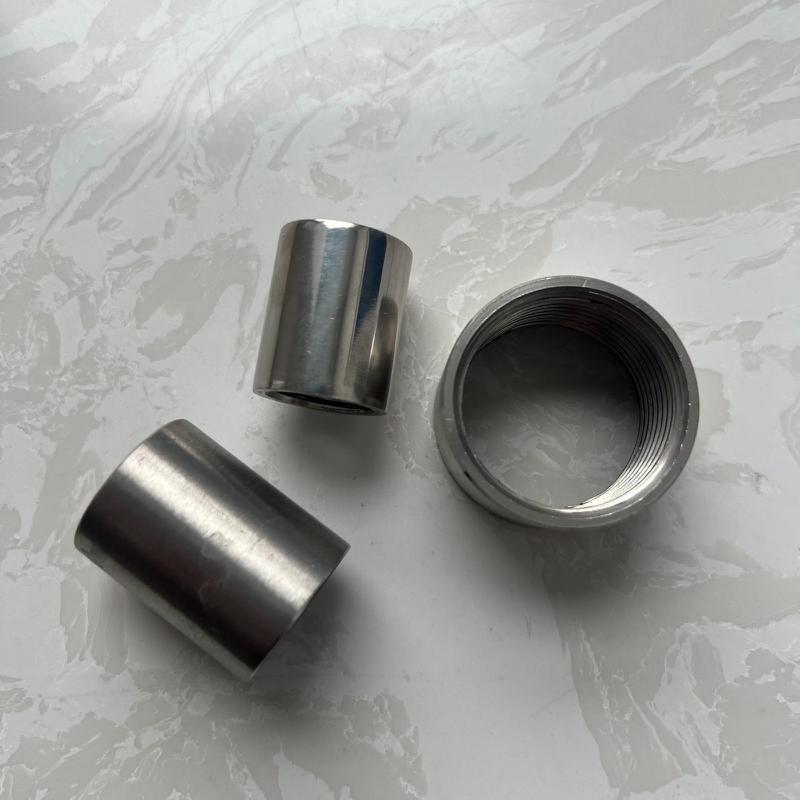
1. Overview Coupling is a piping connector commonly used in high-pressure and high-temperature applications where compact and robust joint construction is necessary. These fittings can be directly welded or threaded into the pipe, providing a strong, leak-proof connection that is particularly valuable in industries such as oil and gas, chemical processing, and power generation. Unlike conventional couplings, these high-performance stainless steel couplings are durable in harsh environments. The corrosion-resistant properties of stainless steel make them ideal for prolonged exposure to extreme conditions without degradation. Every coupling is to meet the exacting standards of high-pressure and high-temperature applications, ensuring precise alignment and consistent performance. 2. Design and Features They are connected to two pipes and usually come in threaded or non-threaded (butt-weld) forms. Threaded couplings involve screwing the pipes into the coupling, while non-threaded couplings are typically with a butt weld or another joining method. Couplings generally do not have the insert-and-weld design of socket weld fittings. Key features include: Durability: Stainless steel pipe couplers made from various materials, including carbon steel, stainless steel, and alloys, provide excellent corrosion resistance, heat resistance, and pressure. Compact Design: Their space-saving design makes socket weld fittings ideal for where space is limited. High Strength: The welding method ensures connections can withstand high pressures, making them suitable for critical applications. Leak Prevention: The flush design of the fitting minimizes the likelihood of leaks, a crucial factor in many industrial settings. Extended Material Range: Materials like carbon steel and advanced alloys, in addition to stainless steel, allow these couplings to be tailored for specific environments—whether high-salinity, high-temperature or highly corrosive. Advanced Connection Types: The option for butt-weld and threaded connections provides installation flexibility, and butt-weld connections, due to their robust, seamless structure, ensure minimal maintenance. Longevity and Maintenance: The high-grade materials ensure minimal wear and tear, reducing the need for frequent maintenance and replacement, especially in critical installations like chemical processing or offshore drilling. 3. Applications Socket in various industries widely, including: To transport high-pressure fluids and gases in pipelines. It’s ideal for handling corrosive substances due to its robust construction. Steam and water systems in power plants. Use in shipbuilding where strength and corrosion resistance are required. Flexible for Various Fluid Types: These pipe couplings are not limited to water, oil, or gas pipelines. Their design accommodates various chemicals, acidic solutions, and other demanding fluids, making them suitable for food processing, pharmaceuticals, and other industries. Critical Industrial Usage: Given their resistance to shock and vibration, they are highly suitable for moving parts in power plants, refineries, and marine engines where stability under load is paramount. Enhanced Corrosion Resistance: Particularly beneficial in environments such as coastal and marine projects, where exposure to salty air and water would typically degrade regular metals, these couplings offer unmatched longevity. 4. Specification Stainless steel pipe connectors are available in various sizes, dimensions, and pressure ratings to meet specific requirements. Standards include ANSI/ASME, ASTM, and MSS-SP, ensuring compatibility and reliability across different applications. Precision Standards Compliance: Not only ANSI/ASME, ASTM, and MSS-SP, these couplings can meet additional specifications upon request, such as DIN and ISO, ensuring global compatibility and seamless integration into existing systems. Customizable Pressure and Temperature Ratings: Available in an extensive range of ratings, these couplings can be customized to withstand unique operating pressures, temperatures, and flow rates, providing tailored solutions for specific industry needs. 5. Conclusion Reliable Under Pressure: Known for maintaining performance under challenging conditions, these stainless steel couplings are a reliable investment for any heavy-duty industrial setup. Comprehensive Support and Customization Options: To help you find the perfect fit, our team offers technical consultation and a range of customization options to ensure they conform to your specifications. For detailed advice on coupling selection, get in touch with our experts! Socket weld fittings are an integral component of industrial piping systems, offering a combination of strength, reliability, and efficiency. Their ability to maintain high performance under extreme conditions makes them a preferred choice for engineers and designers in demanding environments. For more information or a quotation, feel free to contact us!
Understanding the Benefits of Galvanized Pipe Fittings
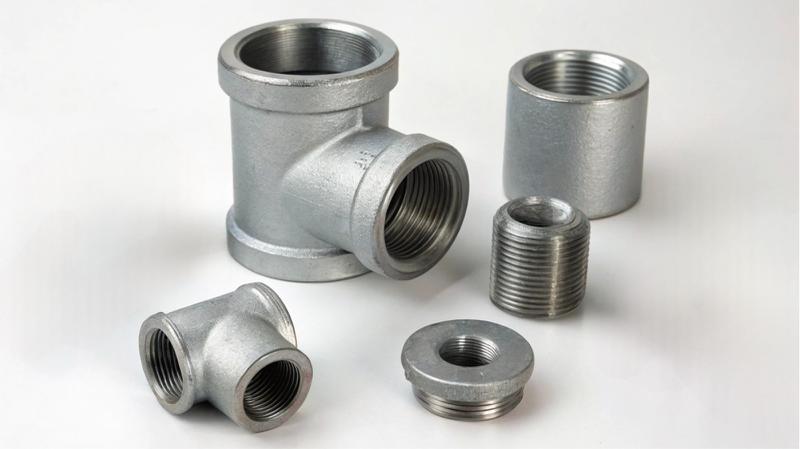
Choosing the right materials is crucial for longevity and reliability when planning a plumbing, structural, or industrial project. Among the many options available, galvanized pipe fittings stand out for their exceptional durability and resistance to corrosion. This article explores galvanized pipes and fittings, their manufacturing process, various types, and significant benefits, illustrating why they may be the ideal solution for your needs. Understanding Galvanized Pipes and Fittings Before we explore the benefits, let’s clarify what we mean by galvanized pipes and fittings. What is a Galvanized Pipe? A galvanized pipe, often called the galv pipe or GI pipe, is a steel pipe coated with a protective layer of zinc. This zinc coating acts as a sacrificial layer, protecting the underlying steel from rust and corrosion. What are Galvanized Pipe Fittings? Galvanized pipe fittings are components used to connect, control flow, or adapt galvanized pipe sections in a piping system. Like the pipes, fittings are coated with zinc through galvanization, providing the same protective benefits. They are essential for creating complete and functional pipe networks. Common terms include galvanized coupling, galvanized nipple, galvanized pipe adapter, galvanized pipe bushing, and more galvanized pipe connectors. The Galvanization Process The key to the durability of these products lies in the galvanization process, most commonly hot-dip galvanization. Hot-Dip Galvanization Explained This process involves immersing the fabricated steel pipe or fitting into a bath of molten zinc. The steel reacts with the molten zinc, forming a series of zinc-iron alloy layers, followed by an outer layer of pure zinc. This metallurgical bond creates a robust coating integral to the steel, not just a surface layer. Why Zinc? Zinc is used because it is more electrochemically active than steel. This means the coating is scratched and the steel is exposed; the zinc will corrode first, protecting the steel from rusting. This is known as cathodic protection. The Composition of Galvanized Pipes Galvanized pipes and fittings are composed of steel or malleable iron and provide structural strength. The outer layer is the protective zinc coating, created through galvanization. This combination of strong base material and corrosion-resistant coating makes them suitable for demanding environments. The Various Types of Galvanized Pipes and Fittings A wide range of galvanized pipe fittings is available to meet diverse plumbing and structural requirements. Understanding the different types is key to selecting the right components for your project. Galvanized Nipples: A galvanized steel nipple is a short pipe section with male threads on both ends. It connects two female-threaded fittings or pipes. Elbows: Used to change the direction of the pipe run, typically at 90 or 45 degrees. Tees: Allow branching off a main pipe run at a 90-degree angle. Couplings: To connect two pieces of pipe in a straight line. Unions: Similar to couplings, but allow for easier disconnection of pipes for maintenance without needing to rotate the pipes. Reducers: Used to connect pipes of different sizes. Caps and Plugs: Used to close off the end of a pipe or fitting. Bushings: Used to reduce the size of a fitting opening, also known as a galvanized pipe bushing. These components, with the galvanized pipe and fittings, constitute the foundation of numerous robust piping systems. The Durability and Longevity of Galvanized Pipes and Fittings One of the most significant advantages of choosing galvanized products is their exceptional durability and long service life. Protection Against Rust and Corrosion The primary benefit of the zinc coating is its ability to prevent rust and corrosion. This makes GI pipe and galvanized fittings ideal for outdoor applications or environments where moisture is present, significantly extending the lifespan compared to uncoated steel. Long Service Life Due to their resistance to degradation, galvanized pipes and fittings can last for decades, even in harsh conditions. This longevity translates into lower replacement costs and reduced maintenance over time. Key Benefits of Choosing Galvanized Pipe Fittings Beyond corrosion resistance, galvanized fittings offer several other compelling advantages. Cost-Effective: While the initial cost might be slightly higher than uncoated steel, the extended lifespan and reduced maintenance needs make them highly cost-effective in the long run. Strength and Reliability: Made from steel or iron, these fittings offer inherent strength and can withstand high pressure and mechanical stress. Versatility: Applicable for various uses, from basic home projects to intricate industrial systems. Ease of Installation: Many galvanized pipe connectors and fittings have threads, which make assembly fairly simple. Are Galvanized Pipes the Right Choice for Your Property? Galvanized pipes and fittings are suitable for numerous applications, including: Non-potable water lines (irrigation, drainage) Structural applications (handrails, fencing, supports) Industrial piping systems Outdoor plumbing Some fire sprinkler systems Important Consideration: Galvanized pipes were historically used for potable water; they are now less common for this purpose due to the risk of zinc buildup and flaking over time, which can negatively impact water quality. Always consult local building codes and regulations, especially concerning potable water systems. Common Applications of Galvanized Pipe Fittings You’ll find galvanized pipe and fittings used extensively in: Residential and commercial plumbing (drainage, vents) Agricultural irrigation systems Industrial fluid and gas transport (non-potable) Construction (scaffolding, handrails) Fencing and gate construction Galvanized Pipe vs. Other Materials Compared to materials like PVC or copper, galvanized steel offers superior mechanical strength and is often more cost-effective for large-diameter or structural applications. While copper is excellent for potable water and corrosion-resistant, it is generally more expensive. PVC is lightweight and easy to install; it lacks the strength and temperature resistance. The choice depends on the specific requirements of the project. Conclusion Choosing the right pipe materials and fittings is critical for any project. Galvanized pipe and fittings, including galvanized nipples, galvanized pipes, couplings, and more, provide an effective combination of durability, corrosion resistance, strength, and cost-effectiveness for various applications. By understanding their benefits and appropriate uses, you can make informed decisions that ensure the longevity and reliability of your piping systems. For projects requiring robust, long-lasting connections, galvanized fittings remain a trusted and effective solution.
The Difference Between Steel Pipe Nipple And Steel Pipe Coupling
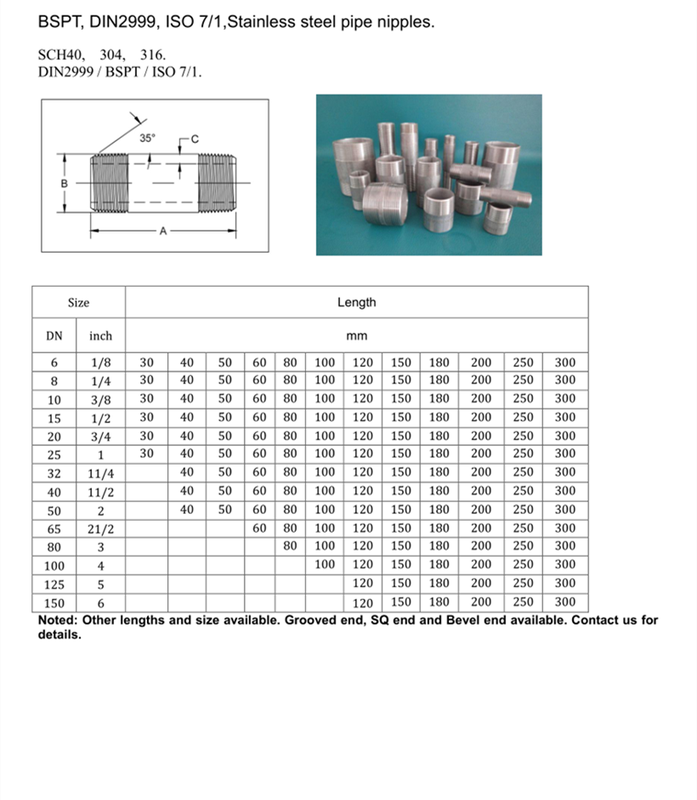
Hebei Sanvo is one of the quality pipe fittings manufacturers and suppliers in China and specializes in the production of steel pipe nipples, steel pipe coupling, stainless steel threaded pipe fittings, etc. These steel pipe fittings are made of carbon steel or stainless steel. The main difference between the steel pipe nipple and steel pipe coupling is the thread connection types. The pipe nipple has one male threaded end or both threaded ends, and the pipe coupling has female threaded ends. 1. What Is A Pipe Nipple? A threaded pipe nipple is a short piece of pipe usually with male threads at both ends or one end for connecting two other pipes or fittings. The threads at two ends can be the same or different types, such as NPT thread to BSP thread nipples also exist. And it is one of the most popular categories of pipe fittings. The length of the pipe nipple is usually specified by the overall length of threads. It may have a hexagonal section in the center for the wrench to grasp (sometimes referred to as a “hex nipple”), or it may simply be made from a short piece of pipe (sometimes referred to as a “barrel nipple” or “pipe nipple”). A “close nipple” has no unthreaded area; when screwed tightly between two female fittings, very little of the nipple remains exposed. A close nipple can only be unscrewed by gripping one threaded end with a pipe wrench which will damage the threads and necessitate replacing the nipple, or by using a specialty tool known as a nipple wrench (or known as an internal pipe wrench) which grips the inside of the pipe, leaving the threads undamaged. When the ends are of two different sizes it is called a reducer or unequal nipple. Pipe Nipple Dimension Standard Threads used on nipples are BSP, BSPT, NPT, NPSM, and Metric. The pipe nipple has different dimension standards according to different thread manufacturing standards. And the threads have different types. The most commonly used types are NPT threads and BSP Threads. NPT is an American standard tapered thread, while BSP is a British standard thread. BSP thread has tapered type BSPT and parallel type BSPP. Pipe Nipple Materials are carbon steel or stainless steel Pipe Nipple Structure is welded or seamless Pipe Nipple Finish is galvanized or black Pipe Nipple Types are TOE pipe nipple/welding nipple, TBE pipe nipple/barrel nipple, close nipple/running nipple, shoulder nipple, etc. 2. What Is A Pipe Coupling? A coupling is a short tube, also called an outer joint; it is a commonly used accessory for industrial pipe connections. The forged coupling is formed by heating and forging with a steel ingot or a round bar and then machined on the lathe to make the thread. The main manufacturing standards are ASTM A865, ASME B1.20.1, etc. According to the connection type, the coupling can be divided into socket coupling and threaded coupling generally. Specifically, it can be divided into single-socket coupling, double-socket coupling, single-thread coupling, and double-threaded coupling. The socket coupling adopts the socket structure to reduce the cost and is extremely convenient to install, use, and maintain, meanwhile, it embodies excellent anti-leakage performance. Thanks to its user-friendliness, it is widely used in civil construction, industry, agriculture, and other fields. What is the threaded pipe coupling? A threaded pipe coupling (or a coupler) (used in piping or plumbing) is a very short length of pipe or tube, with female threads at both ends that allow two pipes or tubes of equal or different sizes to be joined together. Pipe couplings are pipe fittings that help to extend or terminate pipe runs. These pipe fittings are also used to change pipe size. It’s also used to repair a broken or leaking pipe. There are so many different types of couplings available and each one has its specific application. For example, when connecting drop pipes in a well, you may consider using merchant couplings to connect them. Pipe Coupling Materials are carbon steel or stainless steel Pipe Couplings Structure is seamless Pipe Couplings Finish is galvanized or black Pipe Couplings Types are merchant full coupling, merchant half coupling, API Line pipe coupling, etc. 3. The Difference Between Pipe Nipple And Pipe Coupling Are As Follows: In summary and can also be seen from the above pictures that the thread of the steel pipe nipple is male, that is the external thread; the thread of the steel pipe coupling is female, that is the internal thread. That is to say, the two pipes or fittings directly connected with the steel pipe nipple are sheathed and fastened outside, while the two pipes or fittings directly connected with the steel pipe coupling are tightened into the inside. We are one of the excellent pipe fitting manufacturers and exporters in China. We supply all kinds of threaded pipe fittings at factory prices. If you have any questions, please click here to learn more about our products. 4. Can the two be used interchangeably? Generally, pipe nipple and pipe coupling cannot used interchangeably for the following reasons: Structural differences Pipe nipples have external threads on both ends, while pipe couplings have internal threads on both ends, making their functions completely different. In connection design, these two types of fittings have different roles and cannot directly replace each other. Functional purposes The pipe nipple connects two fittings or pipes with internal threads, providing a linear extension function. The pipe coupling connects or extends the pipeline to two smooth-ended pipes. Scenarios of mixed-use In certain particular cases, pipe nipple and pipe coupling can be used together, for example: If a smooth-ended pipe needs to be connected to a fitting with internal threads in the system, coupling and nipple may be required. Pipe nipples can work with Pipe Coupling to form complex piping joint configurations, but careful design ensures connection reliability.
The Difference Between Welded Nipples And Seamless Nipples
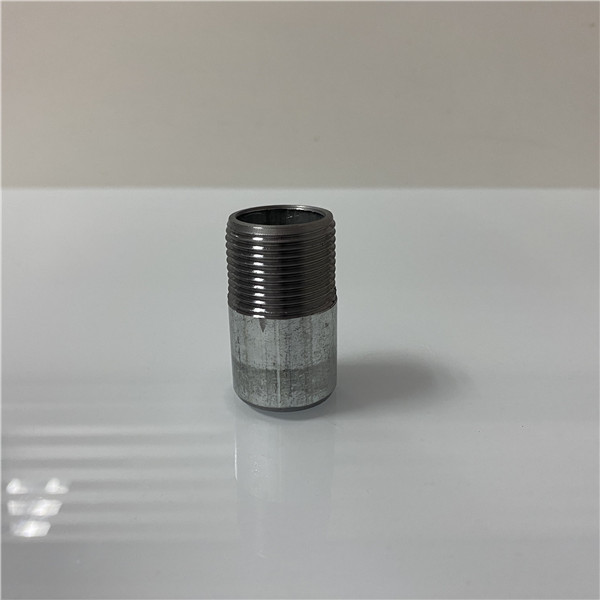
The main difference between welded and seamless pipe nipples lies in the raw materials used, which directly impacts their pressure-bearing capacities. Next, we will discuss both types of pipe nipples, their differences, and their specific applications. 1. What Is a Welded Pipe Nipple? Welded pipe nipples are from flat pieces of carbon or stainless steel. The flat material is rolled into a cylindrical shape and then welded along the seam to create the pipe. The welding process involves using a high-energy source to fuse the edges of the material. This type of pipe is a welded steel pipe, and the standard length of these pipes is typically 6 meters. Key Characteristics: Simple production process: The process is straightforward, raising production efficiency. Variety of specifications: Welded pipes can be manufactured in various sizes and wall thicknesses, making them versatile for different uses. Lower cost: Welded nipples are more affordable than seamless nipples due to their unfussy production process. Weakness: Weld seam: The seam on a welded pipe represents a potential weak point, which can reduce the pipe’s durability under extreme pressure. As a result, welded pipes are generally less suitable for high-pressure applications. Applications: Welded nipples are typically in low-pressure applications, such as water and gas pipelines, heating systems, and industries where the mechanical demands on the pipes are relatively low. 2. What Is a Seamless Pipe Nipple? Seamless pipe nipples are by drawing or extruding a solid bar of carbon steel or stainless steel into a hollow shape. Unlike welded pipes, seamless pipes do not have a seam, which gives them superior pressure resistance and structural integrity. Key Characteristics: No seam: The absence of a seam eliminates the primary weak point found in welded pipes, making seamless pipe nipples stronger and more durable under high pressure. Production methods: Seamless pipes through various processes such as hot rolling, cold rolling, cold drawing, extrusion, and piercing. Wide range of shapes and sizes: Seamless pipes come in cross-sectional shapes, including round, square, and other irregular profiles. Their diameters can range from 0.3mm to 650mm, with the wall thickness varying to suit different applications. Strength: Higher pressure capacity: Seamless nipples are ideal for use in high-pressure environments, such as in the petrochemical industry, boilers, steam pipelines, and automotive applications. Applications: Seamless nipples in high-pressure liquid and gas pipelines, oil and gas exploration, and chemical processing due to their ability to withstand extreme conditions. 3. Differences Between Welded Nipples and Seamless Nipples Appearance: Seamless pipe nipples: These are smooth inside, with no visible seams, providing a more uniform surface for fluid flow. Welded pipe nipples: A visible weld seam or rib runs along the inner surface, which may affect the pipe’s flow characteristics. Pressure Resistance: Seamless nipples: Higher pressure resistance, making them suitable for demanding applications with high pressure and temperature. Welded nipples: Generally have a lower pressure tolerance, around 10 MPa, but are sufficient for low-pressure uses. Production Method: Seamless nipples: Formed from a single piece of steel through rolling, and no welding is involved in their production. Welded nipples: The steel is rolled into shape and then welded, typically using either spiral or direct welding techniques. Cost and Performance: Seamless nipples: Due to their superior performance under pressure, seamless pipe nipples are expensive. Welded nipples are cheap, but their performance is somewhat limited by the presence of the weld seam, making them less durable in high-pressure applications. Applications: Seamless nipples: Preferred for critical applications, such as oil exploration, gas pipelines, and industrial machinery, where high performance is necessary. Welded nipples: Use in water, gas, and heating systems and where there is low demand for mechanical and pressures. 4. Summary of Applications Seamless pipe nipples in industries such as oil and gas, chemical processing, and boiler systems are popular, where reliability and the ability to withstand extreme pressures and temperatures are critical. Welded pipe nipples in residential plumbing, low-pressure heating, and general fluid transport systems are relatively common, where the stress on the piping is less severe. 5. Conclusion In summary, seamless pipe nipples offer greater strength, pressure resistance, and durability. Welded nipples are more economical but better suited for less demanding applications. The choice between the two types of nipples depends on the project requirements, including pressure, temperature, and budget constraints. For industries needing high-performance piping, seamless is often the preferred option. However, welded nipples still play a crucial role in many systems, especially in environments with lower pressures and budgets. Hebei Sanvo is a quality pipe fittings manufacturer and supplier in China, exporting a variety of threaded steel pipe fittings made of carbon steel or stainless steel. There are carbon steel pipe nipples, stainless steel pipe nipples, carbon steel pipe couplings, stainless steel pipe couplings, and stainless steel threaded pipe fittings. If you need pipe nipples or other threaded pipe fittings, please do not hesitate to contact us. Hebei Sanvo welcomes your inquiry.
The Types And Manufacturing Processes Of Steel Pipes
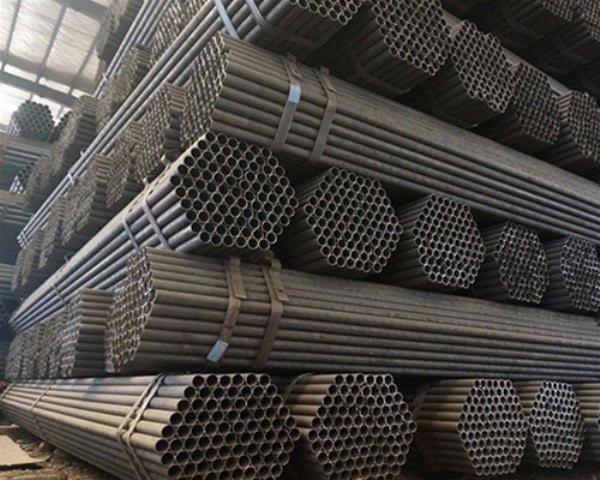
A steel pipe is steel with a hollow section and its length is much greater than its diameter or circumference. There are many steel grades and specifications of steel pipe products, and their performance requirements are also various. All these should be differentiated according to user requirements or changes in working conditions. Generally, steel pipe products are classified according to cross-sectional shape, production method, pipe material, connection method, plating characteristics, and use. The Types Of Steel Pipes According to the cross-sectional shape, it is divided into round, square, rectangular, and special-shaped steel pipes; according to the material, it is divided into carbon structural steel pipes, low-alloy structural steel pipes, alloy steel pipes, and composite steel pipes; according to the purpose, it is divided into transportation pipelines, engineering structures, Steel pipes for thermal equipment, petrochemical industry, machinery manufacturing, geological drilling, high-pressure equipment, etc.; according to the production process, it is divided into seamless steel pipes and welded steel pipes, among which seamless steel pipes are divided into hot-rolled and cold-rolled (drawn) Two types, welded steel pipes are divided into straight seam welded steel pipes and spiral seam welded steel pipes. 1. According To The Section Shape Steel pipes can be divided into round steel pipes and special-shaped steel pipes according to their cross-sectional shape. Special-shaped steel pipes refer to steel pipes with various non-circular cross-sections. Mainly include: Square tube Rectangular tube Oval tube Flat oval tube Semi-circular tube Hexagonal tube Hexagonal inner tube Hexagonal tube with unequal sides Equilateral triangle tube Pentagonal plum blossom tube Octagonal tube Convex tube Double convex tube Double concave tube Multi-concave tube Seed-shaped tube Flat tube, Rhombus tube Star tube Parallelogram tube Ribbed pipe Drop tube Inner finned tube Twisted pipe Type B tube D-type tube and multilayer tube, etc. Steel pipes are divided into equal-section steel pipes and variable-section steel pipes according to the shape of the longitudinal section. Variable cross-section (or variable cross-section) steel pipe refers to a steel pipe whose cross-sectional shape, inner and outer diameter, and wall thickness along the length of the pipe change periodically or non-periodically. Mainly include: Outer tapered tube Inner tapered tube Outer stepped tube, inner stepped tube Periodic section tube Bellows Spiral tube Steel pipe with heat sink Barrels with double lines, etc. 2. According To Production Method Steel pipes can be divided into two categories according to production methods: seamless steel pipes and welded steel pipes. Welded steel pipes are referred to as welded pipes for short. (1) Types Of Seamless Steel Pipes Seamless steel pipes are made of high-quality carbon steel or alloy steel and are divided into hot-rolled and cold-rolled (drawn). According to production methods, seamless steel pipes can be divided into: Hot-rolled seamless pipe Cold drawn tube Precision steel pipe Thermal expansion tube Cold spinning tube Extrusion tube etc. (2) Types Of Welded Steel Pipes Welded steel pipes are formed by welding steel plates rolled into a tube shape with butt seams or spiral seams. In terms of manufacturing methods, they are divided into welded steel pipes for low-pressure fluid transportation, spiral seam electric welded steel pipes, direct coil welded steel pipes, and electric welded pipes. According to different welding processes, welding forms, and end shapes, welded steel pipes can be divided into: Furnace welded pipe Electric welding (resistance welding) pipe Automatic arc welded pipe Longitudinal welded pipe Two types of spiral welded pipe Round welded pipe Special-shaped (square, flat, etc.) welded pipes Seamless steel pipes can be used for liquid pressure pipes and gas pipes in various industries. Welded steel pipes can be used for water pipelines, gas pipelines, heating pipelines, electrical pipelines, etc. 3. According To Pipe Material Steel pipes can be divided into carbon pipes, alloy pipes, stainless steel pipes, etc. according to the pipe material (that is, steel type). Carbon tubes can be divided into ordinary carbon steel tubes and high-quality carbon structural tubes. And alloy tubes can be divided into low alloy tubes, alloy structural tubes, high alloy tubes, and high strength tubes. Bearing tubes, heat-resistant and acid-resistant stainless tubes, precision alloy (such as Kovar) tubes, and high-temperature alloy tubes. 4. According To Connection Method Steel pipes can be divided into smooth pipes (with no threads on the pipe ends) and threaded pipes (with threads on the pipe ends) according to the connection method of the pipe ends. The threaded pipe is divided into the ordinary threaded pipe and pipe end thickened threaded pipe. And thickened threaded pipes can also be divided into threaded pipes such as external thickening (with external threads), internal thickening (with internal threads), and internal and external thickening (with internal and external threads). According to the thread type, the threaded pipe can also be divided into ordinary cylindrical or conical thread and special thread. In addition, according to user needs, threaded pipes are generally delivered with pipe joints. 5. According To The Characteristics Of Plating Steel pipes can be divided into clarinet (uncoated) and coated pipes according to the characteristics of the surface coating. Coated pipes include galvanized pipes, aluminum-plated pipes, chrome-plated pipes, aluminized pipes, and other alloy-layer steel pipes. And coated pipes include outer-coated pipes, inner-coated pipes, and inner-outer coated pipes. The commonly used coatings are plastic, epoxy resin, coal tar epoxy resin, and various glass-type anticorrosive coating materials. Galvanized pipe is divided into KBG pipe, JDG pipe, threaded pipe, and so on. 6. According To Use Steel pipe is not only used to transport fluids and powdered solids, exchange heat, and manufacture mechanical parts and containers, it is also an economical steel. The use of steel pipes to manufacture building structural grids, pillars, and mechanical supports can reduce weight, save metal by 20-40%, and can realize factory mechanized construction. Using steel pipes to manufacture highway bridges can not only save steel, simplify construction, but also greatly reduce the area of the protective layer, saving investment and maintenance costs. Pipes for pipes. Such as seamless pipes for water, gas pipes, steam pipes, oil transportation pipes, and oil and gas trunk lines. Agricultural irrigation water taps with pipes and sprinkler irrigation pipes, etc. Pipes for thermal equipment. Such
A Threaded Nipple Is a Connecting Tool Between Pipes
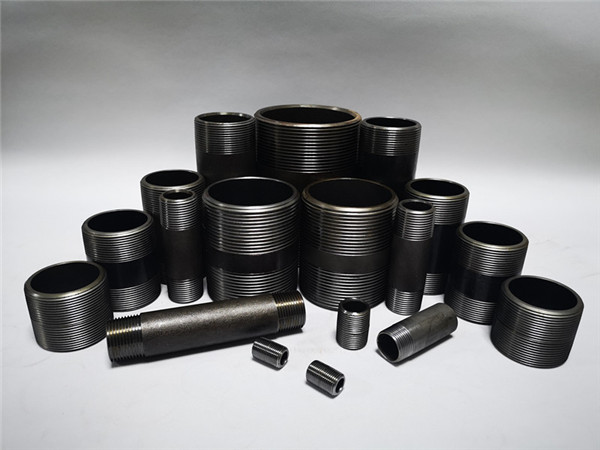
First, this article expands on the relative content of threaded nipples for pipe systems. Deeper into their applications, advantages, variations in design, installation methods, and maintenance considerations. 1. Overview of Threaded Nipples A threaded nipple is a connecting tool between pipes and a connection point between components and pipes that can be disassembled. It plays an indispensable role in the pipe fitting, and it is one of the two main components of the hydraulic pipeline. The connection form of pipe nipple includes socket welding or threaded connection. It is mainly used for small-diameter low-pressure pipeline, which is often installed and disassembled, or as the final adjustment of the pipeline with threaded pipe fittings. The structure form should adopt the metal surface contact sealing structure, which is usually used to transport water, oil, air, etc. In general, malleable cast iron is used for the pipeline. In addition, the user requirements and prices are also factors to be considered in selection. 2. Types There are many kinds of pipe nipples, and commonly used pipe nipples can be divided into two types: hard pipe nipples and hose nipples. 3. Connection In the hydraulic system, the connection mode of the pipe and the pipe nipple is also different. The screw-in end of the pipe adopts the connection thread. Taper thread is mainly used in the middle and low-pressure hydraulic system because of its own vertebral body tightening and sealing operation with polytetrafluoroethylene and other materials. The sealing effect of the fine thread is very good, and it is often used in a high-pressure system, but it needs to use a combination washer or O-ring to seal the end face, and sometimes red copper washer is also used. It is more suitable for connecting pipes with thick walls. Its components mainly include nipple body, connecting pipe, and nut. In use, the nipple body is embedded in the target, and the end face is sealed with the gasket mentioned above. The rubber seal is used between the nipple body and the connecting pipe, and sometimes the spherical seal is also used. Since the pipe nipple is a detachable connecting element, it must meet the requirements of stable connection, strong sealing, reasonable size, small pressure loss, good process performance, etc., as well as the requirements of convenient disassembly and assembly. Therefore, do not look down on those small pipe nipples, because only their existence can support the existence of the entire hydraulic system. 4. Advantages of Using Threaded Nipples High strength of screw joint: According to the principle of cold work hardening of steel, the strength of the straight thread rolled on the steel bar is greatly improved, so that the tensile strength of the straight thread joint is higher than the tensile strength of the base material of the steel bar. Stable performance: The joint process is not affected by the quality of workers, so the performance is stable. Fast connection speed: Because it adopts off-site prefabrication and on-site assembly and connection, the steel bars with prefabricated wire ends can be prefabricated and stored in large quantities in the steel bar storage yard. When the construction period is tight, just add assembly workers at the construction site. Wide range of applications: There are basically no restrictions on the application range, and it is more suitable for bending steel bars, fixed steel bars, steel cages, and other platforms where the steel bars cannot rotate. Easy to manage: the screw joint will not appear the phenomenon of sleeve and steel mismatch, and the inspection is more convenient. The operation is simple, ordinary workers can become skilled workers after a few hours of study. Significant economic and social benefits: shorten the construction period, improve the quality of the project, reduce energy consumption, help environmental protection, reduce equipment investment, lower additional costs, and have obvious economic and social benefits. Low labor intensity: only one step is needed to process a thread head on a dedicated thread rolling machine. 5. Material Choices Carbon Steel: For general applications, offering good strength and wear resistance. Stainless Steel: Ideal for corrosive environments, providing durability and resistance to rust. Brass and Bronze: Used in specialized applications such as marine or high-pressure systems due to their corrosion resistance. 6. Applications of Threaded Nipples Connect fixtures to pipes, facilitating water supply and drainage in residential and commercial buildings. Integral connecting with hydraulic cylinders and pumps, enabling efficient fluid transfer under high pressure. Use the heating installations to connect radiators and boilers, ensuring proper flow of heated liquids. Connecting pipelines to transport crude oil, natural gas, and other hydrocarbons under varying pressures and temperatures is vital. They are essential for connecting pipes that carry corrosive substances, where material compatibility and sealing integrity are crucial. 7. Supplier Information Hebei Sanvo will continue to lead the manufacturing of high-quality threaded pipe nipples and other fittings. We offer an extensive selection to meet the varied needs of customers worldwide. We promise to supply high-quality products only and the best customer service.For more detailed specifications and a comprehensive catalog of available products, click here.