
OD, ID, NPS Explained and Pipe Schedule Table
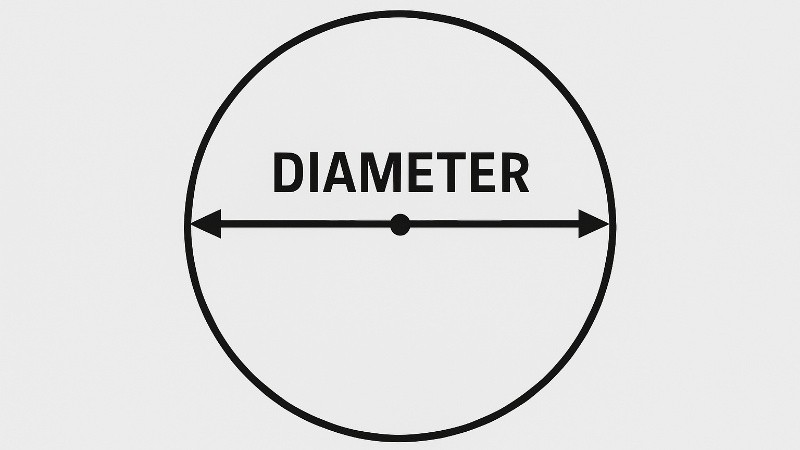
The dimensions of steel pipe directly determine their compatibility, flow performance, pressure-bearing capacity, and connection standards. Understanding steel pipe dimensions can be confusing—OD, ID, NPS, DN, pipe size dimension chart… If you have ever felt confused about material selection, this article will clarify all the key concepts for you. Before Everything: Understanding Diameter To fully understand OD, ID, and other pipe dimensions, we must start with the basic concept of diameter. What Is Diameter? For any circular shape, including round-shaped pipe ends, the diameter is measured as the distance between the two widest points, and the straight line must pass through the center of the circle. In simple terms: Diameter = the widest distance across a circle, passing through the center. This applies to both outer diameter (measured across the external surface) and inner diameter (measured across the inner wall). Outside Diameter (OD) and Why Does It Matter When measuring the outside diameter, you need to cross the center of the round end of the pipe to extend a line to the two ends on the outside widest edge of the pipe. It is a fixed dimension that remains constant regardless of the wall thickness. OD is critical for pipe fittings, threading, welding compatibility, and overall system design. The outer diameter plays a crucial role in ensuring compatibility with threading, fittings, welding, and the overall design of connections. In short, OD is the first dimension you must match when selecting pipe fittings or connectors. Understanding Inside Diameter The inside diameter is the length of the diameter of the inner wall, a line crossing the pipe center point, both ends connected to the two inside widest points of the pipe. This length is the inner diameter. Unlike the outside diameter, the inside diameter changes according to wall thickness. A thicker wall results in a smaller inner diameter of the pipe, while a thinner wall increases the inner diameter. ID plays a key role in calculating flow rate, pressure loss, and fluid capacity. The inside diameter (ID) measures the usable space in the pipe. Sizing pipes for water, gas, HVAC, or industrial fluid systems, ID is often the most important performance dimension. Nominal Pipe Size (NPS) & Diameter Nominal (DN) This is where things get interesting. NPS (Nominal Pipe Size) in the imperial system and DN (Diameter Nominal) in the metric system are named sizes—not actual measurements. They don’t match the OD or ID directly. They’re basic labels used to standardize pipe sizes, making it easier for engineers and buyers to communicate. Think of NPS/DN like T-shirt sizes: “S”, “M”, “L”… the number doesn’t tell you the exact chest width, but everyone knows what size it refers to. Key Differences Parameter Actual Measurement Changes With Wall Thickness Primary Use OD (Outside Diameter) Yes No Fittings, threading, pipe connections ID (Inside Diameter) Yes Yes Flow rate, fluid capacity, pressure loss NPS/DN (Nominal Diameter) No No Standardized naming & specification Pipe Size Chart Nominal Pipe Size Outside Diameter (mm) Nominal Wall Thickness (mm) NPS (inch) DN ASME JIS DIN Sch 10 Sch 20 Sch 40 XS Sch 80 Sch 160 XXS 1/8″ 6 10.3 10.5 10.3 1.25 1.73 3.07 3.07 1/4″ 8 13.7 13.8 13.7 1.65 2.24 3.33 3.33 3/8″ 10 17.1 17.3 17.1 1.65 2.31 3.56 3.56 1/2″ 15 21.3 21.7 21.3 2.11 2.77 3.73 3.73 4.78 7.47 3/4″ 20 26.7 27.2 26.9 2.11 2.87 3.91 3.91 5.56 7.82 1″ 25 33.4 34.0 33.7 2.77 3.38 4.55 4.55 6.35 9.09 1-1/4″ 32 42.2 42.7 42.4 2.77 3.56 4.85 4.85 6.35 9.70 1-1/2″ 40 48.3 48.6 48.3 2.77 3.68 5.08 5.08 7.14 10.15 2″ 50 60.3 60.5 60.3 2.77 3.91 5.54 5.54 8.74 11.07 2-1/2″ 65 73 76.3 76.1 3.05 5.16 7.01 7.01 9.53 14.02 3″ 80 88.9 89.1 88.9 3.05 5.49 7.62 7.62 11.13 15.24 3-1/2″ 90 101.6 101.6 – 3.05 5.74 8.08 8.08 4″ 100 114.3 114.3 114.3 3.05 6.02 8.56 8.56 13.49 17.12 5″ 125 141.3 139.8 139.7 3.4 6.55 9.53 9.53 15.88 19.05 6″ 150 168.3 165.2 168.3 3.44 4.5 7.11 10.97 10.97 18.26 21.95 8″ 200 219.1 216.3 219.1 3.76 6.35 8.18 12.70 12.70 23.01 22.23 10″ 250 273 267.4 273 4.19 6.35 9.27 12.70 15.09 28.58 25.40 12″ 300 323.8 318.5 323.9 4.57 6.35 10.31 12.70 17.48 33.32 25.40 14″ 350 355.6 355.6 355.6 6.35 7.92 11.13 12.70 19.05 35.71 16″ 400 406.4 406.4 406.4 6.35 7.92 12.70 12.70 21.44 40.49 18″ 450 457.2 457.2 457 6.35 7.92 14.27 12.70 23.83 45.24 20″ 500 508 508.0 508.0 6.35 9.53 15.09 12.70 26.19 50.01 22″ 550 558.8 558.8 – 6.35 9.53 12.70 28.58 53.98 24″ 600 609.6 609.6 610.0 6.35 9.53 17.48 12.70 30.96 59.54 26″ 650 660.4 660.4 – 7.92 12.70 12.70 28″ 700 711.2 711.2 711.0 7.92 12.70 12.70 30″ 750 762 762 – 7.92 12.70 12.70 32″ 800 812.8 812.8 813.0 7.92 12.70 17.48 12.70 34″ 850 863.6 863.6 – 7.92 12.70 17.48 12.70 36″ 900 914.4 914.4 914.0 7.92 12.70 19.05 12.70 38″ 950 965.2 965.2 – 12.70 40″ 1000 1016 1016 1016 12.70 42″ 1050 1066.8 1066.8 – 12.70 44″ 1100 1117.6 1117.6 – 12.70 46″ 1150 1168.4 1168.4 – 12.70 48″ 1200 1219.2 1219.2 1220.0 12.70
What Is The Difference Between Plug And Cap In Plumbing?
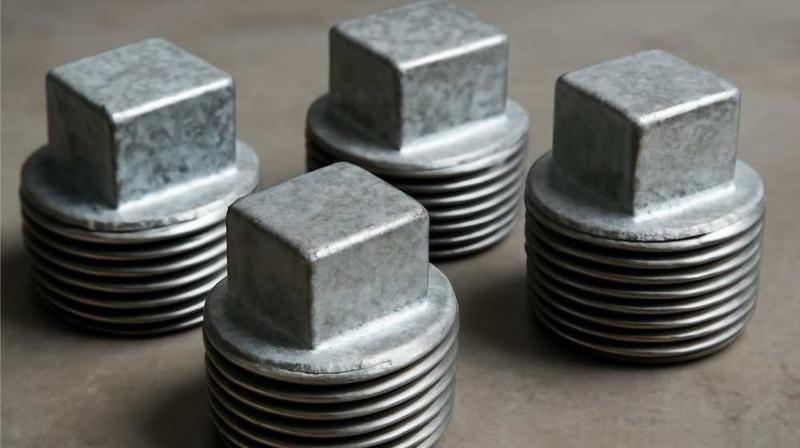
What is a plug? A plug is a male-threaded fitting that seals the end of a pipe when screwed into a female-threaded fitting, commonly used as a gas line cap or water pipe cap. A pipe end cap is a female-threaded fitting used to close off pipelines, preventing dirt, moisture, and contaminants during storage and transportation. 1. What Is A Pipe Cap? A pipe cap (also called a plumbing cap) is a type of pipe fitting that covers the end of a pipe to close the pipeline, preventing leaks and contamination. Its function is similar to a pipe plug but is designed for female-threaded or welded connections. Pipe cap materials: Carbon steel, stainless steel, alloy steel, PVC, plastic, and other materials. Pipe cap connection methods: threaded connection, socket weld, butt Weld, etc. Pipe cap shapes: round head caps, hex head caps, etc. Pipe cap manufacturing standards: ASME B16.11, ASME B16.9, etc. Pipe cap manufacturing process: forging and casting (Forging refers to the use of steel ingots or round bars for heating and forging forming, and then processing threads on a lathe; Casting refers to the melting of steel ingots and pouring them into a fixed pipe hoop model, and then cooling them). Pipe cap applications: Pipe caps, such as PVC caps and stainless steel end caps, protect ends from dust and moisture, ensuring leak-free connections. Gas line caps and pipe plugs are used in hydraulic and pneumatic pipelines, water pump lines, and plumbing systems to prevent contamination and air blocks. 2. What Is A Pipe Plug? What is a plug? A pipe plug is a male-threaded pipe fitting, also a threaded plug, used to block the internal threads of a pipe. Common types include hex head, square head, and round head plugs. Like pipe caps, pipe plugs allow systems to be fully pressurized. Pipe plug materials: carbon steel, stainless steel, copper, brass, plastic, etc. Pipe plug shapes: hex head plug, square head plug, etc. Pipe plug connection methods: The threaded plug must use the threaded connection. Pipe plug manufacturing standards: ASME B1.20.1, ASME B16.11, etc. Pipe plug manufacturing process: forging and casting (Forging refers to the use of steel ingots or round bars for heating and forging forming, and then processing threads on a lathe; Casting refers to the melting of steel ingots and pouring them into a fixed pipe hoop model, and then cooling them). Pipe plug applications: Pipe plugs are used in the closing of the ends of various hydraulic or pneumatic pipes or tubes. Pipe plugs are the type of pipe fittings used in the plumbing apparatus of both industrial and domestic water supply lines, machinery, and so on. They are also for the removal of air blocks on water pump lines. 3. Pipe Cap VS Plug Both plumbing caps and pipe plugs protect pipelines from dust, moisture, and contaminants during storage and transportation. Pipe caps connect to external threads, while pipe plugs screw into internal threads. Always tighten carefully to avoid thread damage. The difference between a pipe cap and a pipe plug is that the pipe cap is an internally threaded pipe fitting and is connected to the externally threaded pipe end, while the pipe plug is an externally threaded pipe fitting that is connected to the internally threaded pipe end. 4. Where To Buy/Purchase Stainless Steel Pipe Caps And Pipe Plugs In China? SANVO is a manufacturer, factory, and exporter of quality stainless steel threaded pipe fittings, gas line caps, and cap plugs. We also supply threaded pipe fittings, including elbows, tees, nipples, and pipe unions. All products meet ASME and DIN standards with guaranteed quality. SANVO Advantage: Stainless steel pipe cap and pipe plug factory, primary source, non-trading company; Best price and guaranteed quality, and ensure timely delivery; Samples can be mailed to customers for free, customer satisfaction is our ultimate goal; Can be customized according to drawings, samples, and the customer’s special needs. I think you can buy stainless steel pipe caps and pipe plugs from SANVO. We can meet your size standards and special needs. If you have any needs, please contact us immediately for free samples or quotations, and we look forward to your messages.
Pipe Coupling Size Guide: How to Choose the Right Size
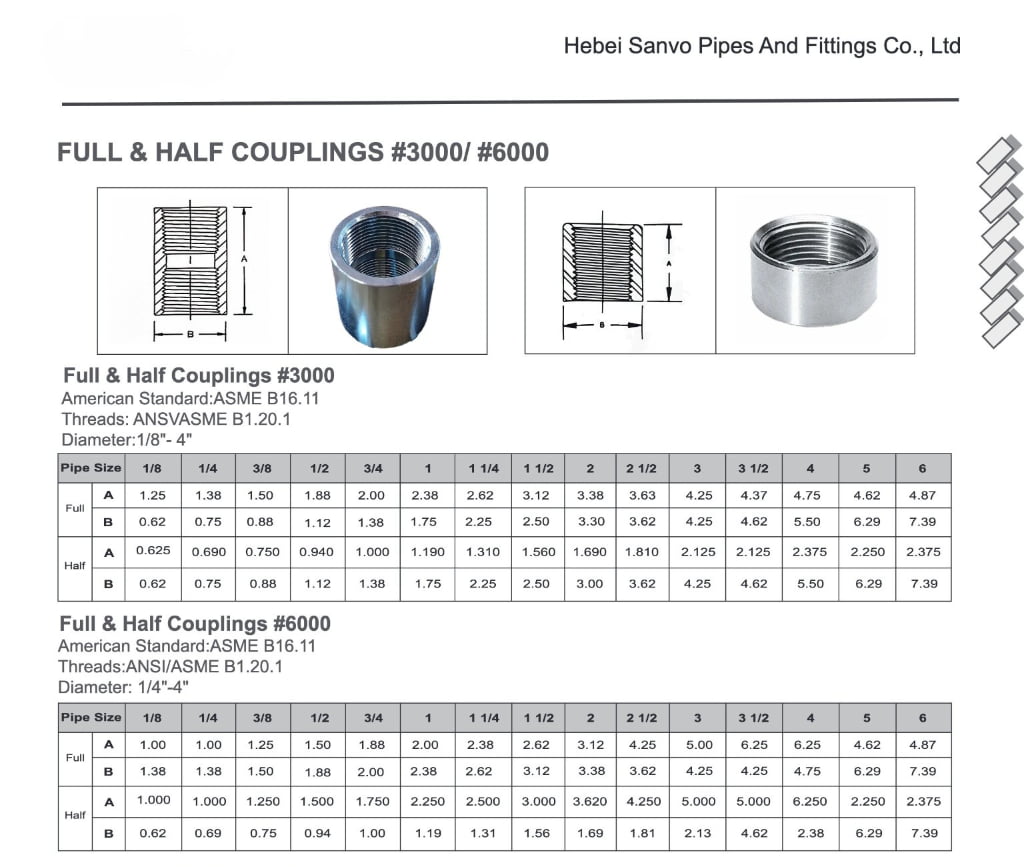
Introduction In industrial piping systems, selecting the correct pipe fitting size is critical for ensuring safety, reliability, and long-term performance. Among the most commonly used fittings in threaded piping networks is the pipe coupling. This small but essential pipe fitting connects two pipes or pipe nipples together, allowing pipelines to extend, repair, or adapt to different layouts. At our manufacturing facility, we produce a wide range of pipe couplings, pipe nipples, steel pipes, and stainless steel threaded pipe fittings designed for demanding industrial environments. Over the years, we have worked with contractors, pipeline engineers, and procurement teams across many industries, and one common challenge we see is choosing the correct pipe coupling size. In this guide, we will explain how pipe coupling sizes work, how they relate to a series of threaded pipe fittings, and how to select the right specification for your industrial piping systems. Applications Pipe couplings are widely used in threaded piping installations where two pipes need to be securely connected. Because they are compact, strong, and easy to install, they are commonly found in many industrial environments. Fire Sprinkler Systems In fire protection systems, threaded pipe fittings are often used because they allow quick installation and easy maintenance. Pipe couplings connect sections of pipe or pipe nipples to form long sprinkler pipelines throughout buildings. Industrial Water Supply Systems Factories and processing plants rely on stable water supply pipelines. Pipe couplings connect steel pipes and pipe nipples to create flexible water distribution networks that can be easily expanded or repaired. Gas Pipeline Systems Gas pipelines often use threaded connections in smaller diameter systems. Pipe couplings help connect pipe nipples and steel pipes securely while maintaining pressure integrity. Mechanical Equipment Piping Many industrial machines require compact pipe connections. Pipe couplings are often used together with pipe nipples to connect valves and pressure gauges. Boiler Room and Utility Piping Utility rooms contain multiple pipelines for water, steam, and gas. Pipe couplings allow technicians to connect or replace sections of piping without welding. Because of these versatile applications, pipe couplings are considered a fundamental component in industrial piping systems. Why Pipe Couplings Are Used in Industrial Piping Systems Although there are many pipe connection methods available, pipe couplings remain one of the most practical solutions in threaded pipelines. Simple Pipe Connection A pipe coupling is essentially a short fitting with female threads on both ends. It allows two pipes or pipe nipples with male threads to be joined quickly. This design makes pipe couplings a standard choice for threaded pipe fitting systems. Easy Pipeline Extension When pipelines need to be extended, engineers can simply insert a pipe nipple and pipe coupling to lengthen the system. This modular structure allows pipelines to be adjusted without replacing entire sections of pipe. Maintenance and Repairs In maintenance situations, pipe couplings allow technicians to remove damaged pipes and install replacements quickly. Compared with welded fittings, threaded pipe fittings reduce downtime during repairs. Compatibility with Standard Threads Pipe couplings are designed with standard threads such as: NPT (National Pipe Thread) BSPT (British Standard Pipe Thread) This ensures compatibility with common pipe nipples, steel pipes, valves, and threaded fittings. Pipe Coupling Sizes Understanding pipe coupling sizes is important when designing or purchasing couplings for industrial piping systems. Pipe coupling sizes correspond to the nominal pipe size (NPS) of the pipes to be connected. The coupling must match the outer thread size (OD) of the pipe nipple or steel pipe. Because pipe thread standards are fixed, selecting the correct size ensures proper sealing and pressure resistance. Material Options for Pipe Couplings Material selection plays a major role in the performance and durability of pipe couplings. Different materials are suited to different industrial environments. Stainless Steel Pipe Couplings Stainless steel is widely used in industries that require corrosion resistance. Advantages include: Excellent corrosion resistance High strength and durability Suitable for chemical and water systems Long service life Stainless steel pipe couplings are commonly used in: chemical processing plants food processing facilities water treatment systems They are often paired with stainless steel pipe nipples and steel pipes in demanding environments. Galvanized Steel Pipe Couplings Galvanized steel pipe couplings are coated with a protective zinc layer to improve corrosion resistance. Advantages include: Good rust resistance Cost-effective solution Suitable for outdoor pipelines Widely used in fire sprinkler systems Galvanized couplings are frequently used with galvanized pipe nipples in construction and infrastructure projects. Carbon Steel Pipe Couplings Carbon steel pipe couplings are commonly used in heavy industrial systems where strength is the primary requirement. Advantages include: High mechanical strength Good pressure resistance Cost-effective for large systems They are commonly used with carbon steel pipe nipples and steel pipes in industrial piping systems. Installation Advantages of Pipe Couplings One of the biggest advantages of pipe couplings is the ease of installation. Quick Installation Because pipe couplings are threaded internally, installation only requires simple pipe tools. Contractors can connect pipe nipples and steel pipes without welding or specialized equipment. Flexible Pipeline Assembly Threaded pipe fittings allow pipelines to be assembled in sections. This modular structure helps engineers build complex industrial piping systems more efficiently. Easy Replacement If a pipe section fails, technicians can remove the damaged pipe nipple and replace it without cutting the pipeline. This reduces maintenance time and system downtime. Lower Installation Costs Compared with welded pipe systems, threaded pipe fittings reduce labor and installation costs, especially in smaller pipeline networks. Typical Industrial Use Cases Over the years, we have supplied pipe couplings for a wide range of industries. Some typical examples include: Fire Protection Systems Pipe couplings are used to connect pipe nipples in fire sprinkler networks installed in commercial buildings and warehouses. These systems require reliable fittings that can maintain pressure for long periods. Factory Utility Pipelines Many factories have internal water and compressed air pipelines. Pipe couplings allow maintenance teams to adjust or extend pipelines quickly. Pump and Valve Connections Pipe nipples and pipe couplings are often used to connect pumps, valves, pressure gauges, and other mechanical equipment.
How to Choose Pipe Coupling Size: Engineer’s Guide
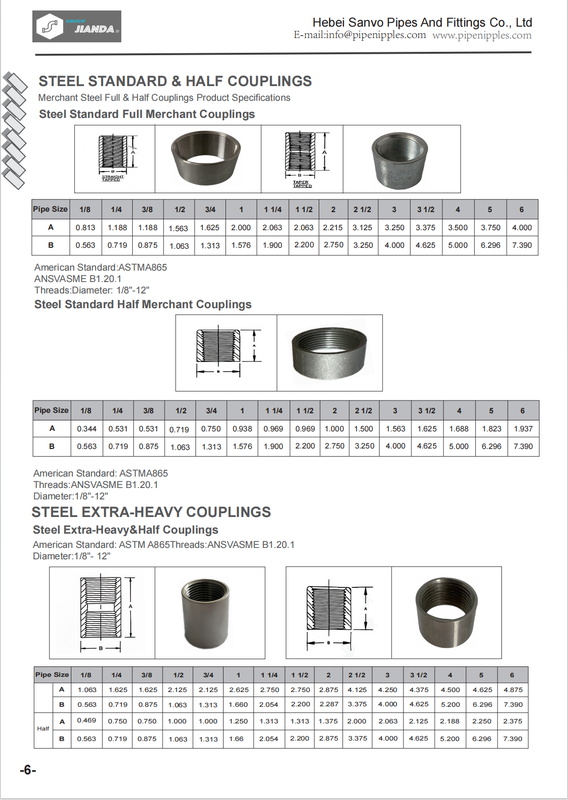
Introduction Choosing the correct pipe coupling size is not as straightforward as it looks. Most errors come from confusing the nominal pipe size and the actual size.Most errors come from confusing thenominal pipe sizeand the actual size. Thus, a “3/4-inch pipe” does not have an outside diameter of 3/4 inch. Pipes and fittings supply, sizing disputes, and specification errors are our responsibilities daily. This guide explains clearly the pipe coupler sizes. It covers pipe coupling dimensions and the most common ordering mistakes. You can specify the correct coupling the first time — without delays or reruns. Quick Answer To choose the correct pipe coupling size, match the coupling to the nominal pipe size, not the actual OD. For example, a 3/4 inch pipe requires the same NPS coupling. The actual outside diameter of 3/4 inch pipe is 1.050 inches, and the coupling bore is machined to match. Confirm the thread standard, pipe wall thickness, and material grade when ordering. Detailed Explanation Step 1 — Understand nominal pipe size (NPS) Nominal Pipe Size (NPS) is a North American standard for pipe and fitting dimensions. It is a reference number only. So, the NPS number does not equal the actual pipe OD or ID. For example, a 1-inch NPS pipe has an actual OD of 1.315 inches. However, a 2-inch NPS pipe has an OD of 2.375 inches — not 2.000 inches. In addition, all schedules of a given NPS share the same OD, with only the wall thickness changing. Key rule: Always specify pipe coupling sizes using NPS numbers. Do not specify by actual outside diameter unless you are working with OD-based. Confusing the two is the most common cause of wrong-size coupling orders. Step 2 — Read the pipe coupling size chart The table below shows pipe coupling dimensions for standard NPT threaded couplings. Use this as your reference when selecting pipe coupler sizes. Step 3 — Answer: What size coupling for 3/4 inch pipe? A 3/4 inch NPS pipe requires the same NPS coupling. The actual pipe OD is 1.050 inches. Therefore, the coupling bore is machined to accept exactly this diameter. In addition, confirm the thread standard — if your system uses BSP instead of NPT, specify BSPT or BSPP accordingly. Step 4 — Confirm pipe schedule compatibility Pipe schedule affects wall thickness and internal bore, but not the OD. So, a coupling fits any schedule of the same NPS pipe on the outside thread. But the pressure rating must match your system requirements. Also, always verify that the coupling pressure class suits the operating conditions. Schedule Wall Thickness (3/4″ NPS) ID (3/4″ NPS) Typical Application SCH 40 (STD) 0.113″ 0.824″ General commercial/light industrial SCH 80 (XH) 0.154″ 0.742″ Higher pressure, industrial process SCH 160 0.219″ 0.612″ High-pressure service XXH (Double Extra Heavy) 0.308″ 0.434″ Very high-pressure or corrosive service Step 5 — Select the right coupling type Not all pipe couplings serve the same function. So, confirm the type before ordering. Full Coupling joins two pipes or pipe nipples of the same size. Most common type. Half Coupling one threaded end only. Used for branch connections or pipe end closures. Reducing Coupling joins two pipes of different NPS sizes. For example, a 3/4″ × 1/2″ reducing coupling connects a 3/4 main line to a 1/2 branch. Hex Coupling hex body for wrench engagement. Easier to install and remove in tight spaces. Common Mistakes These are the most frequent errors we see from procurement teams and field engineers. Reviewing this list before placing an order can save significant time and cost. Mistake 1 — Measuring pipe OD and ordering by that dimension: The OD of a 3/4 inch pipe is 1.050 inches, not 0.750 inches. However, many buyers measure the OD and try to order a “1-inch coupling.” This results in the wrong size every time. Therefore, always order by NPS nominal size, not measured OD. Mistake 2 — Confusing NPT with BSP threads: NPT and BSP tapered threads look similar but are not interchangeable. Forcing a BSP coupling onto an NPT pipe fitting will cross-thread or leak under pressure. So, must confirm the thread standard. Mistake 3 — Ordering full couplings when reducing couplings are needed: In transition points between pipe sizes, a reducing coupling is required. But many teams order full couplings and then try to use a bushing as a workaround. This adds unnecessary joints and potential leak points to the system. Mistake 4 — Ignoring pressure rating: Pipe coupling dimensions alone do not define suitability. Thus, the coupling pressure rating needs to match the system’s operating pressure and temperature. For example, a Class 2000 coupling is not suitable for high-pressure steam lines. Mistake 5 — Selecting the wrong material for the environment: Carbon steel couplings corrode rapidly in wet or chemical environments. However, many orders default to carbon steel because it is cheaper. So, Grade 316 stainless steel is always specified for outdoor, marine, or chemical service. Mistake 6 — Not specifying end-to-end length for tight spaces: Pipe coupling dimensions vary between manufacturers. Also, some applications have strict face-to-face constraints. Thus, dimensional drawing is critical to the installation layout. Engineering Tips These recommendations are based on pipe couplings supply and project experience. Always use PTFE tape or anaerobic thread sealant on NPT connections. NPT threads seal by thread interference, not by face contact. Therefore, sealant is mandatory to prevent leaks at operating pressure. For stainless steel threaded pipe fittings, use anti-seize compound in addition to sealant. Stainless threads are prone to galling under high torque. Therefore, anti-seize prevents thread damage during installation and future disassembly. Match the coupling material to the pipe material wherever possible. Mixing carbon steel with SS pipe fittings causes corrosion in wet environments. Besides, it complicates inspection and maintenance records. Specify Class 3000 as a minimum for steam or high-pressure gas service. Class 2000 threaded couplings are adequate for water and low-pressure air. However, for steam, gas, or hydraulic service, Class 3000 provides the necessary safety margin. For buried or embedded piping, specify galvanized couplings. Ensure the sizes match – the galvanizing coating adds approximately 3–5 mils of surface, which may affect. Request a Mill Test Report (MTR) for all stainless steel pipe couplings on critical projects. MTRs confirm
Pipe Elbow, Tee, and Cross: Essential Pipe Fittings
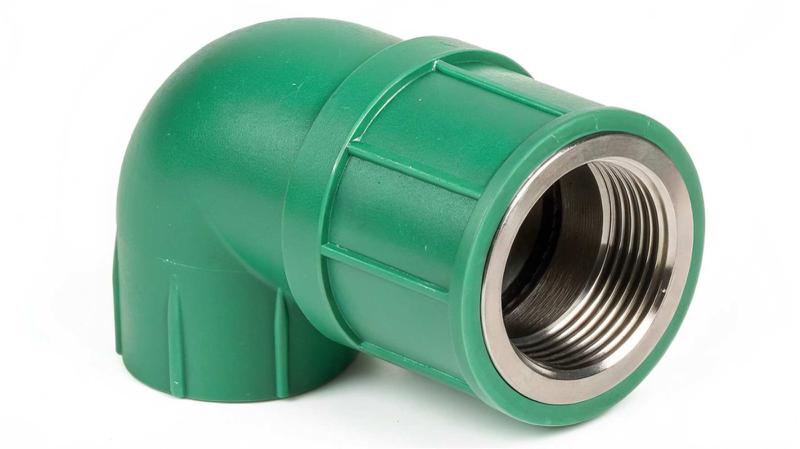
Pipe fittings, such as pipe elbows, cross, and tee pipes, are crucial in piping systems and enable directional changes, branch connections, and flow distribution. In this text, we will discuss each fitting together. 1. Pipe Elbow The pipe elbow is a commonly used pipe fitting to change the direction of a pipe. It typically features an angled design, allowing the pipeline to navigate around obstacles or change its route. 180, 45, or 90-degree elbow pipes fulfill the needs of most systems. 90° Elbow 90-degree elbow pipe creates a right-angle turn in the piping system. 90-degree elbow pipe is wide in those that require a sharp turn system. The flow direction of the 90-degree elbow pipe provides clean and sharpness. 45° Elbow Used for gentle change of direction. Used for pressure descent where the system does not need a sharp turn. 45-degree pipe elbow decreases the turbulence and pressure loss compared with 90-elbow pipe. 180° Elbow: 180-degree pipe elbow allows for a complete turn in piping, forming a U-turn in the pipeline. Suitable for where limited space needs compact layout applications. There is no need to add extra pipe to achieve an effect available flow direction. Types Long Radius Elbow: Has a larger radius, reducing pressure loss and wear. Short Radius Elbow: Compact design for tight spaces but causes more turbulence. Applications HVAC systems for duct routing. Oil, gas, and water pipelines. Chemical and processing plants. Benefits An elbow pipe is efficient in changing direction and does not affect systemic flow integrity. Durable, even in high-pressure and corrosion applications. The elbow pipe is the base to ensure the flexibility and function of any pipeline infrastructure. Stainless steel elbows in food processing due to their high corrosion resistance. 2. Pipe Tee A pipe tee is a T-shaped fitting that allows branch connections in a piping system. It has one inlet and two outlets at a 90° angle to the main line (or vice versa). Equal Tee Equal tee means three outlets have the same diameter, also known as the straight tee. The equal tee maintains uniform flowing pressure and velocity and is easy to install in the same-diameter pipes. Reducing Tee Also known as unequal tee, one branch has a smaller diameter than the main line. Used in the different pipe sizes to transition. Convenient to rate control and pressure regulation. Applications Diverts or combines fluid flow. Common in plumbing, irrigation, and industrial piping networks. Used in systems requiring branching to secondary lines. 3. Pipe Cross A pipe cross is a fitting with four openings arranged at 90° angles, forming a “+” shape. It allows for the connection of four pipes. Equal Cross All four branches are of the same diameter. Reducing Cross One or more branches have a smaller diameter than the main line. Applications It is often used in fire protection systems where must be water flow distributed in multiple directions. Cross pipe is in industrial processes involving complex piping layouts. It cycles the cooling water and steam in many lines. Cross pipe distributes water in multiple irrigation areas. 4. Materials Stainless Steel Stainless steel pipe fittings have high corrosion resistance. Ideal for food, beverage, and chemical industries. Stainless steel pipe fittings maintain longer use even in extreme temperatures and pressures. 304 and 316 stainless steel is suitable for most industries. The smooth surface of stainless steel fittings prevents impurities accumulation and hygiene and is easy to clean. Black Steel Black steel pipe fittings have strength, durability, and cost-effectiveness and are widespread in various industries. Galvanized Steel Galvanized steel fittings enhance corrosion resistance for outdoor and moisture applications and extend use life. Galvanized steel pipe and elbow have benign mechanical strength and are stable even in a high-temperature environment. Galvanized steel fittings have lower maintenance costs, wide applications, and economics. Copper Excellent thermal conductivity; often used in plumbing and HVAC systems. 5. Advantages of Using These Fittings Elbow pipe, pipe tee, and cross pipe fitting are versatile and applicable across multiple industries. Efficiency simplifies complex piping layouts. Durable, high-quality materials extend the system’s lifespan. Ease of Installation, threaded, welded, or push-fit options ensure quick assembly. Flexible, change the direction. Elbow pipe allows piping systems to fit into tight spaces without needing excessive material. Pipe tees and cross pipes reduce the need for additional connections by consolidating branching or flow merging into a single fitting. Elbow pipe, pipe tee, and cross pipe fitting are essential for constructing efficient, safe, and adaptable piping systems. They can adjust direction, manage brach, and connect to many pipes, so these fittings are crucial for modern industry, commercial, and home applications. Suitable pipe fittings ensure long-term properties and save costs. 6. Conclusion Elbows, tees, and cross pipes are efficient and functional, integral to piping systems. Different types, angles, and materials ensure compatibility with applications from industrial systems to residential plumbing. Selecting the applicable fitting ensures smooth operation and enhances the system’s longevity and safety. Choose us, so don’t worry your project may cause problems. The staff of SANVO and the factory provide the best pre and after-sales service and high-quality products.
Pipe Fitting Standards Guide for the European Market
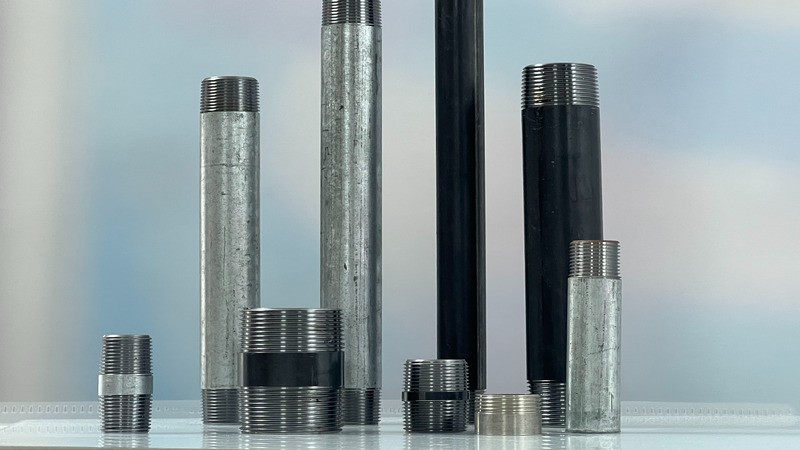
This guide will help you learn the most common EN, ISO, and DIN standards for pipe fittings in Europe, making it easier for you to select the right products from us that comply with European requirements and meet your customers. The common standards for pipe fittings in the European market include EN, ISO, and DIN. EN (European Norm): The unified European Union standard, widely adopted across all EU member countries. ISO (International Organization for Standardization): An international standard system that is also widely applied in Europe, especially for thread types, dimensions, and material grades of pipe fittings. DIN (Deutsches Institut für Normung): The German national standard, which is widely used throughout the European industrial sector for stainless steel and carbon steel fittings. BS Standards (British Standards): Remain influential in Europe and former Commonwealth markets. Many have been harmonized with EN or ISO standards. Types Standards Explain Material Standards EN 10241 Common standards for threaded carbon steel pipe fittings DIN 2982 Carbon steel threaded pipe fittings BS EN 10241 The EN standard version adopted by the UK Threads Standards ISO 7-1 British standard taper pipe thread (BSPT) ISO 228-1 Imperial parallel thread (BSPP) DIN 2999 German standard thread (same as ISO 7) BS 21 British threaded standard (same as ISO 7) These are the most widely used pipe fitting standards that meet the requirements of most European customers. If you’d like to learn more, keep reading. We’ll introduce additional EN, ISO, and DIN pipe fitting standards commonly applied across Europe’s piping industry. EN Standards EN (European Norm) standards are harmonized across the European Union and EFTA countries. They ensure that carbon steel, stainless steel pipe fittings, and PVC pipes meet consistent quality, safety, and performance benchmarks. EN 10255: This standard specifies requirements for threaded carbon steel pipes used for water, gas, and heating applications. EN 10305: Pertains to precision steel tubes used in hydraulic and pneumatic systems. EN 12760: Defines specifications for socket-welding pipe fittings and threaded fittings, commonly used in oil, gas, and chemical industries. DIN Standards Although increasingly superseded by EN standards, DIN (Deutsches Institut für Normung) standards are still widely referenced, especially for technical specifications. DIN 2440/2441: Cover black and galvanized steel pipes with threaded ends. DIN 11850: Relevant for stainless steel pipes and fittings used in food, beverage, and pharmaceutical industries due to their hygienic properties. BS Standards BS standards remain influential in Europe and former Commonwealth markets. Many have been harmonized with EN or ISO standards. BS EN 806: Specifications for installations inside buildings conveying water for human consumption. BS 1387: For threaded galvanized steel pipes, commonly used in low-pressure plumbing. ISO Standards ISO (International Organization for Standardization) standards facilitate international trade and commerce. Many EN standards are aligned with ISO. ISO 9001: While not product-specific, this quality management standard is critical for pipe fittings manufacturers to demonstrate consistent quality. ISO 2531: For ductile iron pipes and fittings used in water and sewage applications. Why Compliance Matters for Exporters For pipe fittings suppliers, adhering to these standards is not optional—it is a prerequisite for market entry. Here’s why: Legal Requirements: Products often must carry CE marking (indicating conformity with EU legislation) to be sold in the EEA. Customer Confidence: Compliance signals quality and reliability to European industrial buyers. Interoperability: Ensures that your pipe fittings will work seamlessly with existing systems. Competitive Advantage: Certification can differentiate your products in a crowded industrial marketplace. Conclusion Navigating the landscape of European pipe standards—from EN and DIN to ISO—is fundamental for any pipe fittings exporter targeting the region. Prioritizing certification and compliance will streamline your market access, enhance your brand reputation, and meet the precise demands of European industrial clients. For suppliers of industrial pipe fittings, investing in understanding these standards is investing in long-term export success.