
Comparing Stainless Steel Fittings to Other Materials
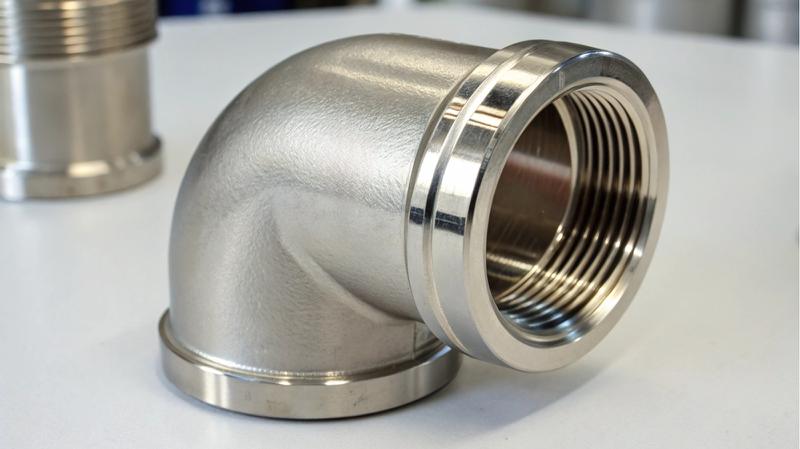
Choosing the right material for your piping system’s fittings is a critical decision that impacts its performance, lifespan, and overall cost. With numerous options available, including galvanized steel, copper, and PVC, understanding the strengths and weaknesses of each is essential. This article provides a detailed comparison, focusing on stainless steel fittings and how they compare to other common materials, helping you determine the best fit for your needs. What Are Stainless Steel Pipe Fittings? Stainless steel pipe fittings, also commonly referred to as SS pipe fittings or simply SS fittings, are components used to connect, control, or adapt sections of stainless steel pipes. They are primarily made from a steel alloy containing a minimum of 10.5% chromium, which sets them apart in their composition. Its remarkable resistance to corrosion and staining is attributed to its chromium content, hence the name “stainless.” These fittings are integral parts of SS pipes and fitting systems used across various industries. Common types include elbows, tees, reducers, couplings, caps, and stainless steel pipe connectors. Why Material Choice Matters for Pipe Fittings The material for your choice of pipe fittings, your project’s success, and longevity have significant implications. Understanding the key factors involved is crucial for making an informed decision when comparing materials like stainless steel plumbing fittings to other options. Application Considerations What substance will be transported through the pipes? Different materials are suited for carrying water (potable or non-potable), chemicals, gases, food products, or waste. The nature of the fluid dictates the required chemical resistance of the fittings. Environmental Factors Where will the piping system be located? Exposure to moisture, corrosive chemicals in the atmosphere or soil, extreme temperatures, or UV light can significantly impact the lifespan and performance of the fittings. Pressure and Temperature Requirements Every system operates under specific pressure and temperature ranges. The chosen fitting material must safely withstand these conditions without deforming, cracking, or failing. Lifespan and Maintenance How long is the system expected to function without major issues? Some materials offer a much longer service life with minimal maintenance than others, leading to lower long-term costs. Cost Implications Consider the initial purchase price of the fittings and the long-term costs, including installation, maintenance, potential repairs, and eventual replacement. A lower initial cost doesn’t always mean it’s the most economical choice over the system’s lifetime. Installation Methods Different materials require different joining methods (e.g., threading, welding, soldering, gluing). The complexity and cost of installation can vary significantly depending on the material chosen. Stainless Steel vs. Galvanized Steel Fittings Galvanized steel fittings are corrosion-resistant steel fittings coated with a layer of zinc. They are often used in non-potable water lines and structural applications. Corrosion Resistance Comparison Stainless steel offers superior, inherent corrosion resistance due to its chromium content, which forms a passive protective layer. Galvanized steel relies on a zinc coating, which can degrade over time, especially in hot water or corrosive environments, leading to rust (red rust) once the steel is exposed. Stainless steel’s resistance is built into the material, providing more consistent long-term protection. Durability and Strength Both are strong, but stainless steel maintains its integrity better in corrosive conditions over the long term. Stainless steel is generally more resistant to abrasion and mechanical damage than galvanized steel once the zinc coating on galvanized steel is compromised. Temperature Handling Stainless steel generally withstands significantly higher temperatures than galvanized steel, making it suitable for more demanding industrial processes. Cost Differences Galvanized fittings typically have a lower initial cost per unit than stainless steel fittings. However, the stainless steel’s longer lifespan and lower maintenance needs can make it more cost-effective over the entire project duration, especially in corrosive environments. Typical Applications Stainless steel is preferred for corrosive environments, high temperatures, and applications requiring hygiene (like food processing, chemical handling). Galvanized is suitable for less demanding, non-corrosive applications like fencing, handrails, and some non-potable water lines. Stainless Steel vs. Copper Fittings Copper fittings are widely used in residential and commercial plumbing, particularly for potable water and HVAC systems. Comparing Corrosion Resistance Copper has good corrosion resistance, forming a protective patina. However, it can be susceptible to corrosion from certain water chemistries (e.g., acidic water) or electrolysis. Stainless steel offers broader chemical resistance and is less affected by variations in water chemistry, providing more reliable performance in diverse water conditions. Strength and Pressure Ratings Stainless steel is significantly stronger and more resistant to mechanical damage and higher pressures than copper. This makes stainless steel the preferred choice for high-pressure industrial applications. Temperature Capabilities Both handle a range of temperatures, but stainless steel is often preferred for very high-temperature industrial applications where copper’s strength may decrease. Installation Differences Copper is a common plumbing material typically joined by soldering or brazing. Stainless steel fittings are often threaded or require welding, which can be more complex, time-consuming, and may require specialized equipment and expertise compared to soldering copper. Cost Comparison Copper prices can fluctuate but are generally comparable to or slightly less than stainless steel, depending on the grade, size, and market conditions. For large-scale industrial projects, stainless steel’s long-term benefits can justify the potentially higher initial cost. Where They Are Used Copper is traditional for potable water distribution in buildings. Stainless steel is used in potable water, in some regions for industrial, chemical, high-pressure, high-temperature, and hygienic applications, and copper is unsuitable. Stainless Steel vs. PVC Fittings PVC and other plastic fittings are lightweight, inexpensive, and easy to install, commonly used for drainage, vent, and some lower-pressure water systems. Resistance to Corrosion and Chemicals PVC is highly resistant to many chemicals (acids, bases) but is susceptible to solvents and has limitations with temperature. Stainless steel offers broader chemical resistance and is unaffected by solvents, though specific SS grades are needed for certain aggressive chemicals. Stainless steel maintains its integrity across a wider range of chemical exposures. Strength and Durability Stainless steel is vastly superior in mechanical strength, pressure resistance, and impact resistance. PVC is brittle under certain conditions and has low pressure and temperature limits,
Stainless Steel Hex Nipple for Food, Pharma & Chemical Systems
Introduction In food processing, pharmaceutical manufacturing, and chemical handling facilities, a single wrong-fitting material can trigger a product recall, a regulatory shutdown, or months of accelerated corrosion-driven maintenance. The stainless steel hex nipple — compact, threaded on both ends with a wrench-flat hex body — sits at almost every instrument tap, sanitary branch connection, and chemical injection point in these systems. The procurement challenge is not finding suppliers. It is knowing which grade (304 vs. 316), which thread standard (NPT vs. BSP), and which surface finish (Ra value) is actually required for your service conditions — and sourcing it at a lead time that does not delay commissioning. This guide covers: fitting selection by application, verified material specifications, realistic quantity estimates by project scale, and cost reduction strategies for buyers in North America, Europe, Southeast Asia, and the Middle East — the primary markets for hygienic and corrosion-resistant stainless steel hex nipples. Which Fittings Are Used in Hygienic & Corrosive Piping Systems Stainless steel hex nipples are one component in a broader threaded fitting system. Understanding how they interact with adjacent components helps avoid mismatched materials, thread incompatibilities, and grade inconsistencies within a single piping circuit. Fitting Type Primary Application Recommended Material Key Engineering Reason Stainless Steel Hex Nipple Instrument taps, branch connections, tight-access manifolds, pump inlet/outlet SS 316L / SS 304 316L for chloride or CIP chemical exposure; hex body enables torque without damaging adjacent threads SS Pipe Coupling Inline joining of two pipe sections; repair connections in corrosive circuits SS 316L Consistent bore ID critical for flow; 316L resists pitting from caustic and acid cleaning agents SS Hex Bushing Female-to-male thread reduction in existing assemblies SS 304 / SS 316L Must grade-match adjacent fittings; galvanic corrosion if mixed with carbon steel SS Ball Valve (Threaded End) Isolation at instrument taps and sample points in hygienic circuits SS 316 body, SS 316L trim 316L trim resists chloride attack; full-bore design maintains piggability and CIP effectiveness SS Street Elbow Direction change at instrument nozzles requiring wrench access in confined spaces SS 316L Hex flats are critical where a standard elbow cannot be torqued without slipping on adjacent components Note: In pharmaceutical and biotech piping (ASME BPE systems), all threaded fittings, including hex nipples, must meet surface finish requirements (SF1 to SF4 classification). Confirm the applicable finish category with your validation engineer before procurement. Project Scale & Quantity Reference Guide The following estimates are based on typical instrument density and branch connection counts across common facility types. Use as a procurement planning baseline; adjust from your actual P&ID instrument takeoff. Project Scale Typical Facility Type SS Hex Nipple Qty Related SS Fittings Selection Notes Small (Single process unit) Pilot plant, small brewery, lab skid, single CIP circuit 20–120 pcs 10–40 couplings 5–20 bushings Specify 316L throughout; verify thread standard (NPT vs BSP) against local valve inventory; order 15% overage for commissioning Medium (Multi-unit facility) Food processing line, pharmaceutical suite, chemical batch plant 120–600 pcs 40–200 couplings 20–80 reducing nipples Segregate grades by zone (316L in CIP/product contact, 304 in utilities); standardize on 2-3 lengths per size; require MTRs on all 316L items Large (Full plant / greenfield) Beverage plant, API facility, petrochemical unit, offshore platform 600–4,000+ pcs 200–1,200+ couplings 80–400+ specialty nipples Issue blanket PO with phased releases; require heat-traceable MTRs; consolidate thread standards; include 5-8% spare parts inventory in order Pharmaceutical and biotech note: Add 20-25% to quantity estimates to account for validation spares and cGMP spare parts inventory requirements. How to Reduce Costs on SS Hex Nipples Without Compromising Compliance 1. Specify 316L Only Where the Chemistry Demands It SS 316L carries a 30-50% unit price premium over SS 304. In facilities where only a portion of lines carry chloride-rich or acidic media, blanket 316L specification is common over-engineering. Build a fluid service matrix: 304 is adequate for utility steam, instrument air, neutral water, and mild services. Use 316L for CIP circuits, brine service, acid media, and any line where chloride exceeds 100 ppm at temperatures above 50°C. A well-segregated specification typically reduces total fitting material cost by 20-35% compared to full-facility 316L. 2. Standardize Nipple Lengths Across the Project Projects that allow per-drawing custom nipple lengths routinely end up with 6-8 different lengths per pipe size. Consolidating to close nipple, 1.5″, and 3″ for each bore diameter reduces SKUs from 30+ to 9, simplifies inventory control, and concentrates volume per SKU to reach price-break thresholds. Over 90% of instrument connection requirements can be met with three standard lengths. 3. Consolidate Orders Across Project Phases Phased procurement — ordering fittings as each construction phase is released — typically means 3-4 separate spot-price purchase orders. Issuing a single blanket PO for 70-80% of projected quantities with phased delivery releases typically achieves 12-20% unit price reduction, guarantees lead time, and maintains heat traceability continuity. For FDA or EU GMP regulated facilities, traceability continuity across the project is a compliance requirement, not just a preference. 4. Apply Electropolish Only Where Surface Finish Is Specified Electropolished (EP) hex nipples with Ra <= 0.8 micron cost 40-60% more than mill-finish equivalents. EP finish is required only on product-contact and CIP-contact fittings — typically 30-50% of total threaded fitting count. Utility lines (compressed air, cooling water, non-product-contact clean steam) do not require EP. Correct surface finish zoning typically reduces average fitting cost by 15-25% facility-wide without any compliance compromise. Material Selection Quick-Reference: SS Hex Nipples by Service Condition Service Condition Media / Temp / Pressure Recommended Grade Avoid Reason Food & beverage product contact Mild acids, dairy, sugars, < 140°C, < 10 bar SS 316L, Ra <= 0.8 um (EP) SS 304, carbon steel 304 susceptible to Cl SCC in CIP; EP finish prevents biofilm accumulation Pharmaceutical/biotech (cGMP) WFI, process water, API solutions, < 121°C SS 316L, ASME BPE SF1-SF4 SS 304, non-traceable material FDA/EMA requires traceability and validated surface finish; 316L is mandatory for WFI service Chemical injection (acid service) HCl, H2SO4, HNO3, < 60°C, < 20 bar SS 316L or Duplex 2205
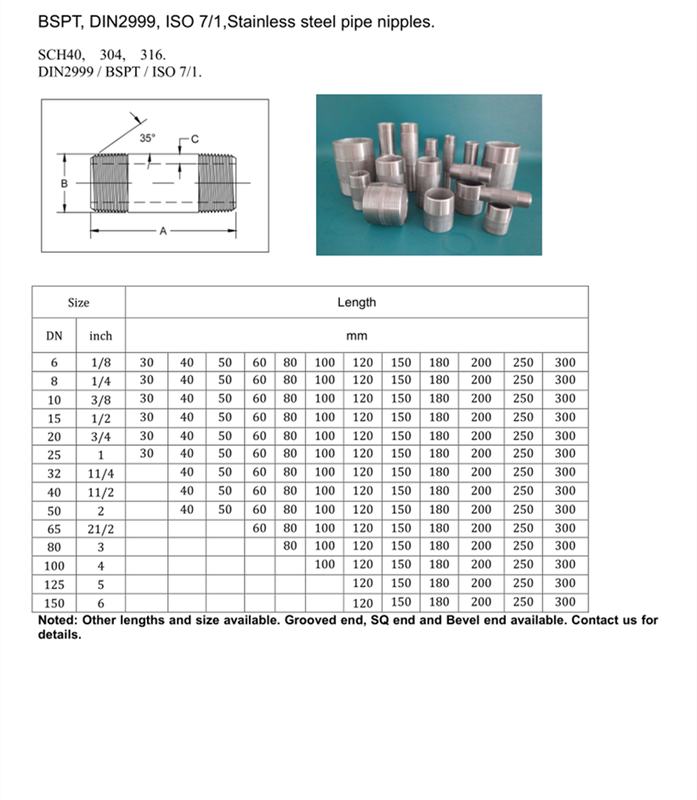
Stainless Steel Pipe Nipple Size Chart
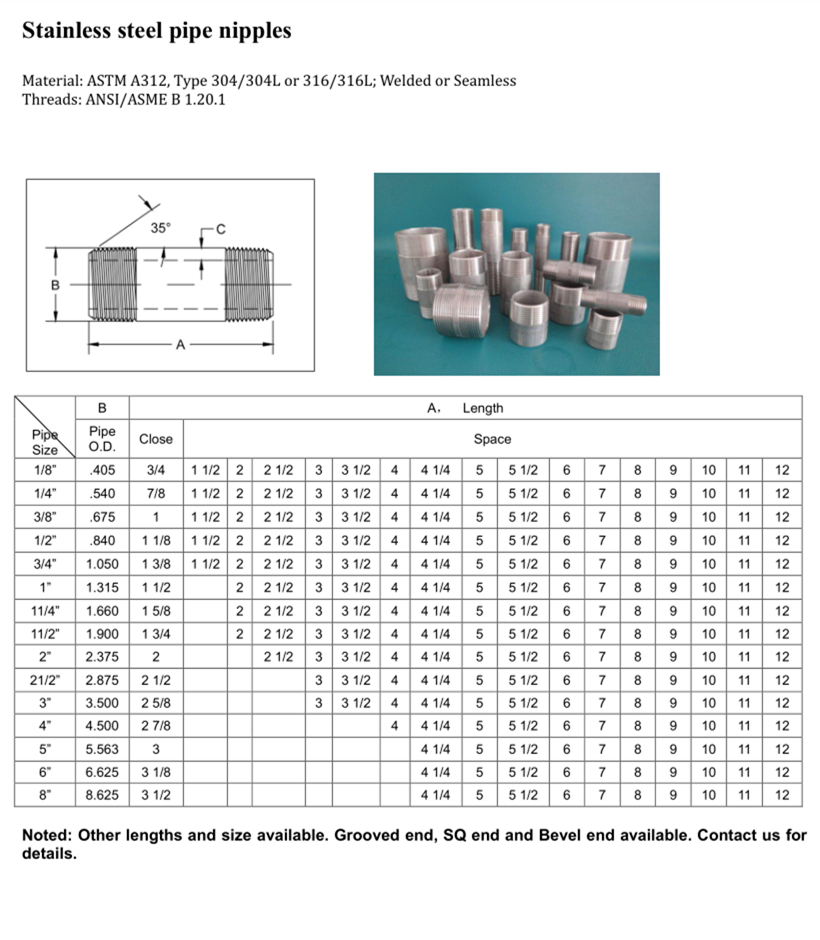
Hebei Sanvo stainless steel pipe nipples are made of high-quality 304/316 stainless steel pipes and have different standard sizes, include NPT, DIN, BSPT. All in all, our ss pipe nipples will meet your needs. The Stainless Steel Pipe Nipple Size Chart Stainless Pipe Nipples Types Our stainless steel nipples are used in the connection of various pipelines in the industry, chemical industry, and daily life. They have the characteristics of firm connection and convenient use. Stainless steel pipe nipples include TBE pipe nipple/barrel nipple, TOE pipe nipple/welding nipple, close nipple/running nipple, etc. In these steel pipe nipples, the thread length, tube length, and pitch length can all be made according to customer requirements. The ss pipe nipples can be customized according to drawings or samples, regardless of length or thickness. Hebei Sanvo is a stainless steel pipe nipple manufacturer and supplier in China, and stocks a full line of stainless steel threaded pipe nipples. In addition to schedule 40 standard and schedule 80 extra heavy stainless steel nipples, we also offer hex nipples and hose nipples – all available in 304 stainless steel and 316 stainless steel. Our pipe nipple with threads of National Pipe Threads (NPT), British Standard Pipe Threads (BSPT), as well as sourcing of Metric Threads upon request. Stainless Steel TBE Pipe Nipple Stainless Steel TOE Pipe Nipple Stainless Steel Close Nipple Stainless Steel Hex Nipple Stainless Steel Hose Nipple At the same time, our company SANVO is also one of the quality steel pipes and fittings manufacturers and suppliers in China. In addition to the production of stainless steel pipe nipples, it also produces carbon steel and stainless steel pipes, carbon steel and stainless steel pipe fittings, carbon steel and stainless steel pipe flanges, and stainless steel ball valves, including seamless steel pipes, welded steel pipes, galvanized steel pipes, black steel pipes, galvanized pipe nipple/coupling, black pipe nipple/coupling, and stainless steel threaded elbow, stainless steel threaded tee, stainless steel pipe cap, stainless steel pipe plug, stainless steel pipe union, stainless steel lock nut, stainless steel hex bushing, and stainless steel reducer coupling, etc., these steel pipes and fittings can be customized according to customer needs, welcome overseas customers to come to consult, and we look forward to cooperating with you.
High-Performance Stainless Steel Pipe Couplings: Durability and Versatile Applications
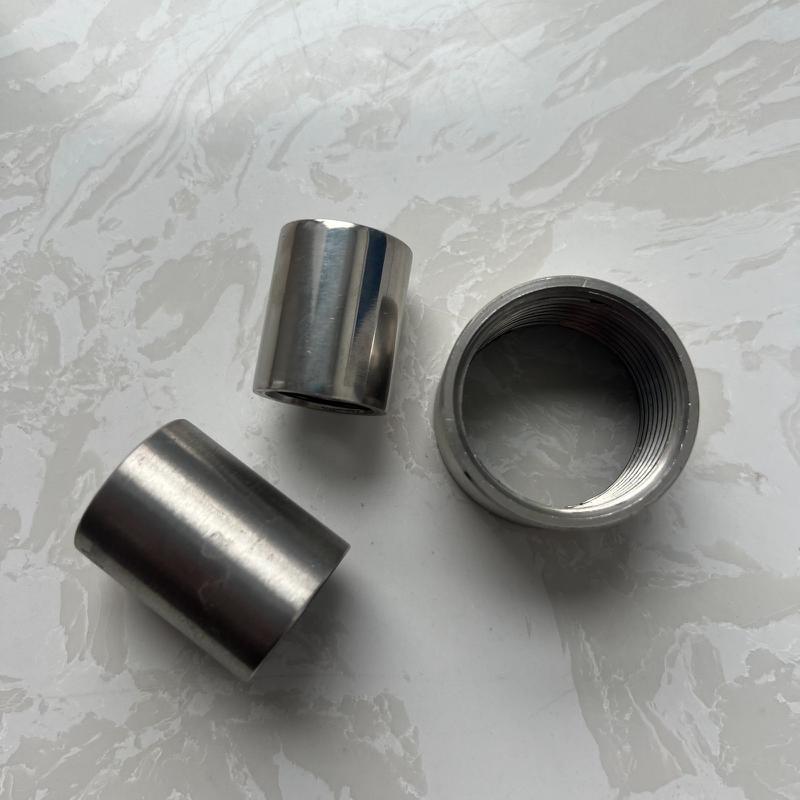
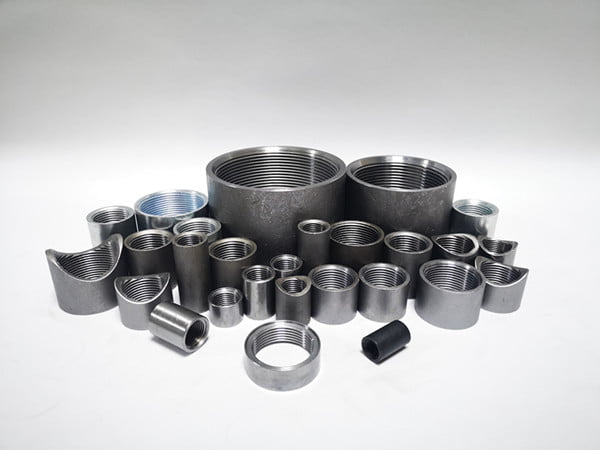
1. Overview Coupling is a piping connector commonly used in high-pressure and high-temperature applications where compact and robust joint construction is necessary. These fittings can be directly welded or threaded into the pipe, providing a strong, leak-proof connection that is particularly valuable in industries such as oil and gas, chemical processing, and power generation. Unlike conventional couplings, these high-performance stainless steel couplings are durable in harsh environments. The corrosion-resistant properties of stainless steel make them ideal for prolonged exposure to extreme conditions without degradation. Every coupling is to meet the exacting standards of high-pressure and high-temperature applications, ensuring precise alignment and consistent performance. 2. Design and Features They are connected to two pipes and usually come in threaded or non-threaded (butt-weld) forms. Threaded couplings involve screwing the pipes into the coupling, while non-threaded couplings are typically with a butt weld or another joining method. Couplings generally do not have the insert-and-weld design of socket weld fittings. Key features include: Durability: Stainless steel pipe couplers made from various materials, including carbon steel, stainless steel, and alloys, provide excellent corrosion resistance, heat resistance, and pressure. Compact Design: Their space-saving design makes socket weld fittings ideal for where space is limited. High Strength: The welding method ensures connections can withstand high pressures, making them suitable for critical applications. Leak Prevention: The flush design of the fitting minimizes the likelihood of leaks, a crucial factor in many industrial settings. Extended Material Range: Materials like carbon steel and advanced alloys, in addition to stainless steel, allow these couplings to be tailored for specific environments—whether high-salinity, high-temperature or highly corrosive. Advanced Connection Types: The option for butt-weld and threaded connections provides installation flexibility, and butt-weld connections, due to their robust, seamless structure, ensure minimal maintenance. Longevity and Maintenance: The high-grade materials ensure minimal wear and tear, reducing the need for frequent maintenance and replacement, especially in critical installations like chemical processing or offshore drilling. 3. Applications Socket in various industries widely, including: To transport high-pressure fluids and gases in pipelines. It’s ideal for handling corrosive substances due to its robust construction. Steam and water systems in power plants. Use in shipbuilding where strength and corrosion resistance are required. Flexible for Various Fluid Types: These pipe couplings are not limited to water, oil, or gas pipelines. Their design accommodates various chemicals, acidic solutions, and other demanding fluids, making them suitable for food processing, pharmaceuticals, and other industries. Critical Industrial Usage: Given their resistance to shock and vibration, they are highly suitable for moving parts in power plants, refineries, and marine engines where stability under load is paramount. Enhanced Corrosion Resistance: Particularly beneficial in environments such as coastal and marine projects, where exposure to salty air and water would typically degrade regular metals, these couplings offer unmatched longevity. 4. Specification Stainless steel pipe connectors are available in various sizes, dimensions, and pressure ratings to meet specific requirements. Standards include ANSI/ASME, ASTM, and MSS-SP, ensuring compatibility and reliability across different applications. Precision Standards Compliance: Not only ANSI/ASME, ASTM, and MSS-SP, these couplings can meet additional specifications upon request, such as DIN and ISO, ensuring global compatibility and seamless integration into existing systems. Customizable Pressure and Temperature Ratings: Available in an extensive range of ratings, these couplings can be customized to withstand unique operating pressures, temperatures, and flow rates, providing tailored solutions for specific industry needs. 5. Conclusion Reliable Under Pressure: Known for maintaining performance under challenging conditions, these stainless steel couplings are a reliable investment for any heavy-duty industrial setup. Comprehensive Support and Customization Options: To help you find the perfect fit, our team offers technical consultation and a range of customization options to ensure they conform to your specifications. For detailed advice on coupling selection, get in touch with our experts! Socket weld fittings are an integral component of industrial piping systems, offering a combination of strength, reliability, and efficiency. Their ability to maintain high performance under extreme conditions makes them a preferred choice for engineers and designers in demanding environments. For more information or a quotation, feel free to contact us!
Understanding the Benefits of Galvanized Pipe Fittings
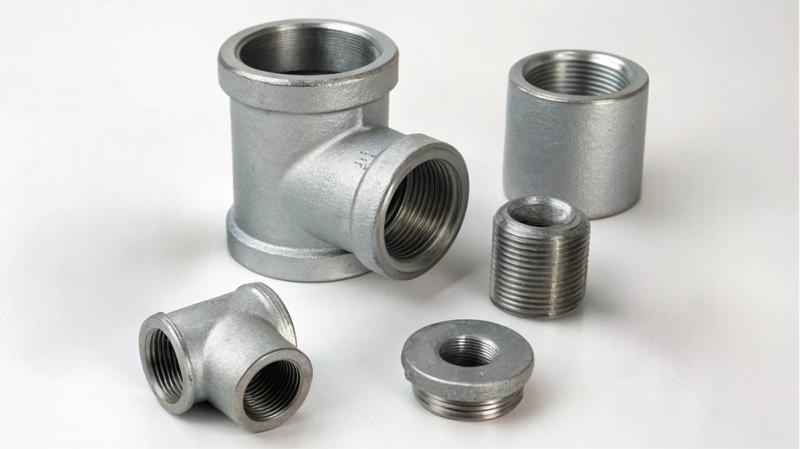
Choosing the right materials is crucial for longevity and reliability when planning a plumbing, structural, or industrial project. Among the many options available, galvanized pipe fittings stand out for their exceptional durability and resistance to corrosion. This article explores galvanized pipes and fittings, their manufacturing process, various types, and significant benefits, illustrating why they may be the ideal solution for your needs. Understanding Galvanized Pipes and Fittings Before we explore the benefits, let’s clarify what we mean by galvanized pipes and fittings. What is a Galvanized Pipe? A galvanized pipe, often called the galv pipe or GI pipe, is a steel pipe coated with a protective layer of zinc. This zinc coating acts as a sacrificial layer, protecting the underlying steel from rust and corrosion. What are Galvanized Pipe Fittings? Galvanized pipe fittings are components used to connect, control flow, or adapt galvanized pipe sections in a piping system. Like the pipes, fittings are coated with zinc through galvanization, providing the same protective benefits. They are essential for creating complete and functional pipe networks. Common terms include galvanized coupling, galvanized nipple, galvanized pipe adapter, galvanized pipe bushing, and more galvanized pipe connectors. The Galvanization Process The key to the durability of these products lies in the galvanization process, most commonly hot-dip galvanization. Hot-Dip Galvanization Explained This process involves immersing the fabricated steel pipe or fitting into a bath of molten zinc. The steel reacts with the molten zinc, forming a series of zinc-iron alloy layers, followed by an outer layer of pure zinc. This metallurgical bond creates a robust coating integral to the steel, not just a surface layer. Why Zinc? Zinc is used because it is more electrochemically active than steel. This means the coating is scratched and the steel is exposed; the zinc will corrode first, protecting the steel from rusting. This is known as cathodic protection. The Composition of Galvanized Pipes Galvanized pipes and fittings are composed of steel or malleable iron and provide structural strength. The outer layer is the protective zinc coating, created through galvanization. This combination of strong base material and corrosion-resistant coating makes them suitable for demanding environments. The Various Types of Galvanized Pipes and Fittings A wide range of galvanized pipe fittings is available to meet diverse plumbing and structural requirements. Understanding the different types is key to selecting the right components for your project. Galvanized Nipples: A galvanized steel nipple is a short pipe section with male threads on both ends. It connects two female-threaded fittings or pipes. Elbows: Used to change the direction of the pipe run, typically at 90 or 45 degrees. Tees: Allow branching off a main pipe run at a 90-degree angle. Couplings: To connect two pieces of pipe in a straight line. Unions: Similar to couplings, but allow for easier disconnection of pipes for maintenance without needing to rotate the pipes. Reducers: Used to connect pipes of different sizes. Caps and Plugs: Used to close off the end of a pipe or fitting. Bushings: Used to reduce the size of a fitting opening, also known as a galvanized pipe bushing. These components, with the galvanized pipe and fittings, constitute the foundation of numerous robust piping systems. The Durability and Longevity of Galvanized Pipes and Fittings One of the most significant advantages of choosing galvanized products is their exceptional durability and long service life. Protection Against Rust and Corrosion The primary benefit of the zinc coating is its ability to prevent rust and corrosion. This makes GI pipe and galvanized fittings ideal for outdoor applications or environments where moisture is present, significantly extending the lifespan compared to uncoated steel. Long Service Life Due to their resistance to degradation, galvanized pipes and fittings can last for decades, even in harsh conditions. This longevity translates into lower replacement costs and reduced maintenance over time. Key Benefits of Choosing Galvanized Pipe Fittings Beyond corrosion resistance, galvanized fittings offer several other compelling advantages. Cost-Effective: While the initial cost might be slightly higher than uncoated steel, the extended lifespan and reduced maintenance needs make them highly cost-effective in the long run. Strength and Reliability: Made from steel or iron, these fittings offer inherent strength and can withstand high pressure and mechanical stress. Versatility: Applicable for various uses, from basic home projects to intricate industrial systems. Ease of Installation: Many galvanized pipe connectors and fittings have threads, which make assembly fairly simple. Are Galvanized Pipes the Right Choice for Your Property? Galvanized pipes and fittings are suitable for numerous applications, including: Non-potable water lines (irrigation, drainage) Structural applications (handrails, fencing, supports) Industrial piping systems Outdoor plumbing Some fire sprinkler systems Important Consideration: Galvanized pipes were historically used for potable water; they are now less common for this purpose due to the risk of zinc buildup and flaking over time, which can negatively impact water quality. Always consult local building codes and regulations, especially concerning potable water systems. Common Applications of Galvanized Pipe Fittings You’ll find galvanized pipe and fittings used extensively in: Residential and commercial plumbing (drainage, vents) Agricultural irrigation systems Industrial fluid and gas transport (non-potable) Construction (scaffolding, handrails) Fencing and gate construction Galvanized Pipe vs. Other Materials Compared to materials like PVC or copper, galvanized steel offers superior mechanical strength and is often more cost-effective for large-diameter or structural applications. While copper is excellent for potable water and corrosion-resistant, it is generally more expensive. PVC is lightweight and easy to install; it lacks the strength and temperature resistance. The choice depends on the specific requirements of the project. Conclusion Choosing the right pipe materials and fittings is critical for any project. Galvanized pipe and fittings, including galvanized nipples, galvanized pipes, couplings, and more, provide an effective combination of durability, corrosion resistance, strength, and cost-effectiveness for various applications. By understanding their benefits and appropriate uses, you can make informed decisions that ensure the longevity and reliability of your piping systems. For projects requiring robust, long-lasting connections, galvanized fittings remain a trusted and effective solution.
The Difference Between Steel Pipe Nipple And Steel Pipe Coupling
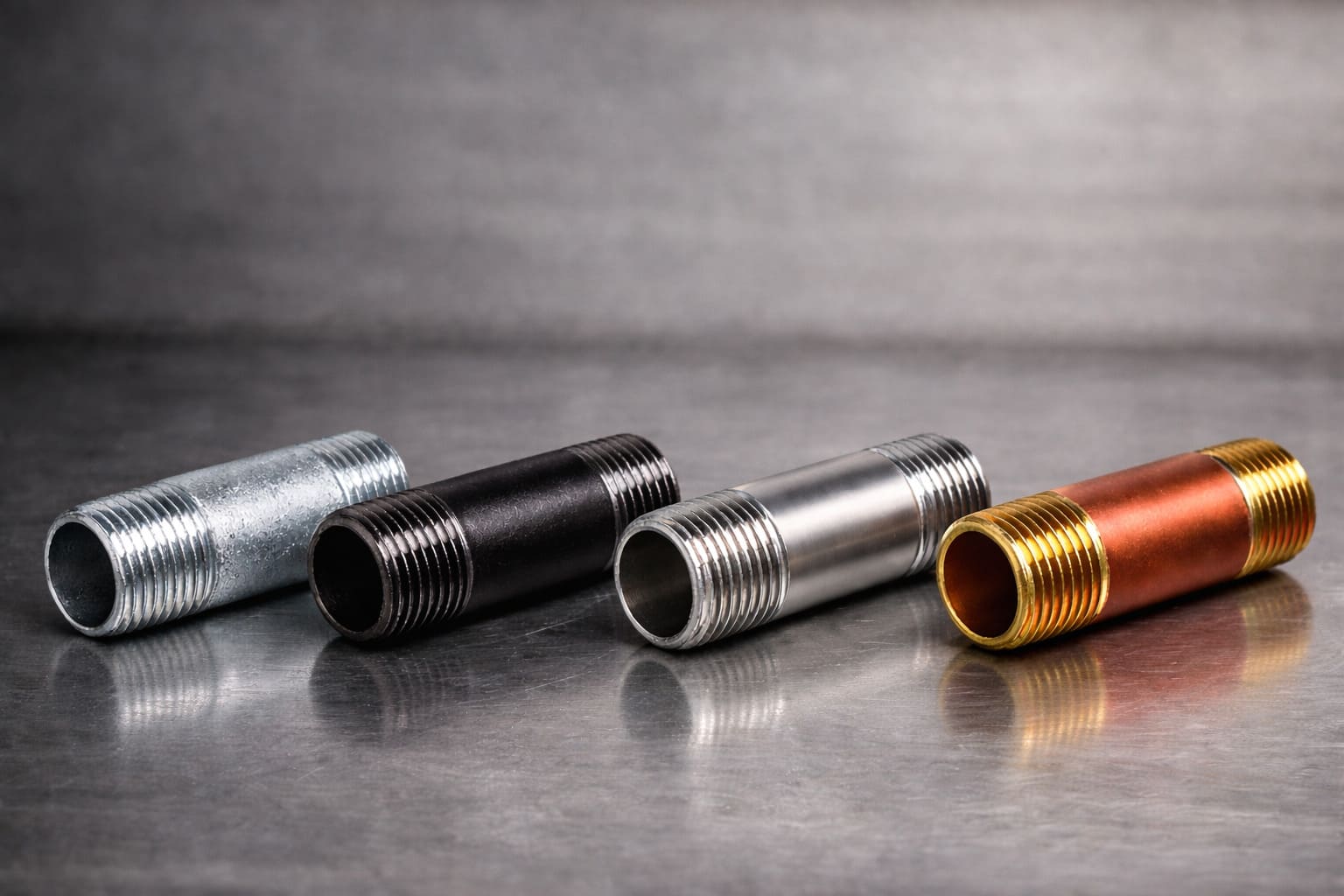
Hebei Sanvo is one of the quality pipe fittings manufacturers and suppliers in China and specializes in the production of steel pipe nipples, steel pipe coupling, stainless steel threaded pipe fittings, etc. These steel pipe fittings are made of carbon steel or stainless steel. The main difference between the steel pipe nipple and steel pipe coupling is the thread connection types. The pipe nipple has one male threaded end or both threaded ends, and the pipe coupling has female threaded ends. 1. What Is A Pipe Nipple? A threaded pipe nipple is a short piece of pipe usually with male threads at both ends or one end for connecting two other pipes or fittings. The threads at two ends can be the same or different types, such as NPT thread to BSP thread nipples also exist. And it is one of the most popular categories of pipe fittings. The length of the pipe nipple is usually specified by the overall length of threads. It may have a hexagonal section in the center for the wrench to grasp (sometimes referred to as a “hex nipple”), or it may simply be made from a short piece of pipe (sometimes referred to as a “barrel nipple” or “pipe nipple”). A “close nipple” has no unthreaded area; when screwed tightly between two female fittings, very little of the nipple remains exposed. A close nipple can only be unscrewed by gripping one threaded end with a pipe wrench which will damage the threads and necessitate replacing the nipple, or by using a specialty tool known as a nipple wrench (or known as an internal pipe wrench) which grips the inside of the pipe, leaving the threads undamaged. When the ends are of two different sizes it is called a reducer or unequal nipple. Pipe Nipple Dimension Standard Threads used on nipples are BSP, BSPT, NPT, NPSM, and Metric. The pipe nipple has different dimension standards according to different thread manufacturing standards. And the threads have different types. The most commonly used types are NPT threads and BSP Threads. NPT is an American standard tapered thread, while BSP is a British standard thread. BSP thread has tapered type BSPT and parallel type BSPP. Pipe Nipple Materials are carbon steel or stainless steel Pipe Nipple Structure is welded or seamless Pipe Nipple Finish is galvanized or black Pipe Nipple Types are TOE pipe nipple/welding nipple, TBE pipe nipple/barrel nipple, close nipple/running nipple, shoulder nipple, etc. 2. What Is A Pipe Coupling? A coupling is a short tube, also called an outer joint; it is a commonly used accessory for industrial pipe connections. The forged coupling is formed by heating and forging with a steel ingot or a round bar and then machined on the lathe to make the thread. The main manufacturing standards are ASTM A865, ASME B1.20.1, etc. According to the connection type, the coupling can be divided into socket coupling and threaded coupling generally. Specifically, it can be divided into single-socket coupling, double-socket coupling, single-thread coupling, and double-threaded coupling. The socket coupling adopts the socket structure to reduce the cost and is extremely convenient to install, use, and maintain, meanwhile, it embodies excellent anti-leakage performance. Thanks to its user-friendliness, it is widely used in civil construction, industry, agriculture, and other fields. What is the threaded pipe coupling? A threaded pipe coupling (or a coupler) (used in piping or plumbing) is a very short length of pipe or tube, with female threads at both ends that allow two pipes or tubes of equal or different sizes to be joined together. Pipe couplings are pipe fittings that help to extend or terminate pipe runs. These pipe fittings are also used to change pipe size. It’s also used to repair a broken or leaking pipe. There are so many different types of couplings available and each one has its specific application. For example, when connecting drop pipes in a well, you may consider using merchant couplings to connect them. Pipe Coupling Materials are carbon steel or stainless steel Pipe Couplings Structure is seamless Pipe Couplings Finish is galvanized or black Pipe Couplings Types are merchant full coupling, merchant half coupling, API Line pipe coupling, etc. 3. The Difference Between Pipe Nipple And Pipe Coupling Are As Follows: In summary and can also be seen from the above pictures that the thread of the steel pipe nipple is male, that is the external thread; the thread of the steel pipe coupling is female, that is the internal thread. That is to say, the two pipes or fittings directly connected with the steel pipe nipple are sheathed and fastened outside, while the two pipes or fittings directly connected with the steel pipe coupling are tightened into the inside. We are one of the excellent pipe fitting manufacturers and exporters in China. We supply all kinds of threaded pipe fittings at factory prices. If you have any questions, please click here to learn more about our products. 4. Can the two be used interchangeably? Generally, pipe nipple and pipe coupling cannot used interchangeably for the following reasons: Structural differences Pipe nipples have external threads on both ends, while pipe couplings have internal threads on both ends, making their functions completely different. In connection design, these two types of fittings have different roles and cannot directly replace each other. Functional purposes The pipe nipple connects two fittings or pipes with internal threads, providing a linear extension function. The pipe coupling connects or extends the pipeline to two smooth-ended pipes. Scenarios of mixed-use In certain particular cases, pipe nipple and pipe coupling can be used together, for example: If a smooth-ended pipe needs to be connected to a fitting with internal threads in the system, coupling and nipple may be required. Pipe nipples can work with Pipe Coupling to form complex piping joint configurations, but careful design ensures connection reliability.