
The Types And Manufacturing Processes Of Steel Pipes
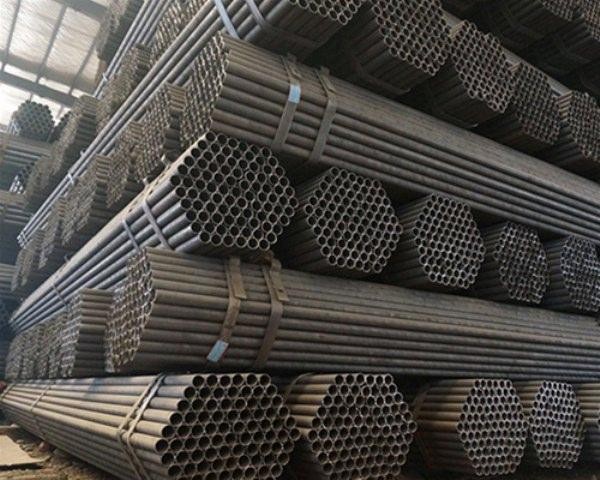
A steel pipe is steel with a hollow section and its length is much greater than its diameter or circumference. There are many steel grades and specifications of steel pipe products, and their performance requirements are also various. All these should be differentiated according to user requirements or changes in working conditions. Generally, steel pipe products are classified according to cross-sectional shape, production method, pipe material, connection method, plating characteristics, and use. The Types Of Steel Pipes According to the cross-sectional shape, it is divided into round, square, rectangular, and special-shaped steel pipes; according to the material, it is divided into carbon structural steel pipes, low-alloy structural steel pipes, alloy steel pipes, and composite steel pipes; according to the purpose, it is divided into transportation pipelines, engineering structures, Steel pipes for thermal equipment, petrochemical industry, machinery manufacturing, geological drilling, high-pressure equipment, etc.; according to the production process, it is divided into seamless steel pipes and welded steel pipes, among which seamless steel pipes are divided into hot-rolled and cold-rolled (drawn) Two types, welded steel pipes are divided into straight seam welded steel pipes and spiral seam welded steel pipes. 1. According To The Section Shape Steel pipes can be divided into round steel pipes and special-shaped steel pipes according to their cross-sectional shape. Special-shaped steel pipes refer to steel pipes with various non-circular cross-sections. Mainly include: Square tube Rectangular tube Oval tube Flat oval tube Semi-circular tube Hexagonal tube Hexagonal inner tube Hexagonal tube with unequal sides Equilateral triangle tube Pentagonal plum blossom tube Octagonal tube Convex tube Double convex tube Double concave tube Multi-concave tube Seed-shaped tube Flat tube, Rhombus tube Star tube Parallelogram tube Ribbed pipe Drop tube Inner finned tube Twisted pipe Type B tube D-type tube and multilayer tube, etc. Steel pipes are divided into equal-section steel pipes and variable-section steel pipes according to the shape of the longitudinal section. Variable cross-section (or variable cross-section) steel pipe refers to a steel pipe whose cross-sectional shape, inner and outer diameter, and wall thickness along the length of the pipe change periodically or non-periodically. Mainly include: Outer tapered tube Inner tapered tube Outer stepped tube, inner stepped tube Periodic section tube Bellows Spiral tube Steel pipe with heat sink Barrels with double lines, etc. 2. According To Production Method Steel pipes can be divided into two categories according to production methods: seamless steel pipes and welded steel pipes. Welded steel pipes are referred to as welded pipes for short. (1) Types Of Seamless Steel Pipes Seamless steel pipes are made of high-quality carbon steel or alloy steel and are divided into hot-rolled and cold-rolled (drawn). According to production methods, seamless steel pipes can be divided into: Hot-rolled seamless pipe Cold drawn tube Precision steel pipe Thermal expansion tube Cold spinning tube Extrusion tube etc. (2) Types Of Welded Steel Pipes Welded steel pipes are formed by welding steel plates rolled into a tube shape with butt seams or spiral seams. In terms of manufacturing methods, they are divided into welded steel pipes for low-pressure fluid transportation, spiral seam electric welded steel pipes, direct coil welded steel pipes, and electric welded pipes. According to different welding processes, welding forms, and end shapes, welded steel pipes can be divided into: Furnace welded pipe Electric welding (resistance welding) pipe Automatic arc welded pipe Longitudinal welded pipe Two types of spiral welded pipe Round welded pipe Special-shaped (square, flat, etc.) welded pipes Seamless steel pipes can be used for liquid pressure pipes and gas pipes in various industries. Welded steel pipes can be used for water pipelines, gas pipelines, heating pipelines, electrical pipelines, etc. 3. According To Pipe Material Steel pipes can be divided into carbon pipes, alloy pipes, stainless steel pipes, etc. according to the pipe material (that is, steel type). Carbon tubes can be divided into ordinary carbon steel tubes and high-quality carbon structural tubes. And alloy tubes can be divided into low alloy tubes, alloy structural tubes, high alloy tubes, and high strength tubes. Bearing tubes, heat-resistant and acid-resistant stainless tubes, precision alloy (such as Kovar) tubes, and high-temperature alloy tubes. 4. According To Connection Method Steel pipes can be divided into smooth pipes (with no threads on the pipe ends) and threaded pipes (with threads on the pipe ends) according to the connection method of the pipe ends. The threaded pipe is divided into the ordinary threaded pipe and pipe end thickened threaded pipe. And thickened threaded pipes can also be divided into threaded pipes such as external thickening (with external threads), internal thickening (with internal threads), and internal and external thickening (with internal and external threads). According to the thread type, the threaded pipe can also be divided into ordinary cylindrical or conical thread and special thread. In addition, according to user needs, threaded pipes are generally delivered with pipe joints. 5. According To The Characteristics Of Plating Steel pipes can be divided into clarinet (uncoated) and coated pipes according to the characteristics of the surface coating. Coated pipes include galvanized pipes, aluminum-plated pipes, chrome-plated pipes, aluminized pipes, and other alloy-layer steel pipes. And coated pipes include outer-coated pipes, inner-coated pipes, and inner-outer coated pipes. The commonly used coatings are plastic, epoxy resin, coal tar epoxy resin, and various glass-type anticorrosive coating materials. Galvanized pipe is divided into KBG pipe, JDG pipe, threaded pipe, and so on. 6. According To Use Steel pipe is not only used to transport fluids and powdered solids, exchange heat, and manufacture mechanical parts and containers, it is also an economical steel. The use of steel pipes to manufacture building structural grids, pillars, and mechanical supports can reduce weight, save metal by 20-40%, and can realize factory mechanized construction. Using steel pipes to manufacture highway bridges can not only save steel, simplify construction, but also greatly reduce the area of the protective layer, saving investment and maintenance costs. Pipes for pipes. Such as seamless pipes for water, gas pipes, steam pipes, oil transportation pipes, and oil and gas trunk lines. Agricultural irrigation water taps with pipes and sprinkler irrigation pipes, etc. Pipes for thermal equipment. Such
A Threaded Nipple Is a Connecting Tool Between Pipes
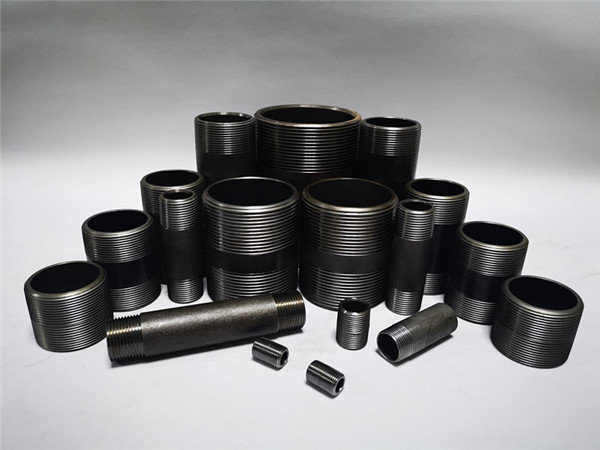
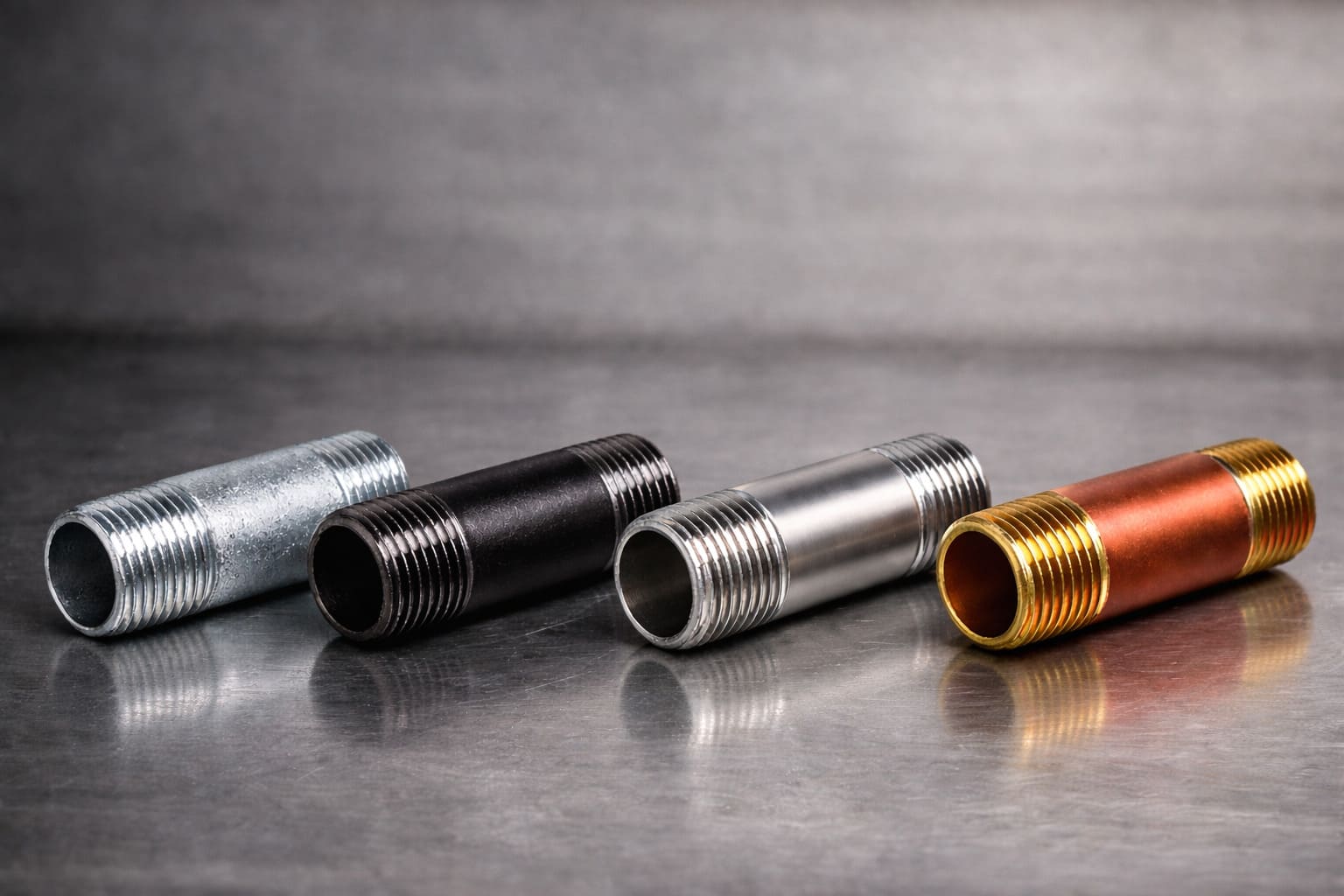
First, this article expands on the relative content of threaded nipples for pipe systems. Deeper into their applications, advantages, variations in design, installation methods, and maintenance considerations. 1. Overview of Threaded Nipples A threaded nipple is a connecting tool between pipes and a connection point between components and pipes that can be disassembled. It plays an indispensable role in the pipe fitting, and it is one of the two main components of the hydraulic pipeline. The connection form of pipe nipple includes socket welding or threaded connection. It is mainly used for small-diameter low-pressure pipeline, which is often installed and disassembled, or as the final adjustment of the pipeline with threaded pipe fittings. The structure form should adopt the metal surface contact sealing structure, which is usually used to transport water, oil, air, etc. In general, malleable cast iron is used for the pipeline. In addition, the user requirements and prices are also factors to be considered in selection. 2. Types There are many kinds of pipe nipples, and commonly used pipe nipples can be divided into two types: hard pipe nipples and hose nipples. 3. Connection In the hydraulic system, the connection mode of the pipe and the pipe nipple is also different. The screw-in end of the pipe adopts the connection thread. Taper thread is mainly used in the middle and low-pressure hydraulic system because of its own vertebral body tightening and sealing operation with polytetrafluoroethylene and other materials. The sealing effect of the fine thread is very good, and it is often used in a high-pressure system, but it needs to use a combination washer or O-ring to seal the end face, and sometimes red copper washer is also used. It is more suitable for connecting pipes with thick walls. Its components mainly include nipple body, connecting pipe, and nut. In use, the nipple body is embedded in the target, and the end face is sealed with the gasket mentioned above. The rubber seal is used between the nipple body and the connecting pipe, and sometimes the spherical seal is also used. Since the pipe nipple is a detachable connecting element, it must meet the requirements of stable connection, strong sealing, reasonable size, small pressure loss, good process performance, etc., as well as the requirements of convenient disassembly and assembly. Therefore, do not look down on those small pipe nipples, because only their existence can support the existence of the entire hydraulic system. 4. Advantages of Using Threaded Nipples High strength of screw joint: According to the principle of cold work hardening of steel, the strength of the straight thread rolled on the steel bar is greatly improved, so that the tensile strength of the straight thread joint is higher than the tensile strength of the base material of the steel bar. Stable performance: The joint process is not affected by the quality of workers, so the performance is stable. Fast connection speed: Because it adopts off-site prefabrication and on-site assembly and connection, the steel bars with prefabricated wire ends can be prefabricated and stored in large quantities in the steel bar storage yard. When the construction period is tight, just add assembly workers at the construction site. Wide range of applications: There are basically no restrictions on the application range, and it is more suitable for bending steel bars, fixed steel bars, steel cages, and other platforms where the steel bars cannot rotate. Easy to manage: the screw joint will not appear the phenomenon of sleeve and steel mismatch, and the inspection is more convenient. The operation is simple, ordinary workers can become skilled workers after a few hours of study. Significant economic and social benefits: shorten the construction period, improve the quality of the project, reduce energy consumption, help environmental protection, reduce equipment investment, lower additional costs, and have obvious economic and social benefits. Low labor intensity: only one step is needed to process a thread head on a dedicated thread rolling machine. 5. Material Choices Carbon Steel: For general applications, offering good strength and wear resistance. Stainless Steel: Ideal for corrosive environments, providing durability and resistance to rust. Brass and Bronze: Used in specialized applications such as marine or high-pressure systems due to their corrosion resistance. 6. Applications of Threaded Nipples Connect fixtures to pipes, facilitating water supply and drainage in residential and commercial buildings. Integral connecting with hydraulic cylinders and pumps, enabling efficient fluid transfer under high pressure. Use the heating installations to connect radiators and boilers, ensuring proper flow of heated liquids. Connecting pipelines to transport crude oil, natural gas, and other hydrocarbons under varying pressures and temperatures is vital. They are essential for connecting pipes that carry corrosive substances, where material compatibility and sealing integrity are crucial. 7. Supplier Information Hebei Sanvo will continue to lead the manufacturing of high-quality threaded pipe nipples and other fittings. We offer an extensive selection to meet the varied needs of customers worldwide. We promise to supply high-quality products only and the best customer service.For more detailed specifications and a comprehensive catalog of available products, click here.
Threaded Pipe Coupling Dimensions
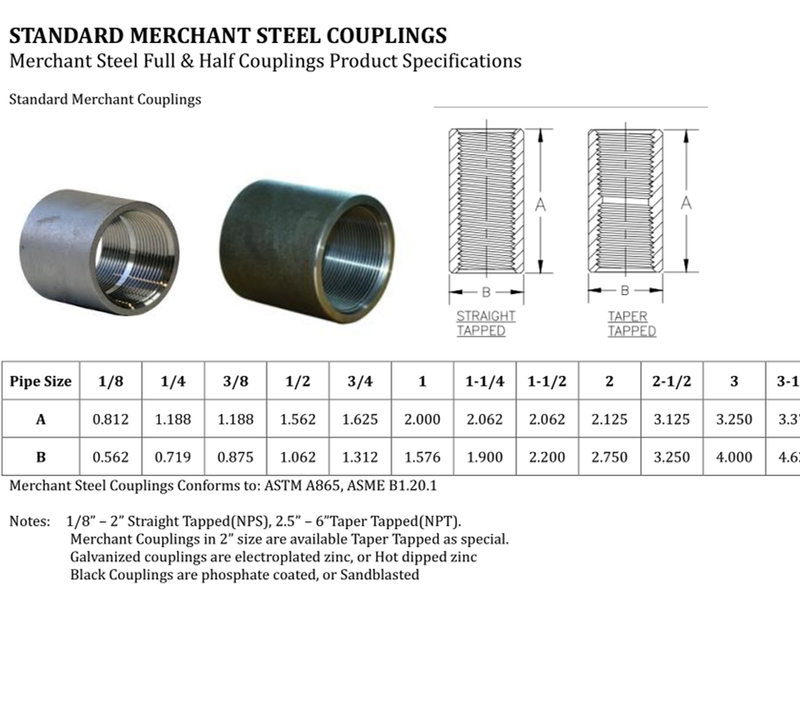
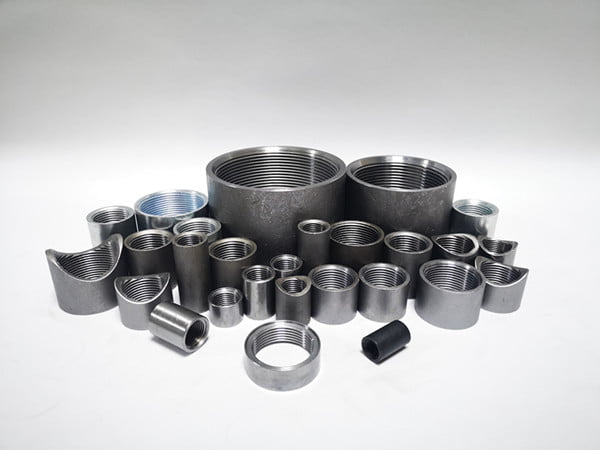
A threaded coupling (or coupler) (used in piping or plumbing) is a very short length of pipe or tube, with threads at both ends that allows two pipes or tubes to be joined together. Hebei Sanvo is a quality pipe couplings manufacturer and supplier, and exports various dimensions of steel pipe coupling, including carbon steel pipe coupling, stainless steel pipe coupling, galvanized pipe coupling, black pipe coupling, standard full merchant coupling, standard half merchant coupling, extra heavy full merchant coupling, extra heavy half merchant coupling, API Line pipe coupling, and other threaded pipe couplings. The Threaded Pipe Coupling Dimensions Chart Is As Follows: 1, Standard Full Merchant Couplings Merchant Steel Couplings Conforms to ASTM A865, ASME B1.20.1Size: 1/8”-6”Notes: 1/8”-2” Straight Tapped(NPS), 2.5”-6” Taper Tapped(NPT).Merchant Couplings in 2” are available Taper Tapped as special.Galvanized Couplings are electroplated zinc or hot-dipped zinc;Black Couplings are phosphate coated or sandblasted. 2, Standard Half Merchant Couplings Merchant Steel Half Couplings Conforms to ASTM A865, ASME B1.20.1Size: 1/8”-6”Notes: 1/8”-1”Taper Tapped(NPT), 1 1/4”-2” Sraight Tapped(NPS), 2.5”-6” Taper Tapped(NPT).Merchant Couplings in 2” are available Taper Tapped as special.Galvanized Couplings are electroplated zinc or hot-dipped zinc;Black Couplings are phosphate coated or sandblasted. 3, Extra Heavy Full Merchant Couplings Size: 1/8”-6”Conforms to ASTM A865, ASME B1.20.1Finish: Black or Galvanized 4, Extra Heavy Half Merchant Couplings Size: 1/8”-6”Conforms to ASTM A865, ASME B1.20.1Finish: Black or Galvanized 5, API Line Pipe Couplings Size: 1/8”-12”Material: API 5L Section 8Dimensions: API 5L, API 5B 6, DIN2986 / EN 10241 Steel Pipe Socket / Steel Pipe Couplings Size: DN6-DN150Conforms to DIN2986, EN10241Material: Seamless Steel PipeThread: DIN2999, ISO7/1, BS21Finish: Black or Galvanized 7, Threaded Welding Outlets With UL/FM Approval Size: 1/2″-2 1/2″(1/2″, 3/4″, 1″, 1 1/4″, 1 1/2″, 2″, 2 1/2″)Material: Black Steel Pipe, ASTM A53Pressure Rating: 20.7 bar(300psi)
Threaded Steel Pipes for Industrial Piping Systems
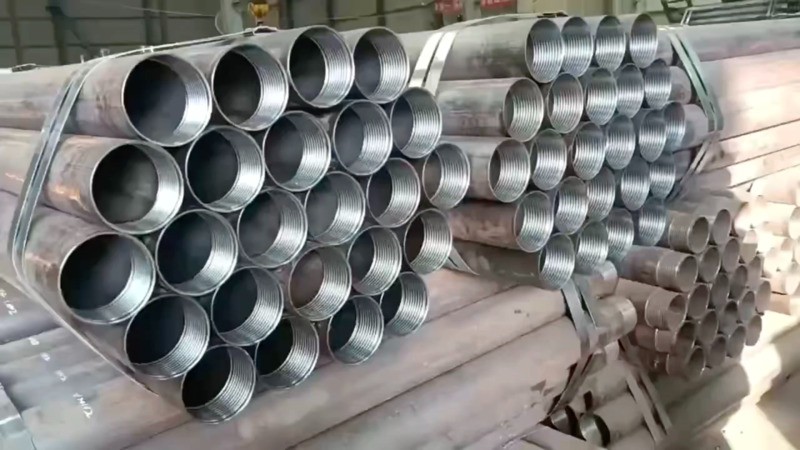
What is a threaded steel pipe? A threaded pipe, also known as a pre-cut pipe or ready-cut pipe, is a type of pipe that is prepared with threaded ends for easy connection. A threaded steel pipe is a finished pipe product with threads machined at one or both ends. Characteristics of threaded steel pipes 1. Threads on both ends or one end Common thread standards include: NPT (American standard) BSPT (British Standard) 2. The Advantage of Pre-cut Pipe No welding required Direct connection to threaded fittings like elbows, tees, couplings, pipe clamps, valves, etc. Ideal for rapid installation and maintenance. 3. Common Materials Carbon Steel: Black Steel (black surface finish), Hot-dip galvanized Stainless Steel Threaded Pipe: 304, 304L, 316, and 316L 4. Primary Applications Threaded steel pipes are commonly used in: Civil & Engineering Water Supply LPG / Natural Gas Sprinklers HVAC Systems, Compressed Air Industrial Piping, Mechanical Equipment Low- and Medium-Pressure Networks Threaded Steel Pipe vs Plain-End Steel Pipe: Key Differences 1. Appearance Threaded Steel Pipe: Pipe is machined into threaded ends Can be directly connected to a threaded fitting Plain-End Steel Pipe: Pipe ends feature plain ends or beveled ends Cannot be directly connected to threaded fittings 2. Different Manufacturing Processes Threaded Steel Pipe: Requires an additional cut threading process Threads are machined on a lathe/threading machine Higher manufacturing precision requirements (taper, depth, accuracy) Plain End Steel Pipe: No end processing required Directly used for welding, flange connections, etc. 3. Usage Method Differences Threaded Pipe: Can be directly screwed into place without welding required, screw on threaded components like elbows, tees, pipe clamps, valves, etc. Plain End Steel Pipe: Requires welding or flange connections 4. Cost Threaded Steel Pipe is a little more expensive than plain-end pipe due to an additional manufacturing step. Plain End Pipe has a lower raw material cost, resulting in a lower price. Technical Specifications Specification Details Size Range 1/2″ – 6″ (DN15 – DN150) Wall Thickness SCH10 / SCH40 / SCH80 Standards ASTM A53 / A106 / A135 / EN10255 / JIS Thread Types NPT / BSPT / BSPP End Types Threaded End Surface Options Black / Hot-dip galvanized Material Carbon Steel, Stainless Steel (304 / 316) Packaging & Delivery Pipes bundled with steel straps Protective plastic caps on both ends Thread protectors to avoid damage during transit Loaded on pallets for safe handling Customized marking and labeling available Compliance & Certifications ISO 9001 certified manufacturing process UL/FM approval available for fire protection applications CE marking for European compliance Mill Test Certificates (MTC / EN10204 3.1) FAQs Q1: What is the difference between NPT and BSPT threads?A: NPT is the American standard tapered thread, while BSPT is the British standard tapered thread. Both provide tight seals but differ in angle and thread pitch. Q2: Can threaded pipes be used in high-pressure systems?A: Threaded steel pipes are suitable for medium-pressure systems. For very high-pressure applications, welded or flanged pipes are recommended. Q3: Do you offer customized lengths?A: Yes, we can cut pipes to customer-specified lengths. Ordering Information MOQ: Negotiable, both small trial orders and bulk orders are welcome. Lead Time: 15–30 days, depending on quantity Available Lengths: 18 to 72 inches, or customized Custom Thread Options: NPT, BSPT, BSPP
EntrePot Trade Strategies to Simplify Pipe Sourcing
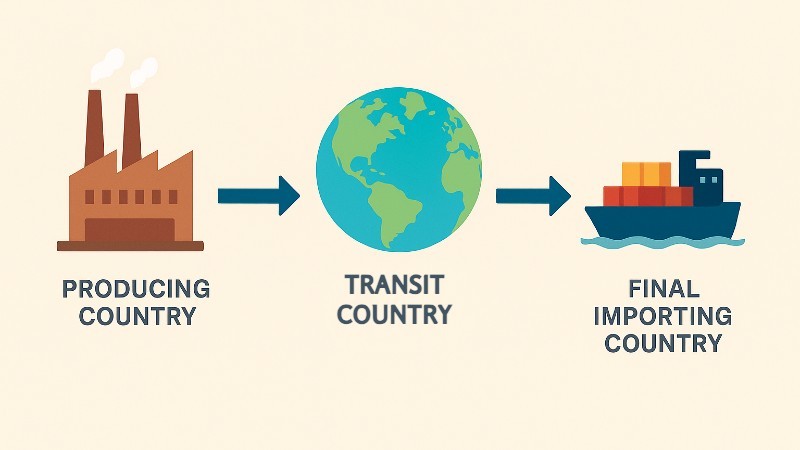
What is Entrepot Trade? The entrepot trade involves exporting products from the producing country to a third country, and then from that third country to the final importing country. This trade method is widely used in the field of industrial products, more suitable for importers who need to optimize taxes, improve customs clearance efficiency, and reduce post-cost. Benefits of Entrepot Trade Reduce Tariff Optimization The higher tariffs of some countries to especially produce a country, but implement the third country entrepot trade can be: Avoid the higher tariff resource country tag Use the third country as the port of transhipment Reduced the import cost and enhanced the price advantages Faster Customs Clearance The third country usually has: Higher customs clearance efficiency Flexible in the requirement of documents The logistics support is more mature Flexible Trade Options The entrepot trade is especially suitable for: Mixed packages of multiple brands Small batch, various varieties Take the different produce land documents to meet the needs of the customer Stable Logistics and Delivery The third country usually has mature ports and shipping routes, and can provide: Shorter transit time More stable shipping schedules Less transportation risk
Types, Dimensions, and Applications Of Stainless Steel Threaded Pipe Fittings
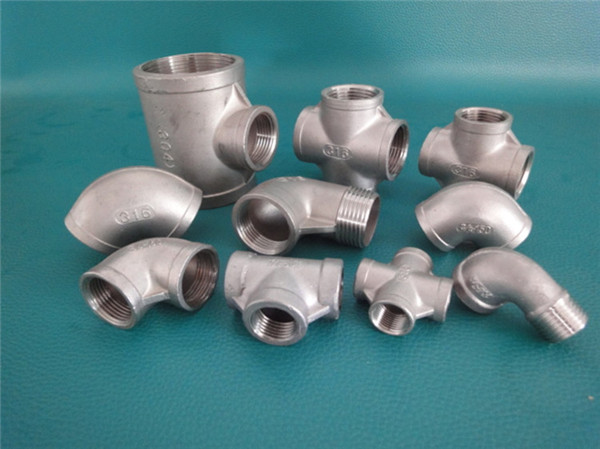
Stainless steel threaded pipe fittings are essential components in various pipeline systems. Their versatility, durability, and superior performance make them ideal for numerous applications. Below is a detailed breakdown of their types, dimensions, features, and uses. 1. What Are Stainless Steel Pipe Fittings? Stainless steel pipe fittings are a kind of pipe fittings. They are made of stainless steel and are called stainless steel pipe fittings. They include stainless steel elbows, stainless steel tees, stainless steel crosses, stainless steel reducers, stainless steel caps, etc., depending on the connection method. Divided into four categories: socket stainless steel pipe fittings, threaded stainless steel pipe fittings, flanged stainless steel pipe fittings, and welded stainless steel pipe fittings. Stainless steel elbows are pipe fittings that allow for turns in piping systems. Flanges connect pipes and are typically attached to the ends of pipes. Stainless steel three-way pipes are designed for situations where three pipes converge, while stainless steel four-way pipes connect four pipes. Additionally, stainless steel reducers connect two pipes of different diameters. The main types of stainless steel materials include 304, 304L, 316, and 316L. Stainless steel pipe fittings refer to various stainless steel pipe connection workpieces, which can be categorized based on their shape, purpose, and connection method. It is characterized by easy installation, high performance, and durability, making it widely used in various pipeline constructions and installations. Stainless steel threaded pipe fittings are stainless steel pipe fittings with threads. Typically found in water gas pipes, small-diameter water pipes, compressed air pipes, and low-pressure steam pipes. The pipe connects to a threaded pipe end. Threads coated with a suitable adhesive, such as thick white paint or glycerin lead monoxide adhesive, ensure proper sealing. Advantages of Stainless Steel: Stainless Steel Corrosion Resistance Stainless steel pipe fittings possess exceptional resistance to oxidation and high temperatures. The toughness and strength of stainless steel pipe fittings are largely unaffected at low temperatures. The high strength of stainless steel withstands wear and tear and high pressure from outside. Stainless steel pipes and fittings can maintain their properties in extreme conditions than other materials. Furthermore, stainless steel fittings typically have a longer lifespan, often decades or more, which helps reduce replacement and maintenance costs. Durable Stainless Steel The high strength of stainless steel withstands wear and tear and high pressure from outside. Stainless steel pipes and fittings can maintain their properties in extreme conditions than other materials. Furthermore, stainless steel fittings typically have a longer lifespan, often decades or more, which helps reduce replacement and maintenance costs. Temperature Resistance Stainless steel pipe fittings possess exceptional resistance to oxidation and high temperatures. The toughness and strength of stainless steel pipe fittings are largely unaffected at low temperatures. 2. What Are Stainless Steel Threaded Pipe Fittings? Stainless Steel Threaded Pipe Fittings Types: (1) Stainless steel threaded elbow; (2)Stainless steel threaded tee; (3)Stainless steel threaded pipe cap; (4)Stainless steel threaded pipe plug; (5)Stainless steel hose nipple; (6)Stainless steel hex bushing; (7)Stainless steel pipe union; (8)Stainless steel hex nipple; (9)Stainless steel locknut; (10)Stainless steel threaded reducer, etc. Stainless Steel Threaded Pipe Fittings Dimensions And Features: (1)Size: 1/8”-4”; (2)Connection: Thread; (3)Thread standards: BSPT, NPT, BSP, DIN, etc; (4)Technics: Casting; (5)Material: 304/316 Stainless Steel; (6)Pressure: 10KG/CM2 (150LBS), 60kg/cm2 (1000WOG); (7)Product advantages: Stainless steel is an environmentally friendly material that replaces traditional carbon steel, aluminum, and copper products. The stainless steel products have a long service life, beautiful appearance, and resistance to acid, alkali, and corrosion. It is ideal for high-end communities, hotels, and equipment manufacturers. Difference between NPT and BSP pipe threads NPT(National Pipe Thread) and BSP (British Pipe Thread) are common thread standards. Differences between them are design standard, thread angle, thread form, and use application. NPT Pipe Thread National Pipe Thread used in the North American market, especially in America and Canada, belongs to the American standard. The NPT thread angle is 60 degrees. Depending on the tight fit of thread and thread to achieve sealing, sealants or raw tape can enhance the sealing effect. NPT pipe is widely used in industrial pipelines, plumbing, and gas transporting. Example: 1/2” NPT mains National Pipe Thread Standards, 1/2 inch diameter. BSP Pipe Thread British Standard Pipe Thread is widespread in Europe, Asia, Oceania, and other countries that belong to the British Standard Pipe. The BSP thread angle usually is 55 degrees. BSPT (British Standard Pipe Taper Thread): The tapered thread is the same as the NPT pipe thread, but the angle and standard differ. The pipe taper thread is sealing depending on the thread matching. BSPP (British Standard Pipe Parallel Thread): Parallel threads require gaskets or seals for auxiliary sealing. Example: 1/4” BSPT Thread mains British Standard Pipe Taper Thread, 1/4 inch diameter. Summary NPT pipe and BSP pipe fittings can not use exchange because of the different thread angles, thread pitches, and design of NPT Pipe Thread, and BSP Pipe Thread connection force may lead to thread worse, poor sealing, or water leak. If you want to connect successfully, please use conversion fittings or adapters to set the adaptive problem. 3. Application Range Of Stainless Steel Pipes And Fittings: A stainless steel pipe is a hollow and long round steel widely used in petroleum, chemical, medical, food, light industry, mechanical instrumentation, and other industrial pipelines and mechanical structural parts. In addition, when the bending and torsion strength are the same, the weight is lighter, making it a popular choice for manufacturing mechanical components and engineering structures. It is also often used to produce conventional weapons, barrels, and shells. Stainless steel pipes can be in oil well pipes (casing, oil pipes, drill pipes, etc.), line pipes, boiler pipes, mechanical structure pipes, hydraulic prop pipes, gas cylinder pipes, geological pipes, chemical pipes (high-pressure fertilizer pipes, petroleum Cracking pipe) and ship pipes. Stainless steel pipe is an economical cross-section of steel and a crucial product in the iron and steel industry. It is widespread in decoration and industry. Many people use it to make stair railings, window guards, railings, furniture, etc on the market. Two