
ERW vs Seamless Pipe: What’s The Difference?
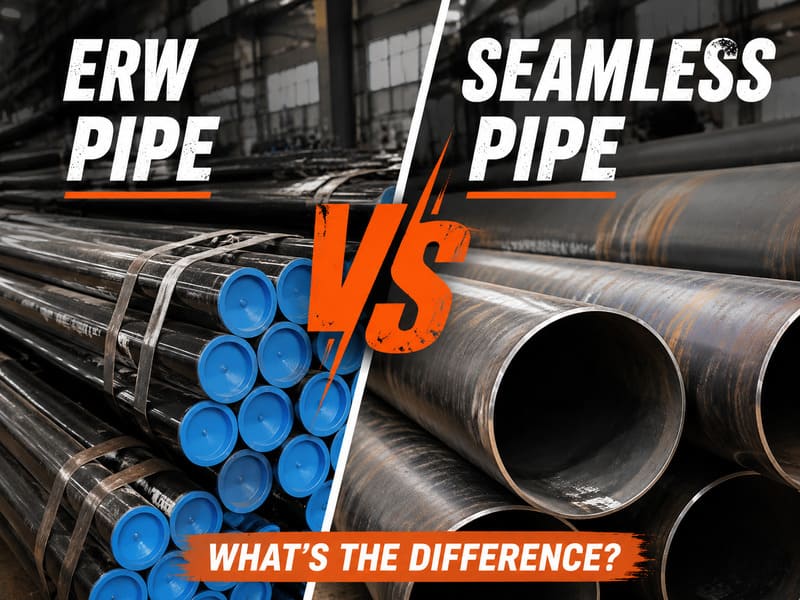
When purchasing steel pipes, buyers often need to compare ERW vs seamless pipe. They have similar functions, but their manufacturing processes, features, and applications are different. Selecting the wrong pipe type may increase costs or result in unsuitable performance. For example, a general water pipeline may not require seamless pipe, while high-pressure and high-temperature applications may require seamless construction. We supply steel pipes, including material grade, manufacturing process, standards, and application conditions. This guide explains the key differences between ERW pipe vs seamless pipe to help buyers. What Is ERW Steel Pipe? ERW stands for Electric Resistance Welded pipe. Flat steel is formed into a round shape and joined via electrical resistance welding. The main production steps include: Steel coil preparation Roll forming Edge heating Electric resistance welding Inspection and finishing Because ERW production uses automated welding technology, it provides: Consistent dimensions High production efficiency Competitive pricing ERW steel pipes are widely used in: Water transportation Fire sprinkler systems Structural applications Mechanical piping General industrial systems What Is Seamless Steel Pipe? Seamless steel pipe is manufactured without a welded seam. Seamless steel pipe is produced from solid billets rather than welded plates. The manufacturing process typically includes: Billet heating Piercing Rolling Sizing Heat treatment Inspection Seamless pipes excel in demanding environments without welded joints. Common applications include: Oil and gas systems High-pressure pipelines Boilers Power plants Chemical processing equipment ERW vs Seamless Pipe: Main Differences Feature ERW Pipe Seamless Pipe Manufacturing Welded from steel strip Made from solid billet Weld Seam Present No weld seam Production Cost Lower Higher Dimensional Accuracy Excellent Excellent Pressure Capability Suitable for many applications Better for extreme conditions Production Efficiency Higher Lower Common Use General industrial piping High-pressure applications Manufacturing Process Comparison ERW Pipe Production ERW manufacturing is highly efficient because steel coils can be continuously processed. Advantages: Fast production speed Lower material waste Competitive pricing Suitable for large-volume orders Modern ERW technology provides excellent weld quality through: Automatic control systems Non-destructive testing Dimensional inspection Seamless Pipe Production Seamless manufacturing requires more complex processing. The billet must be heated and pierced before being rolled into a hollow pipe. Advantages: Uniform structure Excellent pressure resistance Suitable for extreme environments However, the manufacturing process requires more equipment and energy, resulting in higher production costs. Strength Comparison: Is Seamless Always Stronger? Many buyers assume seamless pipe is always stronger than ERW pipe. This is not always correct. Modern ERW pipes can achieve excellent mechanical performance when manufactured according to proper standards and quality controls. The actual performance depends on: Material grade Wall thickness Manufacturing standard Inspection requirements Application conditions For normal industrial applications, high-quality ERW pipe can provide reliable performance. For high-temperature or high-pressure applications, seamless pipe is often preferred. Application Comparison ERW Steel Pipe Applications Common uses: Fire protection systems Water pipelines HVAC systems Mechanical structures General industrial piping ERW is often selected because it provides a good balance between: Performance Availability Cost Seamless Steel Pipe Applications Common uses: Oil and gas industry Pressure vessels Chemical processing Power generation These industries require pipes capable of handling: High pressure High temperature Continuous operation Cost Difference Between ERW And Seamless Pipe Cost is one of the most important factors for buyers. Generally: ERW pipe is more economical. Reasons include: Higher production efficiency Lower manufacturing cost Better material utilization Seamless pipe costs more because: Production is more complex Equipment investment is higher Manufacturing cycle is longer However, selecting based only on price may create problems. The correct choice should consider: Operating conditions Safety requirements Long-term maintenance cost How To Choose Between ERW And Seamless Pipe? Choose ERW pipe when: The application is general industrial use Cost efficiency is important Pressure requirements are moderate Large quantities are required Choose seamless pipe when: High pressure is involved High temperature service is required Critical industrial applications are involved Before ordering, buyers should confirm: Pipe standard Material grade Wall thickness Application requirements Relationship Between Steel Pipes And Pipe Fittings A complete piping system requires compatibility between pipes and fittings. For example: A carbon steel piping system may include: ERW or seamless pipe Pipe nipples Couplings Elbows Flanges Valves The selected components should match in: Material Pressure rating Connection method Applicable standards SANVO Manufacturing Capability As a manufacturer of steel pipes and pipe fittings, SANVO provides solutions for different industrial applications. Our production capability covers: Carbon steel pipes Galvanized steel pipes Threaded pipe fittings Pipe nipples Pipe couplings We help customers select suitable products according to: Application requirements International standards Project specifications Conclusion ERW and seamless steel pipes are both important products used in piping systems. ERW pipes are economical, while seamless pipes suit high-pressure and high-temperature environments. Understanding the differences in their manufacturing processes helps select the correct pipe and decrease costs.
ASTM A53 vs ASTM A106 Pipe: What’s The Difference?
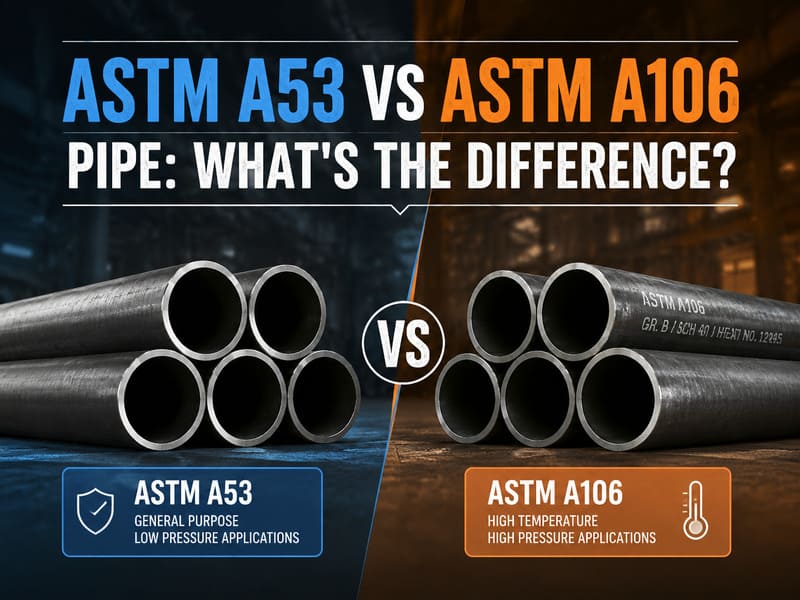
When purchasing carbon steel pipes for industrial projects, ASTM A53 vs A106 are two of the most commonly used standards. Although these two standards are often compared because they are both used for carbon steel piping systems, they are designed for different applications. Many buyers mistakenly select pipes only based on size and price, while overlooking factors such as: Temperature requirements Pressure conditions Manufacturing process Application environment Choosing the wrong specification may result in unsuitable performance or unnecessary project costs. As a manufacturer supplying steel pipes and pipe fittings for international markets, SANVO works with customers who require different ASTM pipe standards depending on project requirements. This article explains the differences between ASTM A53 and ASTM A106 and helps buyers understand which pipe is more suitable for their applications. What Is ASTM A53 Pipe? ASTM A53 is a standard specification for carbon steel pipe used mainly in mechanical and pressure applications. It covers: Welded pipe Seamless pipe Black steel pipe Galvanized steel pipe ASTM A53 steel pipe is widely used in: Water pipelines Plumbing systems Fire sprinkler systems Mechanical applications Structural applications Because of its versatility and relatively economical cost, ASTM A53 is one of the most commonly used carbon steel pipe standards. What Is ASTM A106 Pipe? ASTM A106 is a specification for seamless steel pipe designed for high-temperature service. It is commonly used in industries requiring: High pressure resistance Elevated temperature performance Continuous operation Typical applications include: Oil and gas facilities Power plants Refineries Industrial processing systems ASTM A106 seamless carbon steel pipe, whose construction provides better performance under demanding temperature and pressure conditions. ASTM A53 vs A106: Main Differences Feature ASTM A53 ASTM A106 Main Purpose General pressure and mechanical applications High-temperature service Manufacturing Welded and seamless Mainly seamless Application Level General industrial use Heavy-duty industrial systems Temperature Resistance Standard Higher Cost More economical Higher Common Industries Construction, water, fire protection Oil, gas, power generation Manufacturing Process Difference One of the biggest differences between ASTM A53 and A106 is manufacturing. ASTM A53 Can be produced through: ERW welding Seamless process ERW (Electric Resistance Welding) pipe is commonly used when cost efficiency is important. ASTM A106 Normally produced as: Seamless pipe The seamless process eliminates the welded seam, making it suitable for higher temperature and pressure applications. Chemical Composition And Mechanical Requirements Both standards control: Carbon content Tensile strength Yield strength However, ASTM A106 generally has stricter requirements because it is designed for more demanding environments. When selecting between the two standards, buyers should consider not only chemical composition but also: Working temperature Pressure rating Service conditions ASTM A53 vs A106: Which One Should You Choose? Choose ASTM A53 when your project requires: Water transportation Fire sprinkler systems General mechanical piping Cost-effective solutions Choose ASTM A106 when your project requires: High-temperature operation High-pressure service Industrial processing Energy applications The correct choice depends on the actual working environment rather than simply choosing the higher-grade material. Relationship Between Pipe Standards And Pipe Fittings When designing a piping system, pipes and fittings should be compatible. For example: A carbon steel pipe system may require: ASTM pipe specification Matching threaded fittings Suitable pressure rating Compatible connection method Pipe nipples, couplings, elbows, and other fittings should meet the project requirements to ensure system reliability. How Manufacturers Ensure Quality Professional manufacturers control quality through: Raw material inspection Chemical composition testing Mechanical testing Dimensional inspection Surface inspection For export projects, documentation such as: Mill Test Certificates Inspection reports may also be required. Conclusion ASTM A53 and ASTM A106 are both important carbon steel pipe standards, but they serve different purposes. ASTM A53 is commonly used for general mechanical, water, and fire protection applications, while ASTM A106 is designed for higher temperature and more demanding industrial environments. Understanding these differences helps buyers select the correct pipe specification, reduce purchasing risks, and ensure reliable piping system performance.
Hot-Dip Galvanized vs Electro-Galvanized Pipe Fittings: What’s the Difference?
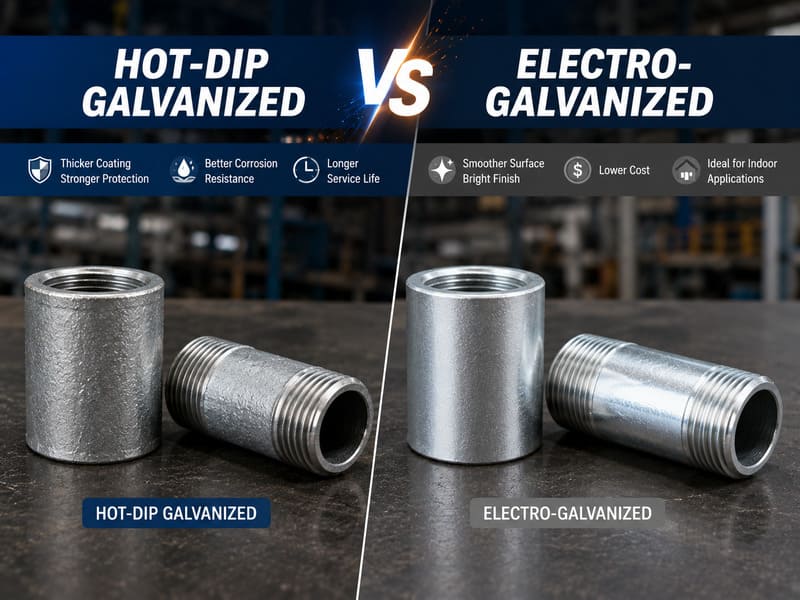
Galvanized pipe fittings are widely used in water supply, fire protection, construction, and industrial piping because the zinc coating helps protect steel from corrosion. However, not all galvanized fittings are manufactured in the same way. The two most common galvanizing methods are hot-dip galvanizing and electro-galvanizing. While both create a protective zinc layer, they differ in coating thickness, durability, appearance, and cost. As a manufacturer of threaded pipe nipples and pipe couplings, we are frequently asked which galvanizing process is better for specific applications. The answer depends on the operating environment and the expected service life of the piping system. This guide explains the differences between these two processes and helps buyers choose the most suitable option. What Is Hot-Dip Galvanizing? Hot-dip galvanizing is a process in which cleaned steel fittings are immersed in molten zinc at approximately 450°C (842°F). The molten zinc reacts with the steel surface, forming several zinc-iron alloy layers and an outer zinc coating. Because the coating becomes metallurgically bonded to the steel, it offers excellent protection against corrosion and mechanical damage. Hot-dip galvanized pipe fittings are commonly used in: Outdoor pipelines Fire sprinkler systems Water supply projects Agricultural irrigation Industrial facilities Coastal environments One of the biggest advantages of hot-dip galvanizing is its long service life, especially in harsh environments where moisture and chemicals accelerate corrosion. What Is Electro-Galvanizing? Electro-galvanizing, also known as electrolytic galvanizing, uses an electric current to deposit a thin layer of zinc onto the steel surface. Unlike hot-dip galvanizing, the zinc layer is much thinner and does not form the same alloy structure with the base metal. Electro-galvanized fittings usually have: A smoother surface finish A brighter appearance Better dimensional consistency for decorative applications However, because the zinc coating is thinner, corrosion resistance is generally lower than that of hot-dip galvanized products. Electro-galvanized fittings are often selected for indoor environments where exposure to moisture is limited. Hot-Dip vs Electro-Galvanized: Key Differences Feature Hot-Dip Galvanized Electro-Galvanized Coating Process Molten zinc immersion Electroplating Zinc Coating Thick Thin Corrosion Resistance Excellent Moderate Surface Finish Slightly rough Smooth and bright Outdoor Use Recommended Limited Indoor Use Suitable Suitable Service Life Longer Shorter Cost Higher Lower Although electro-galvanized fittings may have a cleaner appearance, hot-dip galvanized fittings are generally preferred for demanding industrial applications because they provide stronger long-term protection. Which One Should You Choose? The choice depends on your project requirements. Choose hot-dip galvanized fittings if you need: Long-term corrosion resistance Outdoor installation Fire protection systems Industrial or municipal projects Coastal or humid environments Choose electro-galvanized fittings if you need: Lower initial cost Indoor installation Decorative appearance Light-duty applications For most industrial buyers, durability and maintenance costs are more important than the initial purchase price. In these situations, hot-dip galvanized pipe fittings often provide better long-term value. Our Manufacturing Experience At SANVO, galvanized pipe nipples and pipe couplings are produced according to customer specifications, including material grade, thread standard, and surface treatment. Before galvanizing, each fitting undergoes machining and thread inspection to ensure dimensional accuracy. After coating, the fittings are visually inspected to verify coating quality and thread integrity before packaging. This controlled manufacturing process helps ensure consistent product performance across different export markets. Conclusion Both hot-dip galvanized and electro-galvanized pipe fittings offer corrosion protection, but they are designed for different operating environments. If your project requires maximum durability and long-term performance, hot-dip galvanizing is generally the preferred choice. For indoor or light-duty applications where appearance and cost are more important, electro-galvanized fittings may be sufficient. Understanding the differences between these two galvanizing methods helps buyers select the most appropriate fittings and reduce maintenance costs over the life of the piping system. FAQ Is hot-dip galvanizing better than electro-galvanizing? For most outdoor and industrial applications, yes. Hot-dip galvanizing provides a thicker zinc coating and significantly better corrosion resistance. Can electro-galvanized fittings be used outdoors? They can be used in mild outdoor conditions, but their thinner zinc coating generally results in a shorter service life than hot-dip galvanized fittings. Which galvanized fittings are commonly used in fire sprinkler systems? Hot-dip galvanized threaded pipe nipples and couplings are commonly specified because of their durability and corrosion resistance. Do galvanized fittings require additional painting? In most cases, no. The zinc coating itself provides effective corrosion protection without the need for additional surface treatment.
Pipe Coupling vs Pipe Nipple: Key Differences and How to Choose
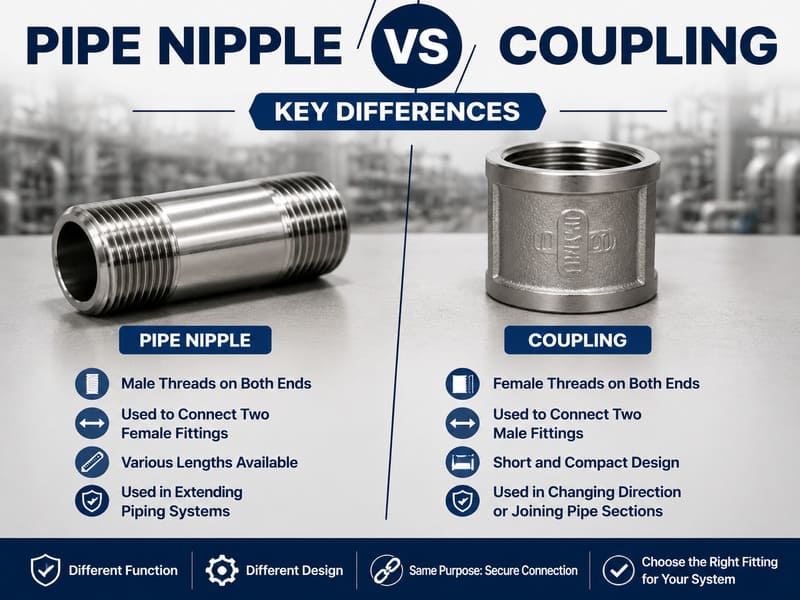
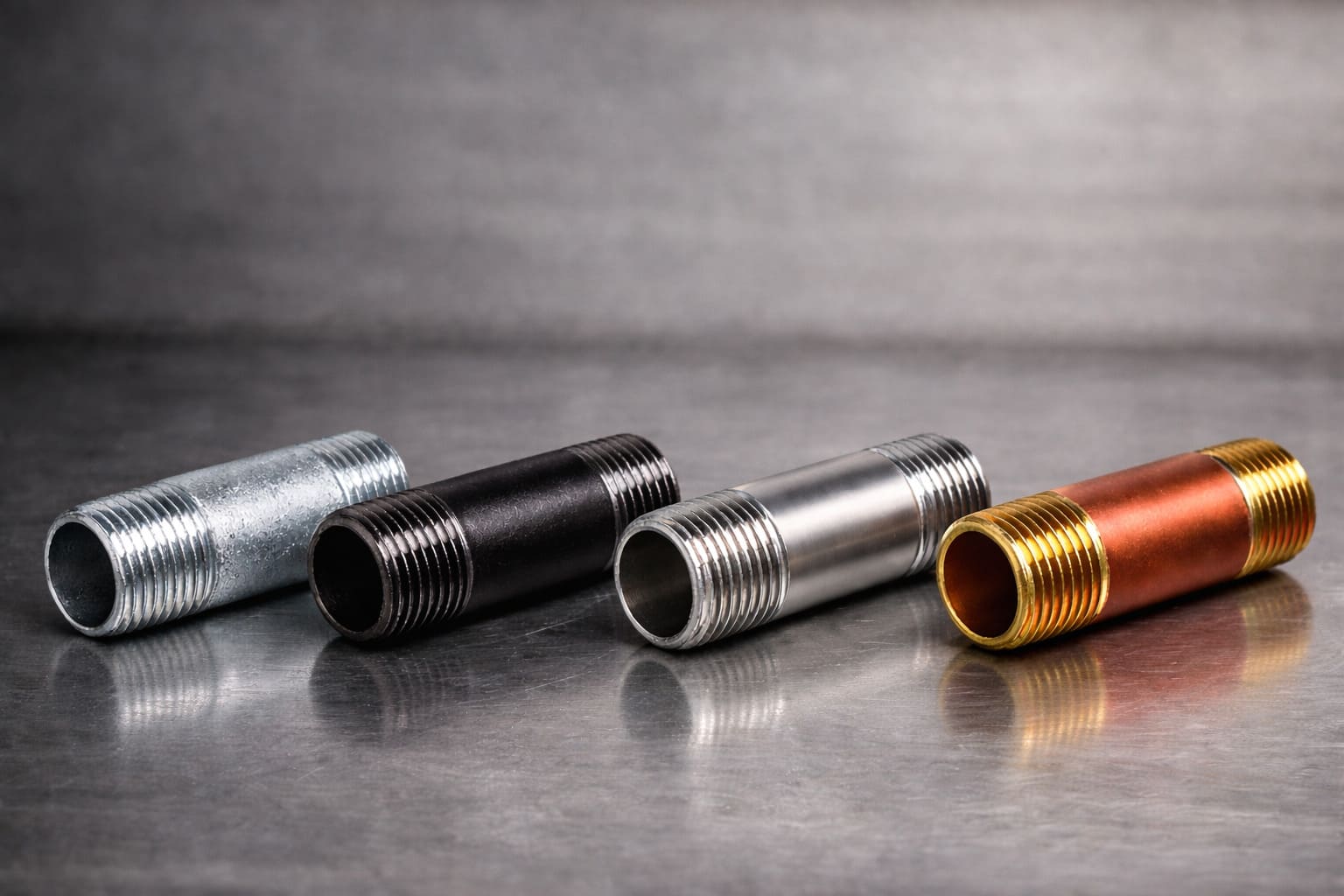
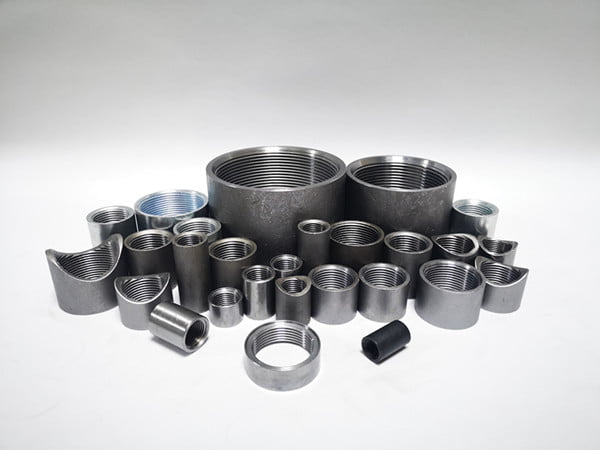
Introduction One of the most common questions we receive from distributors, contractors, and industrial buyers is: “Should I use a pipe coupling or a pipe nipple?” Although these two threaded fittings are often installed together in the same piping system, they are designed for different purposes. Choosing the wrong fitting may lead to unnecessary adapters, additional labor, leakage risks, or even an incompatible piping assembly. Many purchasing mistakes for pipe couplings and nipples occur because buyers focus solely on thread size, neglecting the fitting’s actual function. This guide explains the practical differences between pipe couplings and nipples, compares their applications, and provides recommendations that can help buyers make better purchasing decisions. Pipe Coupling at a Glance A pipe coupling is a female-threaded fitting used to connect two male-threaded pipes or fittings. Unlike a pipe nipple, a coupling does not extend the pipeline. Instead, it joins two externally threaded components into a continuous connection. Because of its simple structure, the coupling is widely used in residential plumbing, fire protection systems, industrial piping, compressed air systems, and mechanical installations. Typical materials include: Carbon steel Galvanized carbon steel Stainless steel Brass Depending on the project, couplings may be supplied as: Full Coupling Half Coupling Reducing Coupling Socket Coupling Industrial buyers usually specify the material grade, thread standard, pressure requirement, and surface finish before placing an order. Pipe Nipple at a Glance A pipe nipple is a male-threaded section of pipe with threads on one or both ends. Instead of connecting two male threads together, a pipe nipple extends or connects piping by engaging with female-threaded fittings such as couplings, elbows, tees, valves, or unions. Pipe nipples are available in numerous lengths and configurations, including: Close Nipple Barrel Nipple Hex Nipple Weld Nipple Shoulder Nipple Hose Nipple TBE (Thread Both Ends) Nipple Material options are generally the same as pipe couplings, but pipe nipples offer much greater flexibility in terms of length and customization. For export projects, custom lengths are frequently manufactured according to engineering drawings or project specifications. Pipe Coupling vs Pipe Nipple: Understanding the Fundamental Difference Although these fittings are often installed together, they perform different functions within a piping system. The easiest way to understand the difference is to think about how they interact with pipe threads. A coupling receives threads internally. A pipe nipple provides threads externally. This simple distinction determines where each fitting can be used. For example: Imagine two threaded steel pipes that need to be joined together. Since both pipes already have external threads, another externally threaded fitting cannot connect them. Instead, a female-threaded coupling is required. Now consider a threaded valve that needs to be installed several inches away from a pipe elbow. A short pipe nipple is installed between the two fittings to provide the required extension. Although both components are threaded fittings, they solve completely different installation problems. Comparison Table Feature Pipe Coupling Pipe Nipple Thread Type Female Thread Male Thread Primary Function Connect Two Male Threads Extend or Connect Threaded Components Standard Length Very Short Various Lengths Available Thread Position Internal External Common Materials Carbon Steel, Galvanized Steel, Stainless Steel Carbon Steel, Stainless Steel, Brass Custom Length Rare Very Common Installation Purpose Joining Pipes Extending Pipe Connections Used With Male Threaded Pipes Female Threaded Fittings For buyers unfamiliar with threaded fittings, this comparison provides a quick reference when reviewing product catalogs or preparing procurement lists. Where Is a Pipe Coupling Used? Pipe couplings are commonly selected when two externally threaded pipes or fittings must be joined securely. Typical applications include: Commercial plumbing systems Water distribution pipelines Fire sprinkler installations Compressed air systems Irrigation networks Industrial utility piping Because couplings have no extended body, they occupy minimal installation space and provide a compact threaded connection. In maintenance projects, replacing a damaged coupling is usually faster than replacing an entire section of pipe, making it a cost-effective fitting for repair work. Where Is a Pipe Nipple Used? Pipe nipples are selected whenever additional threaded length is required between fittings. Common examples include: Connecting valves to pipelines Extending threaded outlets Pressure gauge installations Pump connections Boiler systems Gas piping Hydraulic equipment Chemical process piping Unlike couplings, pipe nipples are available in many standard and custom lengths, allowing engineers to achieve precise spacing between connected components. For this reason, distributors often stock multiple nipple lengths while keeping fewer coupling variations in inventory. Material Comparison: Does the Material Matter More Than the Fitting Type? When comparing a pipe coupling with a pipe nipple, many buyers focus on the fitting type first. In reality, the material often has a greater impact on long-term performance than whether the fitting is a coupling or a nipple. The correct material should always be selected according to the operating environment rather than simply matching the existing pipeline. Carbon Steel Carbon steel is one of the most widely used materials for threaded pipe fittings because it offers high mechanical strength and an economical cost. It is commonly used in: Compressed air systems Mechanical equipment Oil and gas pipelines Industrial machinery Structural piping However, untreated carbon steel is susceptible to corrosion in humid or outdoor environments. Galvanized Carbon Steel Galvanized fittings are carbon steel products coated with zinc to improve corrosion resistance. Galvanized pipe nipples and couplings are widely used in: Water supply systems Fire sprinkler systems Outdoor installations Agricultural irrigation HVAC piping Although galvanized fittings cost slightly more than black steel fittings, the additional corrosion protection often results in a longer service life and reduced maintenance. Stainless Steel Stainless steel provides the highest level of corrosion resistance among commonly used threaded fitting materials. Typical applications include: Food processing Pharmaceutical plants Marine environments Chemical processing High-humidity facilities Grades such as 304, 304L, 316, and 316L are selected according to corrosion requirements and project specifications. Although stainless steel fittings are more expensive, they are often the most economical choice over the lifetime of the system because of their durability and reduced maintenance. Brass Brass pipe nipples and couplings are frequently used where corrosion resistance and
How Pipe Nipples Are Manufactured: From Cutting To Threading
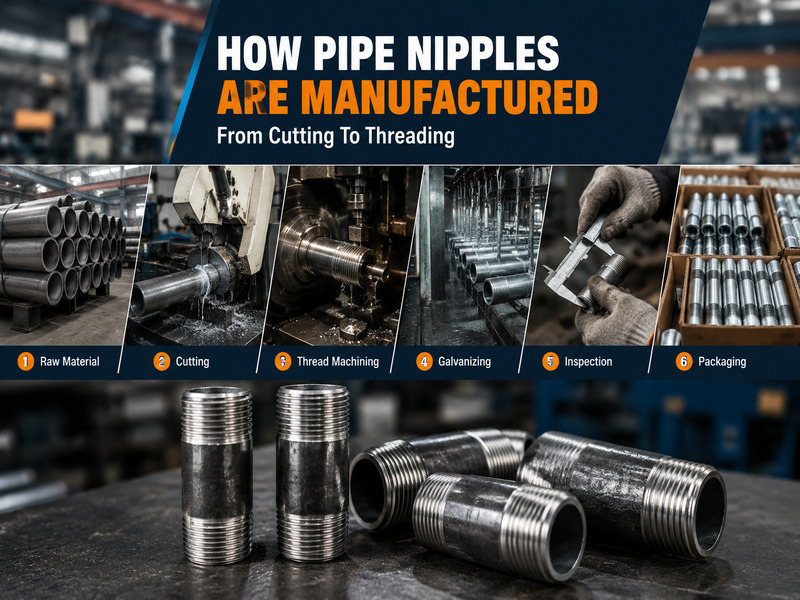
Introduction When purchasing pipe nipples for industrial applications, many buyers focus on material, size, and thread standards. However, the manufacturing process behind a pipe nipple directly affects its dimensional accuracy, sealing performance, and service life. As a pipe nipple manufacturer, we produce threaded pipe nipples for distributors, contractors, and industrial customers worldwide. From raw material selection to final inspection, every production step plays an important role in ensuring consistent quality. This article explains how pipe nipples are manufactured, including cutting, thread machining, surface treatment, inspection, and packaging. 1. Raw Material Selection For Pipe Nipple Production The manufacturing process starts with selecting suitable steel pipes according to customer requirements. Common materials include: Carbon steel Galvanized carbon steel Stainless steel Brass For industrial applications, manufacturers usually select materials according to: Working environment Corrosion resistance requirements Pressure requirements Temperature conditions Thread standard For example: Galvanized steel pipe nipples are commonly used in applications requiring additional corrosion protection, while stainless steel pipe nipples are preferred in environments involving chemicals, moisture, or food processing. 2. Steel Pipe Cutting: Preparing The Correct Length After selecting the raw pipe, the first production step is cutting. Pipe nipples are normally manufactured according to: Customer drawings Standard dimensions Thread requirements During cutting, manufacturers must control: Cutting length accuracy End face flatness Pipe deformation Incorrect cutting may affect the following threading process and result in poor installation performance. For standard products, pipe nipple lengths are usually produced according to commonly requested sizes. Customized lengths can also be manufactured based on project requirements. 3. End Preparation Before Threading Before thread machining, the pipe ends require preparation. This process may include: Removing burrs Cleaning pipe ends Adjusting end surface condition A smooth pipe end helps ensure: Better thread formation Improved sealing performance Reduced installation problems For threaded fittings, even small dimensional errors can affect connection quality. 4. CNC Thread Machining: The Key Manufacturing Step Thread machining is one of the most important steps in pipe nipple production. Common thread types include: NPT BSPT BSPP DIN threads Manufacturers use CNC thread machining equipment to produce accurate external threads according to customer specifications. The CNC threading process controls: Thread pitch Thread depth Thread angle Thread length Surface finish For example, NPT threads require compliance with ASME B1.20.1 specifications to ensure proper sealing between threaded components. 5. Surface Treatment: Galvanizing And Finishing After threading, pipe nipples may receive additional surface treatment depending on application requirements. Common treatments include: Hot-Dip Galvanizing Hot-dip galvanizing creates a zinc coating layer that improves corrosion resistance. It is widely used for: Water systems Outdoor piping Fire protection applications Electro-Galvanizing Electro-galvanizing provides a thinner zinc coating with a smoother surface appearance. Black Finish Carbon steel pipe nipples may also be supplied with black oil coating or black finish for industrial applications. 6. Quality Inspection During Pipe Nipple Manufacturing Professional manufacturers perform inspections throughout production. Typical inspection items include: Dimensional Inspection Checking: Outside diameter Length Thread dimensions Thread Inspection Using: Thread gauges Measuring tools Surface Inspection Checking: Coating condition Surface defects Manufacturing marks Material Verification For export orders, manufacturers may provide: Material certificates Inspection reports Mill Test Reports (MTR) Quality control helps ensure pipe nipples meet customer specifications before shipment. 7. Packaging And Shipment Preparation After inspection, finished pipe nipples are prepared for delivery. Packaging methods depend on: Product size Quantity Transportation method Common packaging includes: Cartons Wooden cases Pallets Customized export packaging Proper packaging prevents: Thread damage Surface scratches Product deformation during transportation 8. Why Manufacturing Process Matters When Choosing A Supplier For buyers, selecting a pipe nipple supplier is not only about price. A reliable manufacturer should have: Stable raw material supply Professional machining equipment Experienced operators Thread inspection capability Export packaging experience A controlled production process helps ensure consistent quality for every shipment. Conclusion The manufacturing process of pipe nipples involves multiple critical steps, including raw material selection, cutting, end preparation, CNC threading, surface treatment, inspection, and packaging. Understanding how pipe nipples are produced helps buyers evaluate suppliers more effectively and choose products that meet their application requirements. As an experienced pipe nipple manufacturer, SANVO provides standard and customized pipe nipples with different materials, sizes, and thread standards for global industrial customers. FAQ Q1: What materials are used to manufacture pipe nipples? Pipe nipples are commonly manufactured from carbon steel, galvanized steel, stainless steel, and brass depending on application requirements. Q2: What is the most important step in pipe nipple manufacturing? Thread machining is one of the most important steps because thread accuracy directly affects sealing performance and installation reliability. Q3: Can pipe nipples be customized? Yes. Manufacturers can customize pipe nipple length, material, thread type, surface treatment, and packaging according to customer requirements. Q4: What machines are used to manufacture pipe nipples? Pipe nipple production commonly uses pipe cutting machines, CNC threading machines, inspection tools, and surface treatment equipment.
5 Key Factors to Consider When Selecting Pipe Fittings
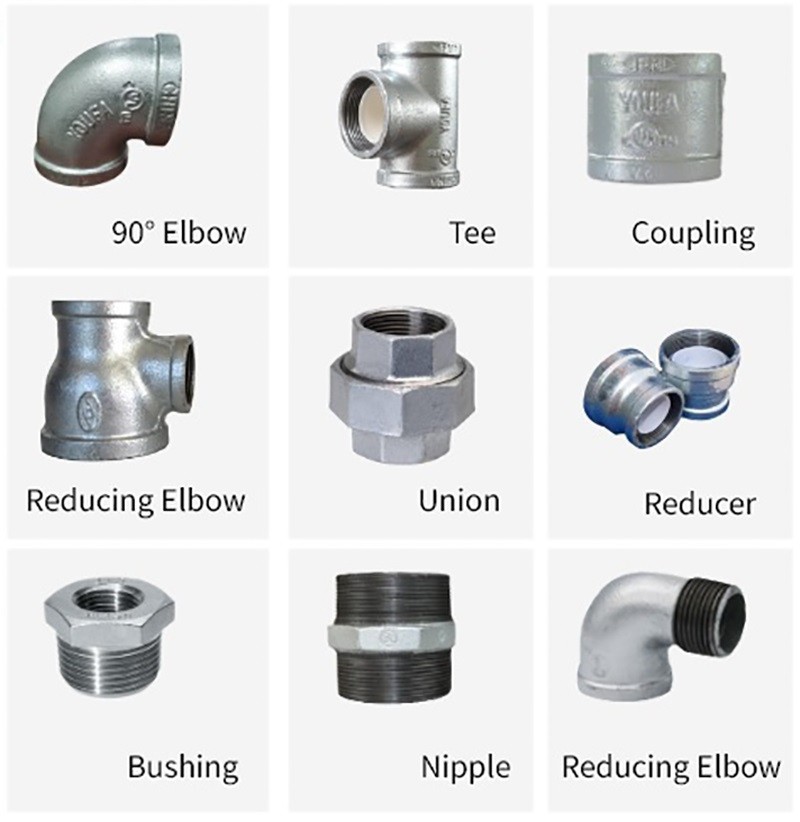
Usually, we need to consider “5 factors” when choosing pipe fittings: (1)Compatible with material and transport fluid; (2)Pressure and temperature grade of pipe fittings; (3)Piping size and connection types; (4)Intended application or flow requirement; (5)Installation method. All factors should stay the same as project requirements, ensuring the normal function and longevity of the system. 1. Material Our factory produces a variety of galvanized steel, stainless steel, and black pipe fittings, ensuring pipe connectors conform to your purchasing requirements. Each material is suitable for different applications and has advantages: stainless steel resists rust, while galvanized steel is solid and cost-effective. Fluid in the piping system may be corrosive and incompatible with pipe fitting material, possibly causing many problems. That is why it is crucial to pick the right material for the job—it saves you time, money, and a lot of headaches down the road: Corrosion Some plumbing fittings materials easily corrode when touched with acidic or basic fluid, making pipe thickness leak and even break. Chemical Attack Some chemicals react when touched with incompatible materials. Contaminant fluid Corrosion or chemical affection may release hazardous substances and pollute the transport fluid, which affects product quality and safety. Before selecting fittings, consider the substances that will flow through the pipes. For instance, when transporting acidic materials such as vinegar or chemicals, stainless steel is more suitable than regular steel. 2. Standard Conditions for Temperature and Pressure Plumbing fittings must withstand the maximum work pressure of the system. If you are short of pressure rating, plumbing pipes, and fittings are on the card break, leaks, even catastrophic failure, and lead to accident and system down. The performance of plumbing fittings changes at different temperatures. For example, high-temperature conditions cause PVC plumbing fittings to soften and metal pipe fittings to swell; however, low temperatures may cause material embrittlement. To avoid this risk, select tube fittings suitable for temperature rating. Different industries have strict standards and specification requirements for the plumbing system: petroleum and natural gas industries always need high-pressure, high-temperature tube fitting; the chemical industry requires the tube fitting to be anti-corrosion and withstand extreme temperature and stress, as ASME B16.5 standard flange; construction and water supply system usually use low pressure and room temperature tube fittings. 3. Sizes and Connection Right Size Pipeline component sizes must match pipe system sizes to ensure the fluid flows smoothly. Undersized pipeline components flow be limited, enhance system pressure, and reduce efficiency; oversizes may cause waste resources and cost increase. Line size unmatched causes unessential pressure loss and influences system performance. Line size usually conforms to international standards (such as ANSI, ISO, and DIN pipe fittings), ensuring pipeline components are compatible with pipeline. For example, nominal pipe size is a common standard in North America. Pipe Connection Types weld fittings are sealed for life and suitable for high-pressure systems; threaded fittings are for low-pressure systems but need regular checking of air tightness. Connections in high-pressure systems must withstand high pressures and avoid leaks or failures. For instance, butt-welded joints and flanges are popular. Quick connector fittings or compression connectors are suitable for fast installation and removal, saving time and manual cost. 4. Applications The different industry has different requirements for pipe connectors: Natural gas and petroleum need pipe connectors like stainless steel flanges to withstand high pressure and corrosion. The chemical industry needs pipe connector fittings like PVC pipe fittings to endure oxidation. The food and medical industry needs pipe connectors such as stainless steel fittings that conform to hygienic standards. Construction and water supply systems need economical galvanized pipe connectors. Different fluids have different requirements for pipe joints. For example, gas needs higher sealing, but thick liquid needs more paths to prevent blocking. Fluid viscosity, density, and corrosion influence the selection of pipe joints. For example, higher viscosity requires bigger pipe joints to reduce flow resistance. 5. Fittings and Installation A quick connector or compression joint is simple to operate, does not require special tools, and can quickly complete projects. Welding joints or flanges that installation time is longer and costs more. They need professional tools and artisans, and They are for large industry projects, like chemical plants or petroleum pipelines. Welding joints nearly leak when connecting finish, suitable for high pressure or risk substance transportation, like the gas pipeline. Flange or threaded connections can be removed and are convenient for maintenance. However, they need to be checked for tightness regularly. Thus, they are suitable for systems that need periodic repair.