
How to Select Hex Nuts: A Complete Buying Guide
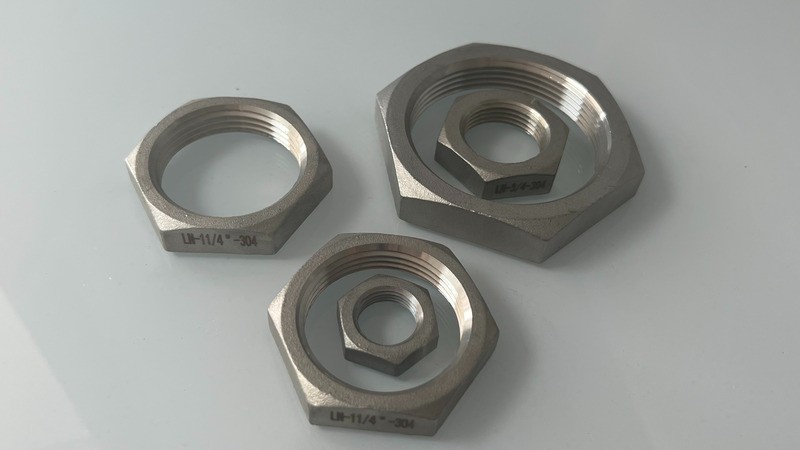
Introduction Hex nuts are one of the most widely used fasteners. However, selecting the wrong type causes installation failures, safety risks, and costly rework. Therefore, understanding the key selection parameters is essential. We supply stainless steel hex nuts and a full range of pipe fittings worldwide. We provide technical support to specify the correct product for every application. This guide covers everything you need to know. It explains common nut types, material grades, thread standards, size selection, and the most frequent buying mistakes we see in the field. Common Types of Hex Nuts Not all hex nuts are the same. Therefore, choosing the correct type depends on your load requirements, installation method, and application environment. Standard Hex Nut ASME B18.2.2 / DIN 934 The most common type of general fastening. Suitable for most structural and mechanical applications. Available in a wide range of sizes and materials. Heavy Hex Nut ASME B18.2.2 / ASTM A563 Larger bearing surface than standard hex nuts. Used in structural steel, flange bolting, and high-load applications. Common in ASTM bolt and nut assemblies. Nylon Insert Lock Nut DIN 985 / ISO 7042 Contains a nylon collar that resists vibration loosening. Ideal for equipment subject to dynamic loads. However, not suitable for temperatures above 120°C. Flange Hex Nut DIN 6923 / ISO 4161 Integrated flange distributes load over a wider surface area. Therefore, no separate washer is needed. Common in automotive and structural applications. Coupling Nut (Hex) ASME B18.2.2 A long hex nut is used to join two threaded rods end-to-end. For example, commonly used in threaded rod extensions and anchor bolt assemblies. Jam Nut (Thin Hex Nut) DIN 439 / ISO 4035 Thinner than a standard hex nut. Used as a locking nut against a full nut, or in applications with limited axial space. Not for primary load-bearing use alone. Procurement tip: When sourcing hex nuts in bulk, always confirm whether the application requires standard or heavy series. For example, ASTM A193 stud bolts require ASTM A563 heavy hex nuts — standard hex nuts do not meet the specification. Materials: Choosing the Right Grade Material selection is the most critical decision when specifying hex nuts. In addition, it directly affects corrosion resistance, tensile strength, and service temperature range. Material Grade / Standard Key Properties Typical Applications Carbon Steel ASTM A563 Gr. A/C/DH ISO 4032 Cl. 8 High strength, cost-effective, requires coating for corrosion protection Structural steel, general mechanical assembly Stainless Steel 304 ASTM F594 Gr. 8 ISO 4032 A2-70 Good corrosion resistance, non-magnetic, moderate strength Food processing, water treatment, and general outdoor use Stainless Steel 316 ASTM F594 Gr. 8 ISO 4032 A4-70 Superior corrosion resistance, especially to chlorides Marine, chemical processing, coastal environments Duplex SS 2205 ASTM A182 F51 High strength + high corrosion resistance, chloride SCC resistant Offshore, desalination, subsea pipelines Alloy Steel ASTM A194 Gr. 2H / 4 Very high strength, heat-resistant High-pressure flanges, pressure vessels, and petrochemical Brass / Bronze ASTM B16 / B98 Excellent corrosion resistance, non-sparking Plumbing, electrical, and explosive environments We recommend stainless steel hex nuts (Grade 316) for any application involving moisture, chemicals, or outdoor exposure. However, for purely structural applications with protective coatings, carbon steel hex nuts remain the most cost-effective choice. Important: Stainless steel hex nuts and carbon steel bolts should not be mixed in high-stress assemblies. Galvanic corrosion occurs when dissimilar metals contact each other in the presence of an electrolyte. Therefore, always match nut and bolt materials whenever possible. Size Selection: Key Parameters to Specify When ordering hex nuts, providing only a nominal diameter is not sufficient. We require the following parameters to fulfill orders accurately. Nominal diameter and thread pitch — e.g. M16 x 2.0 or 5/8-11 UNC Nut series — standard hex or heavy hex Material grade — e.g. SS 316, carbon steel ASTM A563 Gr. DH Finish/coating — plain, hot-dip galvanized, zinc plated, passivated Applicable standard — ASME B18.2.2, DIN 934, ISO 4032, ASTM F594, etc. Quantity and packaging requirement — bulk bag, box, or individually bagged Certification requirement — Mill Test Report (MTR), NACE MR0175, RoHS, etc. For importers and distributors: We strongly recommend requesting a Mill Test Report (MTR) for all stainless steel hex nuts. The MTR confirms chemical composition and mechanical properties. Therefore, it protects you from receiving substandard or mislabeled material — a growing issue in the global fastener market. Common Buying Mistakes We see these errors repeatedly across procurement orders. Therefore, we highlight them here to help you avoid delays, rejections, and cost overruns. Mistake 1 — Ordering by size only, without specifying grade: “M20 stainless hex nuts” is not a complete specification. For example, without stating 304 or 316, you may receive whichever grade is in stock — which may not suit your environment. Mistake 2 — Mixing thread standards: UNC and metric threads look similar in small sizes. However, forcing a UNC nut onto a metric bolt strips the thread immediately. Always verify the thread standard on the engineering drawing before ordering. Mistake 3 — Ignoring the difference between standard and heavy hex: Heavy hex nuts have a larger wrench flat and thickness. Therefore, substituting standard hex for heavy hex in a bolted flange assembly violates the design specification and may fail pressure testing. Mistake 4 — Not requesting MTR or test certificates: Counterfeit and mislabeled stainless steel fasteners are common in global supply chains. In addition, some suppliers ship carbon steel with a stainless coating. An MTR prevents this risk entirely. Mistake 5 — Selecting 304 SS for chloride environments: 304 stainless hex nuts perform well in most conditions. However, in coastal, marine, or chemical environments with chloride exposure, 316 SS is the correct choice. 304 will pit and corrode under these conditions. Mistake 6 — Overlooking coating compatibility: Hot-dip galvanized hex nuts require oversized threads to allow for coating thickness. Therefore, they are not dimensionally interchangeable with plain or zinc-plated nuts of the same nominal size. FAQ Q: What is the difference between a standard hex nut and a heavy hex nut? A heavy hex nut has a larger wrench flat
Hose Pipe Nipple Size Chart
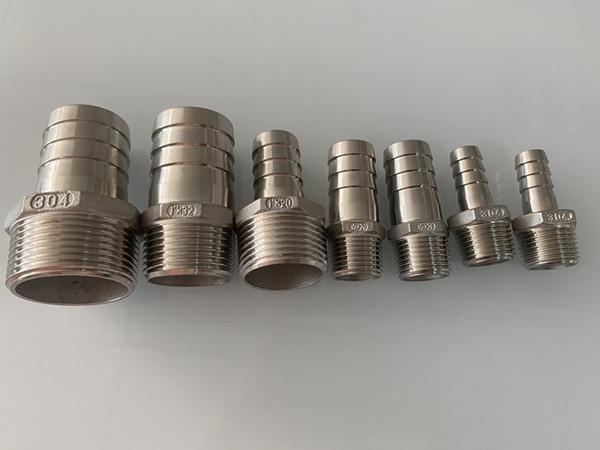
The hose pipe nipple is a pipe nipple with barbs and features a male threaded connection on one end and a hose barb on the other end. The hose barb may be the same size as the pipe connection or it may be of reduced size. This hose pipe nipple is a stainless steel casting pipe fitting with a male National Pipe Taper (NPT) thread on one end and a hose barb on the other end. It has NPT threads connecting to pipes with tighter seals than straight threads. This nipple hose barb is made of 304/316 stainless steel, which is higher strength and more corrosion. The stainless steel hose nipple meets standards ANSI B1.20.1 for quality assurance. Hebei Sanvo is the hose nipple supplier and manufacturer in China, exporting a variety of sizes of hose nipples. The Hose Pipe Nipple Size Chart Is As Follows: How To Use Hose Nipples: Slide the barbed end into a rubber hose and secure it with a clamp or a crimp-on hose ferrule. Hose Nipple Application Range: Hose nipples are available for fluid handling applications, including fertilizers, herbicides, acids, solvents, liquid waste, saltwater, and cooling water, etc. Great for attaching hose and ball valve. Maximum working pressure of 20000 psi. Pipe fittings are components used for connecting, terminating, controlling flow, and changing the direction of piping in many different industries. When purchasing pipe fittings, consider the application, as this will affect material type, shape, size, and required durability. Fittings are available threaded or unthreaded, in many shapes, styles, sizes, and schedules (pipe wall thickness). Our company Hebei Sanvo is one of the leading stainless steel threaded pipe fittings suppliers and manufacturers in China, in addition to supplying and manufacturing hose nipples, it also supplies, manufactures, customizes, and exports other threaded pipe fittings, such as stainless steel threaded elbows, stainless steel threaded tees, stainless steel pipe caps, stainless steel pipe plugs, stainless steel hex nipples, stainless steel pipe unions, and stainless steel lock nuts, etc. Factory direct supply, preferential price, quality assurance, welcome customers to consult, and look forward to discussing and cooperating with you!
How often does plumbing need to be replaced?
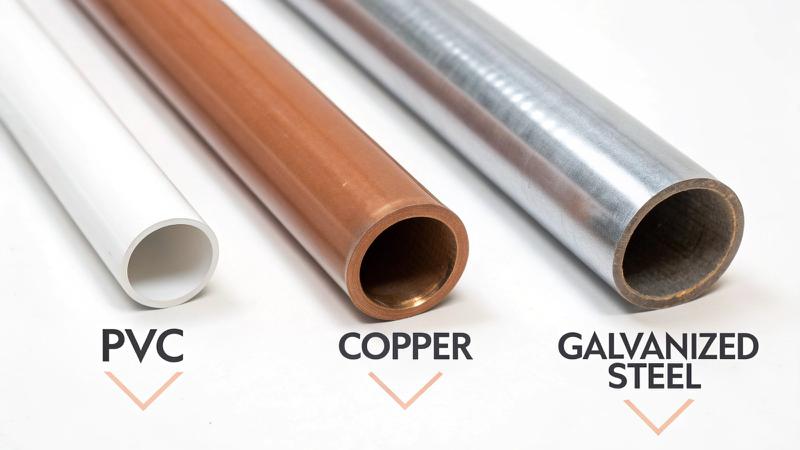
Plumbing is an important part of your home. Most people don’t think about it until something goes wrong. How frequently should it be replaced? In this article, we will examine the factors that influence plumbing lifespan and when it is necessary to consider a replacement. Factors Affecting Plumbing Lifespan Plumbing longevity depends on three key factors: Material Quality Copper pipes last 50+ years but are costly. PVC pipes (40–80 years) resist corrosion but degrade in extreme heat. Galvanized steel (20–50 years) is prone to rust. Water Quality Hard water accelerates mineral buildup, while acidic water corrodes metal pipes. Regular water testing helps prevent premature replacements. Usage Patterns High-pressure systems or frequent temperature changes strain pipes. Signs Your Plumbing System Needs Replacement Watch for these red flags: Frequent leaks or water discoloration. Low water pressure from mineral buildup. Visible corrosion or rust on pipes. How to Extend Plumbing Lifespan Annual inspections are conducted to identify leaks early. Water softeners reduce mineral buildup. Pipe insulation to prevent freezing. Conclusion Most plumbing systems typically last between 20 and 80 years, depending on the materials used and the maintenance they receive. Copper pipes can endure 50+ years, PVC 40–80 years, and galvanized steel 20–50 years. Lifespan is influenced by water quality (hard/acidic water accelerates corrosion), usage intensity, and installation quality. Key signs of failure include frequent leaks, discolored water, or low pressure. Proactive steps like annual inspections, pipe insulation, and water softening extend longevity. As a wholesale supplier, we offer long-lasting pipes, corrosion-resistant fixtures, and expert guidance.
How Often Should Pipes Be Replaced?
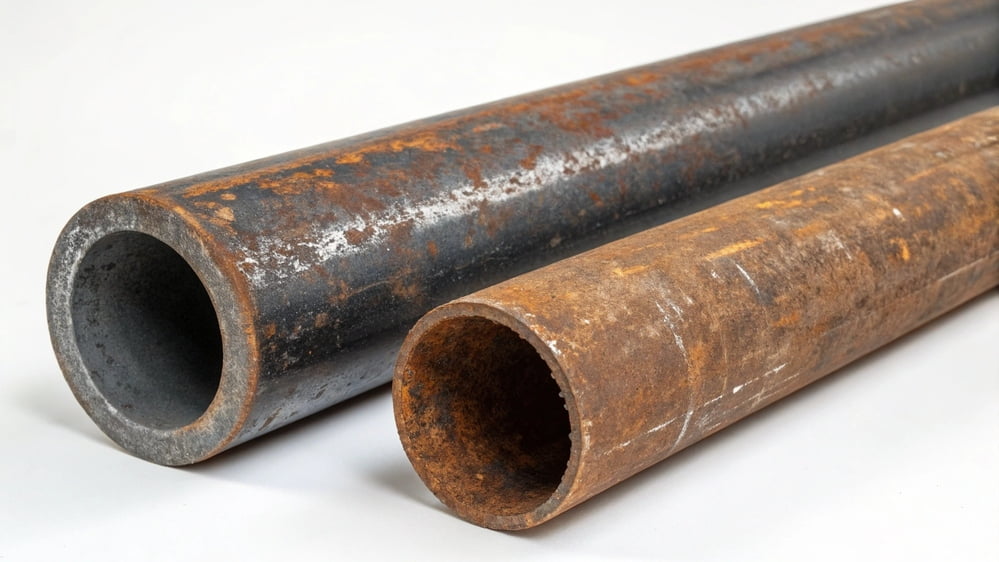
Stainless Steel Pipes: 50+ years (low corrosion) / 20–30 years (harsh conditions). Galvanized Steel Pipes: 40–50 years (dry) / 20–25 years (wet/acidic). Carbon Steel Pipes: 15–20 years (uncoated) / 30+ years (with protective linings). (Note: Actual lifespan depends on environment, maintenance, and usage intensity.) When Should You Replace Your Pipes? Recognizing the signs of pipe deterioration is essential to avoid costly damage: Visible Corrosion: Rust or scaling on steel pipe or galvanized pipe indicates weakening. Leaks or Cracks: Frequent leaks suggest structural failure. Discolored Water: Brown or yellow water signals internal pipe corrosion. Reduced Water Pressure: Blockages or pipe narrowing may necessitate replacement. How to Replace Pipes: A Step-by-Step Guide Replacing pipes involves careful planning and execution: Assess the Problem: Identify the extent of damage and the type of pipe (stainless steel pipe, carbon steel pipe, etc.) needing replacement. Choose the Right Material: Select pipes based on durability, corrosion resistance, and application requirements. Hire Professionals: Engage certified plumbers or contractors for precise installation. Install and Test: Ensure the new pipes are properly fitted and tested for leaks.
How To Install Pipe Nipple For Plumbing Piping?
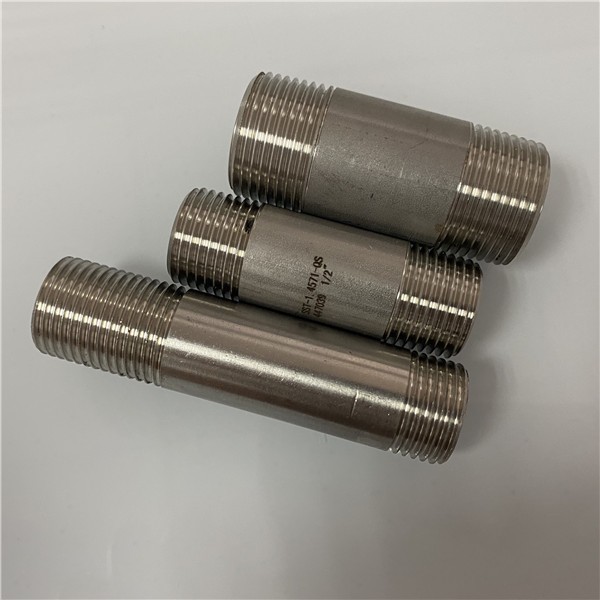
Water pipe nipples are also called casing pipes, pipe sleeve nipples, which are used to connect two water pipes to extend the length of the water pipe. According to the different ways of use, the nipples can be divided into externally threaded end water pipe nipples, bite-type water pipe nipples, and self-fixing water pipe nipples. When installing, pay attention to the same size between the nipple and the water pipe, and choose the correct connection nipple. 1. Find The Correct Size When Installing Water Pipe Nipples The installation and construction of the waterway are at the forefront of the home decoration process. If there is a problem with the installation of the water pipe, other decoration work will be difficult to carry out. To do a good job in waterway construction, it is necessary to have a clear understanding of water pipe material, water pipe nipple specifications, and other issues in advance to prevent the possibility of mistakes. 2. What Is A Water Pipe Nipple? To understand the specifications of water pipe nipples, we must first know what water pipe nipples are. The water pipe nipple, in simple terms, is actually a small part used to connect two water pipes. However, although this part is small, it plays a very crucial role. According to their usage, water pipe nipples can be divided into three categories: Externally threaded water pipe nipples Card sleeve water pipe nipples Water pipe nipples 3. Water Pipe Nipples Are Classified By Material According to their production materials, they can be divided into two categories: Metal water pipe nipples Plastic water pipe nipples The thickness, length, and installation position of the water pipe are different, which also determines that there are many different sizes of water pipe nipple specifications. The use of water pipes is very closely related to people’s daily life. It can be used not only in the family but also in other areas of society. Water pipes are also widely used. There are also certain differences in prices for different pipe materials and pipe specifications. For general washing machine water pipe nipples, the applicable inner diameter of the water pipe is 12mm, and for household water pipe nipples, the general inner diameter is 14m. If the water pipe nipple specifications are not used correctly during the waterway reconstruction construction, it may cause the water pipe in the house to leak and affect people’s normal work and life. In addition, improper water pipe nipples may damage the water pipes and cause serious waste of water resources. Therefore, only by finding the right water pipe nipple specifications and installing it, can the use be more assured. 4. How To Remove Rusted Water Pipe Nipple? You can pour some peanut oil on the rusty water pipe nipple, and then gently rotate it with a wrench. Knock the water pipe nipple with a wrench and loosen the rusty screw to unscrew it. If the rust is too serious, you can only pry open the water pipe nipple, and replace it with a new water pipe nipple later.
How to Verify a Chinese Pipe Fittings Supplier’s MTC
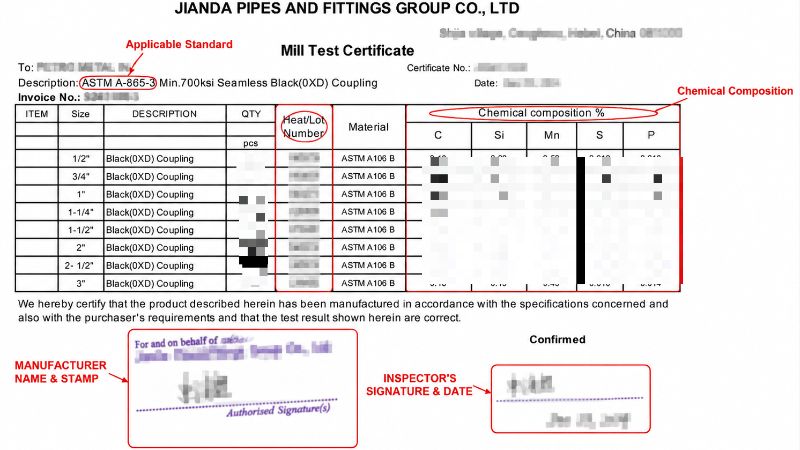
What Is an MTC, and Why Does It Matter? A Material Test Certificate (MTC) verifies pipe fittings meet mechanical and chemical standards. Without a valid MTC, you have no traceable evidence that the material in your hands is what was ordered. For any regulated application, this is a contractual and safety requirement. Projects typically require MTCs issued by the manufacturer’s independent inspection department. At a higher level, MTC also requires a third-party witness’s signature. Step 1: Check That the MTC Contains All Required Fields A legitimate MTC should clearly state the following: Heat/Lot Number Chemical Composition Applicable Standard Product Description Manufacturer Name and Stamp Inspector’s Signature and Date Step 2: Cross-Check the Heat Number Against the Physical Marking Every fitting should have a heat number stamped or stenciled on the product itself. This number must match the heat number on the MTC. This is one of the most overlooked checks in incoming inspection. Suppliers sometimes provide certificates from different batches to hide testing omissions or failures. What to do: Physically inspect a sample of fittings from the shipment Record the heat numbers marked on the fittings Confirm they correspond to the heat number listed on the MTC If numbers do not match, reject the lot until an explanation is provided in writing Step 3: Look at the Test Data Legitimate test results show actual measured values. For example: Property Standard Minimum What a Suspicious MTC Looks Like Tensile Strength 415 MPa min Exactly 415 MPa Yield Strength 240 MPa min Exactly 240 MPa Elongation 22% min Exactly 22% Legitimate test results show actual measured values. For example: Uniform results at the minimum limit suggest manual entry rather than actual data. Real lab results have natural variation. Request the original mill test report to audit for suspicious data. Step 4: Verify the Certificate Format Matches the Required Level Many Chinese suppliers use the phrase “3.1 certificate” loosely. Before accepting the document, confirm: Is the certificate issued on the manufacturer’s official letterhead? Does it carry a separate QC department stamp distinct from the production department? If 3.2 is required, is there a third-party inspector’s countersignature (SGS, Bureau Veritas, TÜV, Intertek, etc.)? A certificate signed only by the sales manager or factory director does not qualify. Step 5: Request Third-Party Inspection for High-Value or High-Risk Orders For critical or large orders, appoint an independent inspection agency to witness testing. For critical or large orders, appoint an independent inspection agency to witness testing. Witness mechanical/chemical testing, verify heat numbers and MTC, and issue the report. This report — combined with the factory’s MTC — gives you a 3.2-equivalent level of confidence. Third-party inspection costs far less than the price of failure or delay. Common Red Flags to Watch For Red Flag What It May Indicate Test values exactly at specification limits Data may have been manually entered The heat number on MTC does not match the physical marking The certificate may belong to a different batch Certificate signed by sales or management only Does not meet EN 10204 3.1 requirements No manufacturer stamp or only a general company chop Certificate origin cannot be verified The certificate is undated or shows an implausible date May be reused from a previous order Chemical or mechanical data copied from the standard Actual testing may not have been performed A Practical Pre-Shipment Checklist MTC received, and all required fields are present Heat numbers on MTC match physical markings on fittings Chemical and mechanical test values show realistic variation (not exact minimums) The certificate is signed by the QC department (not sales or management) Certificate format matches the required level (3.1 or 3.2) Third-party inspection report received (if applicable) All documents are in the required language (English or project-specified language) Working With Suppliers Who Get This Right A reliable pipe fittings manufacturer will not hesitate to provide full traceability documentation. They understand requirements and provide source mill certificates. We supply carbon steel, brass, and stainless pipe fittings with standard full documentation. Contact us to verify our certifications before placing an order.