
Pipe Coupling Size Guide: How to Choose the Right Size
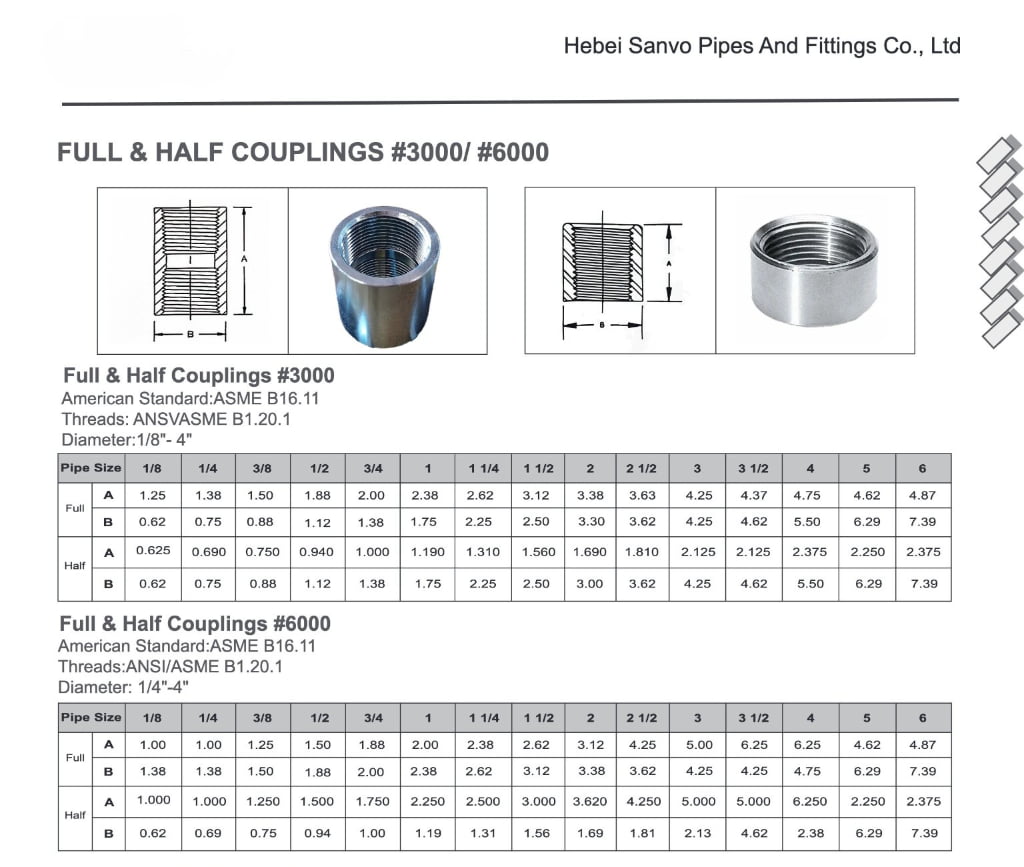
Introduction In industrial piping systems, selecting the correct pipe fitting size is critical for ensuring safety, reliability, and long-term performance. Among the most commonly used fittings in threaded piping networks is the pipe coupling. This small but essential pipe fitting connects two pipes or pipe nipples together, allowing pipelines to extend, repair, or adapt to different layouts. At our manufacturing facility, we produce a wide range of pipe couplings, pipe nipples, steel pipes, and stainless steel threaded pipe fittings designed for demanding industrial environments. Over the years, we have worked with contractors, pipeline engineers, and procurement teams across many industries, and one common challenge we see is choosing the correct pipe coupling size. In this guide, we will explain how pipe coupling sizes work, how they relate to a series of threaded pipe fittings, and how to select the right specification for your industrial piping systems. Applications Pipe couplings are widely used in threaded piping installations where two pipes need to be securely connected. Because they are compact, strong, and easy to install, they are commonly found in many industrial environments. Fire Sprinkler Systems In fire protection systems, threaded pipe fittings are often used because they allow quick installation and easy maintenance. Pipe couplings connect sections of pipe or pipe nipples to form long sprinkler pipelines throughout buildings. Industrial Water Supply Systems Factories and processing plants rely on stable water supply pipelines. Pipe couplings connect steel pipes and pipe nipples to create flexible water distribution networks that can be easily expanded or repaired. Gas Pipeline Systems Gas pipelines often use threaded connections in smaller diameter systems. Pipe couplings help connect pipe nipples and steel pipes securely while maintaining pressure integrity. Mechanical Equipment Piping Many industrial machines require compact pipe connections. Pipe couplings are often used together with pipe nipples to connect valves and pressure gauges. Boiler Room and Utility Piping Utility rooms contain multiple pipelines for water, steam, and gas. Pipe couplings allow technicians to connect or replace sections of piping without welding. Because of these versatile applications, pipe couplings are considered a fundamental component in industrial piping systems. Why Pipe Couplings Are Used in Industrial Piping Systems Although there are many pipe connection methods available, pipe couplings remain one of the most practical solutions in threaded pipelines. Simple Pipe Connection A pipe coupling is essentially a short fitting with female threads on both ends. It allows two pipes or pipe nipples with male threads to be joined quickly. This design makes pipe couplings a standard choice for threaded pipe fitting systems. Easy Pipeline Extension When pipelines need to be extended, engineers can simply insert a pipe nipple and pipe coupling to lengthen the system. This modular structure allows pipelines to be adjusted without replacing entire sections of pipe. Maintenance and Repairs In maintenance situations, pipe couplings allow technicians to remove damaged pipes and install replacements quickly. Compared with welded fittings, threaded pipe fittings reduce downtime during repairs. Compatibility with Standard Threads Pipe couplings are designed with standard threads such as: NPT (National Pipe Thread) BSPT (British Standard Pipe Thread) This ensures compatibility with common pipe nipples, steel pipes, valves, and threaded fittings. Pipe Coupling Sizes Understanding pipe coupling sizes is important when designing or purchasing couplings for industrial piping systems. Pipe coupling sizes correspond to the nominal pipe size (NPS) of the pipes to be connected. The coupling must match the outer thread size (OD) of the pipe nipple or steel pipe. Because pipe thread standards are fixed, selecting the correct size ensures proper sealing and pressure resistance. Material Options for Pipe Couplings Material selection plays a major role in the performance and durability of pipe couplings. Different materials are suited to different industrial environments. Stainless Steel Pipe Couplings Stainless steel is widely used in industries that require corrosion resistance. Advantages include: Excellent corrosion resistance High strength and durability Suitable for chemical and water systems Long service life Stainless steel pipe couplings are commonly used in: chemical processing plants food processing facilities water treatment systems They are often paired with stainless steel pipe nipples and steel pipes in demanding environments. Galvanized Steel Pipe Couplings Galvanized steel pipe couplings are coated with a protective zinc layer to improve corrosion resistance. Advantages include: Good rust resistance Cost-effective solution Suitable for outdoor pipelines Widely used in fire sprinkler systems Galvanized couplings are frequently used with galvanized pipe nipples in construction and infrastructure projects. Carbon Steel Pipe Couplings Carbon steel pipe couplings are commonly used in heavy industrial systems where strength is the primary requirement. Advantages include: High mechanical strength Good pressure resistance Cost-effective for large systems They are commonly used with carbon steel pipe nipples and steel pipes in industrial piping systems. Installation Advantages of Pipe Couplings One of the biggest advantages of pipe couplings is the ease of installation. Quick Installation Because pipe couplings are threaded internally, installation only requires simple pipe tools. Contractors can connect pipe nipples and steel pipes without welding or specialized equipment. Flexible Pipeline Assembly Threaded pipe fittings allow pipelines to be assembled in sections. This modular structure helps engineers build complex industrial piping systems more efficiently. Easy Replacement If a pipe section fails, technicians can remove the damaged pipe nipple and replace it without cutting the pipeline. This reduces maintenance time and system downtime. Lower Installation Costs Compared with welded pipe systems, threaded pipe fittings reduce labor and installation costs, especially in smaller pipeline networks. Typical Industrial Use Cases Over the years, we have supplied pipe couplings for a wide range of industries. Some typical examples include: Fire Protection Systems Pipe couplings are used to connect pipe nipples in fire sprinkler networks installed in commercial buildings and warehouses. These systems require reliable fittings that can maintain pressure for long periods. Factory Utility Pipelines Many factories have internal water and compressed air pipelines. Pipe couplings allow maintenance teams to adjust or extend pipelines quickly. Pump and Valve Connections Pipe nipples and pipe couplings are often used to connect pumps, valves, pressure gauges, and other mechanical equipment.
How to Choose Pipe Coupling Size: Engineer’s Guide
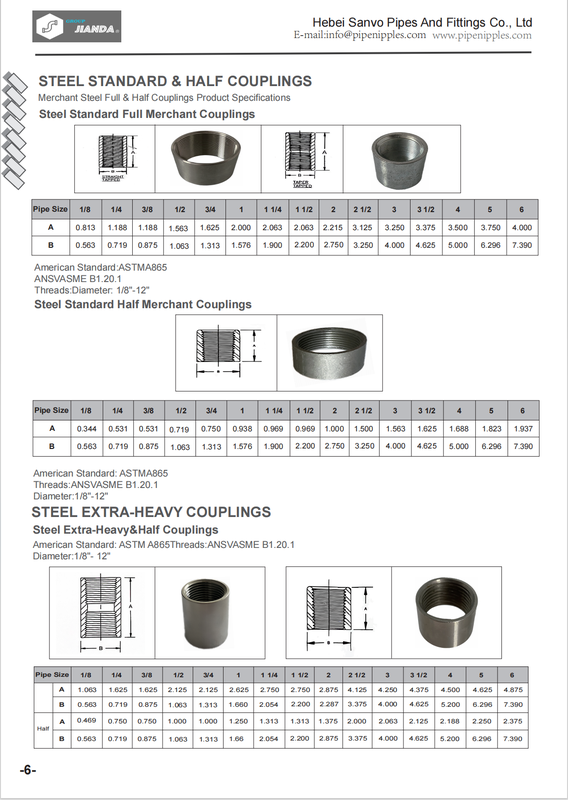
Introduction Choosing the correct pipe coupling size is not as straightforward as it looks. Most errors come from confusing the nominal pipe size and the actual size.Most errors come from confusing thenominal pipe sizeand the actual size. Thus, a “3/4-inch pipe” does not have an outside diameter of 3/4 inch. Pipes and fittings supply, sizing disputes, and specification errors are our responsibilities daily. This guide explains clearly the pipe coupler sizes. It covers pipe coupling dimensions and the most common ordering mistakes. You can specify the correct coupling the first time — without delays or reruns. Quick Answer To choose the correct pipe coupling size, match the coupling to the nominal pipe size, not the actual OD. For example, a 3/4 inch pipe requires the same NPS coupling. The actual outside diameter of 3/4 inch pipe is 1.050 inches, and the coupling bore is machined to match. Confirm the thread standard, pipe wall thickness, and material grade when ordering. Detailed Explanation Step 1 — Understand nominal pipe size (NPS) Nominal Pipe Size (NPS) is a North American standard for pipe and fitting dimensions. It is a reference number only. So, the NPS number does not equal the actual pipe OD or ID. For example, a 1-inch NPS pipe has an actual OD of 1.315 inches. However, a 2-inch NPS pipe has an OD of 2.375 inches — not 2.000 inches. In addition, all schedules of a given NPS share the same OD, with only the wall thickness changing. Key rule: Always specify pipe coupling sizes using NPS numbers. Do not specify by actual outside diameter unless you are working with OD-based. Confusing the two is the most common cause of wrong-size coupling orders. Step 2 — Read the pipe coupling size chart The table below shows pipe coupling dimensions for standard NPT threaded couplings. Use this as your reference when selecting pipe coupler sizes. Step 3 — Answer: What size coupling for 3/4 inch pipe? A 3/4 inch NPS pipe requires the same NPS coupling. The actual pipe OD is 1.050 inches. Therefore, the coupling bore is machined to accept exactly this diameter. In addition, confirm the thread standard — if your system uses BSP instead of NPT, specify BSPT or BSPP accordingly. Step 4 — Confirm pipe schedule compatibility Pipe schedule affects wall thickness and internal bore, but not the OD. So, a coupling fits any schedule of the same NPS pipe on the outside thread. But the pressure rating must match your system requirements. Also, always verify that the coupling pressure class suits the operating conditions. Schedule Wall Thickness (3/4″ NPS) ID (3/4″ NPS) Typical Application SCH 40 (STD) 0.113″ 0.824″ General commercial/light industrial SCH 80 (XH) 0.154″ 0.742″ Higher pressure, industrial process SCH 160 0.219″ 0.612″ High-pressure service XXH (Double Extra Heavy) 0.308″ 0.434″ Very high-pressure or corrosive service Step 5 — Select the right coupling type Not all pipe couplings serve the same function. So, confirm the type before ordering. Full Coupling joins two pipes or pipe nipples of the same size. Most common type. Half Coupling one threaded end only. Used for branch connections or pipe end closures. Reducing Coupling joins two pipes of different NPS sizes. For example, a 3/4″ × 1/2″ reducing coupling connects a 3/4 main line to a 1/2 branch. Hex Coupling hex body for wrench engagement. Easier to install and remove in tight spaces. Common Mistakes These are the most frequent errors we see from procurement teams and field engineers. Reviewing this list before placing an order can save significant time and cost. Mistake 1 — Measuring pipe OD and ordering by that dimension: The OD of a 3/4 inch pipe is 1.050 inches, not 0.750 inches. However, many buyers measure the OD and try to order a “1-inch coupling.” This results in the wrong size every time. Therefore, always order by NPS nominal size, not measured OD. Mistake 2 — Confusing NPT with BSP threads: NPT and BSP tapered threads look similar but are not interchangeable. Forcing a BSP coupling onto an NPT pipe fitting will cross-thread or leak under pressure. So, must confirm the thread standard. Mistake 3 — Ordering full couplings when reducing couplings are needed: In transition points between pipe sizes, a reducing coupling is required. But many teams order full couplings and then try to use a bushing as a workaround. This adds unnecessary joints and potential leak points to the system. Mistake 4 — Ignoring pressure rating: Pipe coupling dimensions alone do not define suitability. Thus, the coupling pressure rating needs to match the system’s operating pressure and temperature. For example, a Class 2000 coupling is not suitable for high-pressure steam lines. Mistake 5 — Selecting the wrong material for the environment: Carbon steel couplings corrode rapidly in wet or chemical environments. However, many orders default to carbon steel because it is cheaper. So, Grade 316 stainless steel is always specified for outdoor, marine, or chemical service. Mistake 6 — Not specifying end-to-end length for tight spaces: Pipe coupling dimensions vary between manufacturers. Also, some applications have strict face-to-face constraints. Thus, dimensional drawing is critical to the installation layout. Engineering Tips These recommendations are based on pipe couplings supply and project experience. Always use PTFE tape or anaerobic thread sealant on NPT connections. NPT threads seal by thread interference, not by face contact. Therefore, sealant is mandatory to prevent leaks at operating pressure. For stainless steel threaded pipe fittings, use anti-seize compound in addition to sealant. Stainless threads are prone to galling under high torque. Therefore, anti-seize prevents thread damage during installation and future disassembly. Match the coupling material to the pipe material wherever possible. Mixing carbon steel with SS pipe fittings causes corrosion in wet environments. Besides, it complicates inspection and maintenance records. Specify Class 3000 as a minimum for steam or high-pressure gas service. Class 2000 threaded couplings are adequate for water and low-pressure air. However, for steam, gas, or hydraulic service, Class 3000 provides the necessary safety margin. For buried or embedded piping, specify galvanized couplings. Ensure the sizes match – the galvanizing coating adds approximately 3–5 mils of surface, which may affect. Request a Mill Test Report (MTR) for all stainless steel pipe couplings on critical projects. MTRs confirm
Pipe Elbow, Tee, and Cross: Essential Pipe Fittings
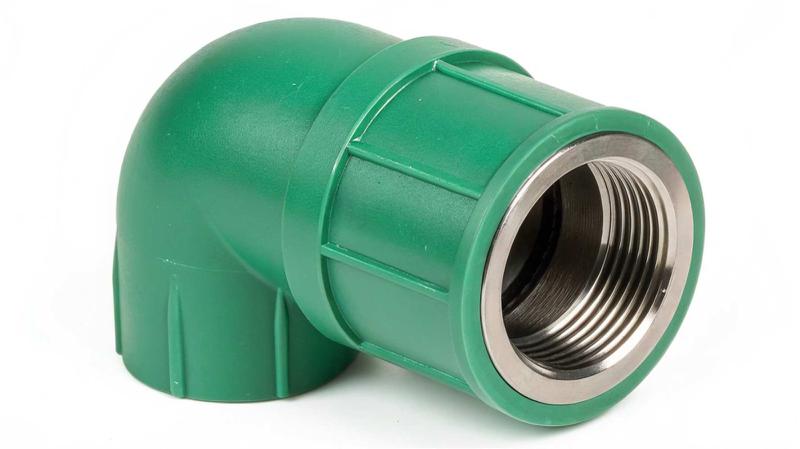
Pipe fittings, such as pipe elbows, cross, and tee pipes, are crucial in piping systems and enable directional changes, branch connections, and flow distribution. In this text, we will discuss each fitting together. 1. Pipe Elbow The pipe elbow is a commonly used pipe fitting to change the direction of a pipe. It typically features an angled design, allowing the pipeline to navigate around obstacles or change its route. 180, 45, or 90-degree elbow pipes fulfill the needs of most systems. 90° Elbow 90-degree elbow pipe creates a right-angle turn in the piping system. 90-degree elbow pipe is wide in those that require a sharp turn system. The flow direction of the 90-degree elbow pipe provides clean and sharpness. 45° Elbow Used for gentle change of direction. Used for pressure descent where the system does not need a sharp turn. 45-degree pipe elbow decreases the turbulence and pressure loss compared with 90-elbow pipe. 180° Elbow: 180-degree pipe elbow allows for a complete turn in piping, forming a U-turn in the pipeline. Suitable for where limited space needs compact layout applications. There is no need to add extra pipe to achieve an effect available flow direction. Types Long Radius Elbow: Has a larger radius, reducing pressure loss and wear. Short Radius Elbow: Compact design for tight spaces but causes more turbulence. Applications HVAC systems for duct routing. Oil, gas, and water pipelines. Chemical and processing plants. Benefits An elbow pipe is efficient in changing direction and does not affect systemic flow integrity. Durable, even in high-pressure and corrosion applications. The elbow pipe is the base to ensure the flexibility and function of any pipeline infrastructure. Stainless steel elbows in food processing due to their high corrosion resistance. 2. Pipe Tee A pipe tee is a T-shaped fitting that allows branch connections in a piping system. It has one inlet and two outlets at a 90° angle to the main line (or vice versa). Equal Tee Equal tee means three outlets have the same diameter, also known as the straight tee. The equal tee maintains uniform flowing pressure and velocity and is easy to install in the same-diameter pipes. Reducing Tee Also known as unequal tee, one branch has a smaller diameter than the main line. Used in the different pipe sizes to transition. Convenient to rate control and pressure regulation. Applications Diverts or combines fluid flow. Common in plumbing, irrigation, and industrial piping networks. Used in systems requiring branching to secondary lines. 3. Pipe Cross A pipe cross is a fitting with four openings arranged at 90° angles, forming a “+” shape. It allows for the connection of four pipes. Equal Cross All four branches are of the same diameter. Reducing Cross One or more branches have a smaller diameter than the main line. Applications It is often used in fire protection systems where must be water flow distributed in multiple directions. Cross pipe is in industrial processes involving complex piping layouts. It cycles the cooling water and steam in many lines. Cross pipe distributes water in multiple irrigation areas. 4. Materials Stainless Steel Stainless steel pipe fittings have high corrosion resistance. Ideal for food, beverage, and chemical industries. Stainless steel pipe fittings maintain longer use even in extreme temperatures and pressures. 304 and 316 stainless steel is suitable for most industries. The smooth surface of stainless steel fittings prevents impurities accumulation and hygiene and is easy to clean. Black Steel Black steel pipe fittings have strength, durability, and cost-effectiveness and are widespread in various industries. Galvanized Steel Galvanized steel fittings enhance corrosion resistance for outdoor and moisture applications and extend use life. Galvanized steel pipe and elbow have benign mechanical strength and are stable even in a high-temperature environment. Galvanized steel fittings have lower maintenance costs, wide applications, and economics. Copper Excellent thermal conductivity; often used in plumbing and HVAC systems. 5. Advantages of Using These Fittings Elbow pipe, pipe tee, and cross pipe fitting are versatile and applicable across multiple industries. Efficiency simplifies complex piping layouts. Durable, high-quality materials extend the system’s lifespan. Ease of Installation, threaded, welded, or push-fit options ensure quick assembly. Flexible, change the direction. Elbow pipe allows piping systems to fit into tight spaces without needing excessive material. Pipe tees and cross pipes reduce the need for additional connections by consolidating branching or flow merging into a single fitting. Elbow pipe, pipe tee, and cross pipe fitting are essential for constructing efficient, safe, and adaptable piping systems. They can adjust direction, manage brach, and connect to many pipes, so these fittings are crucial for modern industry, commercial, and home applications. Suitable pipe fittings ensure long-term properties and save costs. 6. Conclusion Elbows, tees, and cross pipes are efficient and functional, integral to piping systems. Different types, angles, and materials ensure compatibility with applications from industrial systems to residential plumbing. Selecting the applicable fitting ensures smooth operation and enhances the system’s longevity and safety. Choose us, so don’t worry your project may cause problems. The staff of SANVO and the factory provide the best pre and after-sales service and high-quality products.
Pipe Fitting Standards Guide for the European Market
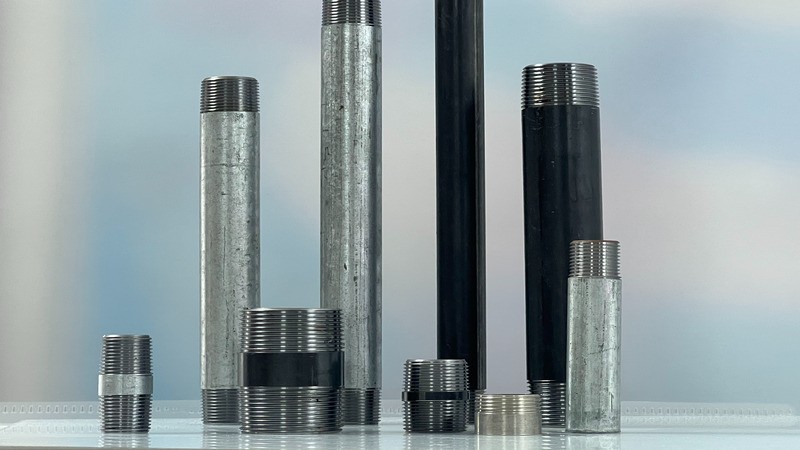
This guide will help you learn the most common EN, ISO, and DIN standards for pipe fittings in Europe, making it easier for you to select the right products from us that comply with European requirements and meet your customers. The common standards for pipe fittings in the European market include EN, ISO, and DIN. EN (European Norm): The unified European Union standard, widely adopted across all EU member countries. ISO (International Organization for Standardization): An international standard system that is also widely applied in Europe, especially for thread types, dimensions, and material grades of pipe fittings. DIN (Deutsches Institut für Normung): The German national standard, which is widely used throughout the European industrial sector for stainless steel and carbon steel fittings. BS Standards (British Standards): Remain influential in Europe and former Commonwealth markets. Many have been harmonized with EN or ISO standards. Types Standards Explain Material Standards EN 10241 Common standards for threaded carbon steel pipe fittings DIN 2982 Carbon steel threaded pipe fittings BS EN 10241 The EN standard version adopted by the UK Threads Standards ISO 7-1 British standard taper pipe thread (BSPT) ISO 228-1 Imperial parallel thread (BSPP) DIN 2999 German standard thread (same as ISO 7) BS 21 British threaded standard (same as ISO 7) These are the most widely used pipe fitting standards that meet the requirements of most European customers. If you’d like to learn more, keep reading. We’ll introduce additional EN, ISO, and DIN pipe fitting standards commonly applied across Europe’s piping industry. EN Standards EN (European Norm) standards are harmonized across the European Union and EFTA countries. They ensure that carbon steel, stainless steel pipe fittings, and PVC pipes meet consistent quality, safety, and performance benchmarks. EN 10255: This standard specifies requirements for threaded carbon steel pipes used for water, gas, and heating applications. EN 10305: Pertains to precision steel tubes used in hydraulic and pneumatic systems. EN 12760: Defines specifications for socket-welding pipe fittings and threaded fittings, commonly used in oil, gas, and chemical industries. DIN Standards Although increasingly superseded by EN standards, DIN (Deutsches Institut für Normung) standards are still widely referenced, especially for technical specifications. DIN 2440/2441: Cover black and galvanized steel pipes with threaded ends. DIN 11850: Relevant for stainless steel pipes and fittings used in food, beverage, and pharmaceutical industries due to their hygienic properties. BS Standards BS standards remain influential in Europe and former Commonwealth markets. Many have been harmonized with EN or ISO standards. BS EN 806: Specifications for installations inside buildings conveying water for human consumption. BS 1387: For threaded galvanized steel pipes, commonly used in low-pressure plumbing. ISO Standards ISO (International Organization for Standardization) standards facilitate international trade and commerce. Many EN standards are aligned with ISO. ISO 9001: While not product-specific, this quality management standard is critical for pipe fittings manufacturers to demonstrate consistent quality. ISO 2531: For ductile iron pipes and fittings used in water and sewage applications. Why Compliance Matters for Exporters For pipe fittings suppliers, adhering to these standards is not optional—it is a prerequisite for market entry. Here’s why: Legal Requirements: Products often must carry CE marking (indicating conformity with EU legislation) to be sold in the EEA. Customer Confidence: Compliance signals quality and reliability to European industrial buyers. Interoperability: Ensures that your pipe fittings will work seamlessly with existing systems. Competitive Advantage: Certification can differentiate your products in a crowded industrial marketplace. Conclusion Navigating the landscape of European pipe standards—from EN and DIN to ISO—is fundamental for any pipe fittings exporter targeting the region. Prioritizing certification and compliance will streamline your market access, enhance your brand reputation, and meet the precise demands of European industrial clients. For suppliers of industrial pipe fittings, investing in understanding these standards is investing in long-term export success.
China Pipe Fittings Factory – Full Catalog & Bulk Order Guide
Full Range of Pipe Fittings We Manufacture We manufacture a complete catalog of pipe fittings, including: 1. Pipe Nipples Pipe nipples are short, threaded pipe connectors with male (external) threads on one or both ends and a smooth central body. Different types include: A standard pipe nipple is a straight nipple with male threads on both ends, commonly used for oil, gas, and water pipelines. A hex nipple features a hexagonal section in the middle for easy tightening with a wrench, ideal for high-pressure and industrial systems. The hose nipple is designed with barbed or ribbed ends for connecting hoses to threaded piping systems, which are commonly used in fluid transfer and irrigation applications. King Nipple is A heavy-duty nipple with longer threads, commonly used in suction or discharge hoses for oil, water, and air lines. (Click size chart to download the PDF) 2. Pipe Sockets/Couplings The pipe socket is a short cylinder pipe (with female threads) used to connect two pipes in a straight line. Main types include: Standard couplings refer to those that have the same diameter on both ends, featuring female threads or socket-weld connections. Reducer couplings connect different diameters they allowing for a smooth transition in flow between large and small pipes. 3. Pipe Elbows Pipe elbows are fittings used to change the direction of flow in a piping system, typically at angles of 45° or 90°. They are essential in routing pipelines around obstacles or in confined spaces. The 90-degree elbow is the most common type, used to create a sharp right-angle turn in pipelines. Suitable for water supply, gas systems, and industrial flow networks. A 45-degree elbow provides a smoother directional change, reducing pressure loss and turbulence in fluid systems, often used in HVAC and plumbing installations. Street Elbow has one end with male threads and the other with female threads, allowing for connection without the need for coupling. It simplifies installation in tight or awkward positions. 4. Pipe Tees & Crosses Pipe Tees – T-shaped fittings that split or combine fluid flow; available in equal tees and reducing tees.Pipe Crosses – Four-way fittings that connect pipes in cross-shaped configurations. 5. Pipe Caps & Pipe Plugs Pipe Caps – Dome-shaped fittings that cover the end of a pipe to stop the flow or protect threads.Pipe Plugs – Solid threaded plugs inserted into a fitting to seal off a pipe opening; available in hex, square, or round head designs. 6. Pipe Unions Pipe Unions – Three-piece fittings (two end pieces and a central nut) designed for easy disassembly and maintenance of pipelines. 7. Valves Valves regulate or stop fluid flow in plumbing and industrial systems. Common types include: Gate Valves – For on-off flow control.Ball Valves – Quick shut-off with a quarter-turn operation.Check Valves – Prevent backflow in pipelines. 8. Hex Bushings & Lock Nuts Hex Bushings – Threaded fittings that reduce the size of a pipe opening; the hex body allows wrench tightening.Lock Nuts – Secure threaded fittings, preventing loosening due to vibration. 9. Flanges Flanges – Flat, disc-shaped components bolted together for connecting pipes, valves, or pumps; available in slip-on, weld neck, and threaded types. Pipe Fittings Materials Guide Galvanized Carbon Steel Pipe Fittings Galvanized carbon steel pipe fittings are carbon steel fittings coated with a protective layer of zinc through a hot-dip or electro-galvanizing process. This zinc coating protects against moisture and oxygen, significantly slowing down and preventing rust corrosion. Best Applications Outdoor Plumbing & Water Supply Lines Low to Medium-Pressure Systems Construction & Structural Support Advantages Strong corrosion resistance in humid or outdoor environments Cost-effective compared to stainless steel Long service life with minimal maintenance Limitations Not suitable for high-temperature or high-pressure gas lines Zinc coating can peel or wear off over time in highly abrasive environments Common Question Q: Are galvanized fittings safe for drinking water? A: Yes, if lead-free zinc coating is used, they are safe for potable water. Q: Can galvanized fittings be used for gas? A: Not recommended due to flaking risk in gas systems. Black Carbon Steel Pipe Fittings Black carbon steel pipe fittings coated on the surface with oil or sandblasted to protect against corrosion, then have a black finish. They are designed to withstand high pressure and temperature. Best Applications Oil & Gas Pipelines High-Pressure Industrial Systems Indoor Use Advantages Excellent strength and durability under high pressure More affordable than stainless steel fittings Ideal for industrial and mechanical applications Limitations Prone to rust in humid or wet conditions Not suitable for drinking water or food-related applications Common Question Q: Can black steel fittings be used for water? A: Only for non-potable water; not recommended for potable water due to rust. Q: What’s the pressure rating of black steel fittings? A: Typically up to 150 psi for standard fittings, higher for specialized types. Stainless Steel Pipe Fittings Stainless steel pipe fittings are made from alloys containing chromium (at least 10.5%), which forms a passive layer that resists corrosion. Common grades include 304, 304L, 316, and 316L, with 316 offering superior corrosion resistance in chemical environments. Best Applications Chemical Processing & Food Industry Water Treatment & Marine Systems High-Pressure & Sanitary Systems Advantages Superior corrosion and rust resistance, even in harsh environments Long service life with minimal maintenance High strength and excellent aesthetic appearance Limitations Higher cost compared to galvanized or black steel Heavier than plastic or brass fittings in some applications Common Searches Answered Q: Which is better, stainless or galvanized pipe fittings? A: Stainless is better for corrosion resistance and sanitary use, while galvanized is cheaper and sufficient for general water systems. Q: What grade of stainless steel fittings should I choose? A: 304 for general plumbing, 316 for chemical and marine environments. Applications of Our Pipe Fittings Our pipe fittings are widely used in: Plumbing & Water Supply Systems Oil & Gas Pipelines Firefighting & HVAC Systems Industrial & Chemical Processing Equipment Why Choose Us OEM & ODM support for customized fittings Advanced manufacturing facilities and strict quality control International certifications: ISO, CE Fast delivery and competitive prices for bulk orders Contact Us for
Pipe Fittings Solutions for the Oil and Gas Industry
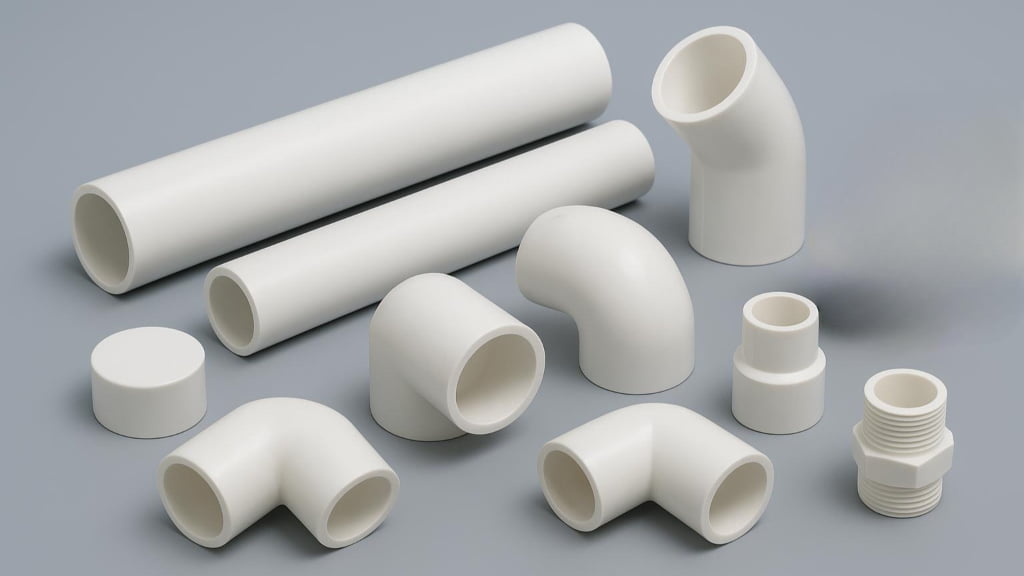
Pipe fittings are essential accessories in any fluid or gas transportation system. They connect, redirect, and control the transportation of fluids or gases under high pressure and harsh environments. In the oil and gas industry, the selection of pipe fittings plays a decisive role in ensuring safety, durability, and system reliability. Due to extreme working conditions, such as high pressure, temperature fluctuations, and corrosive media, the material, design, and performance of fittings are critical to the integrity of pipelines. This article explores the common materials, fitting types, and their applications in the oil and gas industry, providing a comprehensive guide for buyers. The Importance of Steel Pipe Fittings in Oil and Gas Applications Steel pipe fittings, known for their high strength and pressure resistance, are the preferred choice in the petroleum, natural gas, and petrochemical industries. These sectors demand fittings that can withstand high pressure, temperature, and corrosion caused by aggressive fluids. During oil extraction and transportation, pipelines withstand extreme pressure, high temperature, and corrosive environments. Forged steel high-pressure fittings offer superior strength and corrosion resistance, ensuring stable and safe operations. On offshore oil platforms and land-based drilling sites, forged carbon steel and stainless steel fittings are indispensable for connecting pipes, valves, and control systems that must remain leak-free under heavy loads. Natural gas transmission systems often operate under high pressure and low temperature. Forged steel fittings maintain their mechanical strength even in subzero environments, ensuring long-term reliability. They are commonly used in: Wellhead equipment Oil transmission pipelines Processing and separation facilities Gas compressor stations Storage and distribution terminals LNG processing plants and pipelines By using high-pressure forged fittings, operators can reduce leakage risks and improve system efficiency—key factors in achieving safe and sustainable energy transport. Choosing the Right Material for Oil and Gas Fittings Material selection directly affects the performance, cost, and lifespan of a pipeline system. Each material type offers distinct advantages depending on the fluid composition, pressure rating, and installation environment. 1. Carbon Steel Fittings Standards: ASTM A105, API 5L Features: High mechanical strength and pressure resistance Cost-effective for non-corrosive applications Excellent weldability Limitations: Prone to corrosion in wet or sour environments (containing H₂S or CO₂); usually requires anti-corrosion (black or galvanization) coatings or linings. Applications: Onshore oil and gas pipelines Gathering systems for crude oil and untreated natural gas 2. Stainless Steel Fittings Grades: 304, 316, 316L Standard: ASTM A182 Features: Excellent corrosion resistance, especially in sour gas or acidic conditions Suitable for both high-pressure and high-temperature environments Smooth surface reduces scaling and contamination Limitations: Higher cost; may suffer pitting corrosion in chloride-rich conditions. Applications: Offshore drilling platforms and subsea pipelines Sour gas and acid gas applications LNG and petrochemical processing facilities 3. PVC(Polyvinyl Chloride) Features: Lower price, anti acid and alkali. High hardness, but fragility. Temperature resistant range is relatively small from 0°C ~ +60°C, it is not resistant hih pressure, and is not suitable for oily media. Applications: Drainage system Cooling water pipeline Low-pressure chemical conveying line Material Performance Comparison Material Type Pressure Resistance Corrosion Resistance Cost Typical Applications Carbon Steel ★★★★★ ★ ★ Onshore oil & gas pipelines Stainless Steel (304/316) ★★★★ ★★★★ ★★★ Sour gas, offshore platforms PVC ★ ★★★ ★ Drainage and cooling systems Common Pipe Fitting Types and Functions Different fittings perform various mechanical and hydraulic roles within a pipeline system. Below are the most commonly used pipe fittings for oil and gas applications: Fitting Type Function Typical Use Elbow Changes the flow direction (45°, 90°, 180°) Turns in pipelines, tight spaces, high-pressure systems Tee Divides or combines flow Branch lines, manifolds, test points End Cap Closes pipe ends for testing or isolation Pipeline ends, temporary shutdowns Nipple Short connection between fittings or valves Instrumentation, pressure gauges, valve assemblies Coupling Connects two straight pipes Repair and maintenance joints Flange Detachable joint for valves, pumps, and equipment High-pressure connections, refineries, offshore units Union Enables quick assembly and disassembly Maintenance zones, filters, instrumentation lines Why Reliable Fittings Matter in Oil and Gas Infrastructure Oil and gas pipelines operate under some of the harshest conditions on earth. The reliability of fittings directly impacts the safety, performance, and cost efficiency of an entire system. High-quality fittings: Prevent leakage and downtime Reduce maintenance and replacement costs Extend equipment lifespan Ensure compliance with international standards (API, ASTM, ASME, EN, DIN) By choosing fittings from trusted manufacturers and ensuring adherence to material and thread standards, B2B buyers can secure a more dependable and cost-effective pipeline solution. Conclusion From carbon steel to duplex stainless steel, each fitting material has its place in modern oil and gas operations. Whether used in onshore fields, offshore drilling platforms, or subsea pipelines, forged high-pressure fittings play a crucial role in ensuring safety and efficiency. Forcustomers, selecting the right pipe fittings supplier means securing durable, standard-compliant products that meet the challenges of high pressure, corrosion, and extreme temperature. Reliable fittings are not just components—they are the foundation of every successful oil and gas pipeline system.