
ASME and ASTM Certified Forged Fittings Explained
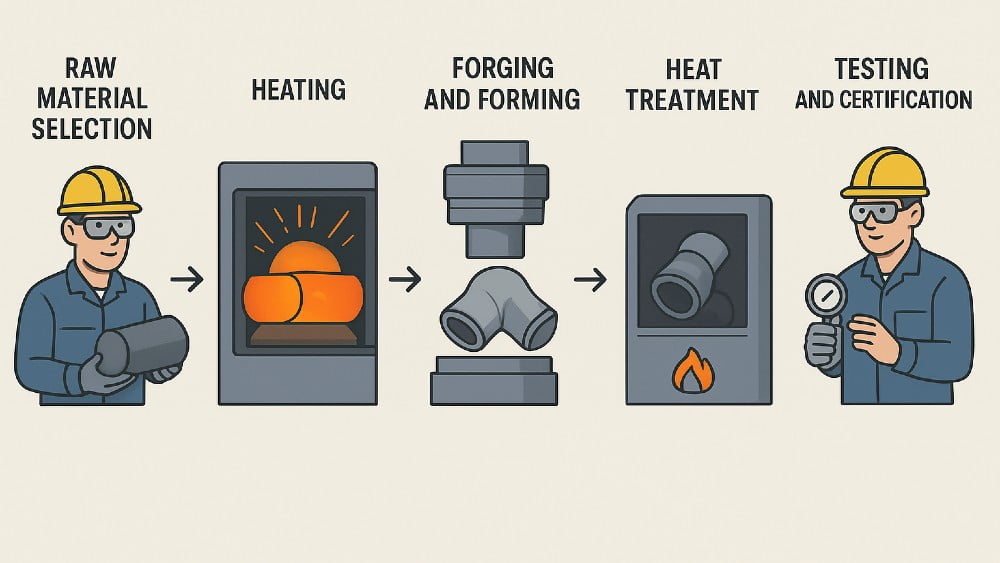
What are Forged Fittings? Forged fittings are pipe connectors produced through the metal forging process, in which metal is shaped under high temperature and pressure. This process refines the grain structure of the material, eliminates internal voids, and creates a dense, high-strength structure with excellent mechanical performance. What is the Difference Between Forged Fittings and Cast Fittings? The main difference between forged fittings and cast fittings is in their production processes. Forged fittings are produced by heating metal to a high temperature and shaping it under pressure using forging and pressing equipment. In contrast, cast fittings are created by pouring molten metal into a mold and allowing it to cool and solidify. The forging process produces fittings with a high-density structure and excellent strength, while cast fittings are more prone to air holes or inclusions due to their lower density. Forged fittings generally have a smoother surface and lighter weight, while cast fittings are rougher in appearance and heavier due to their solidified casting structure. In the oil, gas, high-pressure steam system, chemical industry, shipbuilding, power plants, high corrosion, high temperature environment and other applications, forging fittings such industry’s first choice, can play its own maximum advantage; and casting fittings do not have to be used in this kind of extreme application environment, the most commonly used in the low-pressure water pipes and drainage systems. Mechanical Properties Comparison Property Forged Fittings Cast Fittings Strength High. Tensile strength and toughness are better Lower Density High Low, easily formed pores Impact resistance Excellent General Service life Long Relatively short Forged Fitting Manufacturing Process Raw Material Selection: Carbon or stainless steel (e.g., ASTM A105, A182) is typically used. Heating: The billet is heated to a plasticized state at a high temperature. Forging and forming: By die forging or free forging, the material is pressed into the required shape (e.g., elbow, tee, socket, etc.). Heat treatment: including normalizing, annealing, quenching, tempering, and other processes to improve the organization and properties. Machining: Threading, beveling, and finish processing. Testing and Certification: Conduct dimensional, strength, pressure, hydrostatic, and flaw detection tests, and comply with ASME/ANSI/ASTM standards. Forged Fittings Types Carbon steel fittings (Galvanized or Black Coated): pipe nipples, pipe couplings Stainless steel fittings: pipe nipples, pipe couplings, pipe elbows, pipe tees, pipe caps, pipe unions, pipe plug, hex bushing, hex nut, pipe cross, valves, flanges Common Standards for Forged Fittings Our factory produces forged fittings with carbon steel and stainless steel. Carbon steel generally adheres to the ASTM A105 standard. In contrast, stainless steel follows the ASTM A182 standard, each defining the chemical composition, mechanical properties, and heat treatment requirements for different types of steel used in forged fittings. ASTM A105 – Carbon Steel Forged Fittings ASTM A105 is the standard specification for carbon steel forgings used in piping components such as pipe nipples and couplings for ambient- and high-temperature services. Material type: Plain carbon steel Applications: Oil and gas pipelines, power generation, and petrochemical plants Characteristics: Excellent strength and toughness under pressure Good machinability and weldability Can be supplied with black or galvanized coating for enhanced corrosion resistance Typical products: Welded and threaded pipe nipples, couplings ASTM A182 – Stainless Steel Forged Fittings ASTM A182 covers forged stainless steel fittings, flanges, valves, and parts for high-temperature or corrosive service. Material type: Austenitic, ferritic, martensitic, or duplex stainless steels (e.g., 304, 316) Applications: Chemical processing, food and beverage, shipbuilding, power plants, and offshore industries Characteristics: Superior corrosion and oxidation resistance Suitable for both cryogenic and high-temperature environments Excellent surface finish and dimensional stability Typical products: Pipe nipples, couplings, elbows, tees, unions, caps, plugs, crosses, and flanges FAQ 1. Q: What is the Relationship between ASME & ASTM standards? A: ASTM defines material properties, while ASME (e.g., ASME B16.11) defines dimensions, pressure ratings, and design tolerances. 2. Q: What are the Pressure Ratings of Forged Fittings? A: Common pressure classes: 2000, 3000, 6000, and 9000. 3. Q: What are the Connection Types of these Pipe Fittings? A: Socket Weld and Threaded (NPT/BSP). 4. Q: What of the Surface Treatment of Carbon Steel Fittings can I select? A: Black phosphate or black sandblasted coated and electroplated or hot-dipped zinc coating.
Best City in China for Pipe Fittings Manufacturing
Top Cities in China for Pipe Fittings Manufacturing Cangzhou (Hebei Province) – The “Capital of Pipe Fittings” Cangzhou is widely recognized as China’s largest hub for stainless steel fittings, galvanized steel pipe fittings, and black pipe nipples. The city has numerous large-scale factories, making it ideal for bulk orders and OEM services. Best for: Galvanized pipe fittings, stainless steel pipe fittings, black nipples Advantages: Stable quality, massive production capacity, competitive prices How to Choose the Right Manufacturer of Pipe Fittings Supply? When choosing a supplier, consider: Material Requirements (stainless steel, carbon steel, plastic) Order Quantity (bulk vs small MOQ) Application (industrial, plumbing, HVAC) Export Experience (check if the supplier provides standard certifications like ISO) Conclusion If you need any materials for plumbing fittings, whether carbon steel, stainless steel, or brass, go to Cangzhou directly. SANVO provides high-quality black pipe nipples, galvanized fittings, and stainless steel fittings, sourced directly from the best Chinese manufacturing hubs. Contact us for competitive pricing and bulk orders.
Benefits of Using Black Carbon Steel Pipe in Plumbing
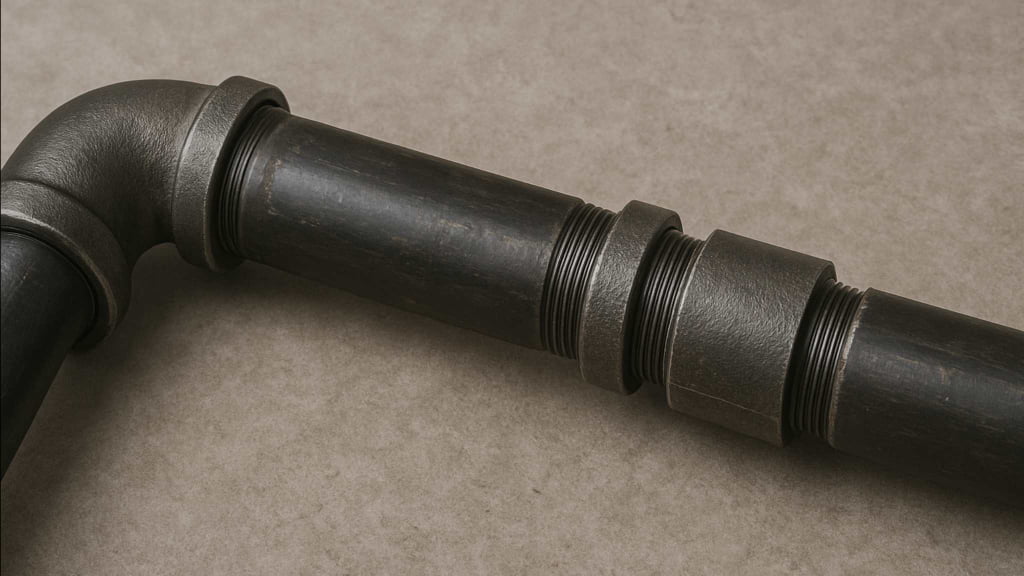
Understanding the materials is key to meeting needs and ensuring reliable project outcomes for plumbing. Black steel pipe is a staple in the industry, and it is popular due to its unique properties and applications. While unsuitable for every job, its benefits in certain scenarios make it indispensable. What is a Black Steel Pipe? Black steel pipe is a type of steel pipe made from carbon steel. Its name comes from the dark iron oxide scale that forms on its surface during production. Unlike galvanized pipe, black steel pipe is not coated with zinc. This lack of coating makes it more susceptible to corrosion when exposed to moisture, but also gives it advantageous properties specific to dry applications. Black steel pipe is typically manufactured through two main processes: seamless or welded (ERW – Electric Resistance Welding). It is commonly used for transporting natural gas, propane, and fire sprinkler systems. Advantages of Black Carbon Steel Pipe 1. Exceptional Strength & Durability Black steel pipe is made from high-grade carbon steel, offering superior tensile strength and pressure resistance (up to 1,000+ PSI). It’s ideal for: High-temperature industrial systems (steam, oil, gas) Structural applications (scaffolding, machinery) Fire sprinkler systems (meet NFPA 13 standards) 2. Cost-Effective for Large-Scale Projects Compared to copper, stainless steel, or galvanized pipes, black steel is 30-50% cheaper in many sizes. Its affordability makes it a top choice for: Natural gas distribution networks Commercial HVAC systems Industrial piping infrastructure 3. Easy Installation with Threaded Fittings The black pipe is pre-cut and pre-threaded, allowing for: Quick assembly with NPT (National Pipe Thread) fittings Secure, leak-resistant joints for gas lines Minimal welding requirements 4. Optimal for Gas & Fire Safety Systems Natural Gas & Propane Lines: Approved by ASTM A53/A106 standards for safe gas transport. Fire Sprinklers: Retains structural integrity longer than plastic pipes during fires. 5. Wide Availability & Standardization Available in schedule 40 & 80 thicknesses, common sizes (1/2″ to 24″), and lengths (21′ or custom). Disadvantages of Black Carbon Steel Pipe 1. Prone to Rust & Corrosion Unlike galvanized or stainless steel, black pipe lacks corrosion protection, making it: Unsuitable for underground use without epoxy coatings or wraps Banned for potable water systems (risk of rust contamination) 2. Heavy & Labor-Intensive Weighs 2-3x more than PVC or PEX, increasing installation costs. Requires heavy-duty supports in large-scale systems. 3. Limited Use in Wet Environments Needs external coatings (paint, varnish, or wraps) if exposed to: High humidity Underground burial Chemical exposure Can you use a black pipe for water? No, black carbon steel pipe is generally NOT suitable or permitted for transporting drinking water (potable water). The main reason is its high susceptibility to internal corrosion when in contact with water. This corrosion can lead to: Rust formation can flake off and contaminate the water, affecting its color and taste, and potentially posing health risks. Deterioration of the pipe wall over time leads to leaks. Common materials used for potable water applications include copper, PEX, CPVC, and galvanized steel. The newer option is less common, but it is preferred for new installations because it helps avoid potential long-term problems. What is Special About Seamless Pipe? Seamless pipe, whether black steel or another material, is manufactured from a solid billet of steel that is heated and then pushed or pulled over a form until it is the shape of a hollow tube. The key feature is the absence of a welded seam running along the length of the pipe. What makes seamless pipe special? Higher Pressure Ratings: Without a weld seam, the seamless pipe has uniform wall strength around its circumference. This makes it inherently stronger and capable of withstanding higher internal pressures than welded pipes of the same material and size. Uniformity: Seamless pipes tend to have more uniform wall thickness and roundness. Reliability in Critical Applications: Due to its strength and lack of a potential weak point (the weld seam), seamless pipe is often specified for critical applications involving high pressure, high temperature, or volatile substances, such as in oil and gas pipelines, power plants, and some industrial processes. Black steel pipe can be manufactured as either seamless or welded. In many buildings, welded black pipe is common and sufficient for standard gas lines or fire sprinklers. However, seamless black steel pipe would be preferred for more demanding applications requiring maximum integrity. Common Applications for Black Steel Pipe Beyond gas and fire sprinkler systems, black steel pipe is also used in: Steam and condensate lines Oil and gas field pipelines (often with external coatings) Industrial process piping Structural applications Why Black Pipe is a Smart Choice? Stocking black steel pipe and its associated fittings is essential for any plumbing serving the residential, commercial, or industrial markets. Its consistent demand for critical applications, gas, and fire safety ensures steady sales. Understanding its specific uses and limitations allows you to provide accurate information and the right products, building trust and reliability. Its relative cost-effectiveness also means it can offer good volume sales and margins. Conclusion Black steel pipe remains a vital component in modern piping systems, particularly for the safe and reliable transport of gases and for fire protection. While its susceptibility to corrosion makes it unsuitable for potable water, its strength, cost-effectiveness, and suitability for high-pressure, high-temperature, and critical dry applications ensure its continued importance. Black steel pipe and fittings are fundamental for plumbing, serving key market segments effectively.
Black Iron vs Galvanized
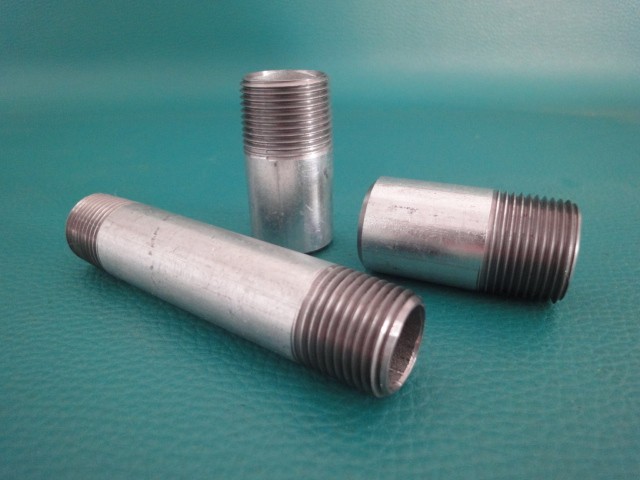
Two commonly considered options for selecting materials for a piping system are black iron and galvanized steel. While both have specific applications and benefits, understanding their differences is key to making the right choice for your project. 1. What is Black Iron? Black iron is a carbon steel without coating, giving it a distinctive dark appearance. It is not pure iron but steel with a specific amount of carbon. Its strength and durability make it popular for gas and oil transport applications. Black iron pipe is economical and durable, has lower corrosion resistance, and is widely used in dry and low-corrosion applications. When used in environments that require extra protection, applying a coating on the surface of the black iron pipe can extend its life. Advantages of Black Iron Strength: Its robust construction is ideal for high-pressure environments. Cost-Effective: Black iron is typically less expensive than galvanized steel. Gas Transport: Perfect for carrying gas, as it doesn’t have a zinc coating that might react with the transported material. Common Applications Natural gas and propane systems Fire sprinkler systems Industrial and commercial settings requiring strong, high-pressure pipes 2. What is Galvanized Steel? Galvanized steel is carbon steel coated with a layer of zinc to protect against corrosion. This additional coating makes it more suitable for water transport and outdoor applications. Advantages of Galvanized Steel Corrosion Resistance: The zinc coating prevents rust and extends the pipe’s lifespan, especially in wet environments. Versatility: Suitable for both indoor and outdoor applications, including exposed piping. Aesthetic Appeal: The shiny zinc coating provides a cleaner, more polished appearance. Common Applications Potable water systems Outdoor piping and fencing Applications exposed to humidity or frequent contact with water 3. Key Differences Between Black Iron and Galvanized Steel When choosing between black iron and galvanized steel, understand their key differences in material properties, applications, and advantages. Use black iron pipe and fitting for indoor, high-heat applications like gas lines or fire systems. Choose galvanized steel for outdoor or moisture-prone environments where corrosion resistance is essential. Black Iron Black iron pipes and fittings have no protective layer and are prone to rust and corrosion over time. Black iron lacks corrosion resistance and is suitable only for indoor use or exposure to moisture in minimal applications. Strong and durable but less resistant to environmental wear and tear without additional protection. Black pipes and fittings are commonly gas lines due to their ability to withstand high temperatures. Black iron has a dark, matte finish and a rough texture. Black iron requires regular maintenance, and protective coatings (like paint or oil) prevent rust. Black iron pipes and fittings are generally cheaper due to their simplicity and lack of coating. They are best suited for dry, controlled environments where rust is not a concern. Galvanized Steel Coated with a layer of zinc through a galvanization process. The zinc coating provides excellent corrosion resistance, especially in outdoor and humid environments. The galvanized coating provides strong rust and corrosion resistance, making it suitable for outdoor use, plumbing, and moist environments. Galvanized pipe and firrings are durable and long-lasting, with added protection against corrosion, giving it a longer lifespan in harsh conditions. Suitable for environments where exposure to moisture or weathering. The galvanized coating on pipes and fittings has a shiny silver finish, offering a clean and polished look. Galvanized pipes and fittings are low maintenance, as the zinc coating provides inherent rust protection. Slightly more expensive because of the added galvanization process. Suitable for outdoor and humid environments due to its corrosion resistance. 4. Choosing the Right Material Your choice between black iron and galvanized steel depends on the specific requirements of your project: For Gas Systems: Black iron is the superior choice due to its lack of zinc coating, which might cause clogging in gas lines. For Water Systems: Galvanized steel is the go-to option, as it resists rust and maintains water quality. For Outdoor Use: Galvanized steel is better suited to withstand weather conditions and humidity. 5. Maintenance Considerations Black Iron: Requires regular inspection for rust and may need periodic painting or coating in moist environments. Galvanized Steel: Minimal maintenance, though the zinc layer can eventually wear off, especially in high-salt environments. 6. Environmental Impact Galvanized steel reduces resource waste and service life long, and zinc coating makes it less environmentally friendly to produce and recycle than black iron. However, the galvanized steel extracted zinc in processing and coating (such as hot-dip galvanizing processes results in energy consumption and emission reduction. Black iron processing is simple but requires little energy. Because of its short life, it is frequently replaced and produces more garbage, especially in corrosion environments. 7. Conclusion Both black iron and galvanized steel have their strengths and limitations. Black iron excels in gas and high-pressure systems, while galvanized steel is ideal for water transport and outdoor applications. Carefully evaluate the environmental conditions, budget, and specific system requirements to make the best decision for your needs.
What is a black pipe nipple used for?
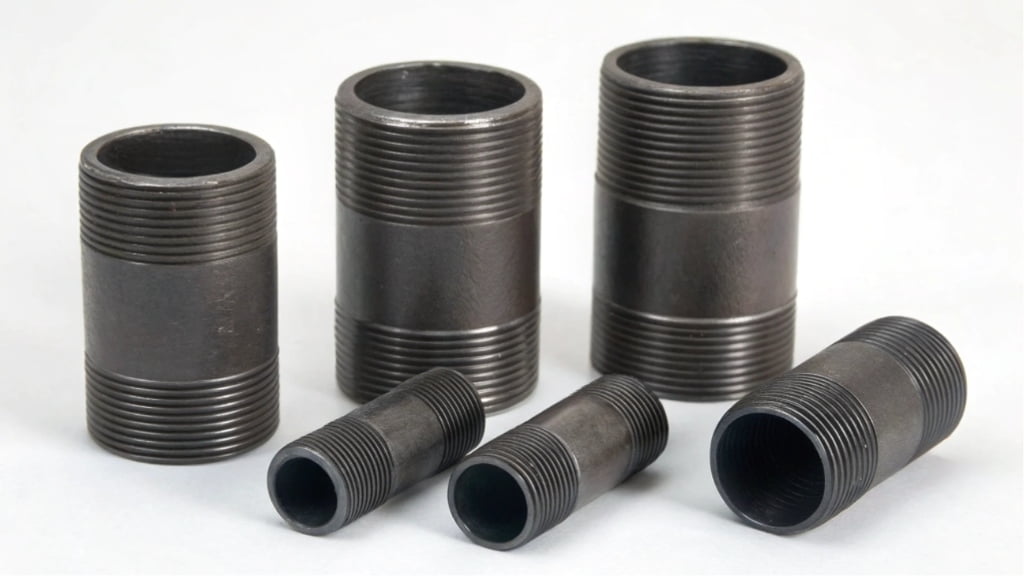
What is a Black Pipe Nipple Used For? Ever looked at plumbing or engineering projects and seen those short, threaded pipe pieces connecting things? Chances are, you’ve spotted a pipe fitting nipple. And one of the most common types you’ll encounter, especially for its durability and distinct look, is the black pipe nipple. But what exactly is it, and what is a black pipe nipple used for? Let’s break it down in simple terms. What Exactly is a Black Pipe Nipple? Think of it as a short connector. A black pipe nipple is a short piece of steel, usually made from steel, featuring male threads on both ends. These threads allow it to screw into other threaded pipe fittings or pipes, creating a secure connection. The “black” refers to the dark color of the carbon steel, which comes from the manufacturing process (often a protective oxide coating). This distinguishes it from galvanized nipples (which have a zinc coating). It’s a fundamental pipe fitting nipple designed to bridge gaps or connect components in a piping system. So, What Are the Main Applications of Black Pipe Nipples? The versatility of the black pipe nipple makes it useful in many situations, especially for engineering projects and home improvement. Here are some common uses: Connecting Other Fittings: This is its primary job. You can use a nipple to connect two female-threaded fittings, like elbows, tees, or couplings. Extending Pipe Runs: Need to make a pipe section a little longer? A nipple can connect two longer pipes or a pipe to a fitting to add that necessary length. Bridging Gaps: Sometimes you have a small space between two points that needs connecting. A short nipple is perfect for this. Low-Pressure Applications: While often associated with gas lines (where professional installation is always required), black steel nipples can also be used in other low-pressure fluid or air systems, depending on local codes and the specific application. In short, anywhere you need to connect two threaded pipe components over a short distance, a black pipe nipple is likely the tool for the job. Understanding Black Pipe Nipple Sizes Just like pipes themselves, black pipe nipples come in various nipple sizes. Choosing the correct size helps you to have a proper, leak-free connection. Matching Size: The pipe nipple sizes need to match the size of the pipes or fittings to which you are connecting it. Standard pipe sizes (like 1/2 inch, 3/4 inch, 1 inch, etc.). Length Matters Too: Nipples come in different lengths, from very short (“close” nipples where the threads meet in the middle) to several inches long. The length you need depends on the gap you’re trying to bridge or the specific design of your project. Knowing the required nipple sizes is the first step before purchasing. Why Choose Black Carbon Steel? Why opt for a steel nipple with a black finish? Durability: Steel is robust, making it suitable for many applications. Cost-Effective: Black steel is often more affordable than galvanized or other materials. Aesthetics: Many people choose black steel because it’s a strong, industrial look for furniture or decoration projects. Finding the Right Black Pipe Nipple When you’re ready to buy, remember to consider: The required nipple sizes (diameter and length). The specific use case (connecting pipes, building furniture, etc.). The type of threads needed (though most standard pipe nipples use NPT threads). Conclusion A black pipe nipple is a small but essential pipe fitting nipple. This connector is made from strong steel and is important for many uses, from simple piping to complex plumbing projects. Understanding the different nipple sizes and their uses helps you confidently choose the right one for your needs. When fixing a pipe or doing any engineering work, having a black pipe nipple in your toolkit is essential.
BSPT vs. NPT: How to Distinguish and Select Them?
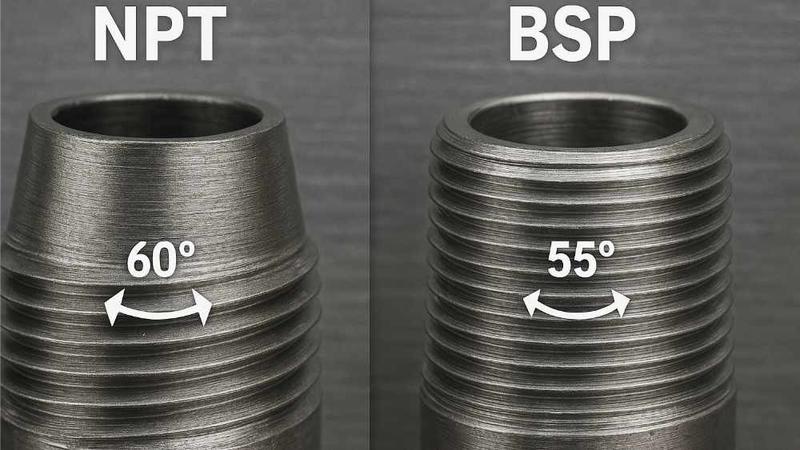
What is the NPT Thread? NPT (National Pipe Thread) is an American standard taper thread that features a specific taper angle, sealing achieved through extrusion between threads. NPT thread belongs to the ANSI/ASME B1.20.1 standards. The NPT thread is widely used in America, parts of the Middle East, water heat, fire sprinkler, petrochemical, and gas industries. What is BSPT Thread? BSPT (British Standard Pipe Taper Thread) is a British Standard taper pipe thread. The BSPT thread executive standard is ISO 7-1/BS 21. The BSPT thread is a type of taper thread, similar to the NPT thread, but it differs in tooth profile angle, sealing method, and pitch. The BSPT thread is one of the widely used pipe threads globally, especially in Asia, Europe, the Middle East, and Australia. Features of BSPT Thread VS. NPT NPT Thread BSPT Thread Taper 1:16 taper 1:16 taper Thread Angle 60° V-thread angle (standardized with general American threads) 55° rounded tooth peaks/roots (Whitworth threads) TPI (Example) 1/2″ NPT:14 TPI 1/2″ BSPT → 11 TPI Although BSPT and NPT have similar taper threads, their processing references and tooth profile geometries are different; they cannot be used interchangeably. The 60° V-thread angle of the NPT thread and the 55° of the BSPT thread are key differences between BSPT and NPT. NPT and BSPT pipes cannot be used interchangeably due to their differences in TPI (Threads Per Inch), tooth angles, and shapes. NPT threads, whether female or male, are all taper threads; but, with BSPT threads, the male thread is tapered, and the female threads are parallel or tapered. To ensure compatibility, the NPT female thread must be connected to NPT male thread fittings, while the BSPT female thread must be connected to BSPT male thread fittings. This guarantees that the pipeline system is properly connected, compatible, and sealed. FAQ How can you choose the most suitable one for your project? NPT pipe and NPT fittings are commonly used in American petroleum projects, while BSPT pipe and BSPT fittings are prevalent in European hydraulic systems.