How Seamless Steel Pipe Is Made
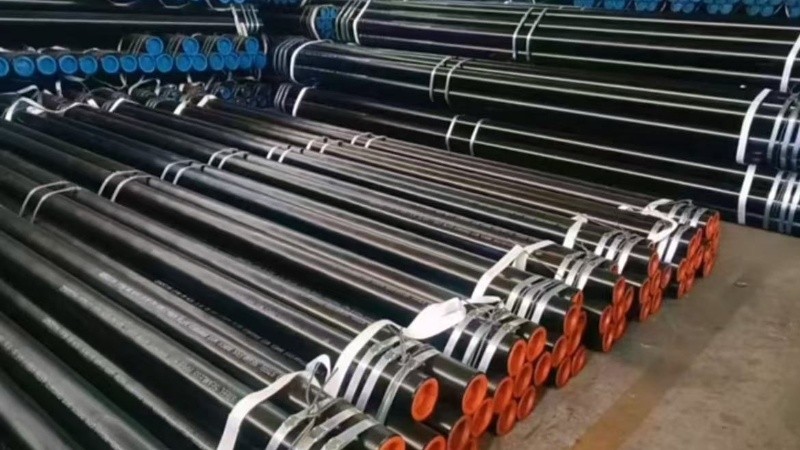
Seamless steel pipe is made without any weld seam. Manufacturers start with a solid steel billet. They then pierce and roll it into a hollow tube. Because there is no weld, the pipe has uniform strength throughout its entire wall.
This process makes seamless pipe more expensive to produce. However, it also makes the pipe more reliable under extreme pressure and temperature conditions.
How Welded Steel Pipe Is Made
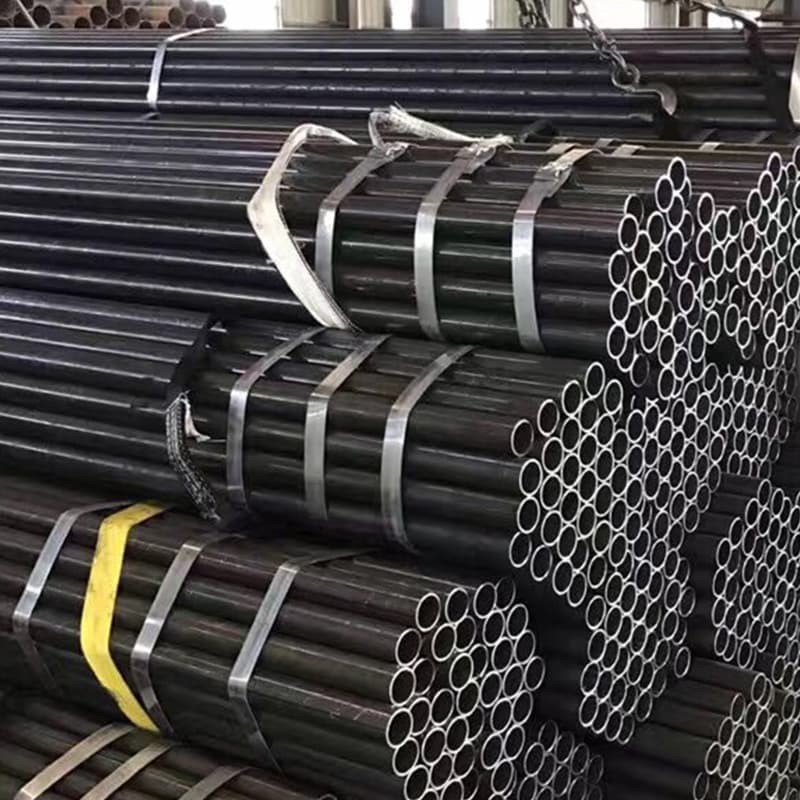
Welded steel pipe starts as a flat steel strip or plate. The strip is rolled into a cylinder and then welded along one seam. The most common method is Electric Resistance Welding (ERW). Another method is Submerged Arc Welding (SAW) for large diameter pipes.
Welded pipe is faster and cheaper to produce. As a result, it dominates many standard-pressure applications.
Seamless vs Welded: Key Differences
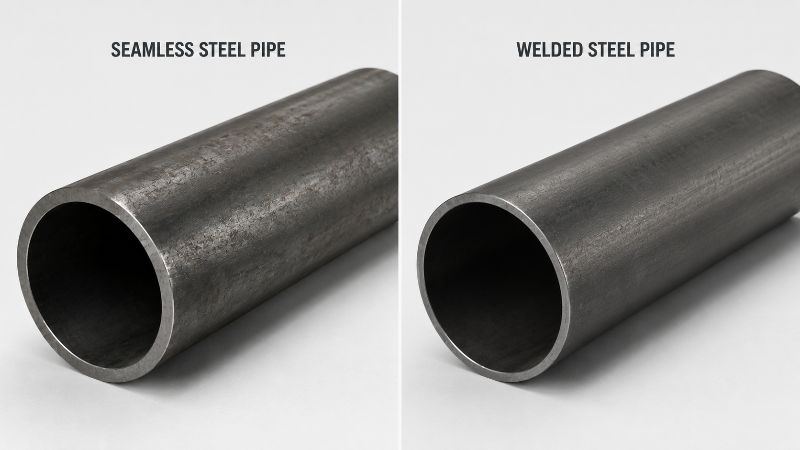
- Strength: Seamless pipe has no weld seam, so it handles higher pressure more reliably. Welded pipe depends on weld quality.
- Cost: Welded steel pipe costs 20–40% less than seamless in most sizes. Budget-conscious projects typically prefer welded pipe.
- Size range: Welded pipe is available in much larger diameters. Seamless pipe is typically limited to diameters under 24 inches.
- Wall uniformity: Seamless pipe has more consistent wall thickness. Welded pipe can have minor variations at the seam.
- Lead time: Welded pipe is faster to produce and usually available from stock. Seamless pipe may require longer lead times.
- Testing requirements: Seamless pipe may require less non-destructive testing. Welded pipe seams must be inspected and tested.
Applications of Seamless Pipe
Seamless pipe is preferred in high-pressure and high-temperature applications. Common uses include oil and gas exploration, boiler and heat exchanger tubes, hydraulic systems, and chemical processing plants. Additionally, it is widely used in the aviation and defense industries.
Applications of Welded Pipe
Welded pipe handles most standard-pressure applications efficiently. It is commonly used in water supply and distribution, structural and construction applications, HVAC systems, and low-pressure gas lines. Furthermore, large-diameter welded pipe is standard for long-distance pipeline transportation.
Which Should You Choose?
Choose seamless pipe when your application involves high pressure, extreme temperature, or critical safety requirements. Choose welded pipe when cost efficiency, large diameter, or fast delivery is the priority. In many cases, welded pipe performs just as well as seamless at a lower price. Therefore, evaluate your specific pressure ratings and industry standards before deciding.
Standards
Seamless pipe standards include ASTM A106, ASTM A53 Type S, and API 5L PSL1/PSL2. Welded pipe follows ASTM A53 Type E and API 5L for line pipe. Both types are available in carbon steel, stainless steel, and alloy steel.
Conclusion
Seamless vs welded steel pipe is a choice driven by pressure requirements, budget, and application. SANVO supplies both seamless and welded steel pipes to international standards. We offer custom sizes, grades, and coatings. Contact our team for a free sample and competitive factory pricing.