CNC Thread Machining for Industrial Pipe Fittings
Thread accuracy directly affects sealing performance, installation efficiency, and long-term reliability.
For threaded fittings, precision threads are essential to ensure compatibility with threaded standards.
Today, most Chinese manufacturers use CNC thread machining to produce threaded pipe fittings.
This article explains how CNC threading works and why it matters.
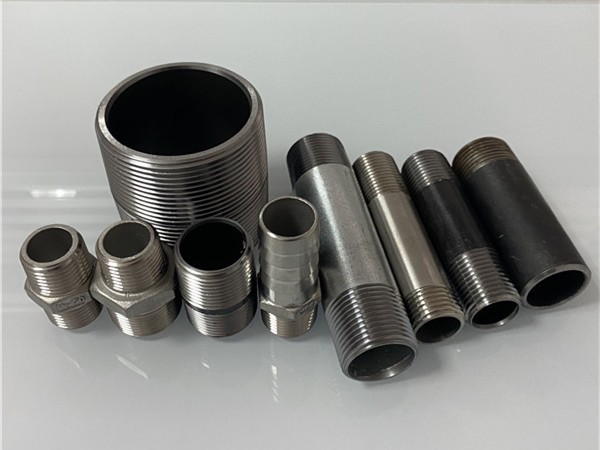
What Is CNC Thread Machining?
It refers to the use of Computer Numerical Control (CNC) to cut or form threads with high precision.
It operates according to programmed parameters to maintain stable thread dimensions and quality.
For pipe nipples and couplings, CNC threading is commonly used for:
-
NPT threads
-
BSPT threads
-
BSPP threads
-
G threads
-
Metric threads
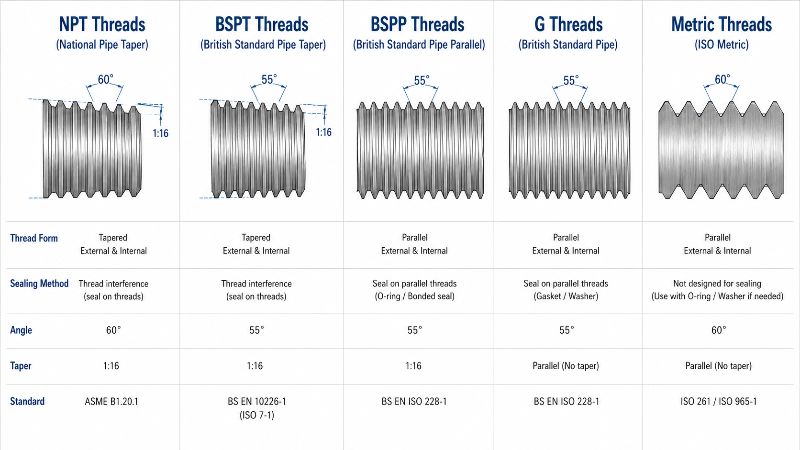
Typical threaded products include:
-
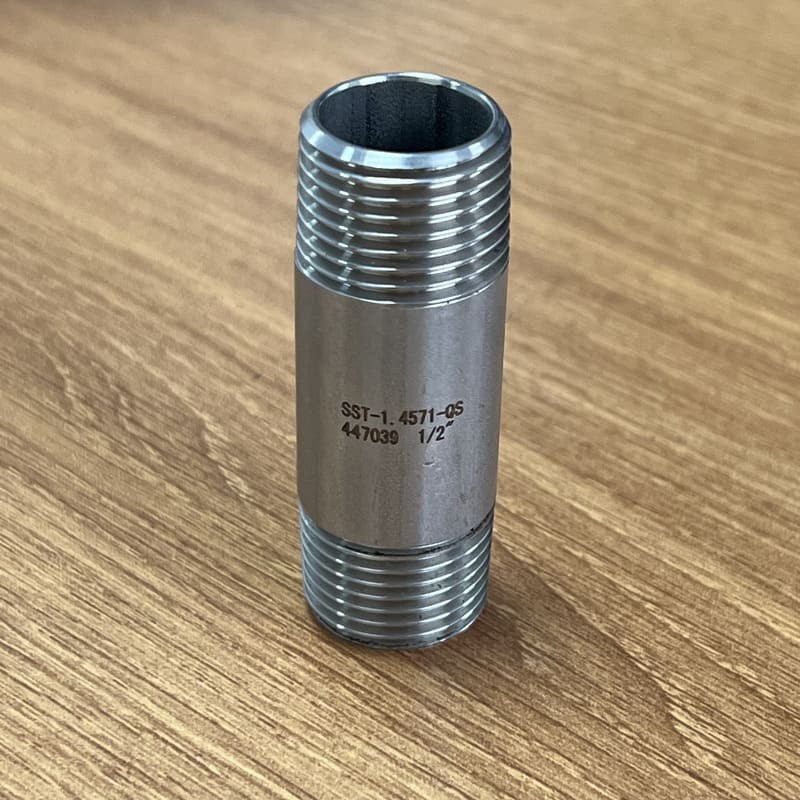
Stainless steel pipe nipples
-
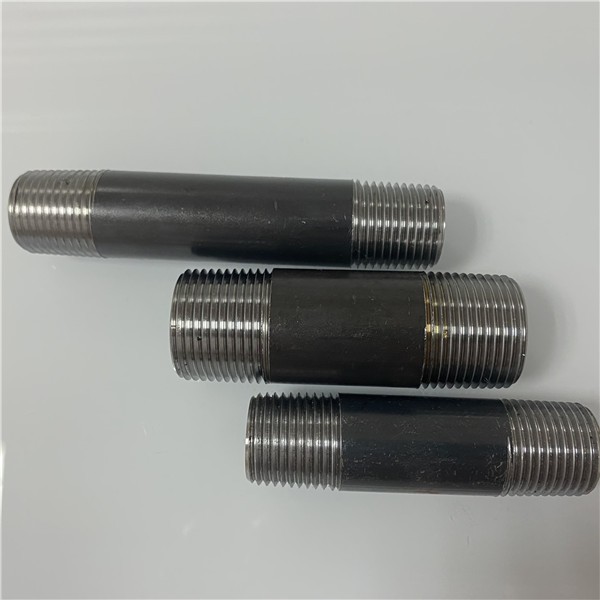
Black steel pipe nipples
-
Galvanized pipe nipples
-
Threaded couplings
-
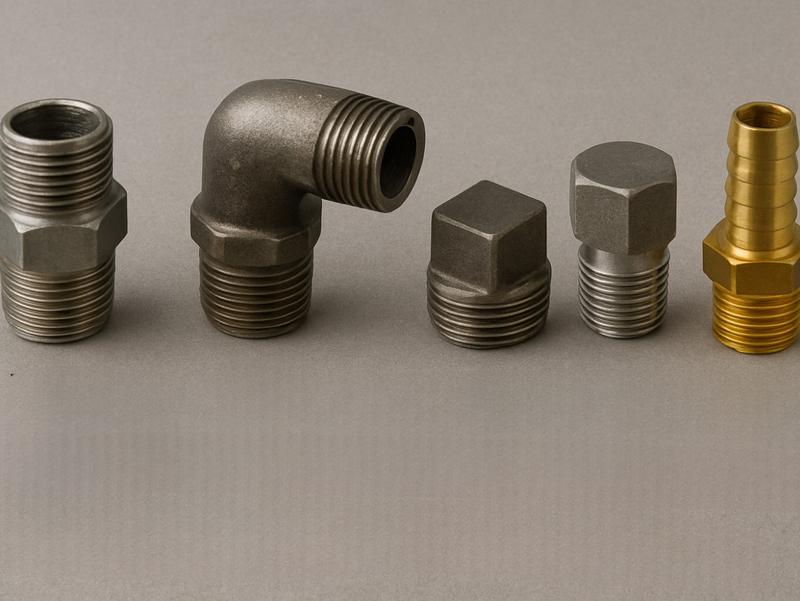
Industrial threaded adapters
Why CNC Thread Accuracy Matters
Buyers are not only purchasing pipe fittings, but also reliability and installation safety.
Poor thread machining can lead to:
-
Leakage
-
Improper sealing
-
Difficult installation
-
Cross-threading
-
Failed pressure testing
-
Product rejection on-site
This is especially critical in:
-
Gas pipelines
-
Fire protection systems
-
Hydraulic systems
-
Steam systems
-
Oil & chemical processing
Accurate CNC threading helps ensure:
-
Proper thread engagement
-
Leak-free connections
-
Smooth installation
-
Consistent batch quality
-
Compliance with international standards
Common Thread Standards in Global Markets
Different regions require different thread standards.
NPT Threads
NPT (National Pipe Thread) is widely used in the United States and Canada.
Characteristics:
-
Tapered thread
-
Designed for sealing
-
Standard: ASME B1.20.1
BSPT Threads
BSPT (British Standard Pipe Taper) is common in Europe, the Middle East, Australia, and parts of Asia.
Characteristics:
-
Tapered thread
-
Pressure sealing connection
-
Standard: ISO 7-1
BSPP Threads
BSPP uses parallel threads and often requires sealing washers or O-rings.
Characteristics:
-
Parallel thread
-
Common in hydraulic systems
-
Standard: ISO 228
Professional CNC machining allows these thread types with stable tolerances and accurate profiles.
CNC Thread Machining Process
A typical CNC threading production process for pipe nipples and couplings includes:
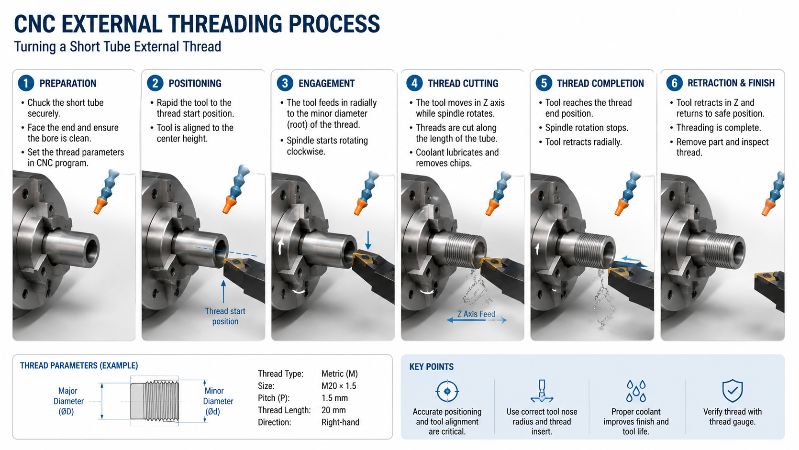
1. Raw Material Preparation
Steel pipes or bars are selected according to customer specifications.
Common materials include:
-
ASTM A733
-
ASTM A106
-
Stainless Steel 304/316
-
Carbon steel
-
Galvanized steel
2. Pipe Cutting
Materials are cut to the required length using automatic cutting equipment.
3. CNC Thread Cutting
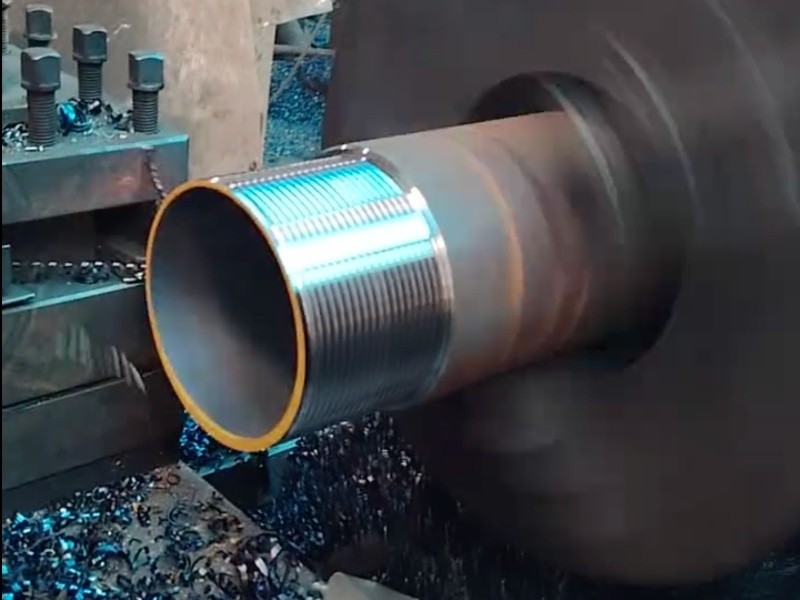
CNC lathes machine the threads according to programmed dimensions and standards.
Critical parameters include:
-
Thread pitch
-
Taper angle
-
Thread depth
-
Thread length
-
Surface finish
4. Deburring & Cleaning
Threads are cleaned to remove burrs and sharp edges.
This improves:
-
Assembly performance
-
Surface quality
-
Safety during installation
5. Thread Inspection
Manufacturers use thread gauges to verify thread accuracy.
Common inspections include:
-
Go/No-Go gauge testing
-
Visual inspection
-
Dimensional checks
-
Surface quality inspection
6. Surface Treatment
Depending on product requirements:
-
Black finish
-
Hot-dip galvanizing
-
Electro galvanizing
-
Passivation
-
Oil coating
7. Final Packaging
Products are packed according to export requirements and customer standards.
How Professional Manufacturers Control Thread Quality
Reliable manufacturers implement strict CNC quality control systems.
Thread Gauge Inspection
Professional factories perform regular Go/No-Go gauge inspections to ensure thread compatibility.
CNC Program Standardization
Stable CNC programming reduces dimensional variations between production batches.
Tool Maintenance
Regular replacement of cutting tools helps maintain thread precision and surface quality.
Batch Traceability
Advanced factories maintain production records for:
-
Material batches
-
CNC parameters
-
Inspection reports
-
Production dates
This improves consistency and quality management.
Common CNC Thread Defects and How to Avoid Them
Burrs on Threads
Cause:
-
Worn cutting tools
-
Poor deburring process
Solution:
-
Tool maintenance
-
Proper deburring procedures
Incorrect Taper
Cause:
-
Incorrect CNC settings
-
Calibration errors
Solution:
-
Precision programming
-
Regular machine calibration
Rough Thread Surface
Cause:
-
Improper cutting speed
-
Tool wear
Solution:
-
Optimized machining parameters
-
Carbide cutting tools
Loose Thread Fit
Cause:
-
Incorrect tolerance control
Solution:
-
Accurate gauge inspection
-
Standardized machining process
Why Buyers Prefer CNC-Machined Pipe Nipples and Couplings
Compared with traditional threading methods, CNC machining provides significant advantages.
| Feature | Traditional Threading | CNC Thread Machining |
|---|---|---|
| Accuracy | Operator dependent | High precision |
| Batch Consistency | Moderate | Excellent |
| Production Speed | Slower | Faster |
| Complex Threads | Limited | Flexible |
| Quality Stability | Variable | Stable |
| Export Standard Compliance | More difficult | Easier |
For industrial buyers, these advantages reduce installation problems and improve project reliability.
Choosing a Reliable CNC Threaded Pipe Fitting Manufacturer
When sourcing pipe nipples or couplings, buyers should evaluate:
Production Capabilities
-
CNC threading capacity
-
Size range
-
Material options
-
Customization capability
Quality Control
-
Thread gauge inspection
-
Pressure testing
-
MTR documentation
-
ISO certification
Technical Experience
-
Knowledge of NPT/BSPT standards
-
Export experience
-
Industrial application understanding
Custom Manufacturing Support
Professional suppliers should support:
-
Custom lengths
-
Special thread types
-
Logo marking
-
OEM packaging
-
Non-standard dimensions
Conclusion
CNC thread machining plays a critical role in the quality of threaded pipe fittings.
Accurate thread production improves:
-
Sealing reliability
-
Installation efficiency
-
Product consistency
-
Long-term durability
CNC threading capability can significantly reduce project risks and improve supply reliability.
CNC-machined threaded fittings are becoming the preferred solution for piping systems.