Introduction
Choosing the correct pipe coupling size is not as straightforward as it looks.
Most errors come from confusing the nominal pipe size and the actual size.
Most errors come from confusing thenominal pipe sizeand the actual size.
Thus, a "3/4-inch pipe" does not have an outside diameter of 3/4 inch.
Pipes and fittings supply, sizing disputes, and specification errors are our responsibilities daily.
This guide explains clearly the pipe coupler sizes.
It covers pipe coupling dimensions and the most common ordering mistakes.
You can specify the correct coupling the first time — without delays or reruns.
Quick Answer
To choose the correct pipe coupling size, match the coupling to the nominal pipe size, not the actual OD.
For example, a 3/4 inch pipe requires the same NPS coupling.
The actual outside diameter of 3/4 inch pipe is 1.050 inches, and the coupling bore is machined to match.
Confirm the thread standard, pipe wall thickness, and material grade when ordering.
Detailed Explanation
Step 1 — Understand nominal pipe size (NPS)
Nominal Pipe Size (NPS) is a North American standard for pipe and fitting dimensions.
It is a reference number only.
So, the NPS number does not equal the actual pipe OD or ID.
For example, a 1-inch NPS pipe has an actual OD of 1.315 inches.
However, a 2-inch NPS pipe has an OD of 2.375 inches — not 2.000 inches.
In addition, all schedules of a given NPS share the same OD, with only the wall thickness changing.
Key rule: Always specify pipe coupling sizes using NPS numbers.
Do not specify by actual outside diameter unless you are working with OD-based.
Confusing the two is the most common cause of wrong-size coupling orders.
Step 2 — Read the pipe coupling size chart
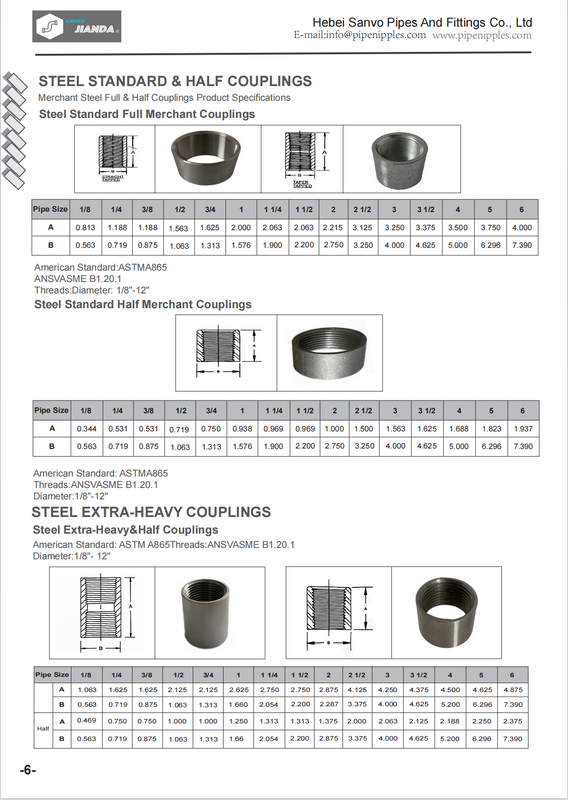
The table below shows pipe coupling dimensions for standard NPT threaded couplings.
Use this as your reference when selecting pipe coupler sizes.
Step 3 — Answer: What size coupling for 3/4 inch pipe?
A 3/4 inch NPS pipe requires the same NPS coupling.
The actual pipe OD is 1.050 inches. Therefore, the coupling bore is machined to accept exactly this diameter.
In addition, confirm the thread standard — if your system uses BSP instead of NPT, specify BSPT or BSPP accordingly.
Step 4 — Confirm pipe schedule compatibility
Pipe schedule affects wall thickness and internal bore, but not the OD.
So, a coupling fits any schedule of the same NPS pipe on the outside thread.
But the pressure rating must match your system requirements.
Also, always verify that the coupling pressure class suits the operating conditions.
| Schedule | Wall Thickness (3/4" NPS) | ID (3/4" NPS) | Typical Application |
|---|---|---|---|
| SCH 40 (STD) | 0.113" | 0.824" | General commercial/light industrial |
| SCH 80 (XH) | 0.154" | 0.742" | Higher pressure, industrial process |
| SCH 160 | 0.219" | 0.612" | High-pressure service |
| XXH (Double Extra Heavy) | 0.308" | 0.434" | Very high-pressure or corrosive service |
Step 5 — Select the right coupling type
Not all pipe couplings serve the same function. So, confirm the type before ordering.
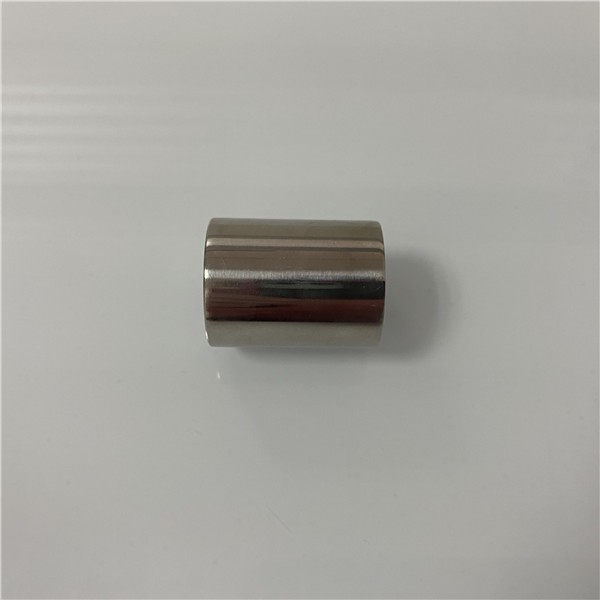
- Full Coupling
joins two pipes or pipe nipples of the same size. Most common type.
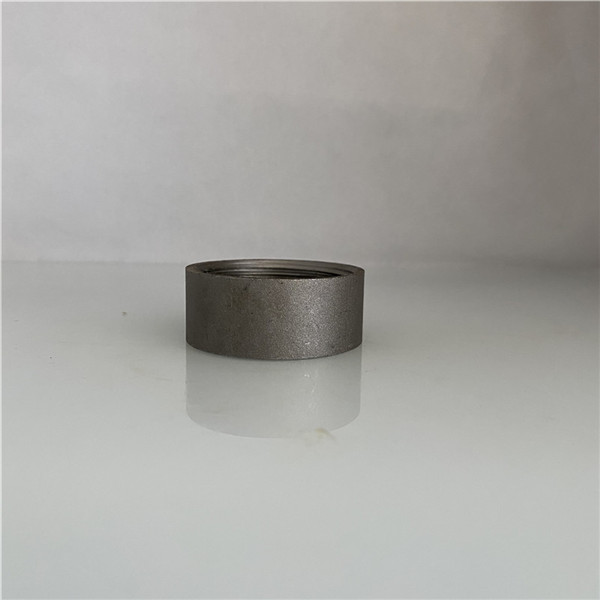
- Half Coupling
one threaded end only. Used for branch connections or pipe end closures.
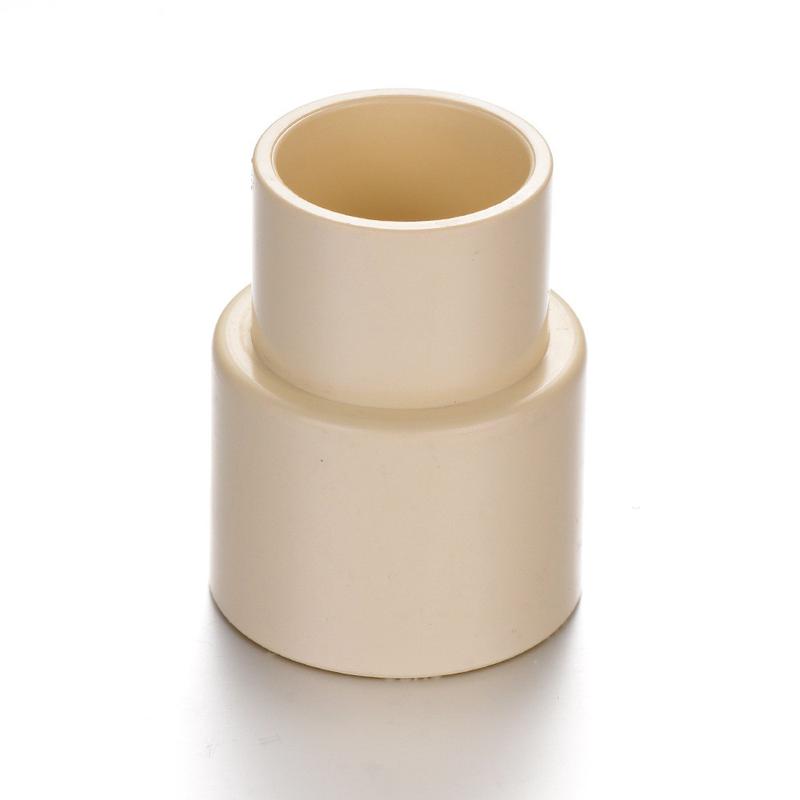
- Reducing Coupling
joins two pipes of different NPS sizes. For example, a 3/4" × 1/2" reducing coupling connects a 3/4 main line to a 1/2 branch.
- Hex Coupling
hex body for wrench engagement. Easier to install and remove in tight spaces.
Common Mistakes
These are the most frequent errors we see from procurement teams and field engineers.
Reviewing this list before placing an order can save significant time and cost.
Mistake 1 — Measuring pipe OD and ordering by that dimension:
The OD of a 3/4 inch pipe is 1.050 inches, not 0.750 inches.
However, many buyers measure the OD and try to order a "1-inch coupling."
This results in the wrong size every time.
Therefore, always order by NPS nominal size, not measured OD.
Mistake 2 — Confusing NPT with BSP threads:
NPT and BSP tapered threads look similar but are not interchangeable.
Forcing a BSP coupling onto an NPT pipe fitting will cross-thread or leak under pressure.
So, must confirm the thread standard.
Mistake 3 — Ordering full couplings when reducing couplings are needed:
In transition points between pipe sizes, a reducing coupling is required.
But many teams order full couplings and then try to use a bushing as a workaround.
This adds unnecessary joints and potential leak points to the system.
Mistake 4 — Ignoring pressure rating:
Pipe coupling dimensions alone do not define suitability.
Thus, the coupling pressure rating needs to match the system's operating pressure and temperature.
For example, a Class 2000 coupling is not suitable for high-pressure steam lines.
Mistake 5 — Selecting the wrong material for the environment:
Carbon steel couplings corrode rapidly in wet or chemical environments.
However, many orders default to carbon steel because it is cheaper.
So, Grade 316 stainless steel is always specified for outdoor, marine, or chemical service.
Mistake 6 — Not specifying end-to-end length for tight spaces:
Pipe coupling dimensions vary between manufacturers.
Also, some applications have strict face-to-face constraints.
Thus, dimensional drawing is critical to the installation layout.
Engineering Tips
These recommendations are based on pipe couplings supply and project experience.
- Always use PTFE tape or anaerobic thread sealant on NPT connections.
NPT threads seal by thread interference, not by face contact.
Therefore, sealant is mandatory to prevent leaks at operating pressure.
- For stainless steel threaded pipe fittings, use anti-seize compound in addition to sealant.
Stainless threads are prone to galling under high torque.
Therefore, anti-seize prevents thread damage during installation and future disassembly.
-
Match the coupling material to the pipe material wherever possible.
Mixing carbon steel with SS pipe fittings causes corrosion in wet environments.
Besides, it complicates inspection and maintenance records.
- Specify Class 3000 as a minimum for steam or high-pressure gas service.
Class 2000 threaded couplings are adequate for water and low-pressure air.
However, for steam, gas, or hydraulic service, Class 3000 provides the necessary safety margin.
- For buried or embedded piping, specify galvanized couplings.
Ensure the sizes match - the galvanizing coating adds approximately 3–5 mils of surface, which may affect.
- Request a Mill Test Report (MTR) for all stainless steel pipe couplings on critical projects.
MTRs confirm chemical composition and mechanical properties. In addition, they protect you from substandard or mislabeled material in global supply chains.
- For procurement managers ordering in volume:
NPS size, thread standard, coupling type (full/half/reducing), material grade, pressure class, and surface finish in your buy order.
Incomplete specifications are the primary cause of delivery delays and return shipments.
Conclusion
Selecting the correct pipe coupling size requires more than matching NPS.
Specify NPS nominal size — not the measured OD.
Confirm standard, coupling type, pressure class, and material grade before placing your order.
As a pipe fittings manufacturer, we supply full, half couplings, and reducing couplings.
If you need a pipe coupling size chart or material certification support, contact us.
We are ready to review your specifications and recommend the correct solution.
FAQ
1. What is the difference between Class 2000 and Class 3000 pipe coupling?
Class 3000 couplings have thicker walls and are larger than Class 2000 in the same NPS.
They carry higher pressure ratings.
A 1-inch Class 3000 stainless steel coupling has a significantly higher working pressure than its Class 2000 equal.
Also, Class 3000 is the least we recommend for steam, gas, and hydraulic applications.
2. Can I use a pipe coupling to join two different pipe schedules?
Yes — provided both pipes with the same NPS nominal size.
All schedules of a given NPS share the same outside diameter.
So, the same coupling fits Schedule 40 and Schedule 80 pipe of the same NPS.
Confirm that the coupling pressure rating meets or exceeds the system operating pressure for both pipes.
3. What is the difference between NPT and BSP pipe coupling threads?
NPT (National Pipe Taper) is the North American standard, defined by ASME B1.20.1.
BSP covers BSPT and BSPP threads, used in the UK, Europe, Asia, and the Middle East.
Although both tapered thread systems have different thread angles and pitches.
So, NPT and BSP couplings are not interchangeable.
Always confirm the thread standard on the project specification or existing system.
4. When should I use a reducing coupling instead of a full coupling?
Use a reducing coupling wherever two pipes of different NPS sizes connect.
Reducing coupling allows a smooth transition.
Also, reducing couplings cuts the number of joints in the system, reduces potential leak points, and simplifies installation.
5. Do you provide pipe coupling size charts and dimensional drawings?
Use a reducing coupling wherever two pipes of different NPS sizes connect.
Reducing coupling allows a smooth transition.
Reducing couplings cuts the number of pipe connectors and simplifies installation.
6. What material should I specify for stainless steel pipe couplings in a corrosive environment?
Grade 304 is enough and cheaper for general outdoor or water service.
We recommend Grade 316 stainless steel for environments involving chlorides, seawater, or chemicals.
Duplex stainless steel (2205) provides superior resistance to stress corrosion in aggressive environments.