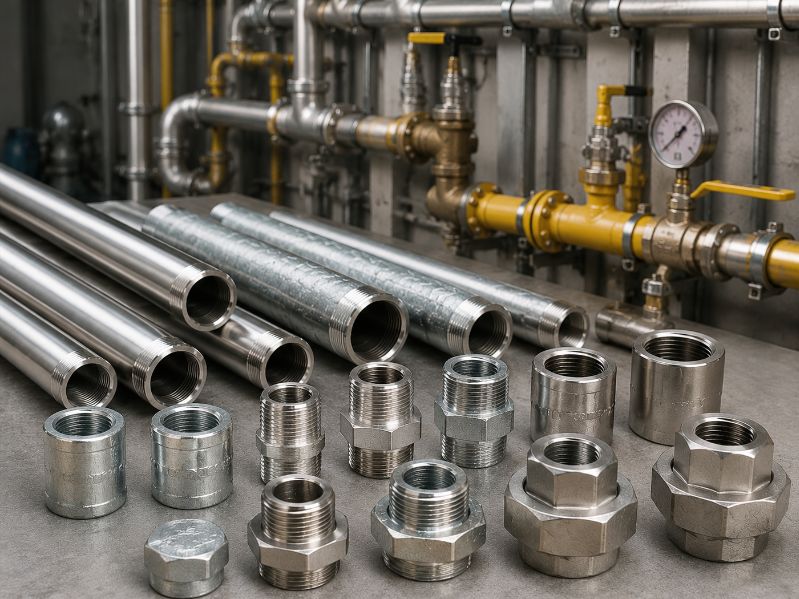
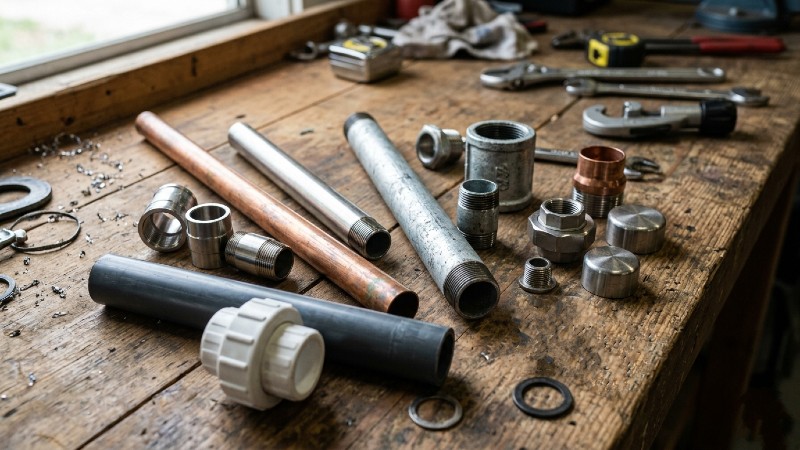
In gas systems, the common materials are galvanized steel, stainless steel, and copper.
Each material has different strengths, applications, and cost considerations.
This guide explains each option to help you choose the best pipe material for gas lines.
Common Materials for Gas Lines
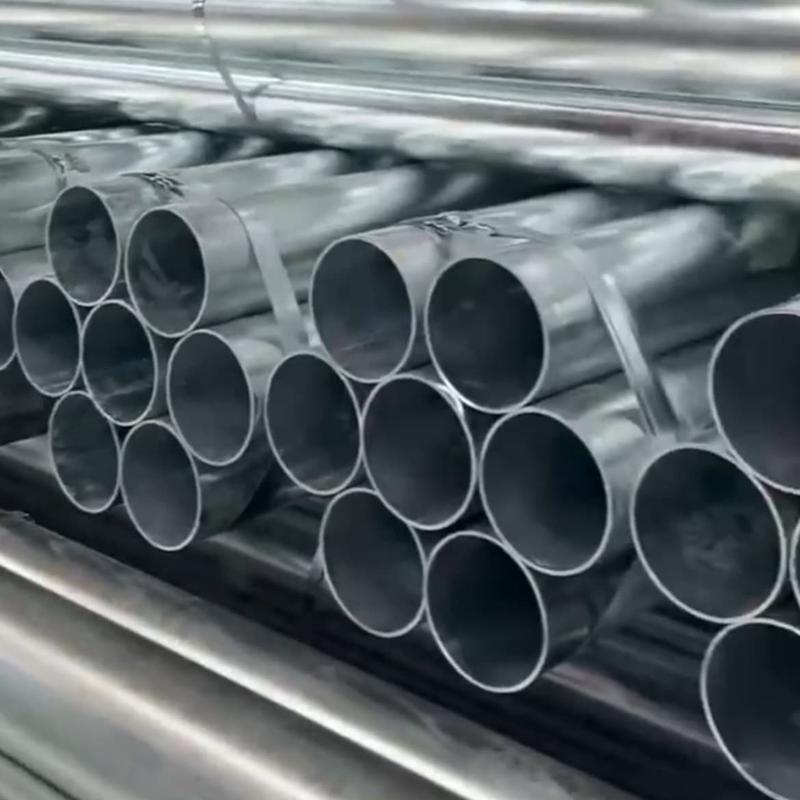
1. Galvanized Steel
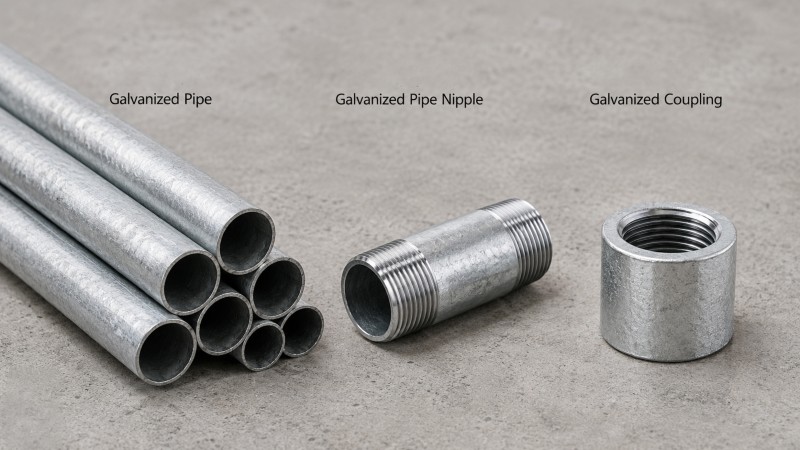
Galvanized steel pipes are widely used in households.
Galvanized steel has high corrosion resistance, convenient installation, and high strength.
Advantages
-
Better corrosion resistance than black steel
-
Suitable for humid environments
-
Longer outdoor service life
Disadvantages
-
More expensive than black steel
-
Zinc coating may deteriorate over time
-
Some gas utilities restrict galvanized pipe for certain gas applications
Typical Applications
-
Outdoor gas piping
-
Moist environments
-
Utility piping systems
Best Choice For
Gas systems exposed to moisture or outdoor weather conditions.
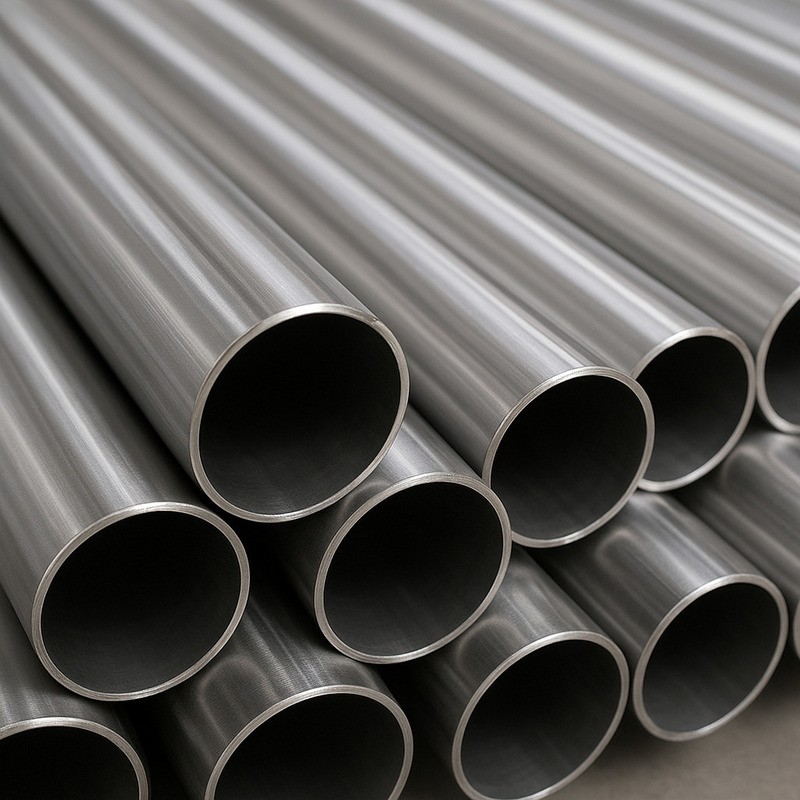
2. Stainless Steel
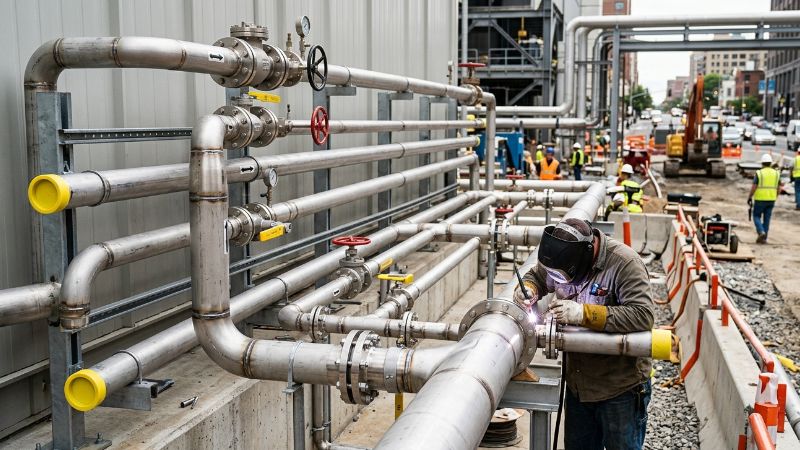
Stainless steel includes 304 and 316 stainless steel.
Stainless steel pipes and fittings are used for moisture and coastal environments.
Usually, a compression-type connection is adopted for better seal performance.
316 is better than 304 in higher corrosion environments.
Advantages
-
Excellent corrosion resistance
-
High temperature resistance
-
Long service life
-
Clean appearance
-
Suitable for harsh environments
Disadvantages
-
Higher material cost
-
More expensive machining and threading
Typical Applications
-
Chemical plants
-
Offshore systems
-
Corrosive gas environments
-
High-purity gas systems
Best Choice For
Corrosive, high-moisture, or high-temperature gas applications.
3. Copper
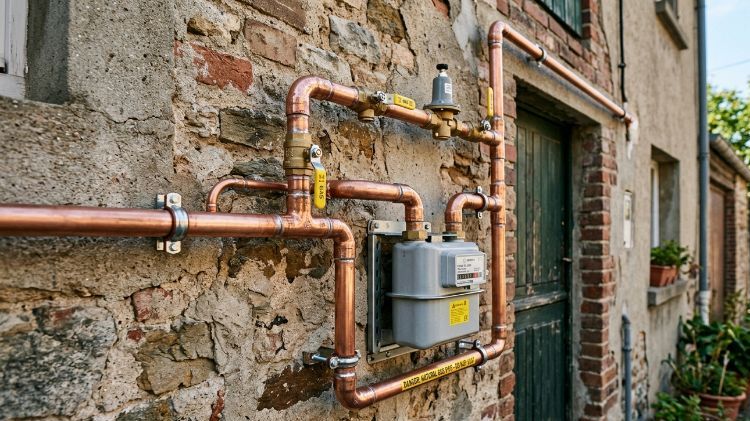
Copper pipe is best for complicated piping.
Copper pipe can reduce the number of pipe connectors, even though it has a higher cost, but it has good ductility.
Advantages
-
Good corrosion resistance
-
Easy to machine and install
-
Reliable sealing performance
Disadvantages
-
Lower strength than steel
-
Not ideal for high-pressure industrial systems
-
Higher cost than carbon steel
Typical Applications
-
Residential gas appliances
-
Regulators
-
Small gas connections
Best Choice For
Low-pressure residential or appliance gas systems.
4. Plastic
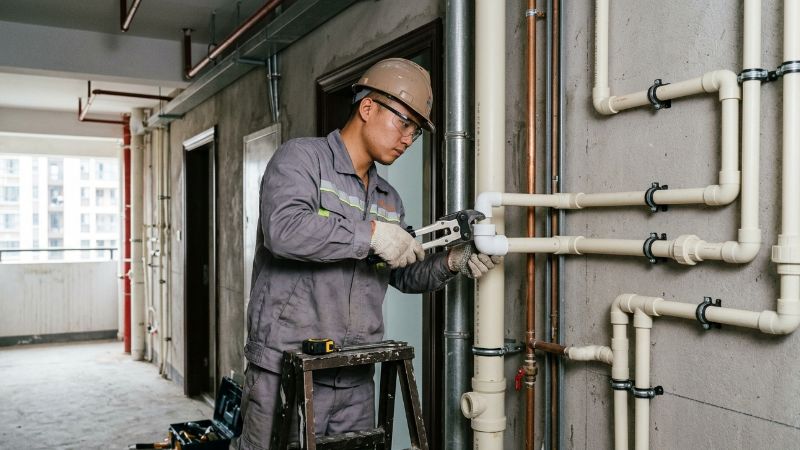
Plastic pipe is becoming more widely used in gas pipeline applications with the development of technology.
Plastic pipes have good corrosion resistance, light weight, lower cost, and are easy to install.
Last, which materials of gas pipe and fittings are needed to consider many factors according to specific requirements and applications.
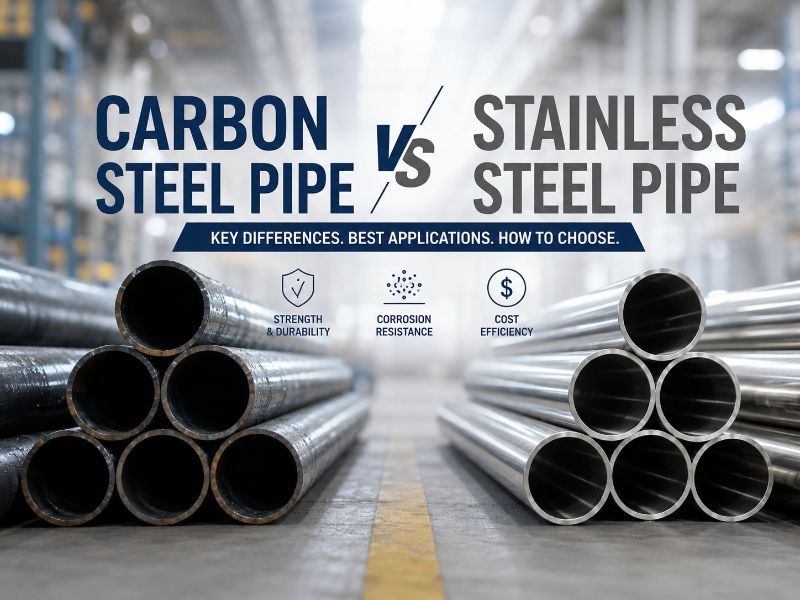
Galvanized Steel vs Stainless Steel for Gas Lines
This is one of the most common comparisons in industrial piping.
| Feature | Galvanized Steel | Stainless Steel |
|---|---|---|
| Cost | Lower | Higher |
| Strength | Excellent | Excellent |
| Corrosion Resistance | Moderate | Excellent |
| Outdoor Use | Good | Excellent |
| Industrial Gas Systems | Very Common | Premium Option |
| Service Life | Long | Very Long |
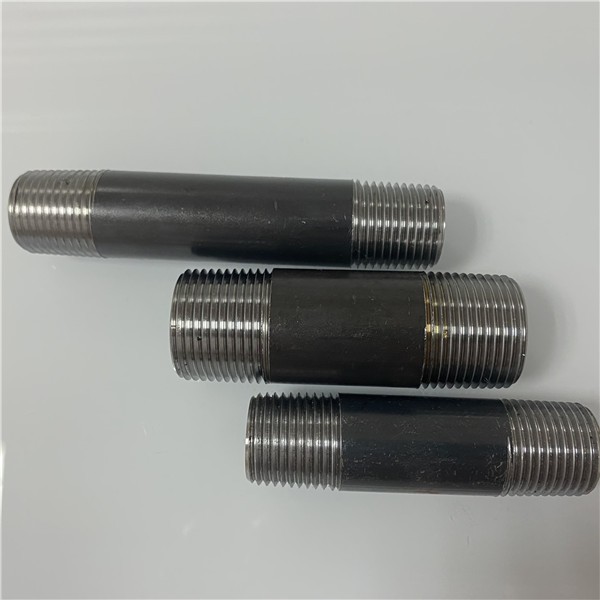
For most standard gas distribution systems, black carbon steel pipe nipples remain the industry standard because of their balance between strength, availability, and cost.
However, stainless steel becomes the preferred option when corrosion resistance is critical.
Which Thread Type Is Best for Gas Pipe Nipples?
Most gas pipe nipples use:
-
NPT Threads (North America)
-
BSPT Threads (Europe, Asia, Middle East)
Thread sealing is extremely important in gas systems to prevent leakage.
Common sealing methods include:
-
PTFE thread seal tape
-
Pipe thread sealant
-
Gas-rated sealing compounds
Factors to Consider When Choosing Gas Pipe Nipple Materials
1. Corrosion Exposure
Outdoor or humid environments may require galvanized or stainless steel.
2. Gas Type
Different gases may require specific material compatibility.
3. Pressure Requirements
Industrial high-pressure systems generally prefer carbon steel or stainless steel.
4. Local Codes and Standards
Always verify local gas installation regulations before selecting materials.
5. Budget
Carbon steel provides the best balance between performance and cost for most projects.
Recommended Material by Application
| Application | Recommended Material |
|---|---|
| Indoor Natural Gas Lines | Black Carbon Steel |
| Outdoor Gas Systems | Galvanized Steel |
| Corrosive Environments | Stainless Steel |
| Residential Appliances | Brass |
| Industrial High-Pressure Gas | Carbon Steel or Stainless Steel |
Final Thoughts
The best pipe nipple material for gas lines depends on the operating environment, pressure requirements, corrosion exposure, and budget.
For most commercial and industrial gas systems, black carbon steel pipe nipples remain the most widely used and cost-effective solution.
For outdoor or corrosive environments, galvanized steel or stainless steel may provide longer service life and better reliability.
Selecting the correct material helps improve safety, reduce maintenance, and ensure long-term system performance.